

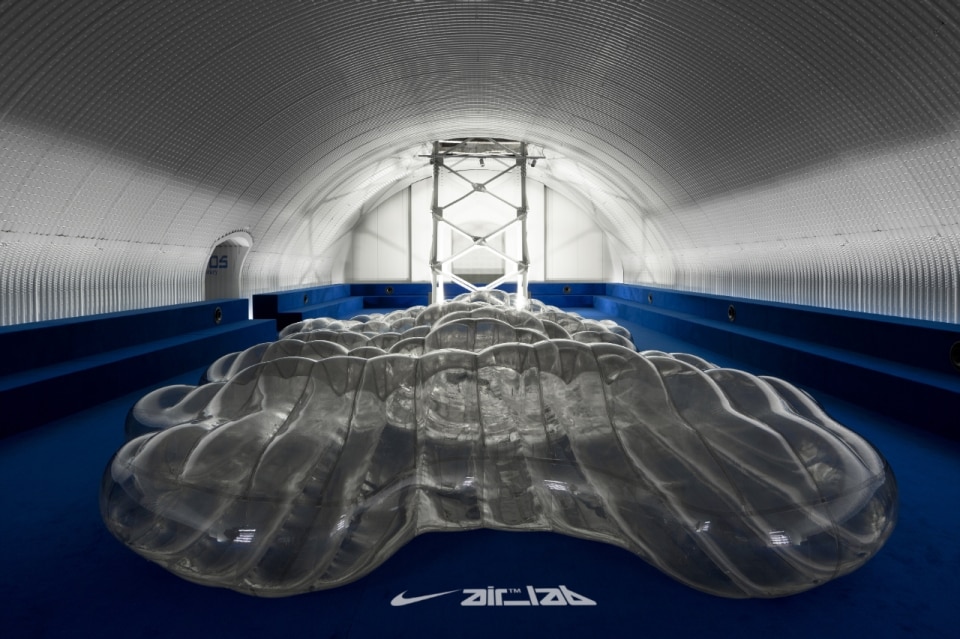
Nike and Gucci. If you want to understand what design week has become, this year you have to start from here. Because it always ends up talking about selfies and photos, queues and drinking sessions, about “do you remember that time when, while now...” – but the truth is that Milan Design Week remains an incredible communication and advertising device. And of design, of course, but what is design after all? We at Domus have been asking the most established designers and theorists around the globe for years, but we have yet to identify an answer. On the other hand, among professionals, the key phrase creeping between a queue and a Neit Boulevardier at the Vocla temporary bar is “see that it has become brand week, where did you see the design”. But you also have to know how to do brand week, otherwise you make a fool of yourself.
The product as a narrative
Nike, as you may have read in the newspapers, is a company in transformation today, crossing boundaries to remain faithful to itself, expanding into mind sciences and robotics, among other things. Its exhibition this year is one of the largest ever in Milan and centers on Air, its most famous technology. Air itself is also at the center of a boundary-crossing: if before it was identified with air capsules in shoes, today it has become a system, almost a philosophy, that has also directly entered clothing design. And tomorrow, who knows.
“What if we applied Air to clothing?”. Martin Lotti, head of design at Nike, tells it this way, accompanying Domus: air is something that cannot be seen, and for this very reason it becomes interesting to try to make it visible in an exhibition.
Air is something that cannot be seen, and for this very reason it becomes interesting to try to make it visible in an exhibition.
The Nike Air Lab fits perfectly into the philosophy of Dropcity, in the connected warehouses of Milan Central Station: what was a spectacular location has become a tedious Legoland for budding architects. But there was nothing like it in Milan, it fits. Nike stages the past, present, and future of Air with prototypes from the design center and archival materials coming directly from Beaverton, a giant seat, and a real laboratory to study air in all its forms: after the design days, the machinery will be donated to Milan.
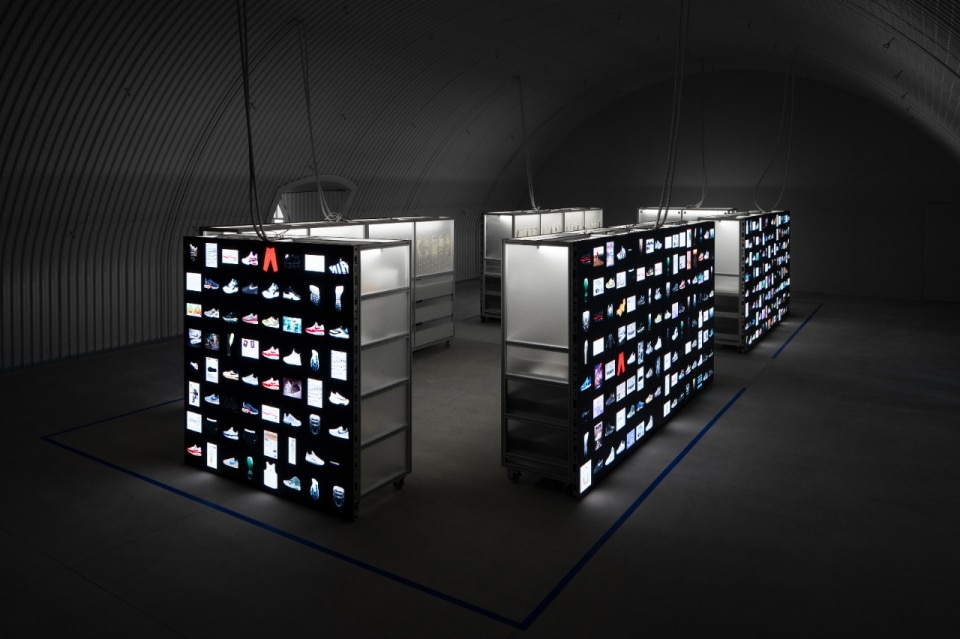
Nike has done something that only the company employing the largest number of designers in the world can achieve: a very serious and at the same time engaging journey that tells its product design. To round it off, a series of talks including one with the godfather of street style, Hiroshi Fujiwara. We are very far from last year’s dancing installation. Yet the result is masterful. Even if perhaps it will only appeal to fans of the swoosh. But then again, who isn’t?
The brand as myth
On the other side is Gucci. Gucci, too, is in a moment of redefinition, with the entry of Demna as head of creative direction and the Milan fashion show in lights and shadows. Plus, there is the Kering crisis. In short, if not a bad moment, at least a big moment. So you book yourself in, show your QR code and find yourself in a cloister where there is only a black monolith leaning in the middle. You get closer and realize that the monolith is handing out personalized cans. It came out "super pissed off" to me. Very fitting. But this first space leaves a feeling of desolation, because you wonder, "but is this all there is?"
The wonder is the next cloister, where you find yourself walking through an incredible flowered garden. It is spring for Gucci, it says so clearly. On the walls, Renaissance-style tapestries that retrace the brand’s history, between leather jackets with nothing underneath and girls with a severed head under their arm. “How kitsch”, comments the friend who is an art critic. But the operation is perfectly successful. Everything is there. The history of the brand and its consecration on an almost mythological level, spring, the sprezzatura, and even the “demnata”. He said Renaissance and Renaissance it was.
The rest of the system
Between the minimalism of Nike and the maximalism of Gucci, there is a fairly disappointing world in between. Automotive brands try without convincing even themselves, among those who repeat the same formula of past years for the umpteenth time, becoming a cliché of themselves, those who occupy downtown buildings with improbable installations, and new entries like Geely, which puts heart and commitment into it, but in the end, it is not really clear what the brand has to do with the installation created by Dotdotdot – which anyway remains among those we will remember. There is the fifteen minutes of fame. But probably the design studio gains more than the brand that paid for it.
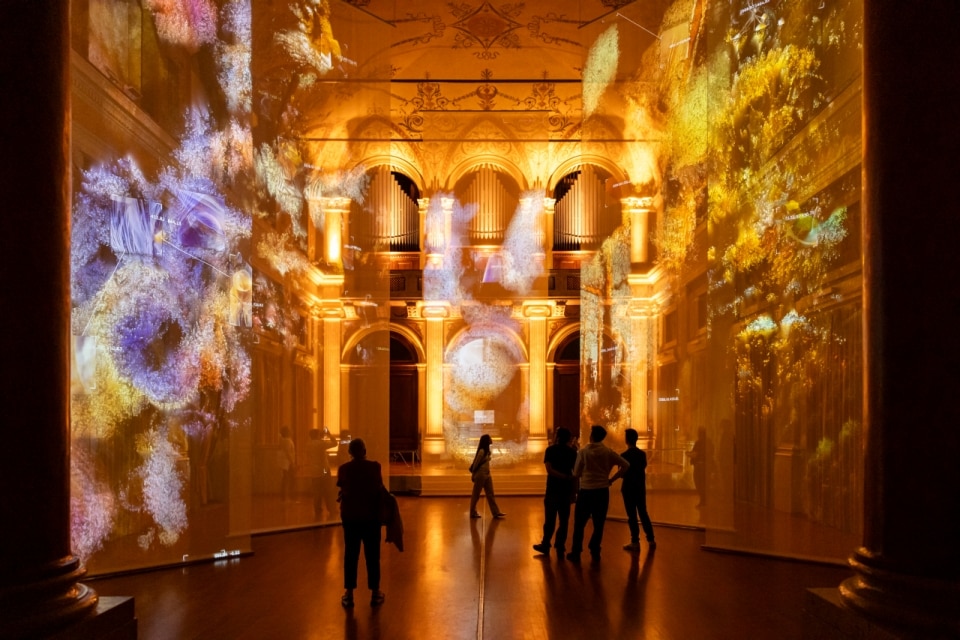
And then there is other fashion trying, Balenciaga with a mini-exhibition, Jil Sander with her 60 well-laid-out books. Arket with the carousel (the ladies seem to love it) and Louis Vuitton with its exhibition of objects that is so rhetorical it seems almost sublime. The lesson here is clear: you can have the ideas, you can call Hans Ulrich Obrist, but at Milan Brand Week you function if you have worked well the rest of the year, indeed in recent decades, because by now being intelligent or even just spectacular is no longer enough – even though in the closed world of the blocked Strait of Hormuz, not much money seems to have arrived here in Milan. And along with them, neither have Asian visitors. Certain “show-offs” of past years, this time absolutely nothing. Which is better.
Is it better?
Building a brand
Aesop is a L’Oreal brand that focuses heavily on architecture and it shows. If last year it focused on the product and the experience of that product – fragrance, soap, perfume – this time it reverses the narrative and sublimates the design of its famous stores into a scalar and well-structured formula: it does so with a series of lamps and an outdoor-indoor installation that could easily become an essay on how to excite while remaining faithful to brand values. On the ideal podium of Brand Week, it would be a sensible silver medal.
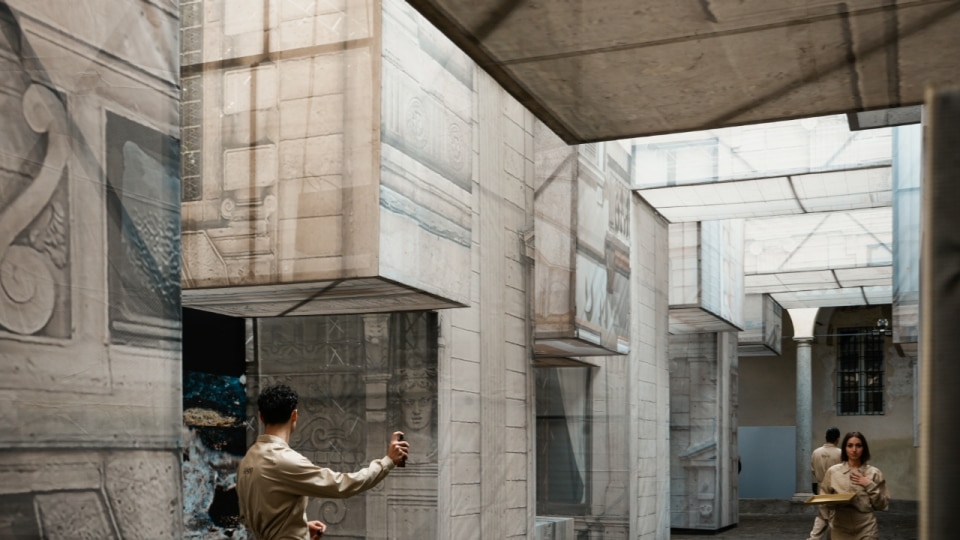
And what does furniture and especially Italian furniture do, which after all is the first thing we think of when we think of Fuorisalone and Design Week? Maurizio Porcini, recently head of design at Samsung, told Domus that he finds great inspiration there and in fashion, and that in Italian furniture design there are communication skills that tech lacks.
The lesson here is clear: you can have the ideas, you can call Hans Ulrich Obrist, but at Milan Brand Week you function if you have worked well the rest of the year, indeed in recent decades, because by now being intelligent or even just spectacular is no longer enough.
Now, for sure consumer tech is going through a phase of crisis and growth and today must face logics that go beyond the mere successful product or the cultural monopoly of the sector by Apple. Porcini, who before experiences in companies around the world started from the Politecnico (and it shows, fortunately), proposes for this Salone a linear and didactic exhibition, certainly necessary to start looking at Samsung with different eyes, but probably still too little to really grab attention. But he will have time to make up for it, we count on it.
The exception
The problem is that furniture, despite Porcini’s optimism, we did not see it too convincingly at this design week. Or rather, it created huge captions: it is as if brands had fallen in love with a formula that turns increasingly tired and empty, even when there is the starchirtect (is that still a thing?) or the Scandinavian super-studio of the moment signing it.
Something different happens at Spazio Maiocchi, a context usually inhabited by the orphans of Demna’s Balenciaga and the stage for the latest editions of the ultra-chic and somewhat radical Capsule Plaza. But here this year IKEA has settled, transforming the courtyard of black-clad hipsters into a huge food market, the theme of the year for the Älmhult-based company.
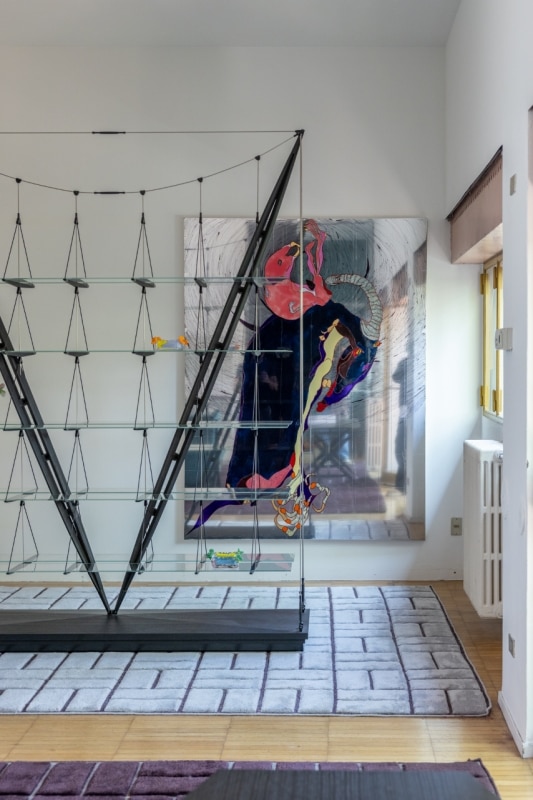
Meanwhile, Mexican designer Maye Ruiz builds a room inside the Space that is all IKEA and baroque from the state of Guanajuato where she comes from, a sincere and representative grounding of today’s most representative style, the one that yet no one wants to admit: take some basics and put an exceptional accessory on it, that only you and a few others have. We dress like this, we live like this, even if the official representation is another: waiting for one day the New York Times to write an article saying it is a peculiar thing of this strange age group called Gen Z and consecrate it as a new trend.
But let’s go back to Italian design brands. The exception comes from an exceptional brand like Alessi. Besides the splendid Sottsassian-inspired bar pavilion behind Via Torino – there would be much to discuss about the bars of Brand Week and how, between design and the charm of timelessness, they clearly stand out from Milan’s proposal in the other 51 weeks of the year –, this year Alessi linked up with another historic name in Italian design: CP COMPANY, the fashion company founded by Massimiliano Osti. A strange couple, almost paradoxical, which in an era of wacky crossovers presents a very credible one, set between industrial history, love for research, and the Italian model of the family business. Too little has been said about it, unfortunately: yet it is a splendid representation of how much good Brand Week could do in the coming years. As long as no one obsesses over looking for design there.