


The stops in this third guide curated by Domus—designed to help you navigate the layered map of the Fuorisalone—lead you to discover design as it enters some of the city’s architectural masterpieces, spaces that are usually inaccessible. Have you ever made it to the sixteenth floor of Torre Velasca? From up there, the view reveals a series of “voids” hidden behind the buildings that surround them. These are spaces that are almost impossible to imagine while walking through Milan’s dense urban fabric: cloisters, courtyards, and hidden squares that, during Design Week, become some of the most sought-after locations for designers and brands to stage their installations.
In these places, we encountered contributions from some of the most influential architects on the contemporary scene—such as Lina Ghotmeh, who transforms the courtyard of Palazzo Litta into a “metamorphosis in motion”—alongside interventions from the world of fashion. Demna curates an installation for Gucci at the Chiostri di San Simpliciano, while Aesop turns a visit to the cloister of Santa Maria del Carmine into an olfactory experience. Here are more addresses that stood out to us—and that will likely be talked about in the weeks to come.
1. Gucci Memoria - Chiostri di San Simpliciano
Piazza Paolo VI 6
20-26 April, h. 10:00AM-8:00PM
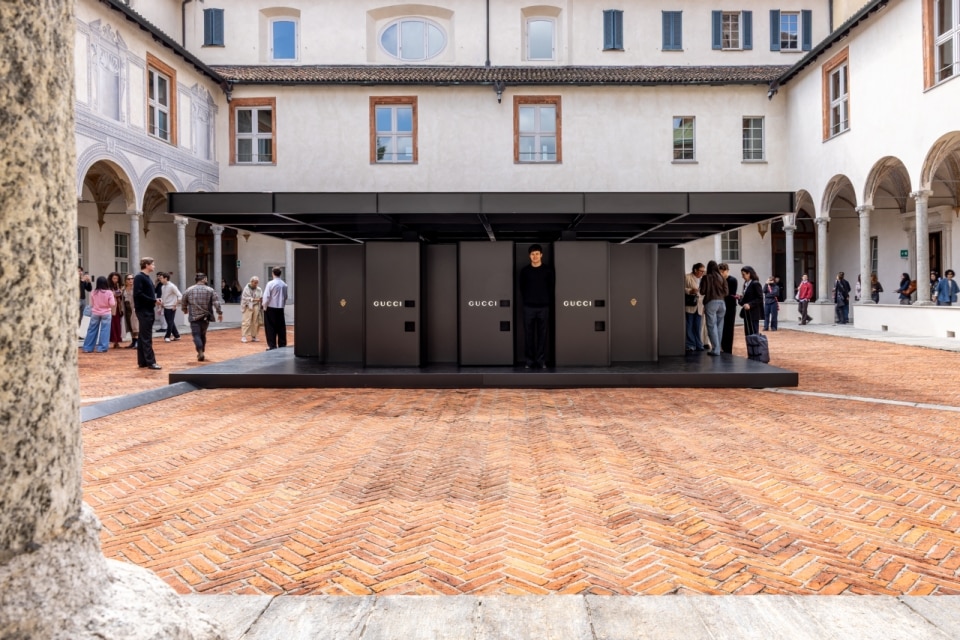
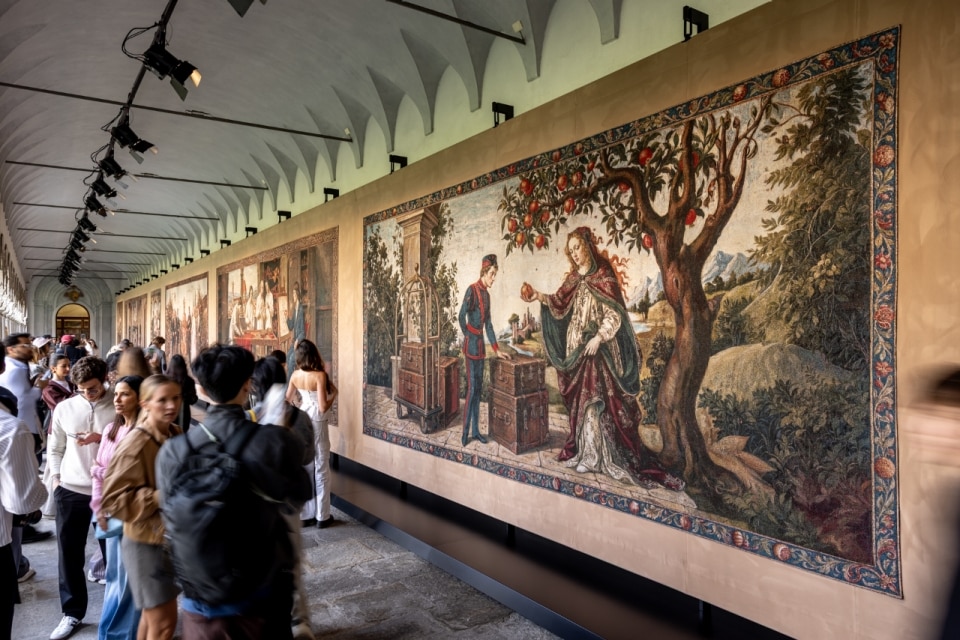
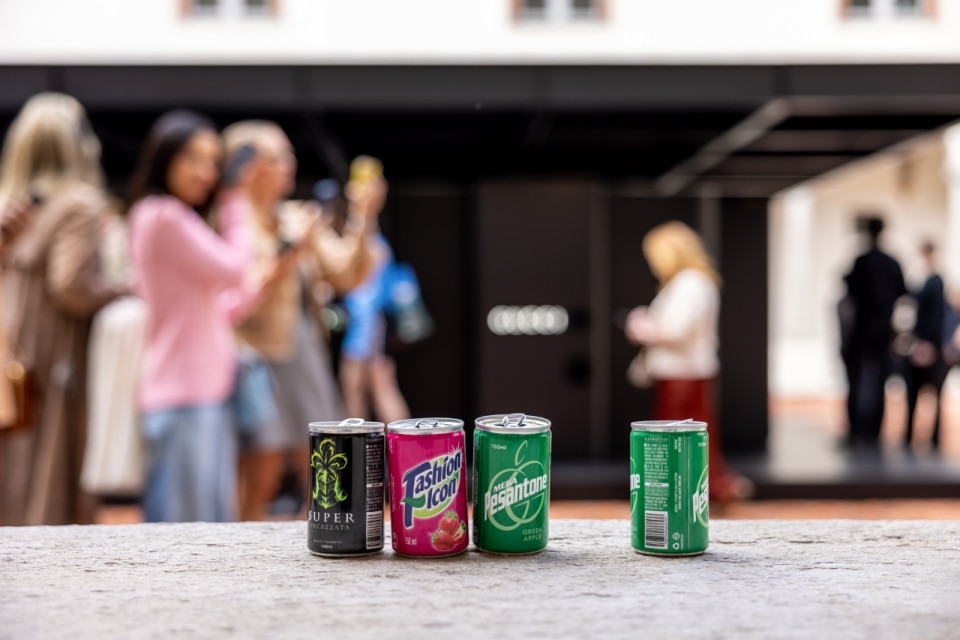
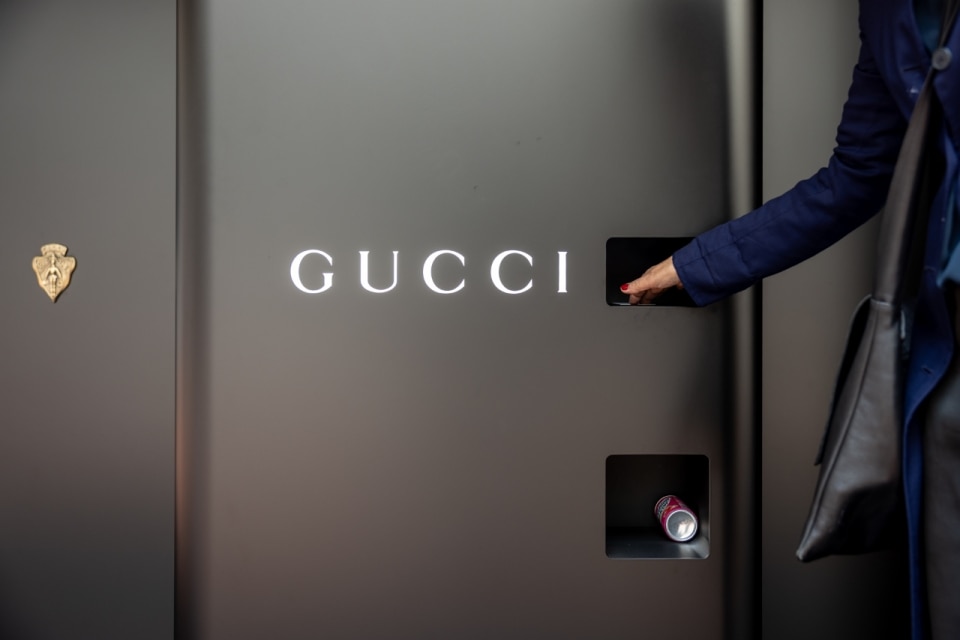
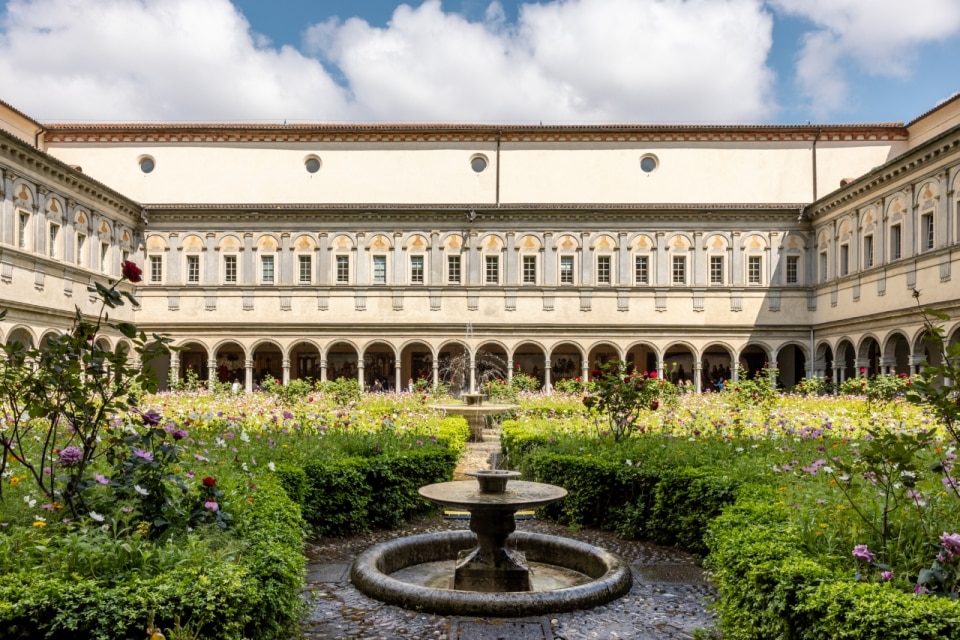
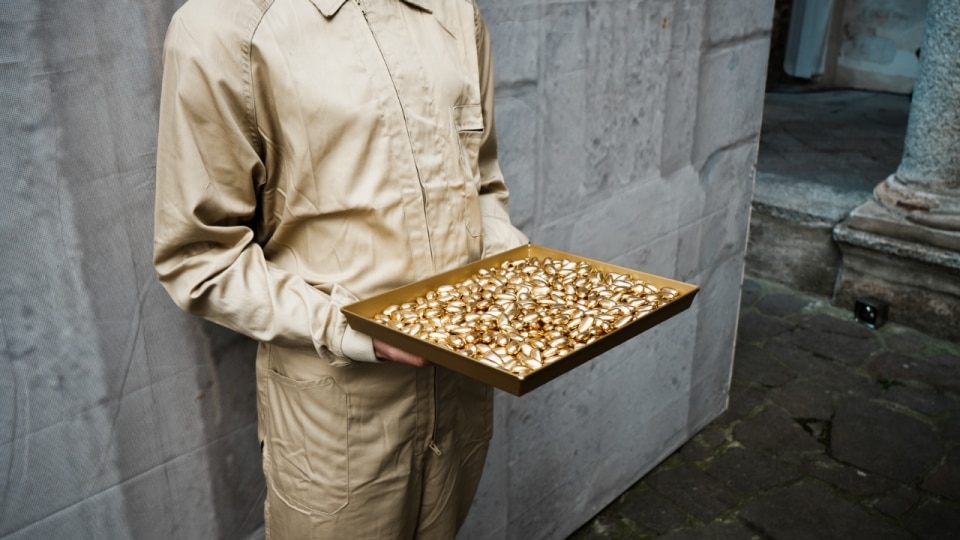
The alignment between design and fashion grows stronger year after year, and at the Chiostri di San Simpliciano it reaches a peak of expression, provocation—inevitable when Demna is involved—and spatial activation, especially at the level of imagination. In the first cloister, everything is still. A cluster of monolithic vending machines dispenses cans dedicated to the characters of the recent campaign “La Famiglia”—and, most likely, to the visitors themselves. All of this unfolds beneath a solemn, monumental metal canopy that, on closer inspection, reveals itself as a reference to Mies van der Rohe’s Neue Nationalgalerie in Berlin. In the second cloister lies the core of the provocation, along with an evocative reflection on the maison’s heritage. The central space is saturated with flowers; one can almost hear the ethereal I Feel Love that Chris Cunningham used to narrate Gucci Flora in the early 2000s. Along the ambulatory, 105 years of Gucci history unfold in a cycle of tapestries: Florentine craftsmanship conquering the world, the much-mythologized “family” of the postwar years, and the creative directions of Frida Giannini, Alessandro Michele, Sabato De Sarno, and, most recently, Demna. He is portrayed stitching together past and present, surrounded by collaborators, a racing seat in the background, props, and Renaissance iconography—somewhere between critical genius and celebration.
Giovanni Comoglio
2. Meisdel – Anima 01
Tortona Square, Via Tortona 36
20-26 April, h. 10:30AM–6:00PM; 22–25 April h. 10:30AM–8:00PM
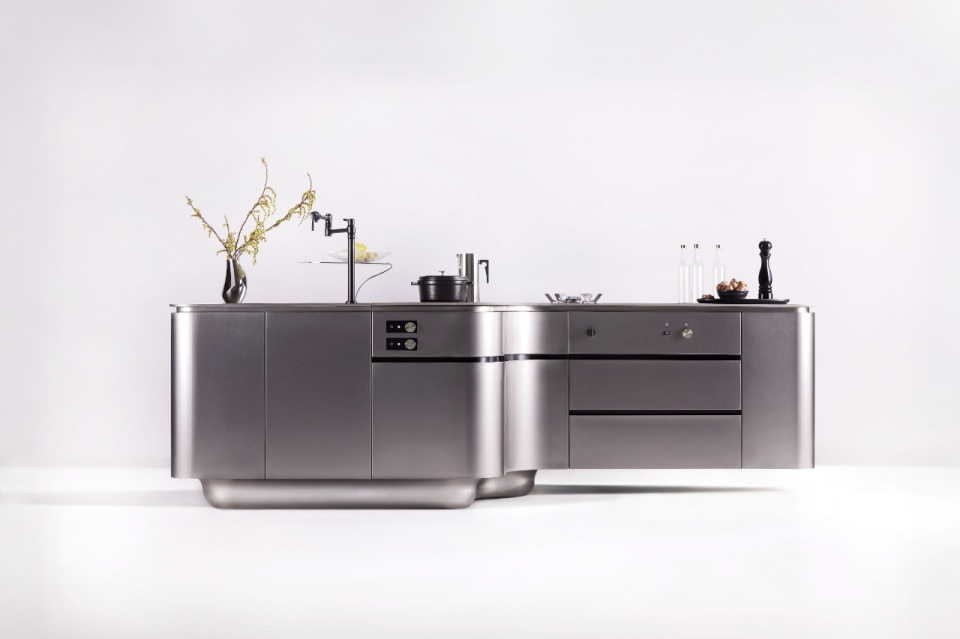
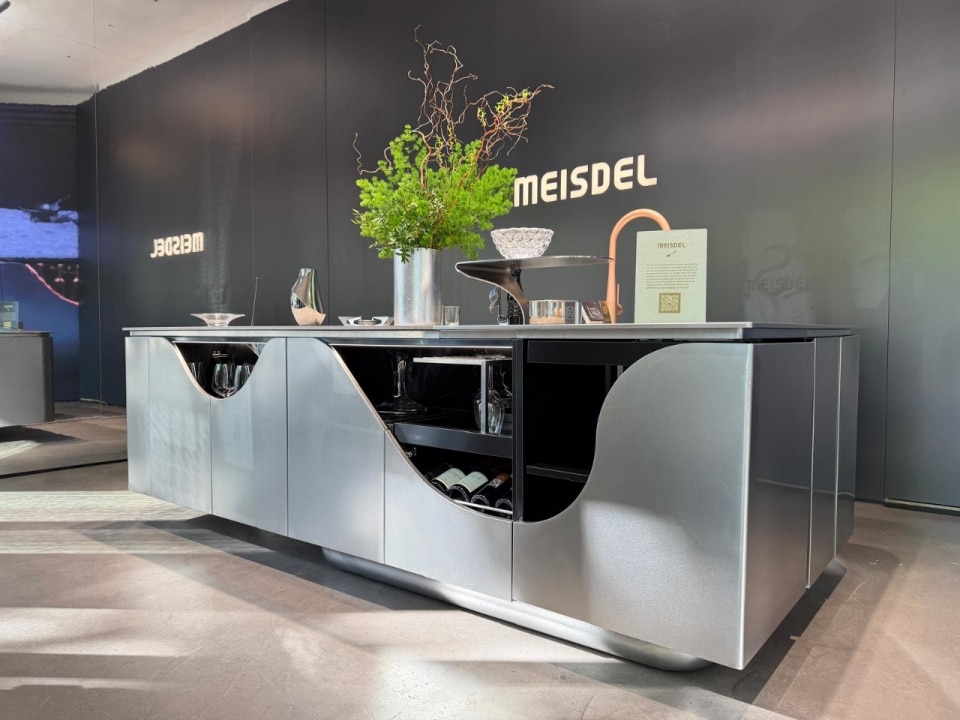
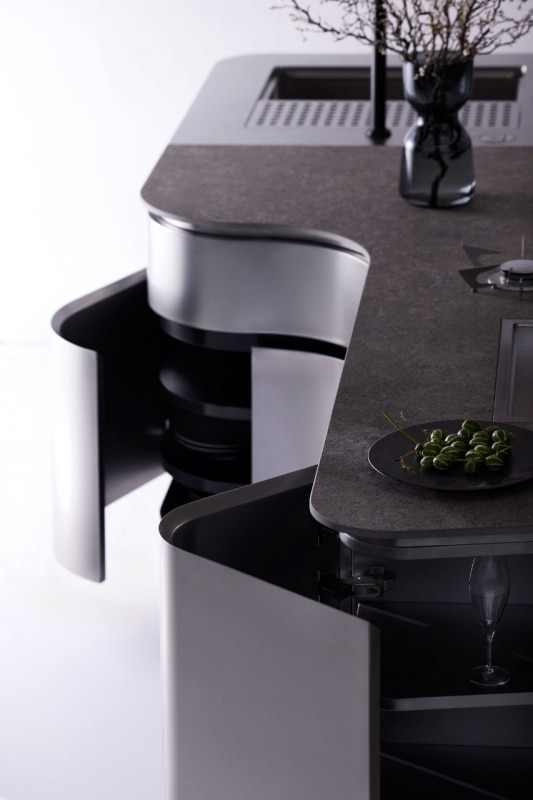
The European debut of the Japanese brand Meisdel takes place within the Fuorisalone, with a strongly poetic installation in the Tortona Design District. At its core is Anima 01, a domestic stainless-steel architecture that transcends functionality to become a sculptural presence, a kitchen poised between industrial rigor and organic tension. The exhibition space is conceived as an essential, restrained container that amplifies this ambiguity without overpowering the work on display: surfaces that absorb and return material qualities engage in dialogue with a softly undulating half-mirror that dissolves perceptual boundaries, while a vertical monitor, tilted against the primary geometry, introduces a dynamic element contrasting the object’s stillness. In this interplay of matter, reflection, and image, the urban context and the springtime atmosphere of Design Week are also drawn in, turning the installation into a manifesto on contemporary living, grounded in perception.
Sponsored Content
3. Aesop, The Factory of Light - Chiesa di Santa Maria del Carmine
Piazza del Carmine 2
21-26 April, h. 10:00AM-6:00PM
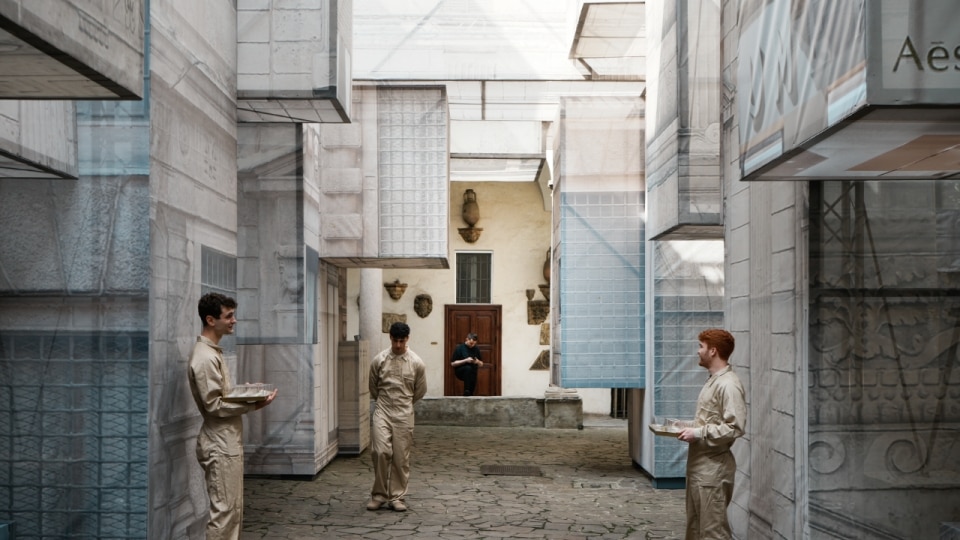
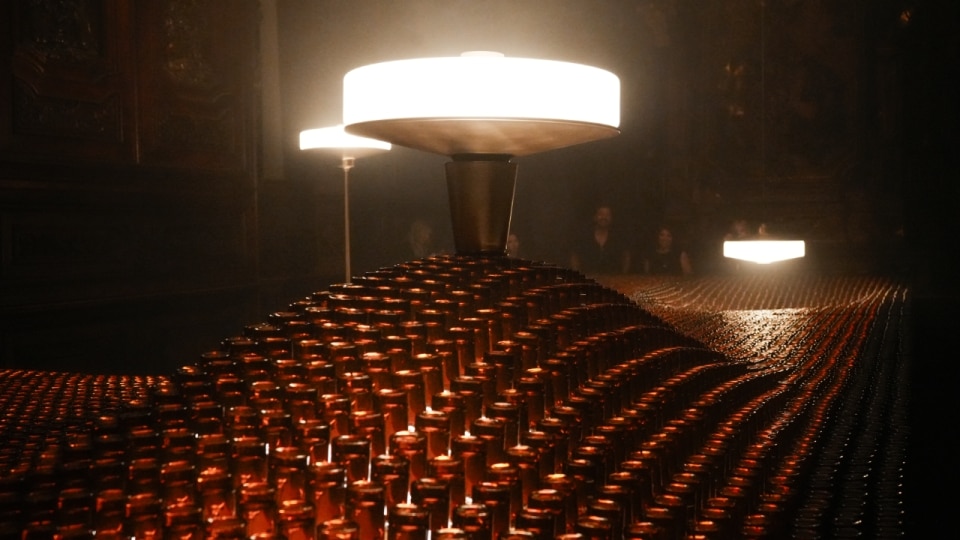
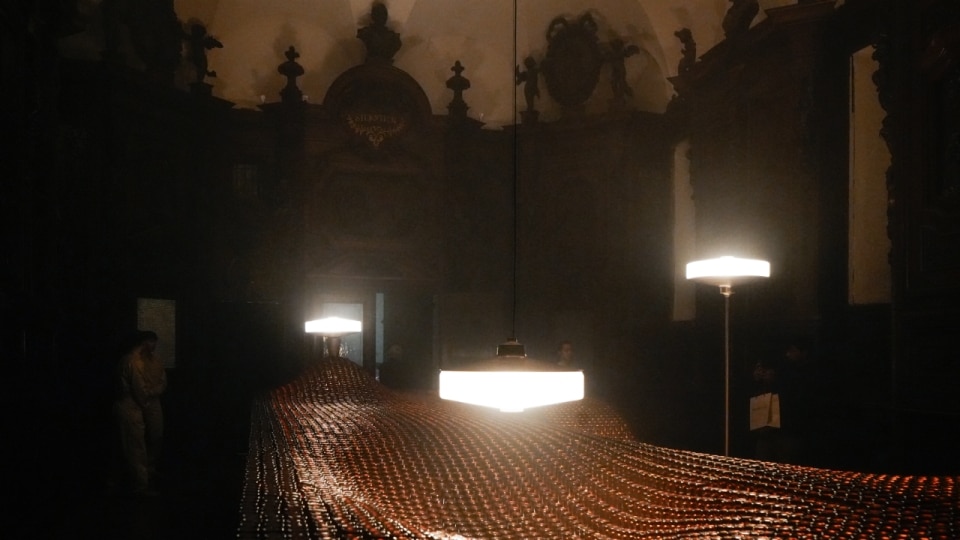
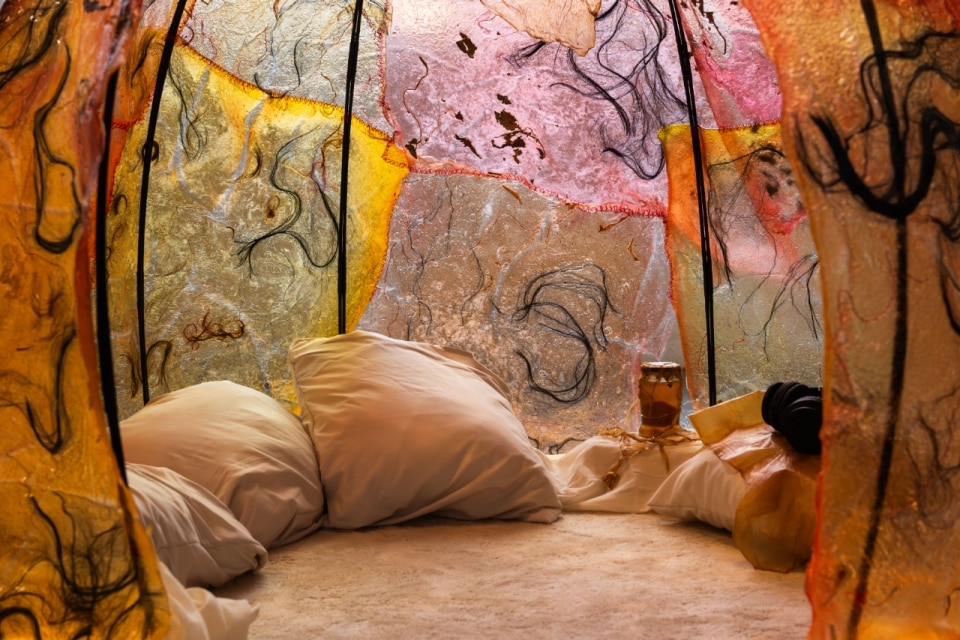
At the Fuorisalone, Aesop presents Aposē, its first lighting collection, produced in a very limited edition. Unexpected? Not really. The brand, best known for soaps and skincare, has long been deeply attentive to architecture and design—its stores are integral to its identity. Returning to the Church of Santa Maria del Carmine after last year’s acclaimed exhibition, Aesop now presents “Factory of Light”, a journey through memory and illumination. Outside, reclaimed materials from Milanese construction sites and video installations narrate the complex manufacturing process behind the lamps. Inside, the installation—developed with Australian architect Rodney Eggleston, who has designed many of the brand’s stores—continues with a structure made from 10,826 recovered fragrance bottles. Amber-toned surfaces refract the light, engaging in a dialogue with the wood of the sacristy, in line with Aposē’s focus on warm, intimate lighting. At the entrance, a simple ritual: washing your hands. A welcome return that introduces a thoughtful shift in perspective. Not to be missed.
Alessandro Scarano
4. Metamorphosis - Palazzo Litta
Corso Magenta 24
21–25 April, 10:00AM-8PM. 26 April, 10:00AM–6:00PM
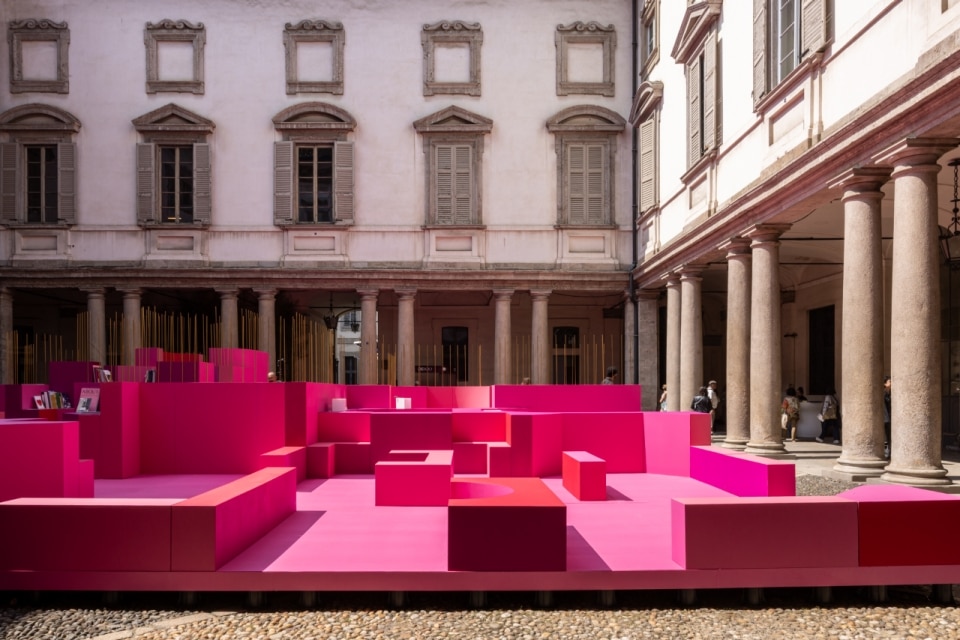
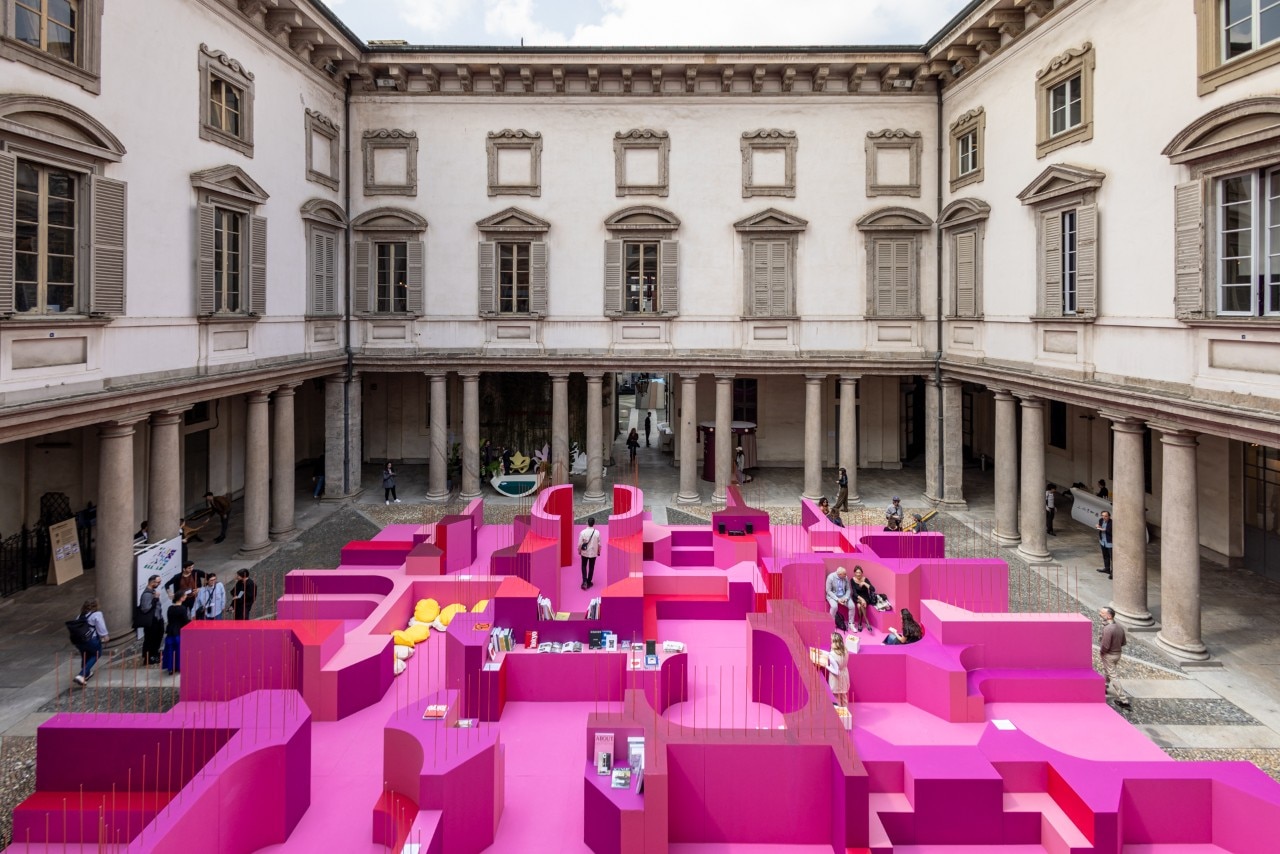
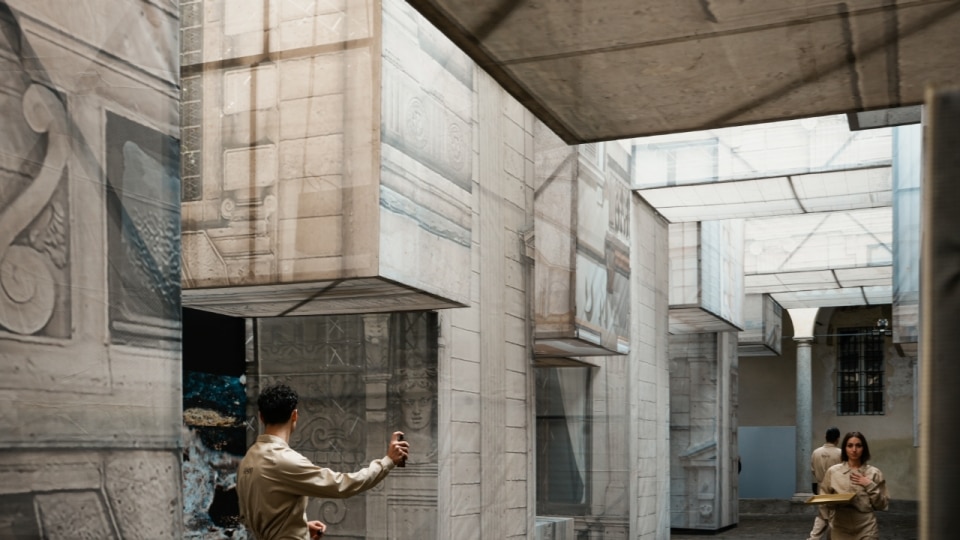
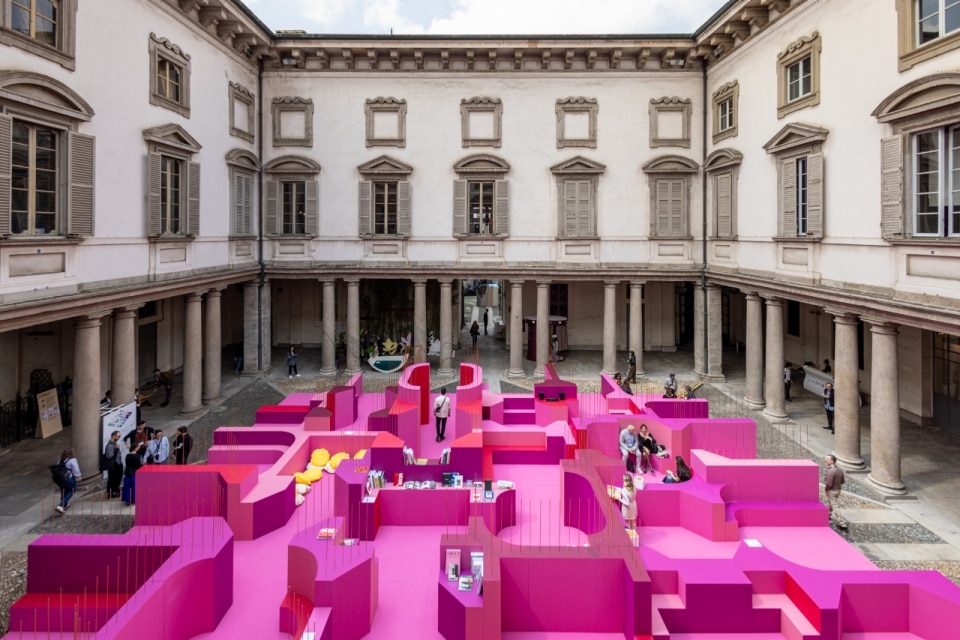
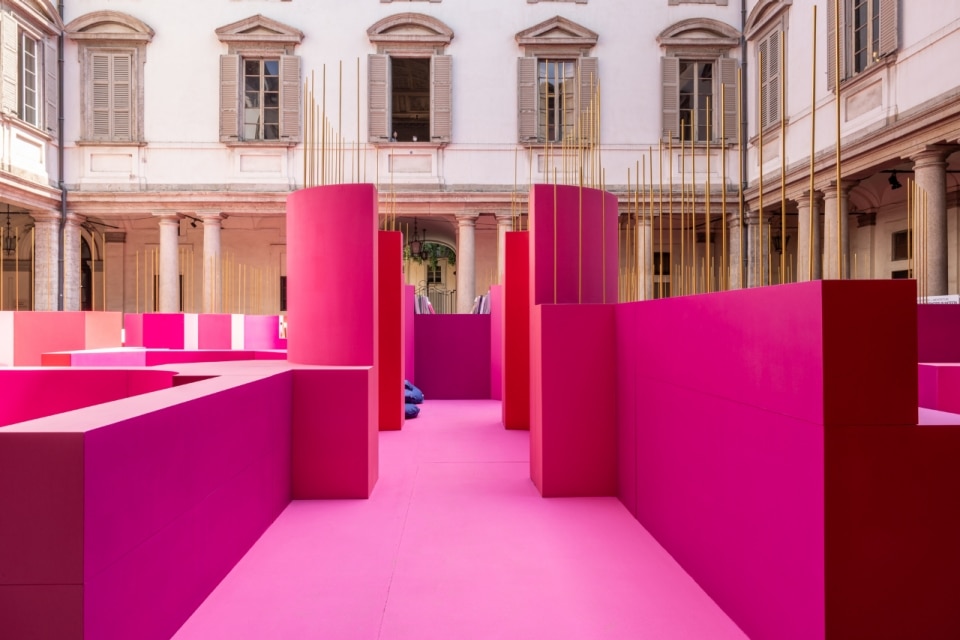
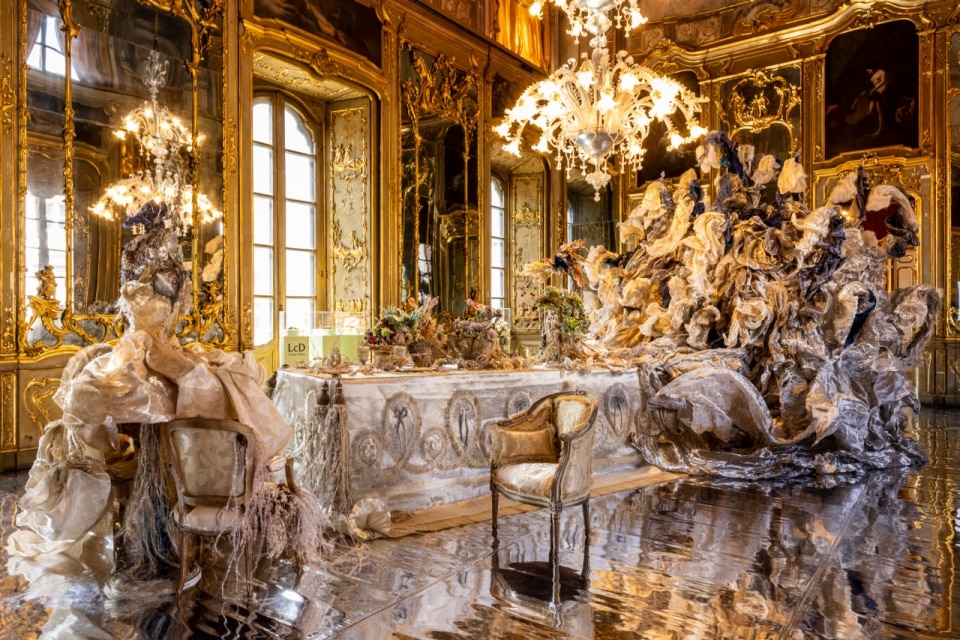
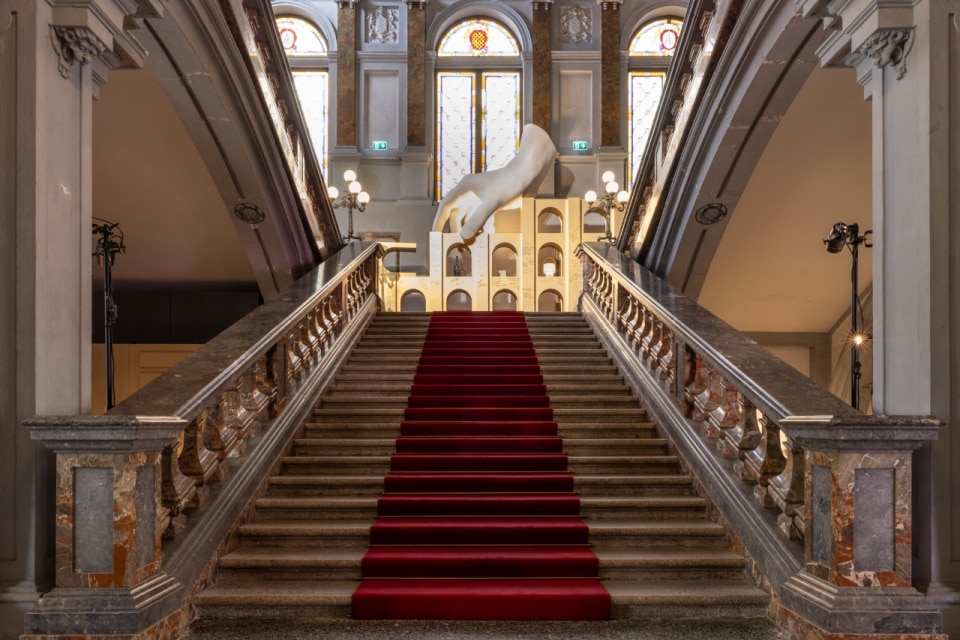
A sequence of wow-effects defines the exhibition “Metamorphosis” by Mosca Partners Variations at Palazzo Litta. The first striking moment comes from Lina Ghotmeh’s installation in the main courtyard of the large late-Baroque complex. “Metamorphosis in Motion” continues the successful genealogy of “monoblock installations in monumental courtyards,” a classic of Milan Design Week. It does so with an intelligent project that, after capturing attention with its (plural) tone-on-tone shades of pink, reveals itself as a welcoming platform to inhabit, a labyrinth of spaces for pause or passage. It is divided into modules, square like the courtyard that hosts them and variously equipped, conceived as devices mediating between monumental architecture and human scale, and between the original ceremonial vocation of this space and its possible contemporary uses. Ascending the celebrated grand staircase—here the wow belongs entirely to the palace, while the “giant hand” on display, Transforming Hand by Alexander Brizhevati, is less convincing—the exhibition continues through the enfilade of rooms on the first floor. Here, lovers of Rococo will be astonished by the crumpled explosion of Full Metal Banquet by Luc Druez for LcD Textile Edition, while scientists will be more drawn to the interesting research on bioplastics by Shoei Bijutsu for Mitsubishi Chemical Group Corporation.
Alessandro Benetti
5. Kaldewei – Bubbles of Time
Corso Giacomo Matteotti 1
20–26 April, h. 11:00AM–7:00PM
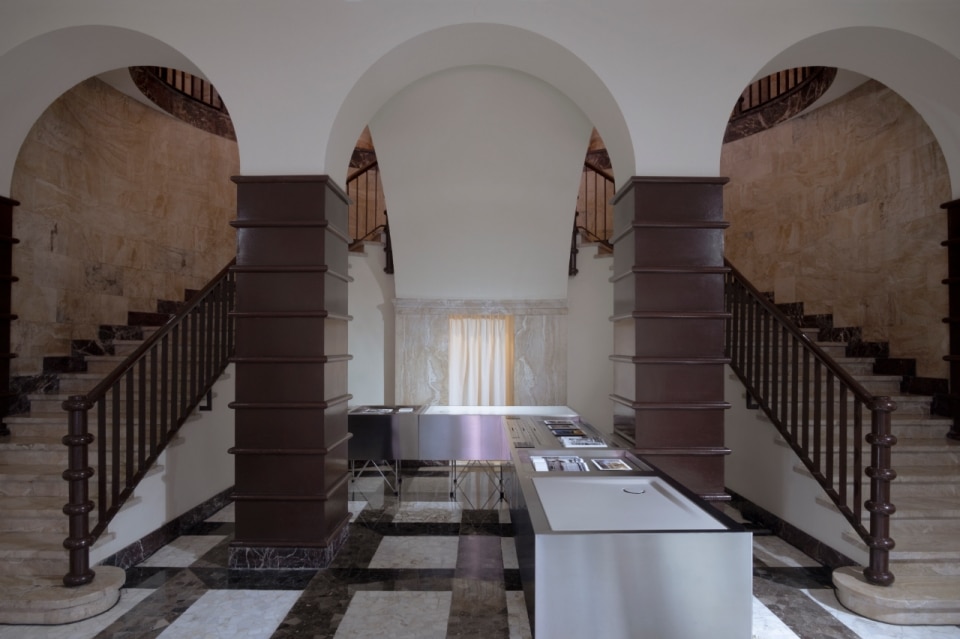
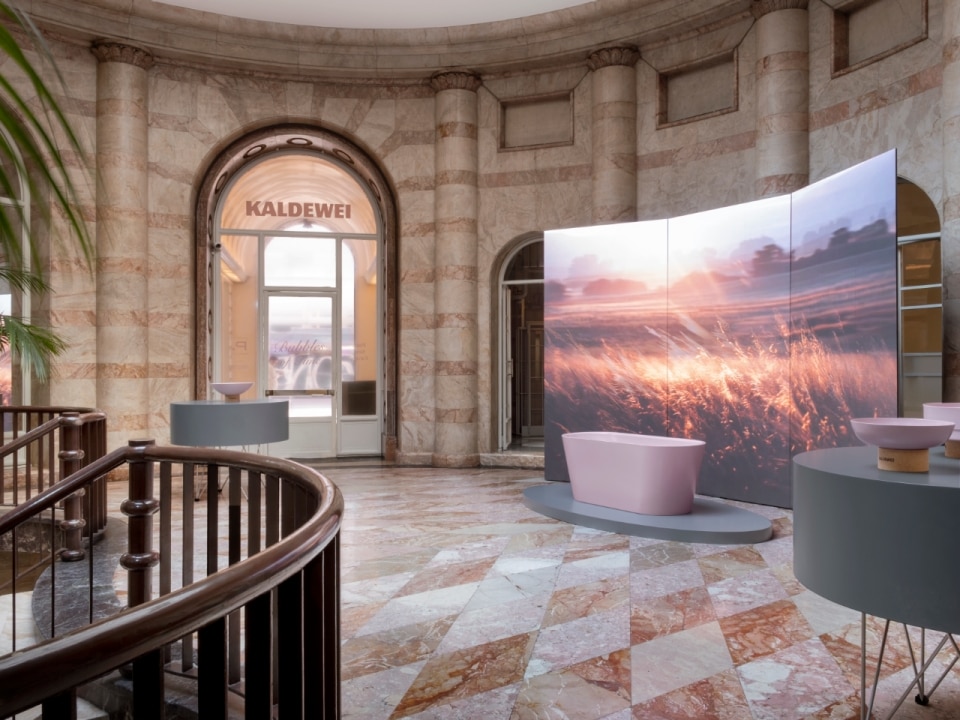
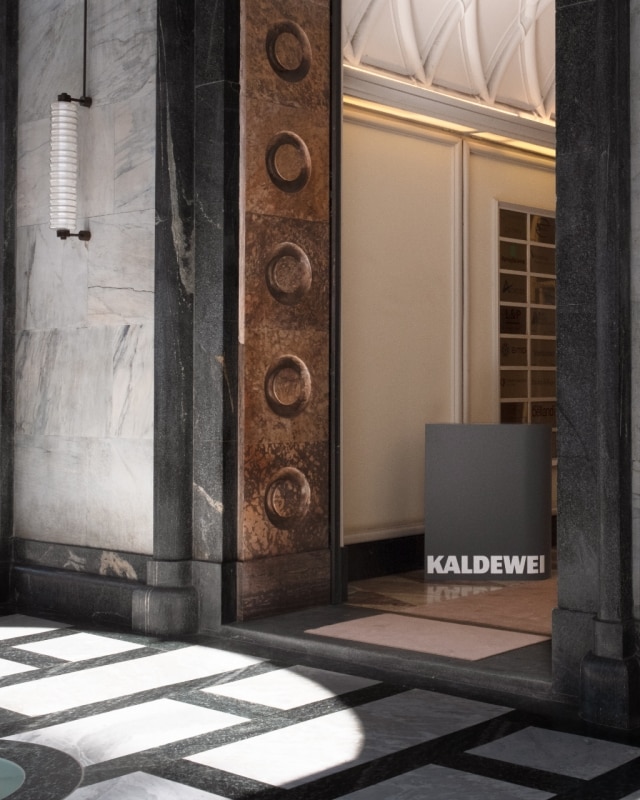
With “Bubbles of Time,” Kaldewei has chosen Palazzo Crespi, designed in the 1920s by Piero Portaluppi, to reflect on the evolution of the bathroom as a space. The building, an emblematic example of Milanese modernism, expresses through geometric rigor, refined materials, and historically significant details Portaluppi’s idea of architecture as a total work. It is precisely here that one of the earliest conceptions of the bathroom as a representational and experiential environment takes shape, anticipating the contemporary notion of the private spa. The intervention by Parasite 2.0, curated by Forgotten Architecture, creates a path between the foyer and the basement level where iconic and innovative Kaldewei products take part in a cinematic mise-en-scène, highlighting continuities and transformations, as in the reinterpretation of the Meisterstück Classic Duo Oval, archetype of the freestanding bathtub. Extending beyond typological permanence and industrial innovation, the bathroom thus emerges as a structural element of the domestic project.
Sponsored Content
6. Polish Modernism. A Struggle for Beauty - Torre Velasca
Piazza Velasca 5
21-26 April, h. 11AM-7:00PM
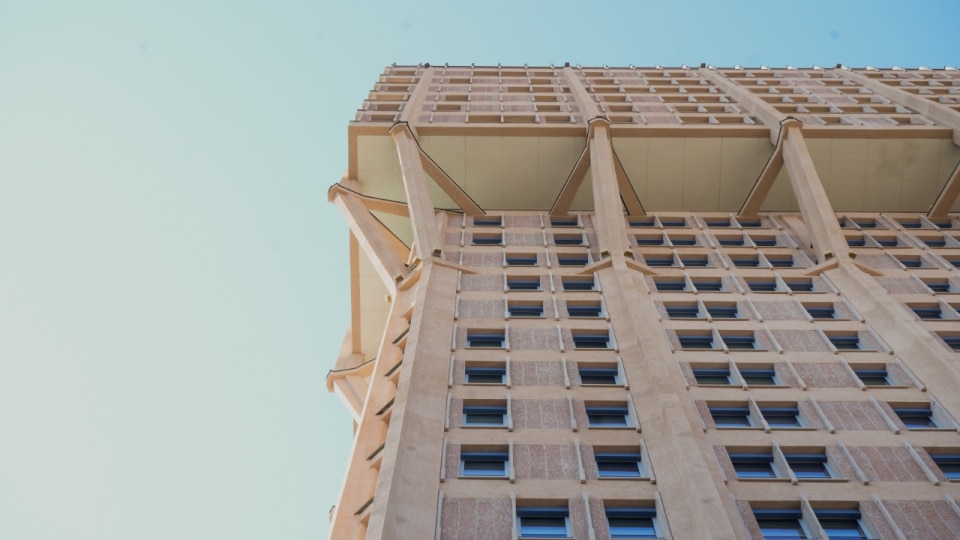
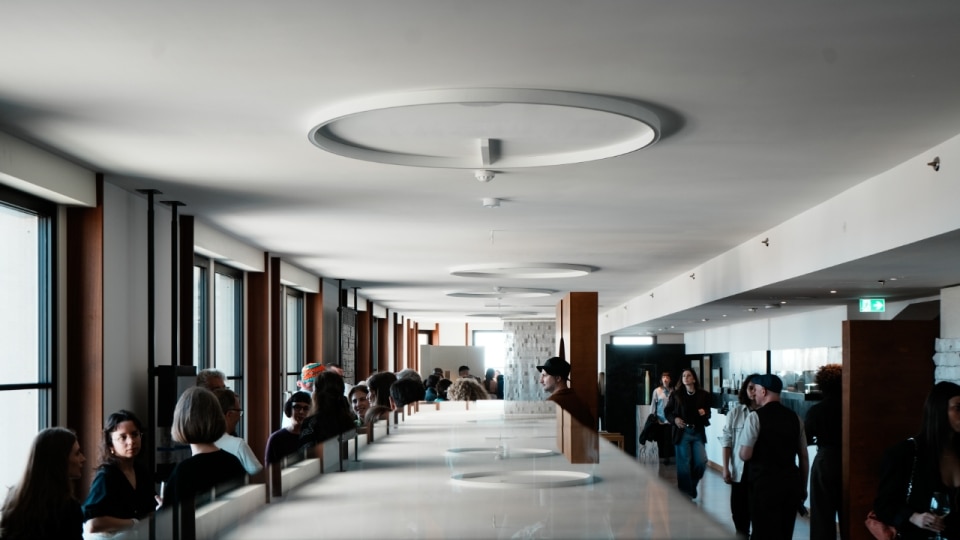
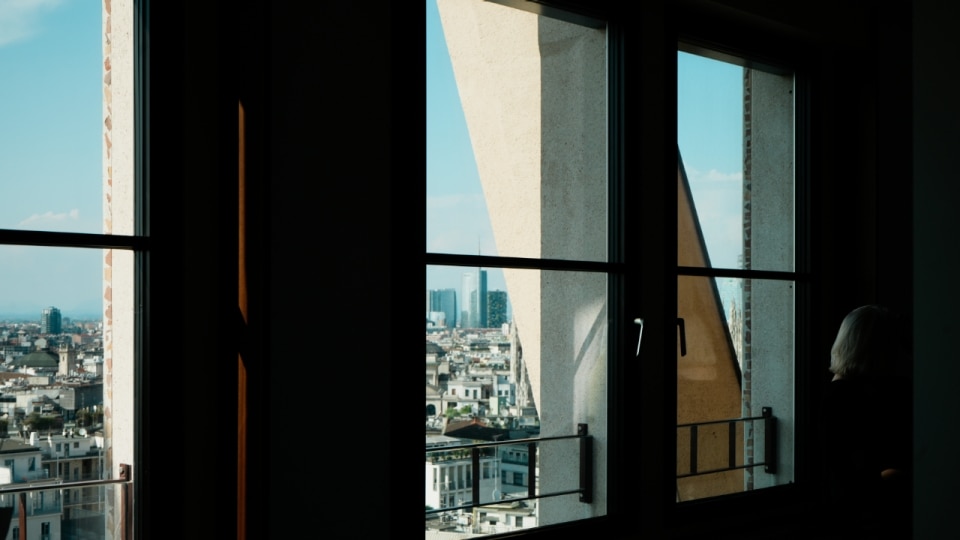
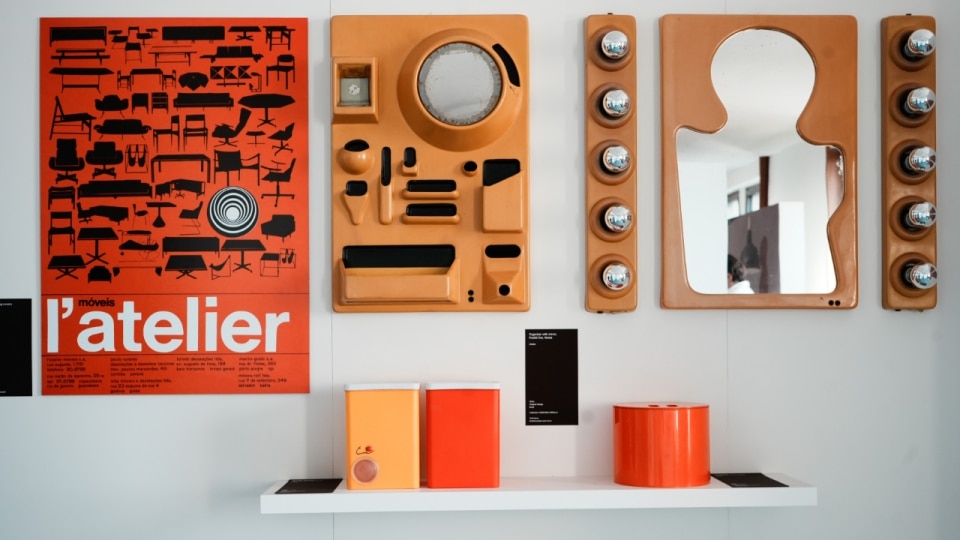
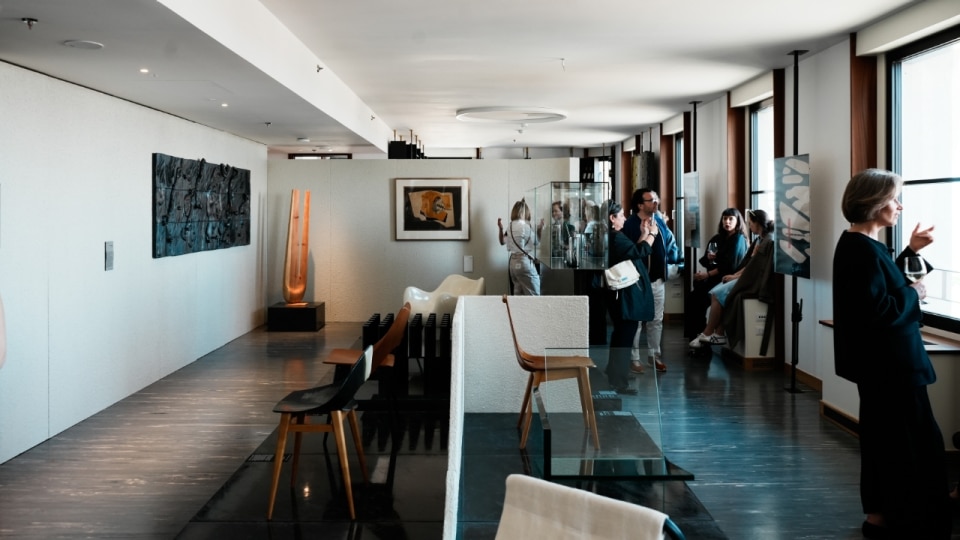
There are at least two reasons why it is worth stopping by “Polish Modernism. A Struggle for Beauty”: the first is that it is not every day you can look at Milan from the sixteenth floor of one of its most important buildings, Torre Velasca by BBPR. The second is that Polish modernism produced extraordinary furniture, and this is the opportunity to see it up close. While the rapid and flourishing industrial development swept across Western Europe in the postwar years, Poland, largely destroyed by the conflict, encountered the Modern Movement at a time when craftsmanship still dominated production processes. This gave rise to an aesthetic that partly escapes the logic of form and function of the Bauhaus that were taking shape in our factories, in favor of a design that does not exclude or conceal grafts, joints, or other elements revealing the presence of the handmade. In the same large space, a monographic exhibition dedicated to Jerzy Zalszupin is also on view, a Jewish designer born in Warsaw who emigrated to Brazil to escape racial persecution. He worked in Niemeyer’s studio and founded his own brand of extraordinary furniture but never managed to return to his homeland. Last autumn, an exhibition in the Polish capital symbolically brought him back home, and today that same exhibition is on display in Milan during the Fuorisalone.
Nicola Aprile
7. We Will Design: Hello Darkness - Base
Via Bergognone 34
20-26 April, h. 10:30AM-8:00PM
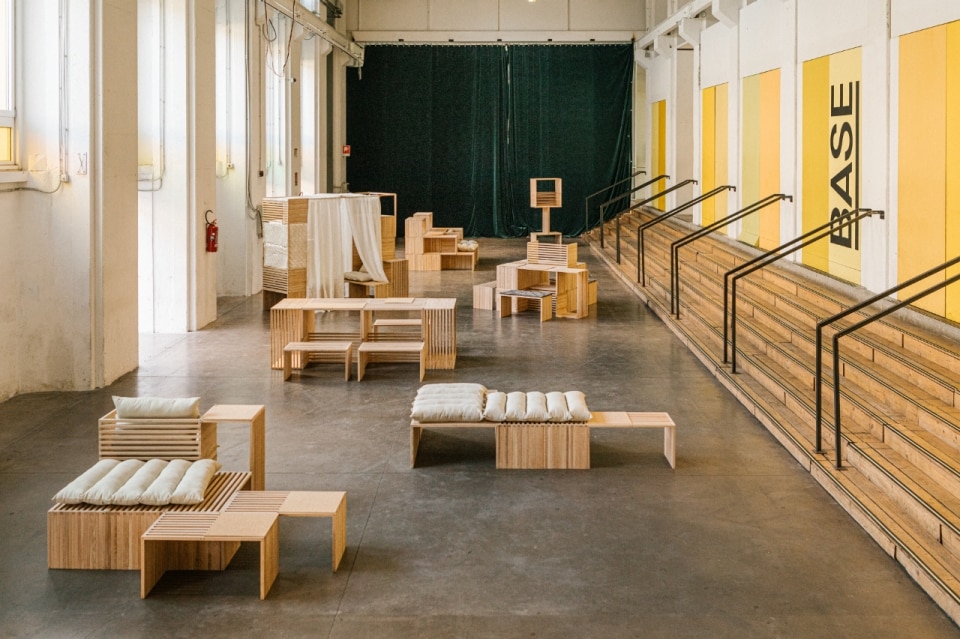
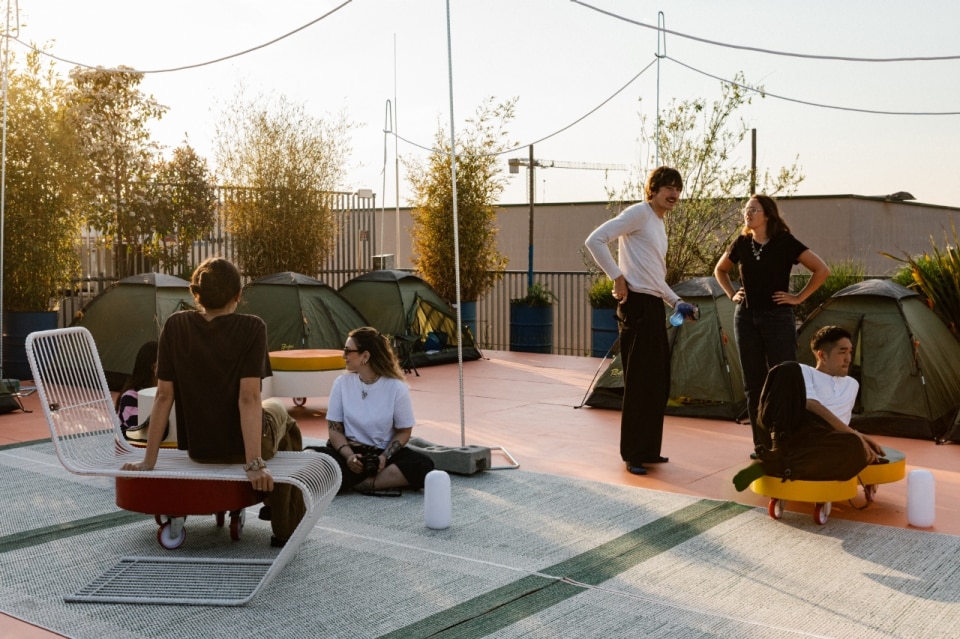
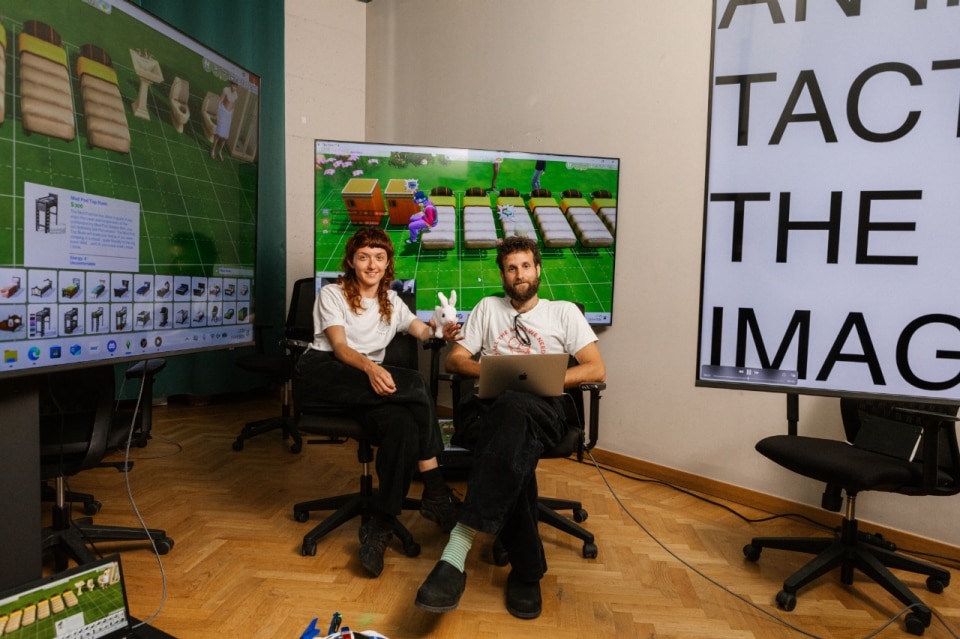
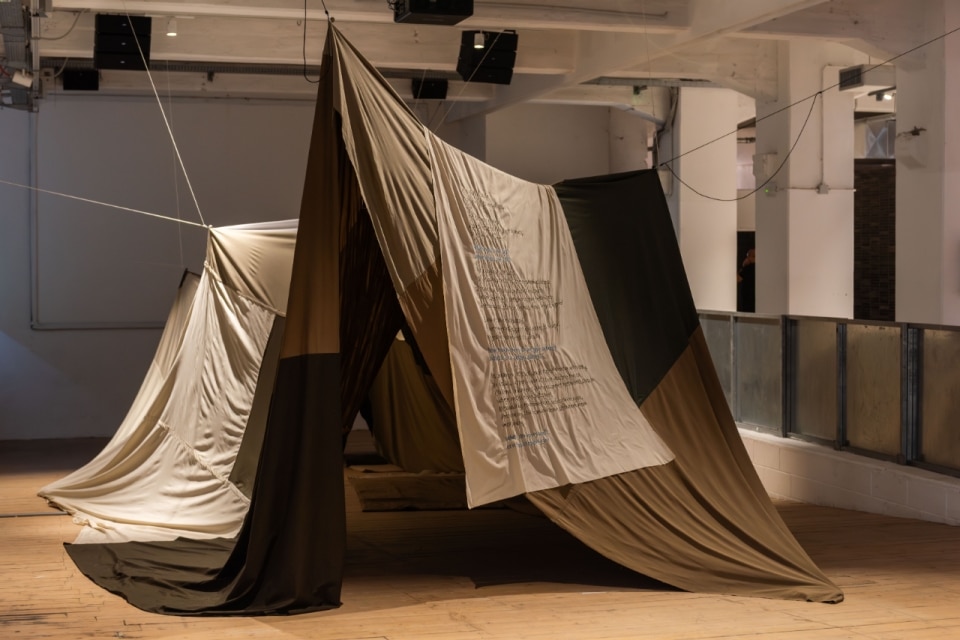
In Tortona, one of Milan's key design districts, the spaces of Base host a varied programme of exhibitions and events that reveals a clear vision of design: not a result, not a definitive answer, but a process, an ongoing investigation, a collective activity open to cross-pollination. The ground floor transforms multiple times throughout the day: a wooden furniture system reconfigures the space by connecting to identical pieces, generating now a lounge area, now a large table for sharing a meal, now an arena for talks, now a reading space. This is Re-U, the modular system by French studio Smarin, installed here in collaboration with art and design historian Emanuele Quinz; together, they will take part in the talk "IDIORYTHMIA — a first spark for a rhythmic approach to design", moderated by Alessandro Scarano, web editor of Domus. The talk takes place tomorrow (23 April) and registration is required via the Base website. Meanwhile, on the first floor, the hospitality programme for creatives, casaBase, welcomes into its hostel rooms the experimental projects of five international designers who question the future by imagining objects, spaces and practices useful for preserving traditions linked to food, nature and some of the activities threatened by the effects of climate change. And on the rooftop of the former factory, Base has organised the third edition of its camping event: among the plants, a handful of tents serve as temporary home for designers and enthusiasts.
Nicola Aprile
8. Mcm Disco On Mars - La Rotonda del Pellegrini
Via delle ore 3
21-26 April, h. 10:00AM-6:00PM
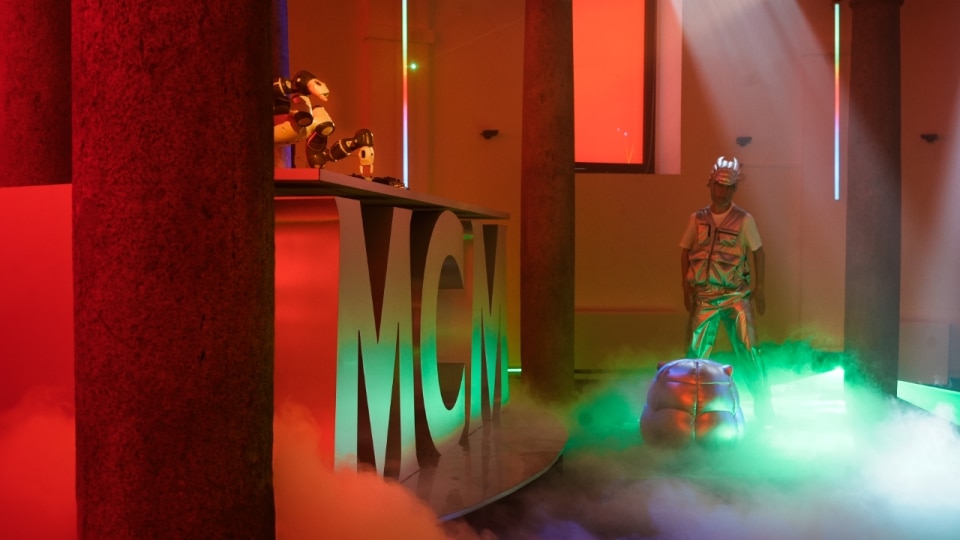
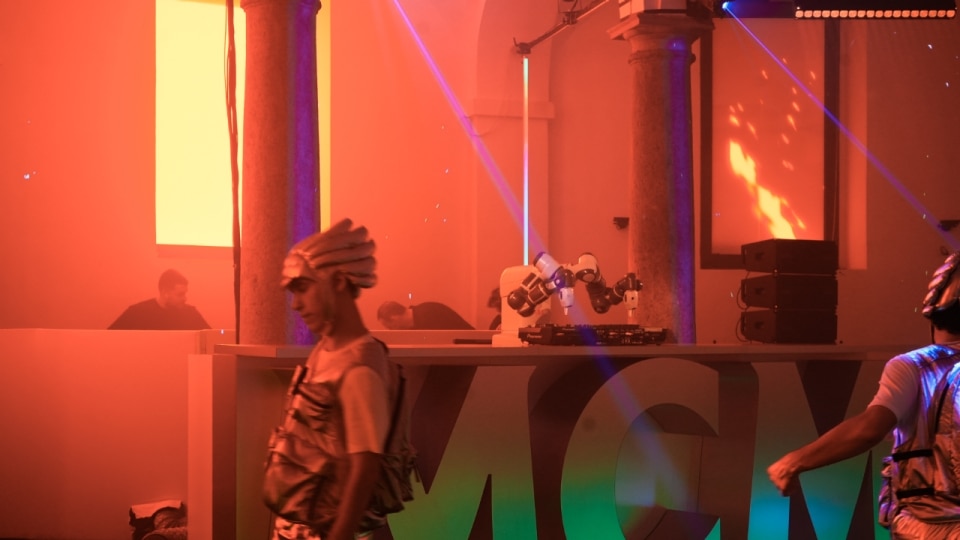
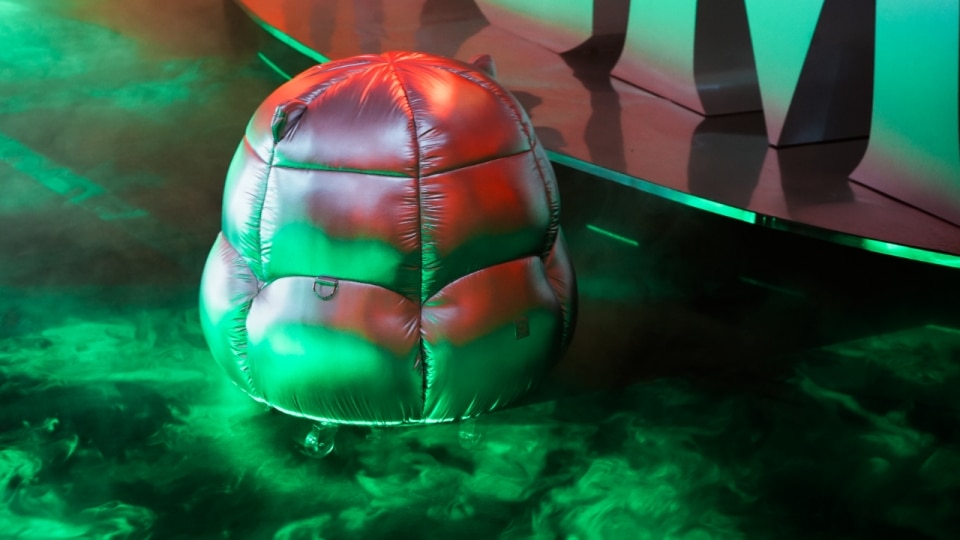
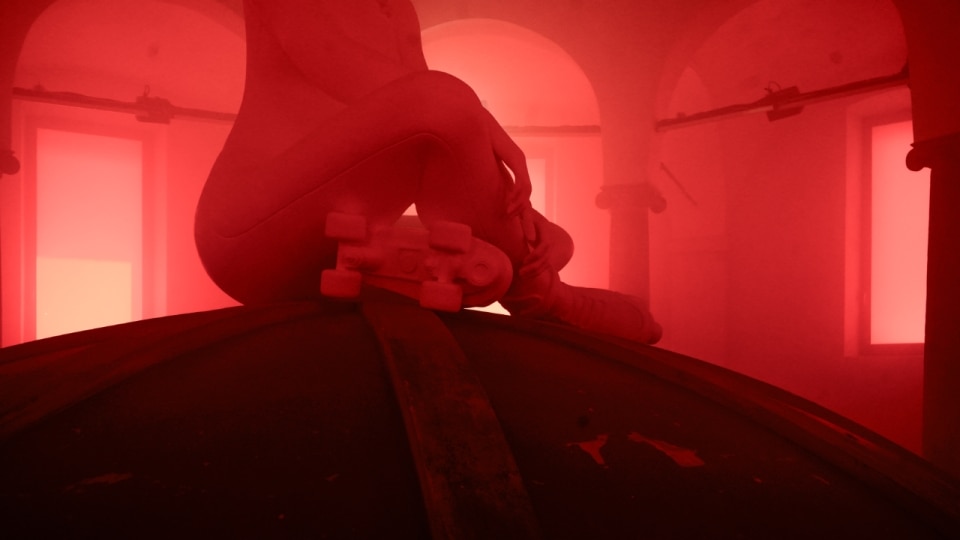
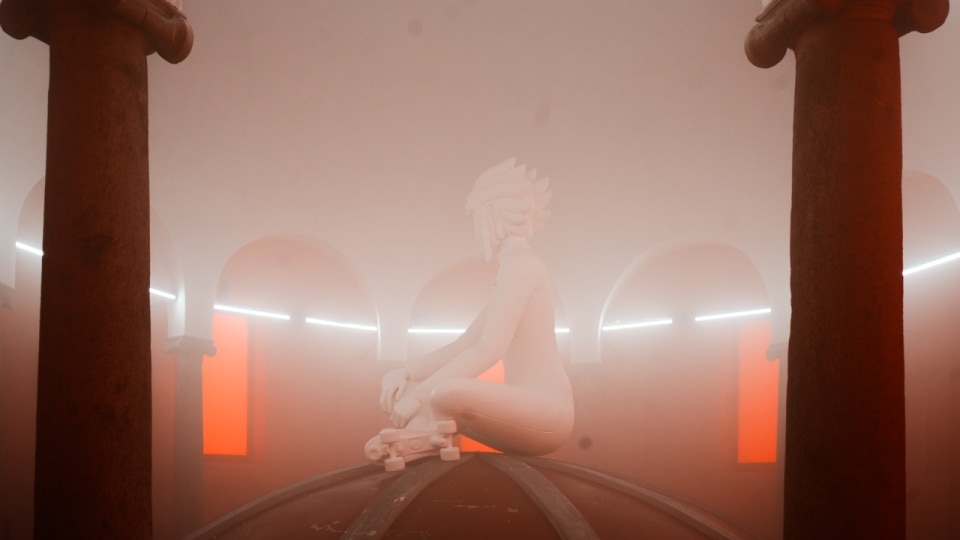
Take science fiction into design, then enclose it within one of Milan’s least-seen locations, with a top floor that is almost entirely unknown. The result is “Disco on Mars,” the installation entrusted by Mcm to Atelier Biagetti for Fuorisalone 2026: one of the strangest and most radical interventions of the week. At La Rotonda del Pellegrini, the experience unfolds like a video game. It begins in an orbital laboratory populated by hybrid objects—companion robots, sonic helmets, Bauhaus candles—and ascends toward a skating rink where robot DJs and human bodies share the space. Everything is silver, rounded, deliberately retro, like an analogue science fiction. At the top, the dome becomes a theater: the operatic voice of Vincenzo Bellini meets a post-human dimension. More than an installation, it is an immersive narrative that blends fashion, design, and performance, transforming Mcm’s 50th anniversary into an off-orbit journey.
Alessandro Scarano