


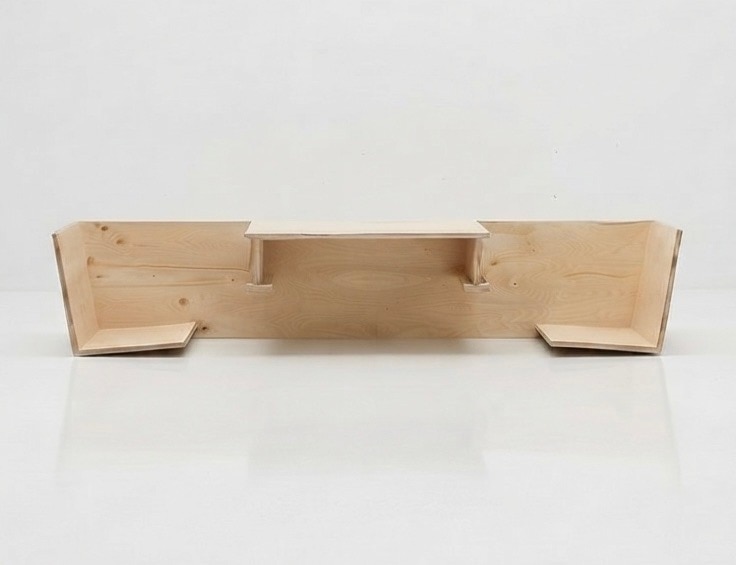
If it is true that design is made for human beings, it is equally true that there are instances where, without them, design simply could not exist. Take, for example, a table that functions only if two people fit into it, lending it their own legs to keep it upright.
The wooden structure features a tabletop and two seats with backrests, but lacks any elements to support it on its own. Thus, it only exists and functions when two people lift it, wedge themselves into it, and keep it stable, remaining at a fixed distance from one another.
@klochekk33 Questo tavolo funziona senza gambe😳
♬ âm thanh gốc - klochekk
Obviously, more than a solution for eliminating legs—a challenge that deeply occupied Eero Saarinen as he pursued his dream of single-pedestal, monomaterial furniture, which would eventually become the Knoll-branded Tulip series—this 'legless table' is an investigation into the themes of participatory and collaborative design. It pushes the centrality of the human being to the extreme, viewing them no longer as a mere beneficiary of the project, but as an integral part of it.
What has been the norm for centuries—a mindful and measured use of objects, based on the trust established with them—has once again become a radical provocation.
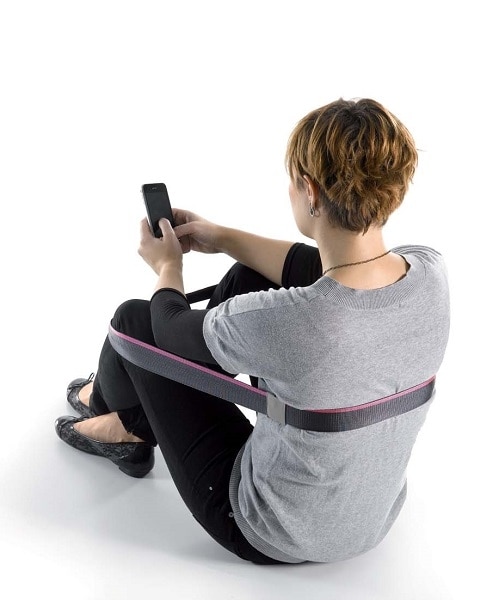
This is a radical vision that resonates with us today more than ever, in an era where all objects seem available, accessible, and effortless. It recalls the many investigations that have much to do with design and people, yet less with industry. From Enzo Mari’s Autoprogettazione, which provides the user not with a finished piece of furniture but with the instructions to build it, to the Chairless seat by Chilean architect Alejandro Aravena for Vitra—which consists solely of a strap to secure around one’s knees to remain balanced while sitting on the ground.
What has been the norm for centuries—a conscious and measured use, rooted in the intimacy established with our objects—is once again becoming a radical provocation. Reminding ourselves that an object functions better when we know how to inhabit it—by placing a finger here, applying weight there, or wedging a shim underneath—teaches us that our role is never passive or marginal. It is a warning that resonates with today’s global crisis, in an era that demands we become active citizens, active neighbors, and active inhabitants. Above all, it sheds new light on the other side of user experience: not the one that aims to make everything faster and easier, but the one that aims to make us more aware.