


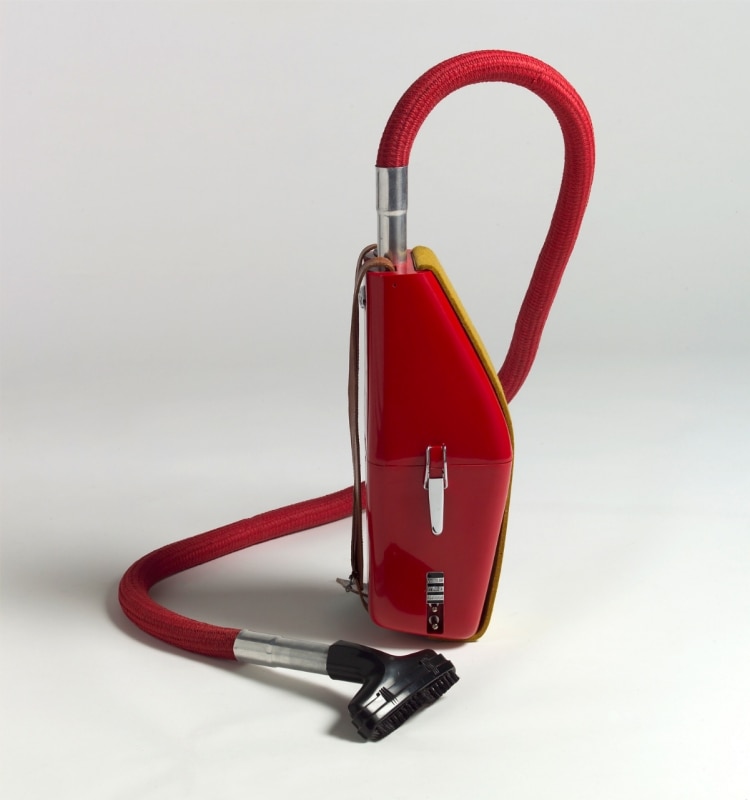
The problem with robot vacuum cleaners isn’t that they clean poorly. It’s that they’ve eliminated the gesture.
When Achille, Pier Giacomo, and Livio Castiglioni designed the Spalter in 1956, they weren’t simply creating a new household appliance. They were imagining a different relationship between the body and the machine. And perhaps that’s why, almost seventy years later, this vacuum cleaner still feels more contemporary than many of today’s technological products.
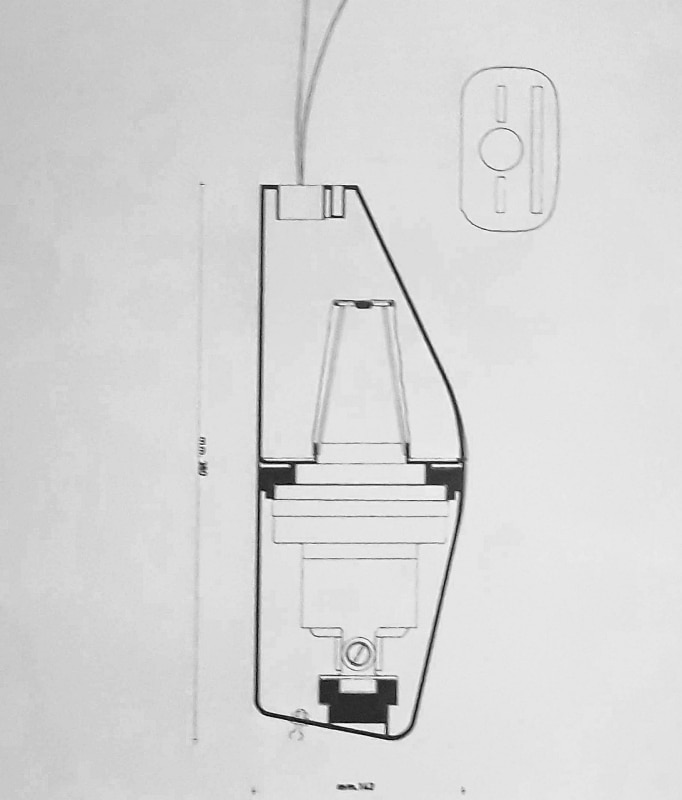
Spalter—short for Spalla-Terra (“Shoulder-to-Floor”)—was conceived at a time when the modern home was still being invented. While technology promised to reduce the burden of domestic chores, the Castiglionis chose a less obvious path: rather than eliminating human involvement, they decided to redesign it.
A wearable vacuum cleaner
Unlike conventional vacuum cleaners of the era, Spalter wasn’t pushed in front of the user. It had no wheels. Instead, it was carried over the shoulder like a bag, dragged along behind, and worn almost like a mobile accessory of modern life. The difference may seem minor, but it completely transformed the user experience.
Spalter was born at a time when the modern home was still a territory to be invented.
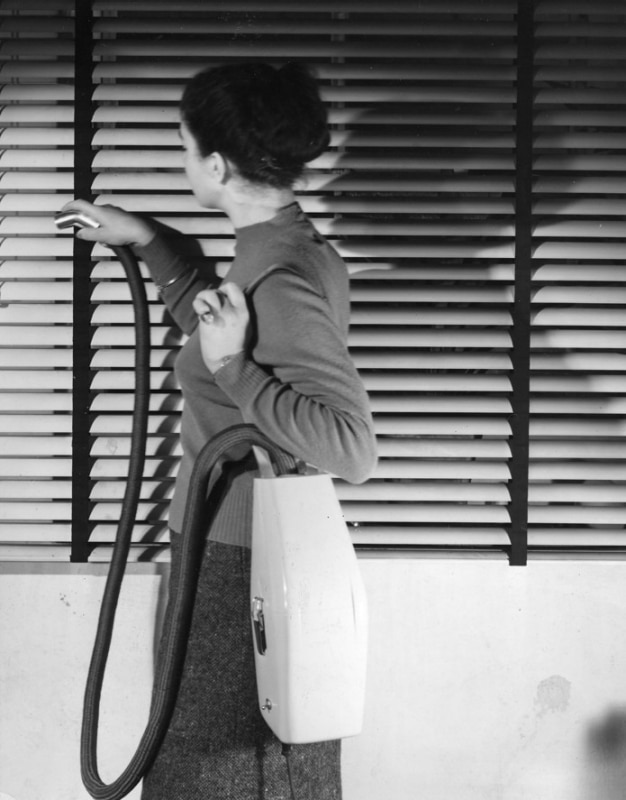
The Castiglioni brothers understood a lesson that would later become central to contemporary design: objects do not merely shape functions—they shape behaviors. The focus shifts from the machine itself to the network of relationships the machine creates, from the product to the gesture.
Design as a theater of gestures
Behind Spalter’s apparent simplicity lies a remarkable degree of technical sophistication. Its components were enclosed in a lightweight, flexible, shatterproof nylon shell—a material that, in the 1950s, still embodied the promise of the future. Even the leather strap was multifunctional, serving as a shoulder strap, a handle, or a fastening system depending on the situation.
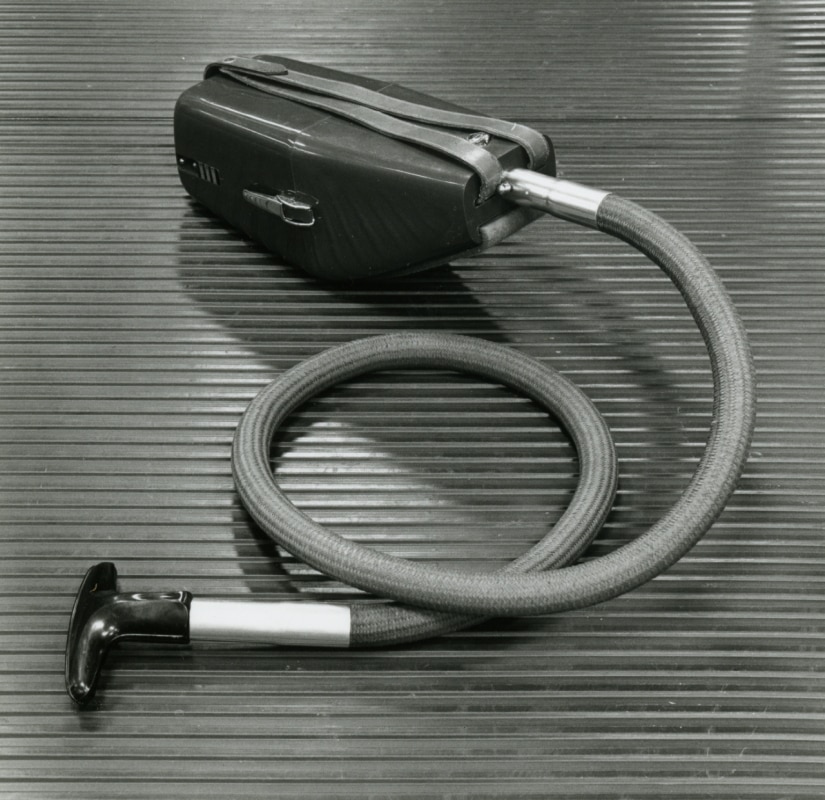
Movement itself was reimagined. On carpets, the vacuum glided like a sled; on hard floors, it relied on a felt skid. It is one of those characteristically Castiglioni details in which an apparent limitation—the absence of wheels—is transformed into a design opportunity.
A lesson that still resonates
Today, household appliances increasingly disappear from view. They are quieter, more autonomous, and more invisible than ever. Their promise is to do their work without demanding attention, interaction, or even memory.
Spalter does exactly the opposite. It does not attempt to vanish into the domestic environment. It asserts its presence and establishes a direct, physical, almost tactile relationship with the user. It is a technology that engages with the body rather than replacing it.

Perhaps this is precisely why it remains so strikingly relevant. In an age obsessed with automation, Spalter reminds us that the smartest objects are not necessarily those that eliminate every human gesture. Sometimes they are the ones that make those gestures freer, more conscious, and even more enjoyable.
Like much of the Castiglionis’ finest work, this vacuum cleaner demonstrates that design is not merely about solving problems. It can transform an everyday action into a small cultural experience. And that is a lesson that feels anything but outdated in the era of domestic robots.
Opening image: Achille, Pier Giacomo and Livio Castiglioni, Spalter, 1956. Courtesy Collezione Triennale Milano. Photo: Amendolagine Barracchia
.