

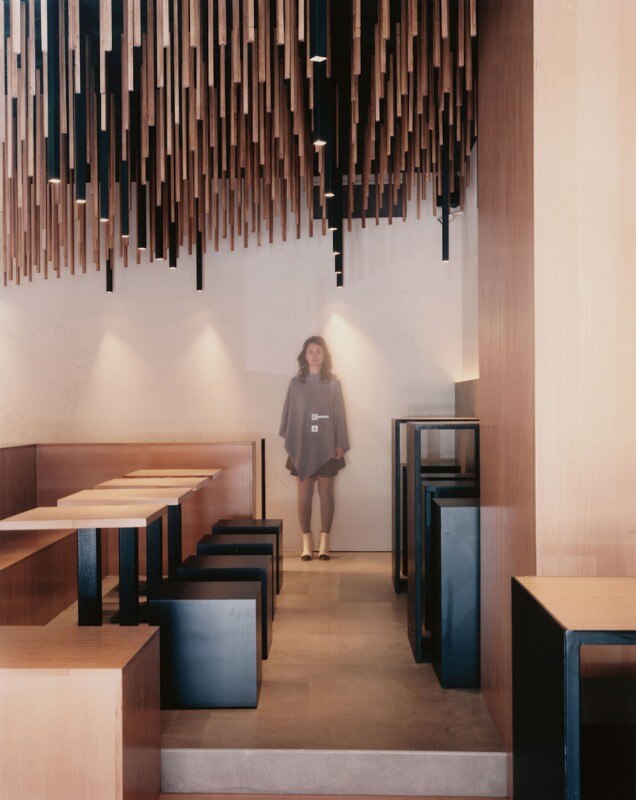
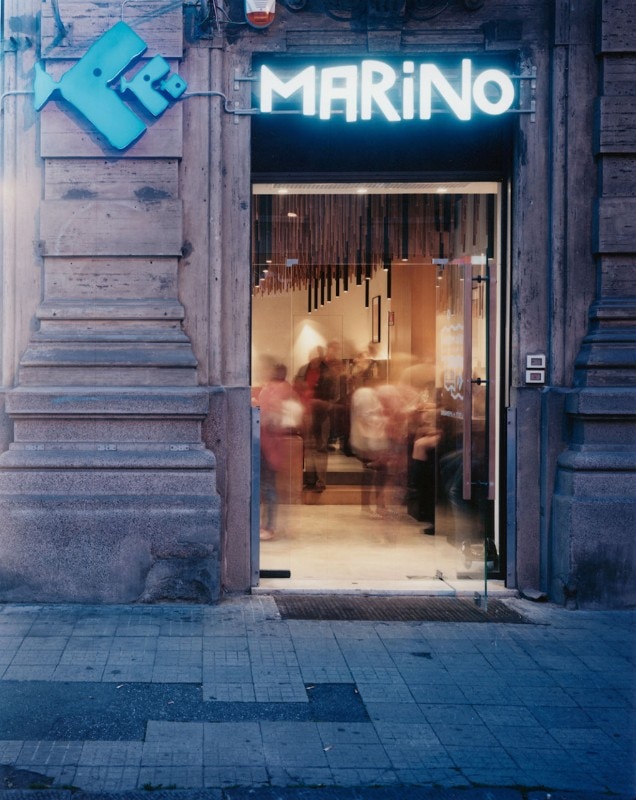
Panino Marino is a new snack bar on Via Brigata Liguria in Genoa designed by Studio Gap Associati led by the architects Simona Gabrielli and Maurizio Cazzulo. It serves fish-based street food. The immediate impression is like coming across one of the passages couverts described by Walter Benjamin – a place of public commerce that generates an urban transformation.
 View gallery


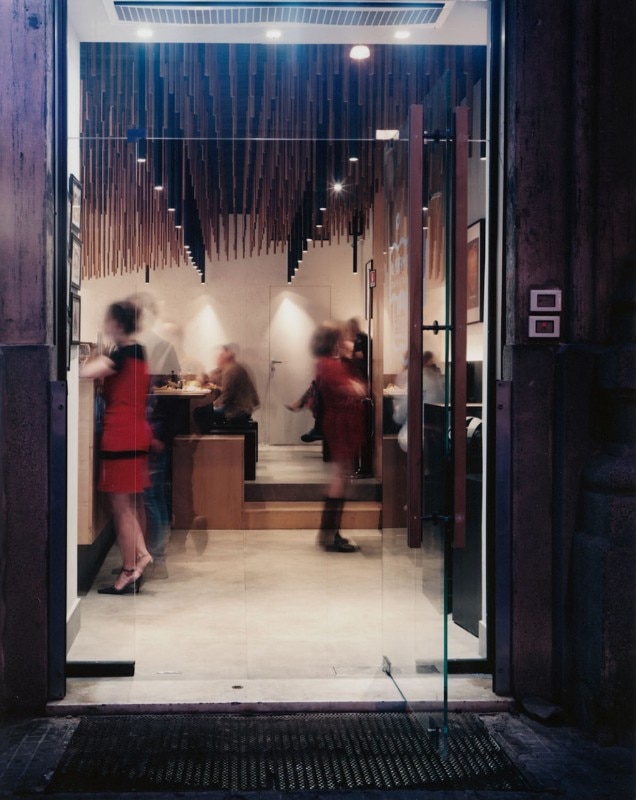
How did Studio Gap succeed in obtaining this alchemy?
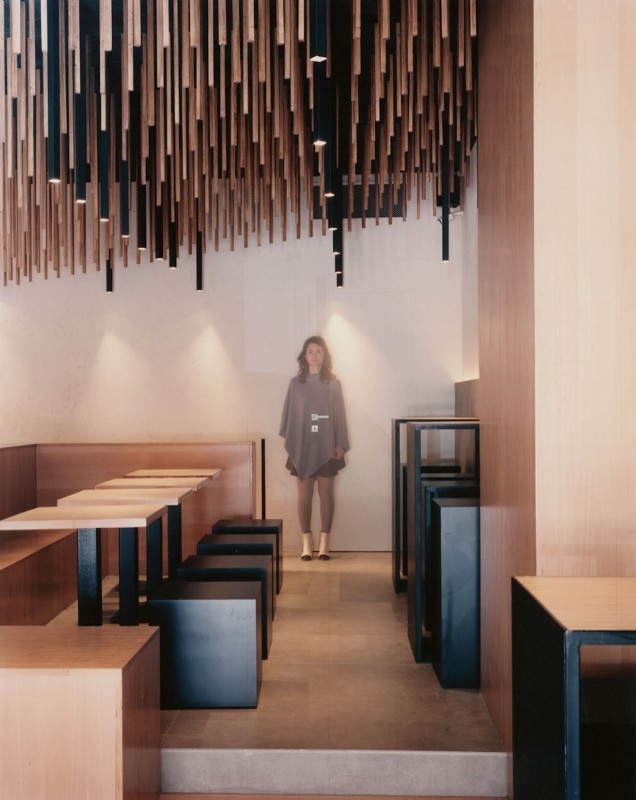
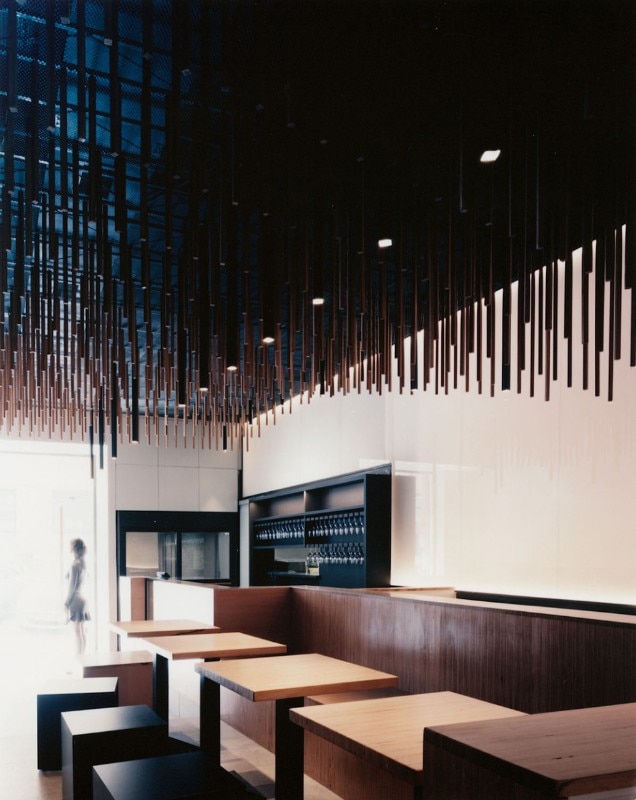
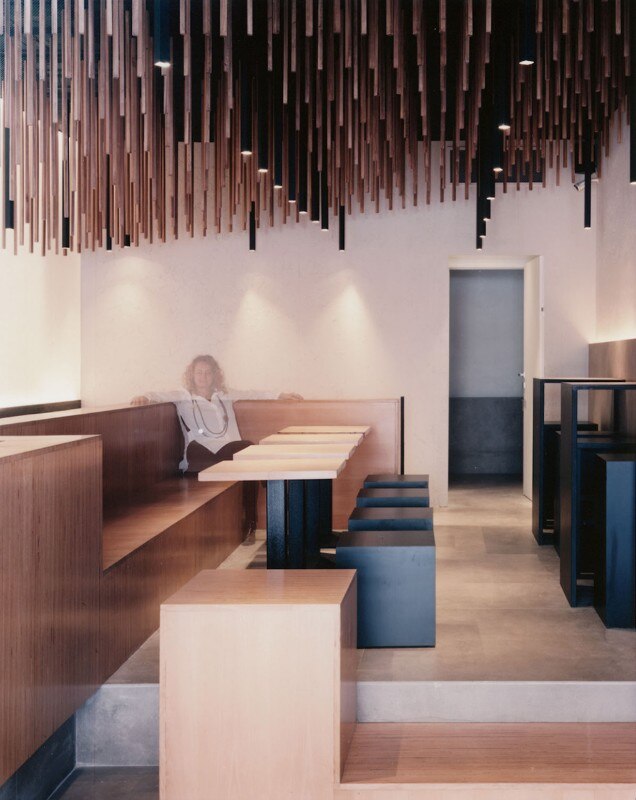
The space is conceived to be not only an interior, but almost like a covered arcade that winds around itself, fanning out into a collective room. The attempt was to translate the dynamic perception of a spring mechanism into a concrete dimension by means of spatial relations between shapes and materials. The bar–counter, for example, is continued as the backrest of the bench that lines the wall along the full length of the room, while the wave of canes hanging from the ceiling slides over the stair to guide customers to the underlying level.
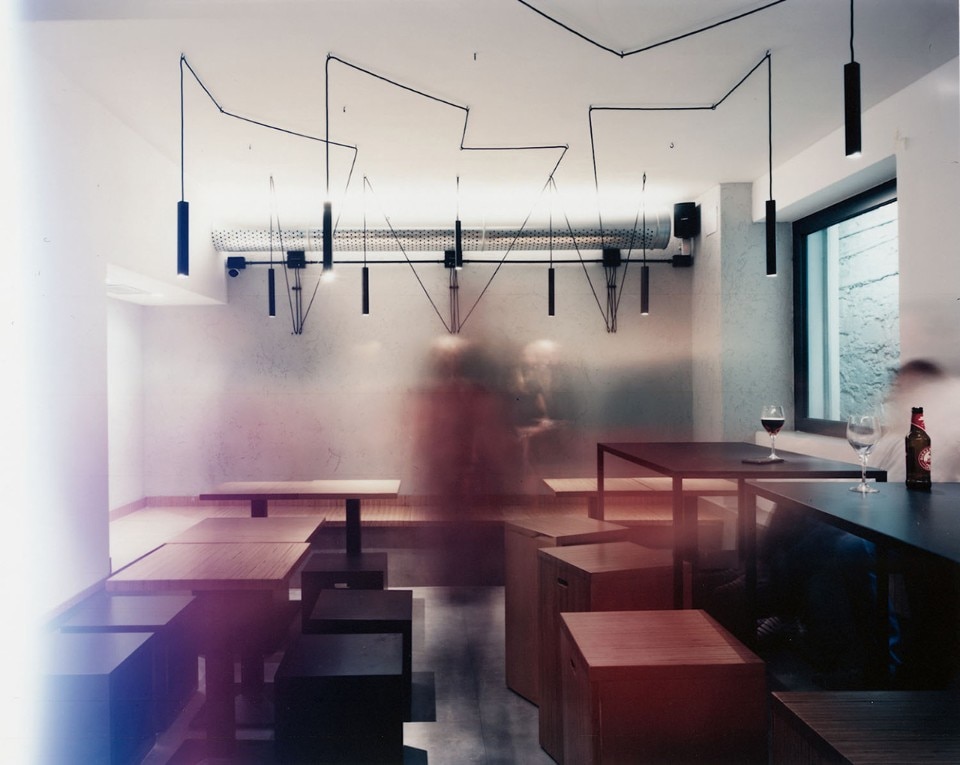
We perceive the idea of a continuous space here. Horizontal and vertical elements travel together from indoors to outdoors and from upstairs to downstairs. Is this a site-specific concept, or is it the modus operandi of your design work, meaning a sort of creative formula?
Beyond the intrinsic singularity of each project, the specificity of the relation between indoors and out is indubitably a major theme in our work. On every occasion, the reasoning contains a reference to imagery constructed by means of movement through the space. There is playful continuity between interior and exterior. We explore a possible version of this according to the type of place and the morphology of the context. The design is an expedient, a “magical box” you can walk through made up of interludes and accelerations calibrated based on the degree of osmotic energy by alternating containment and expansion. This flow is a continuous movement on different scales, from the indoor dimension to the wider surroundings of the city or region.
For Studio Gap, the Panino Marino design is a kind of impermanent flux. Was this a specific request from the client, or were there other reasons for your concept?
The result is above all our vision, as I described above. We interpreted the idea of a space in continuity with the street and the ground underneath it. This a fast–food eating-house with a quick turnover of patrons, so the aim is not a closed–in area where you settle down, but a fluid space of passage for a brief stay.
We interpreted the idea of a space in continuity with the street and the ground underneath it
What do you see as the key devices of this project?
Basically the out–of–scale relations between the components of the interior space. They refer to an outdoor dimension: the single counter–cum–bench piece that runs the entire length of the room; the continuity of the cladded surfaces and expanse of reflective glazing; and the repetition of minute punctiform elements.
Your work contains strong compositional themes. Here, there is a dialectical exchange between rules and transgression.
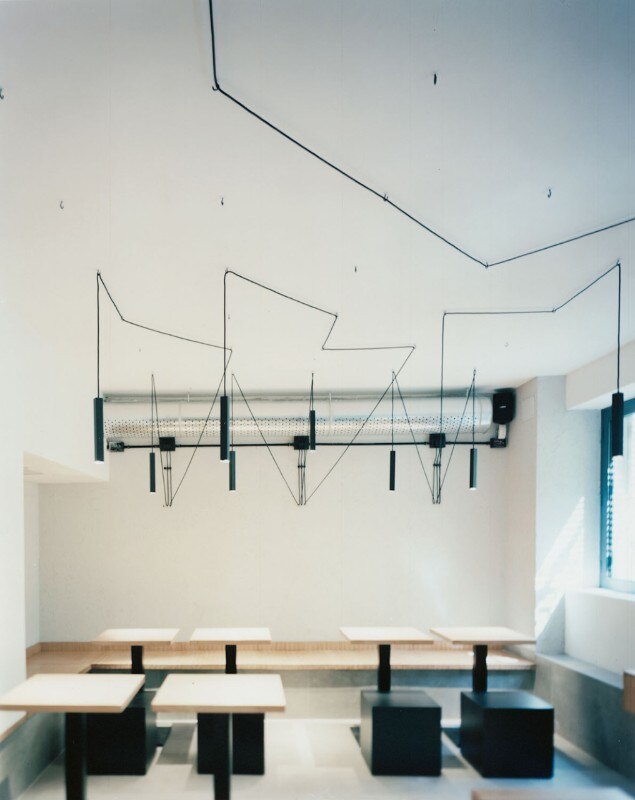
Yes, there is definitely a precise compositional order built upon the dimensional proportions of the parts. It is connected to our choice of a restricted range of elements, materials and colours. Transgression is made possible on this basis, like overwriting on a structured musical score. In this manner, the regularity of the canes’ positioning on the upper floor is overlaid by the freeness of the wave that is created by the irregularity of their length. The framework of hooks hanging from the ceiling on the underground floor forms an anchor for the free–form paths of electrical wires of the lighting fixtures, which corresponds to the flexibility of the table layout.
 View gallery
Which are the materials that give physical form to the interior?
The repertory of materials is limited and elementary: iron, wood, glass and stoneware. We studied a system of contrasts where everything has been thought out, but comes across as a rather undetailed whole in which the shape is the end result.
Natural and artificial light complement each other at Panino Marino.
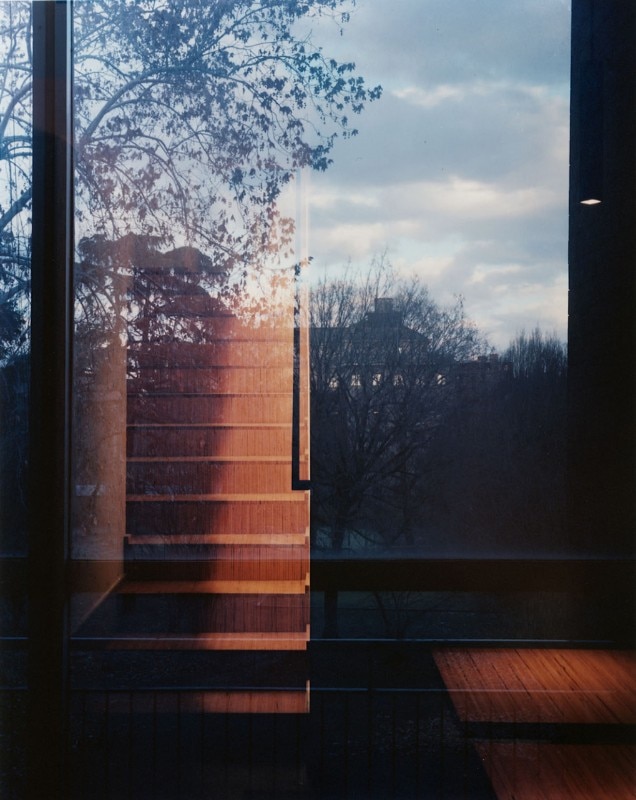
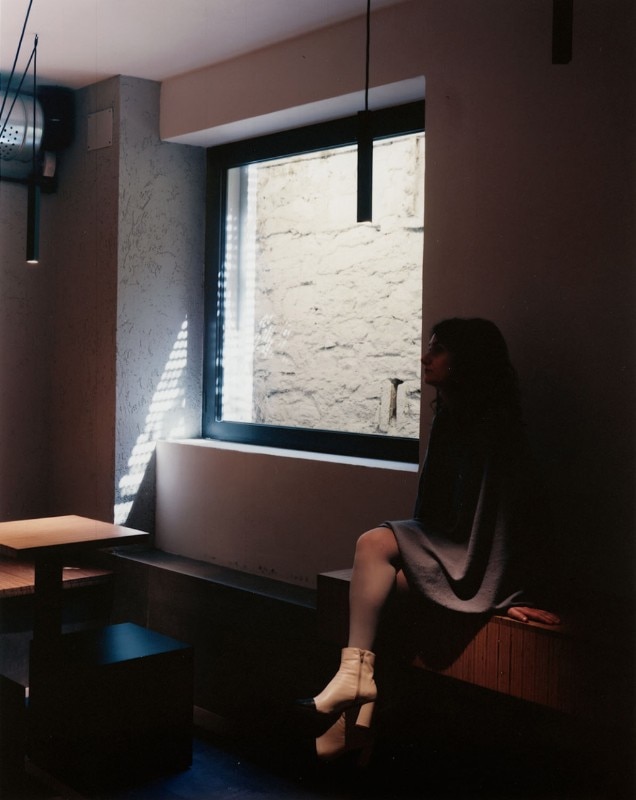
Mainly it is a dialogue between lighting and surfaces by means of different intensities of natural and artificial light. Glass multiplies the space by its reflectiveness; walls are diffusely illuminated to highlight different textures of non–coloured plaster; and spotlights give direct light to the tables at various heights.
- Project:
- Panino Marino
- Architecture:
- Studio GAP
- Area:
- 130 sqm
- Location:
- Genoa
- Completion:
- 2018