


There are objects that don’t age: they advance.
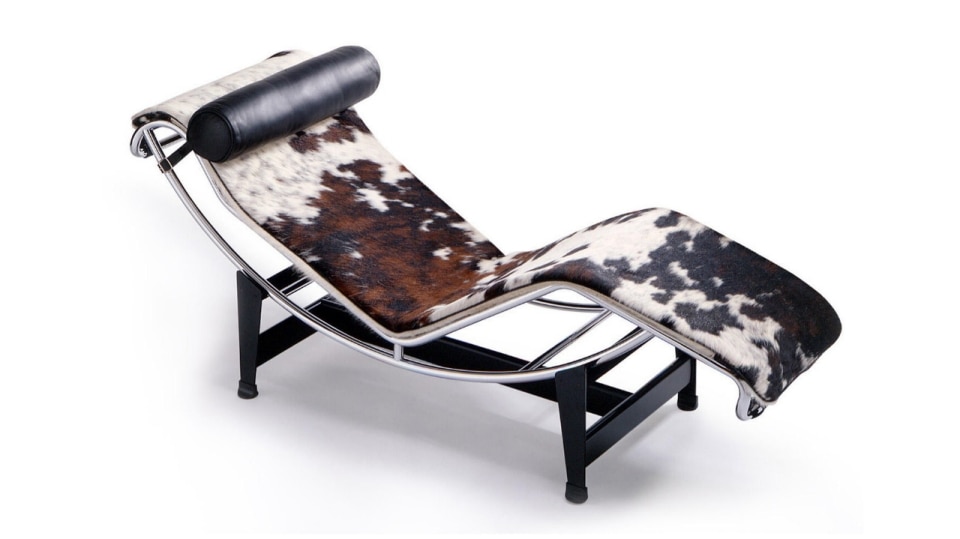
The 4 Chaise longue à réglage continu – the chaise longue, designed in 1928 by Le Corbusier, Pierre Jeanneret and Charlotte Perriand – belongs to that rare genealogy of forms that do not merely survive history, but anticipate it. It is not an icon: it is an organism. A “machine for rest”, as Le Corbusier called it, but above all a machine for moving through time.
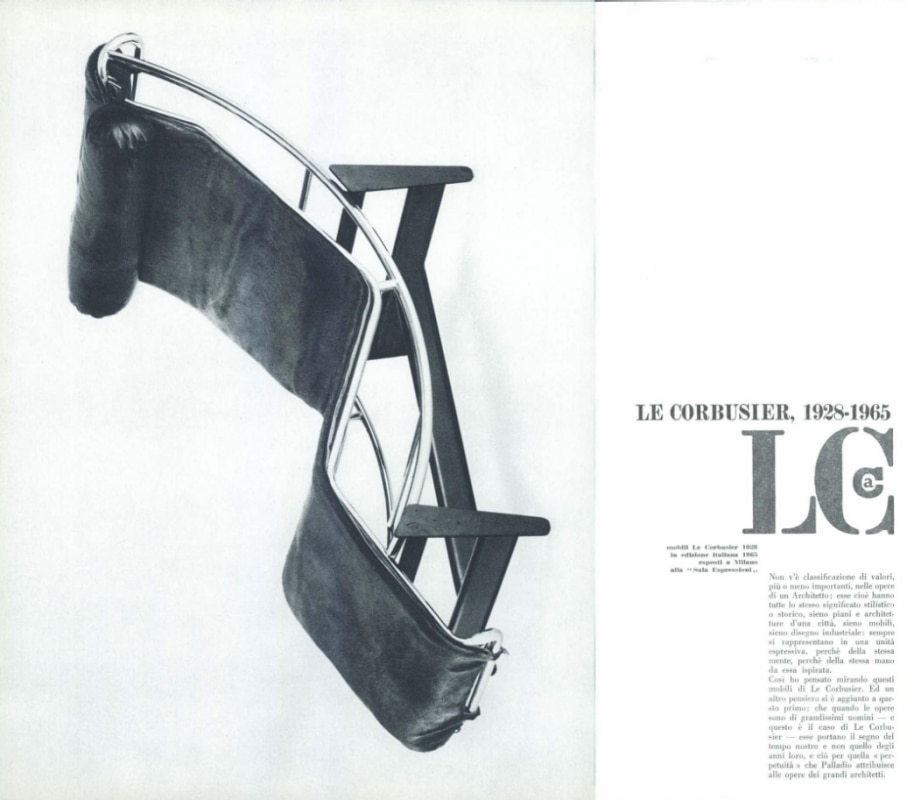
When, in 1965, thirty-six years after its first appearance at the Salon d’Automne in Paris, Cassina began producing it, Domus celebrated the event with words that sound prophetic today: “These pieces of furniture from 1928 seem to rise again before our eyes with a surprising modernity, or rather, contemporaneity… works that time cannot corrupt because of their purity, clarity and simplicity… a rappel à l’ordre.” (Domus no. 430, September 1965).
Modernity as contemporaneity, not style. Purity as an ethical act before an aesthetic one. And that chaise longue resting on an “H”-shaped base, free to tilt, to follow the body rather than impose a posture, becomes – for the eye of then and of now – a lesson in design that eludes fashion and crosses decades without blinking.
Objects become antique once they have passed beyond being old… and they once again become part of the present.
Ernesto Nathan Rogers, 1965
In a Cassina booklet from the same year, Ernesto Nathan Rogers offered perhaps the most acute definition of the phenomenon: “Objects become antique once they have passed beyond being old… and they once again become part of the present. Le Corbusier is always modern because each of his objects, while expressing the time in which it was conceived, transcends it to become universal heritage.” (E.N. Rogers, Cassina, 1965).
The 4 Chaise longue à réglage continu is precisely this: an object that has already outlived its own century of birth and continues to remain “current” because it does not belong to any stylistic season. It is a machine, yes, but also an archetypal gesture: the line of the reclining body, suspended between gravity and levitation. Its genesis is not an isolated act: it originates within the Équipement d’une habitation programme, where furniture is not decoration but prosthesis, extension, “servant” of the body and of domestic life. Charlotte Perriand – the true operational engine of the entire collection – starts from the theoretical writings of L’Art décoratif d’aujourd’hui (1925) and turns them into practice: furniture as an independent, functional, essential object, “decorative art without decoration”.
The three known influences – Dr. Pascaud’s Surrepos, Thonet’s rocking sofa no. 7500, and the chaise with column designed by Le Corbusier in 1928 – are merely starting points.
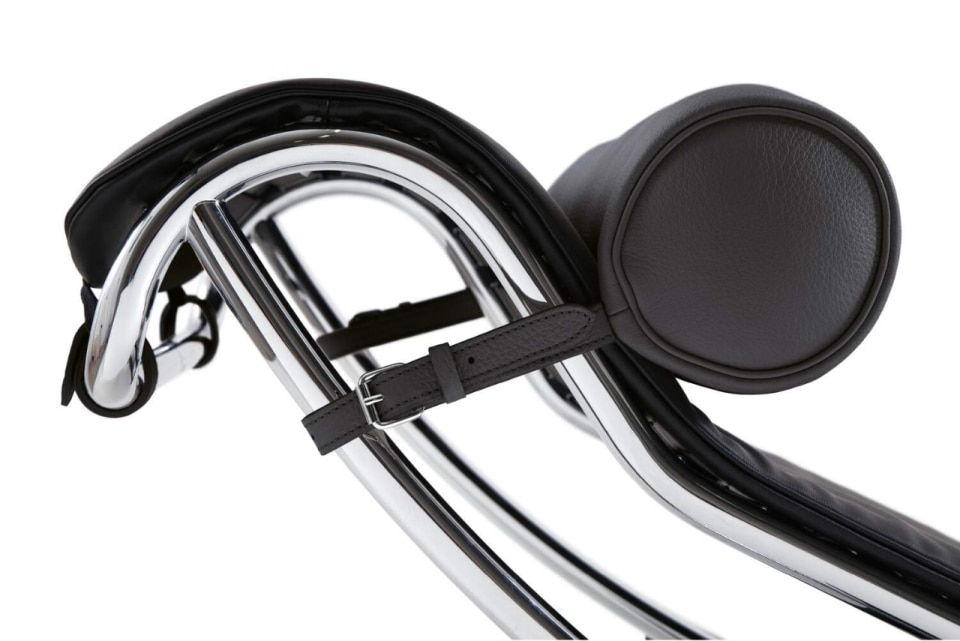
The true invention lies elsewhere: in the split structure, where the seat slides freely on the base; in the two curved tubes that trace the ergonomic trajectory of the body; in the rubber sleeves that prevent slipping and transform mechanics into perceived comfort; in the ability to adjust the inclination continuously, without steps, almost like breathing; in the aeronautical evocation of the base, with its drop-shaped sections recalling aircraft wings.
It is a dynamic object even when still. A balance of forces, a system that expresses – visually and structurally – modernity as “organized energy”.
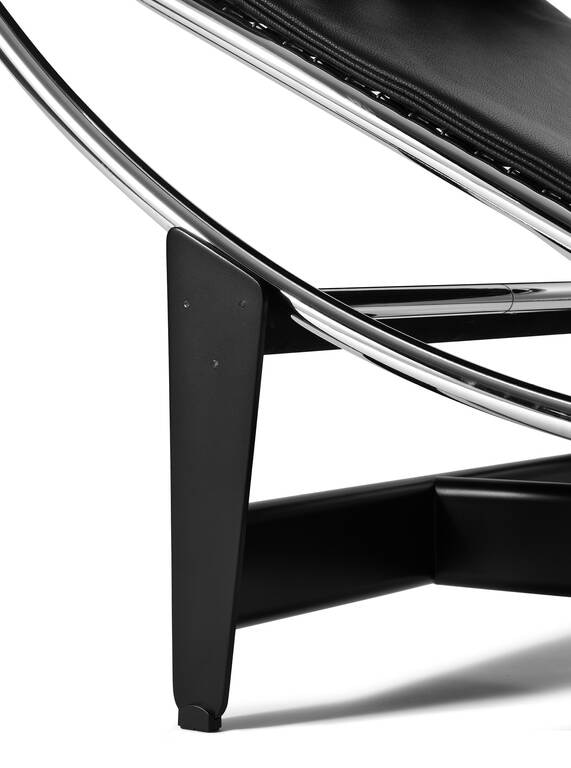
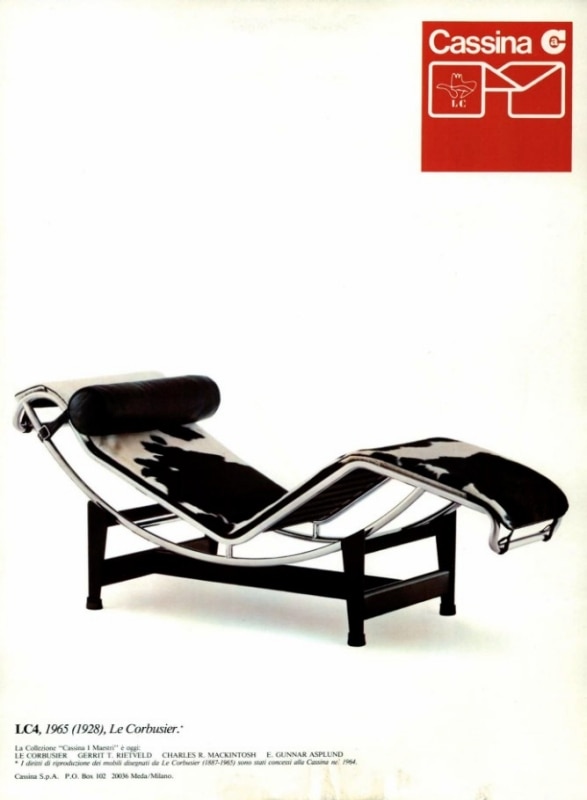
The first specimen, built for Villa Church in 1928, still featured welded tube ends: a small inconsistency that Perriand immediately corrected in the version for Maison La Roche. The original drawings were handed over to Thonet in 1929, and from there began a cosmopolitan production history: Thonet, Embru in Switzerland, and finally – in 1965 – Cassina, which codified its definitive form.
And it is Cassina today that celebrates sixty years of production with a limited series that reinterprets the tubular structure in glossy colours – red, blue, green – and the self-supporting Plus leather upholstery in the same tones.
Not its elegance, not its “iconic” aura, not its cult status. What makes the 4 Chaise longue à réglage continu eternal is the fact that it does not belong to an aesthetic, but to an idea. The body – not fashion – is its true client.
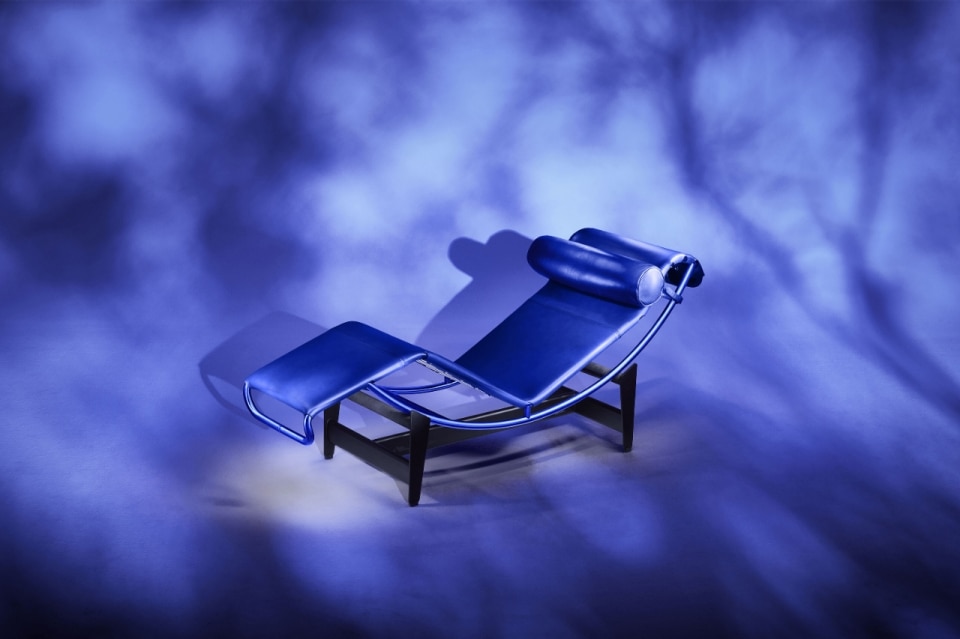
What makes the 4 Chaise longue à réglage continu so resistant to time? Not its elegance, not its “iconic” aura, not its cult status. What makes the 4 Chaise longue à réglage continu eternal is the fact that it does not belong to an aesthetic, but to an idea. The body – not fashion – is its true client. The lines of the back, the curve of the legs, the position of the head. It is physics before it is aesthetics. The chaise longue does not propose a way of sitting: it recognises a universal one. And in doing so, it becomes archetype, root, measure.
If modernity is an act of clarity, the 4 Chaise longue à réglage continu is one of its purest forms. Nearly a century after its design and sixty years after its Cassina re-edition, it continues to show what Domus had foreseen with striking clarity: “A civilisation that, from urban planning to architecture to design, still has its cycle open.” The LC4 belongs to this open civilisation: not a finished object, but a principle. A lesson – in purity, coherence, freedom – that continues to call us to an order that is not nostalgic, but current. An invitation to be, as Rogers wrote, “worthy contemporaries” of the masters.
All images: 4 Chaise longue à réglage continu, model B 306. Courtesy Cassina
Please note that the chaise longue designed by Le Corbusier, Pierre Jeanneret, and Charlotte Perriand, originally known as the LC4, is now marketed under the name “4 Chaise longue à réglage continu.”