


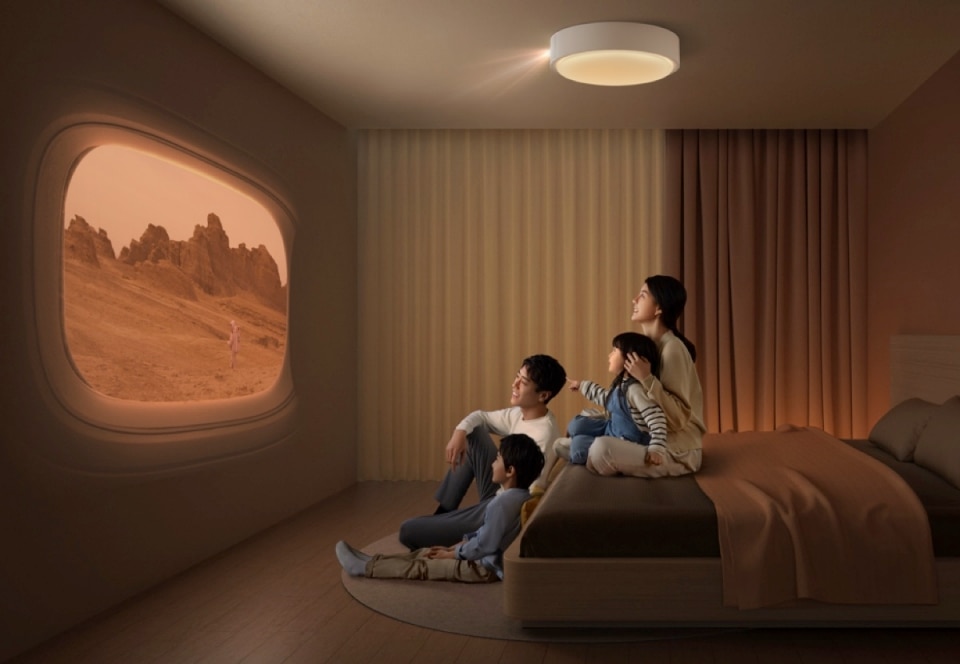
For decades, the projector has been the utilitarian workhorse of presentations and basement home theatres — anonymous black boxes that prioritised function over form. Now a new generation of manufacturers is treating the projector as a design object, borrowing vocabularies from furniture, lighting and hi-fi. These aren’t devices pretending to be invisible; they’re objects confident enough to sit alongside carefully chosen furniture.
The paradox is that this confidence emerges in a surprisingly small market. Research places the entire European projector sector at around USD 450 million in 2024, with slow single-digit growth expected through the next decade. Europe accounts for roughly a third of a global market just above USD 1.5 billion, and within that Italy remains minor: under USD 40 million compared to nearly USD 90 million in Germany. Most demand still comes from offices, schools and signage rather than domestic living rooms.
For most people, a well-priced television still beats a “good beamer” on image quality — and cheaper projectors rarely help the case. Which is why this generation matters. These devices aren’t chasing the average home; they target those who dislike the black rectangle on the wall, who worry about cables as much as contrast ratios, who might prioritise typology and materiality over value-per-inch. What follows is a tour of projectors designed to win over exactly these sceptical users: machines that behave like furniture, lighting or hi-fi objects first, and only then happen to throw a three-metre image on the wall.
Leica Cine 1 – material luxury and hi-fi heritage
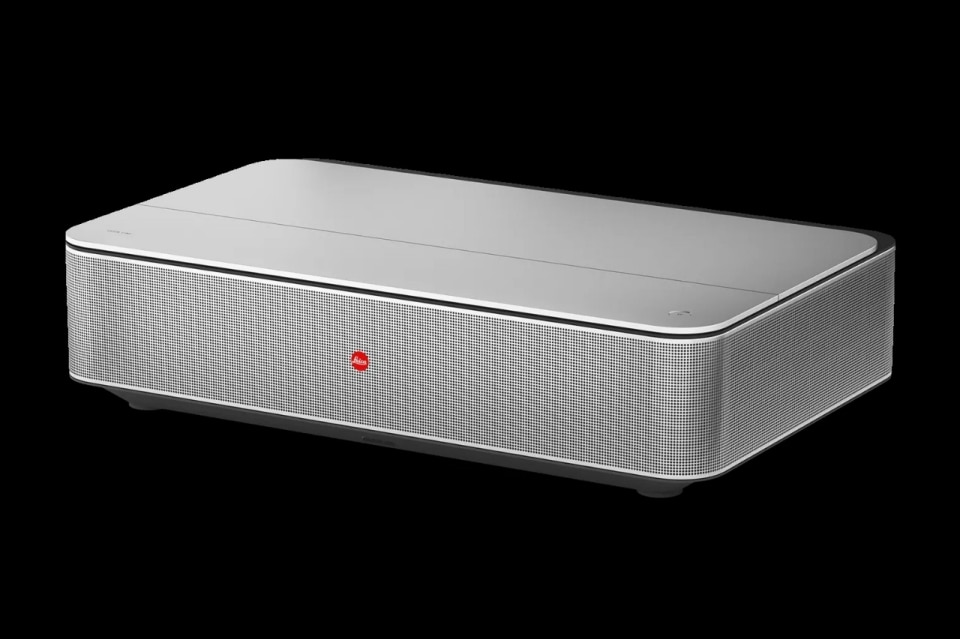
The Cine 1’s chassis borrows directly from mid-century audio equipment: perforated aluminium, soft radius corners and a sliding cover that moves with the precision of a camera lens barrel. Brushed aluminium meets a matte powder-coat; the perforated speaker grille wraps around three sides in a continuous rhythm. The sliding lid protects the ultra-short-throw optics when closed, and opening it is a tactile pleasure.
Leica calls the Cine 1 a “laser TV”, reflecting its integrated tuner, smart interface and spatial audio — a complete object that doesn’t require the usual constellation of boxes. At 40 cm wide and 14 kg, it has unapologetic presence. Like premium hi-fi, it’s meant to be left on display because its craftsmanship rewards attention.
LG CineBeam S – the polite architect
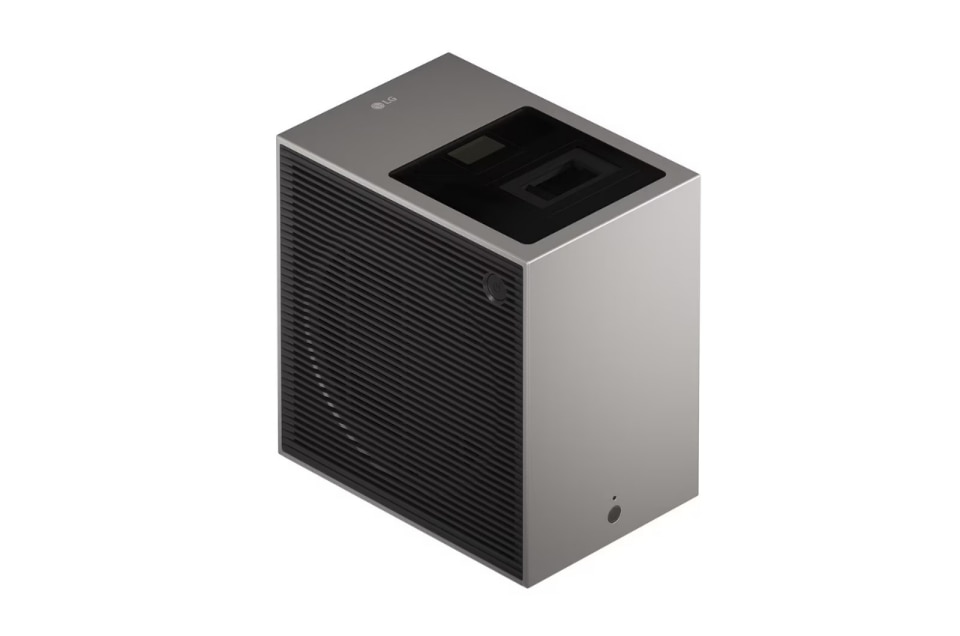
LG’s CineBeam S is the new baseline: a miniature UST column that sits against the wall and quietly casts a 40–100-inch image from a few centimetres away. Instead of a large AV box, you get a small aluminium monolith with soft edges and a discreet grille — something that can sit on a low cabinet without shouting for attention.
Because the optics fire straight upward, the unit hugs the wall rather than living in the middle of the room. Auto-screen adjustment and wall-colour compensation handle the invisible work, making the device feel like it negotiates with your architecture rather than asking you to rearrange it. In a line-up of heroic machines, this is the modest one: calm form, tiny footprint, and a 4K image with real contrast and colour when needed.
Samsung The Premiere 8K Wireless – textile neutrality
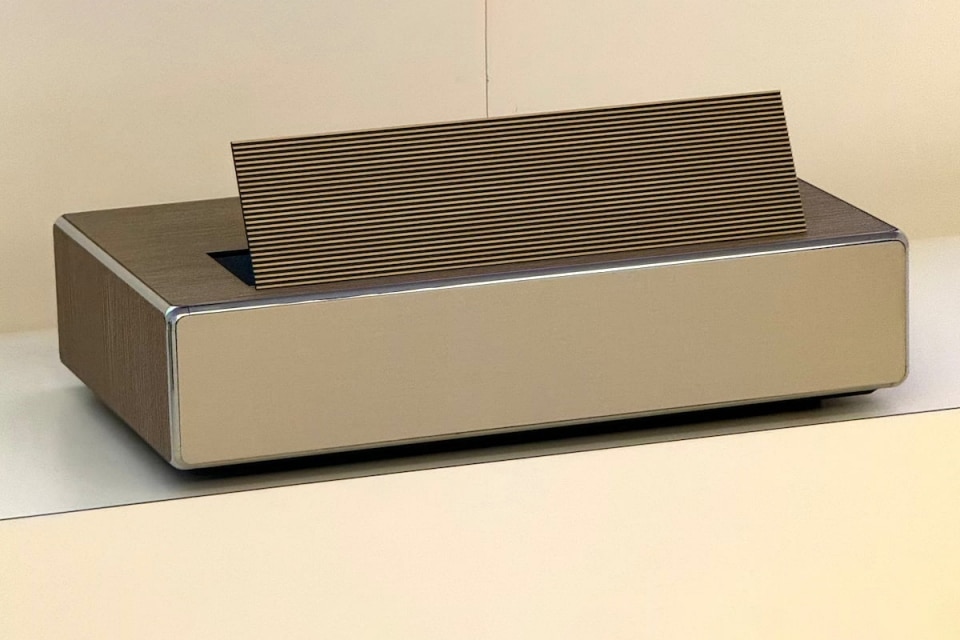
Samsung’s The Premiere 8K takes soft modernism through textile wrapping and wireless infrastructure. The compact body is wrapped in a light neutral fabric that evokes premium speakers rather than AV equipment. Rounded corners, minimal branding and a beige-grey palette reinforce Samsung’s “lifestyle” philosophy seen in The Frame and The Serif. The 8K spec — 8000 ANSI lumens, up to 150-inch projection — is impressive but almost secondary.
The separation of the One Connect box, which hides all inputs and consoles, means only a power cable reaches the projector, letting it sit like a sculptural object instead of a cable hub.
Valerion VisionMaster Pro2 – the maximalist cinema object
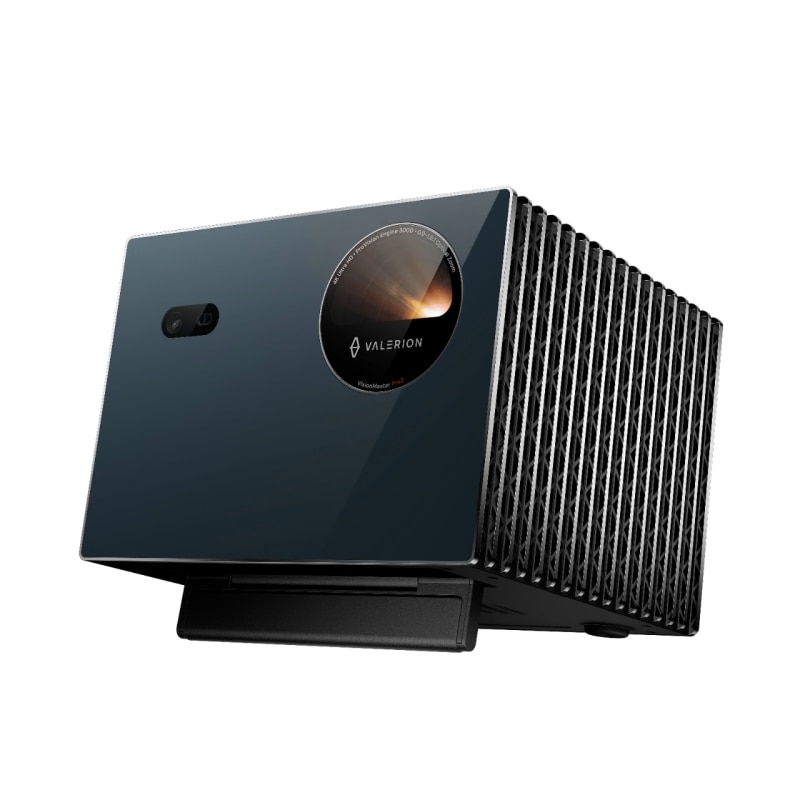
Valerion embraces excess. This triple-RGB-laser 4K projector from a boutique manufacturer targets cinema purists with deep front grilles, aggressive chamfers and a light engine powerful enough for a 300-inch screen, Dolby Vision, IMAX Enhanced and every cinema format imaginable.
The architectural body — 44 cm wide, low and confident — frames the lens in a sculptural way, like a studio spotlight or reference audio gear. Rather than apologising for its complexity, it leans into it. This is for people who enjoy living with well-made tools: the industrial honesty is part of the pleasure.
3D, revisited
Valerion didn’t just send a projector; it sent the whole ritual. The matching screen and 3D glasses transform the VisionMaster Pro into a complete cinema setup rather than a bright box. The dedicated screen is a revelation: colours snap into place, contrast deepens, and the image feels intentional, not like a faint picture on painted plaster.
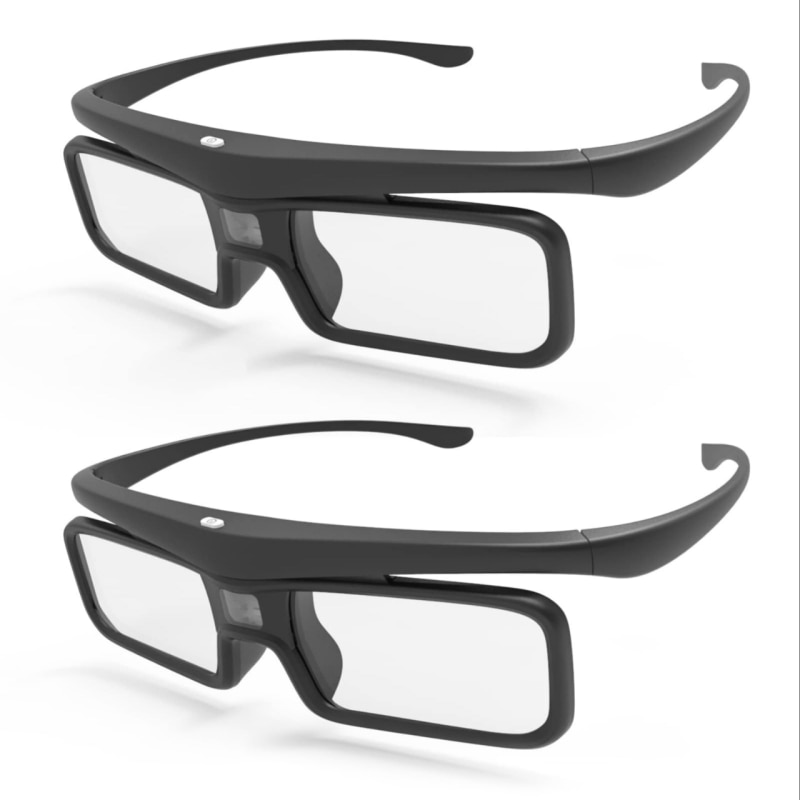
In this context, 3D stops feeling like a gimmick. Concert films gain stage depth, animation gets volume, and older films develop a subtle “window into” presence. 3D suits projection more than TV — you’re already dimming lights and sitting down — so glasses become part of the ceremony. The fact that Valerion still supports the ecosystem speaks to its belief in home cinema as an experience, not just a spec sheet.
TCL PlayCube – toy-like typology
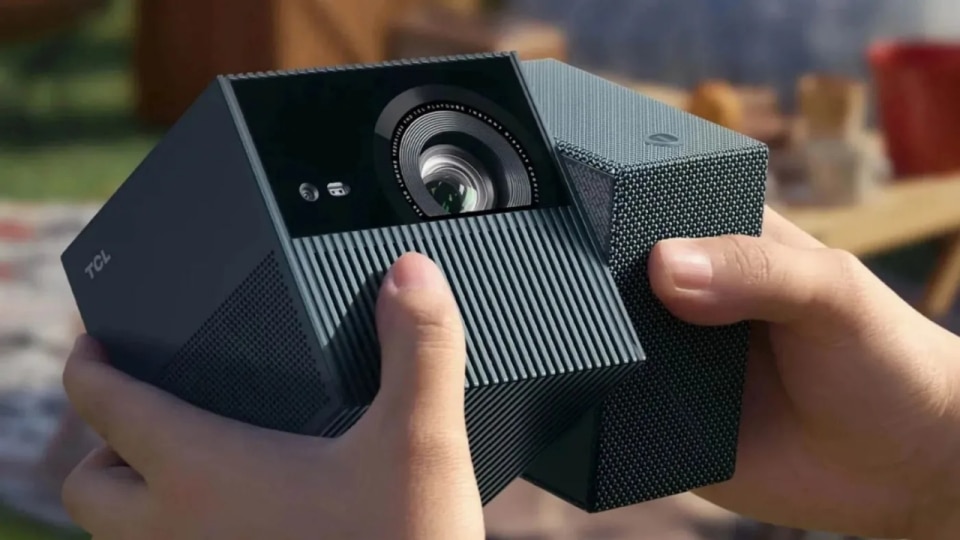
TCL’s PlayCube embraces friendly geometry rather than furniture cues. It’s a 10 cm cube with rounded edges, available in cream or grey, designed to be handled and rotated like a Rubik’s Cube or a portable speaker.
The internal battery runs for three hours, and the cube rotates 90° to aim at walls, ceilings or improvised screens without tripods. Portability gets its own formal language here: matte plastic, approachable geometry, clear purpose. The projection specs — 1080p, 1000 ANSI lumens — are modest but suited to casual use. It’s projector-as-occasion, not projector-as-infrastructure.
XGIMI Aladdin – the ceiling light that plays movies
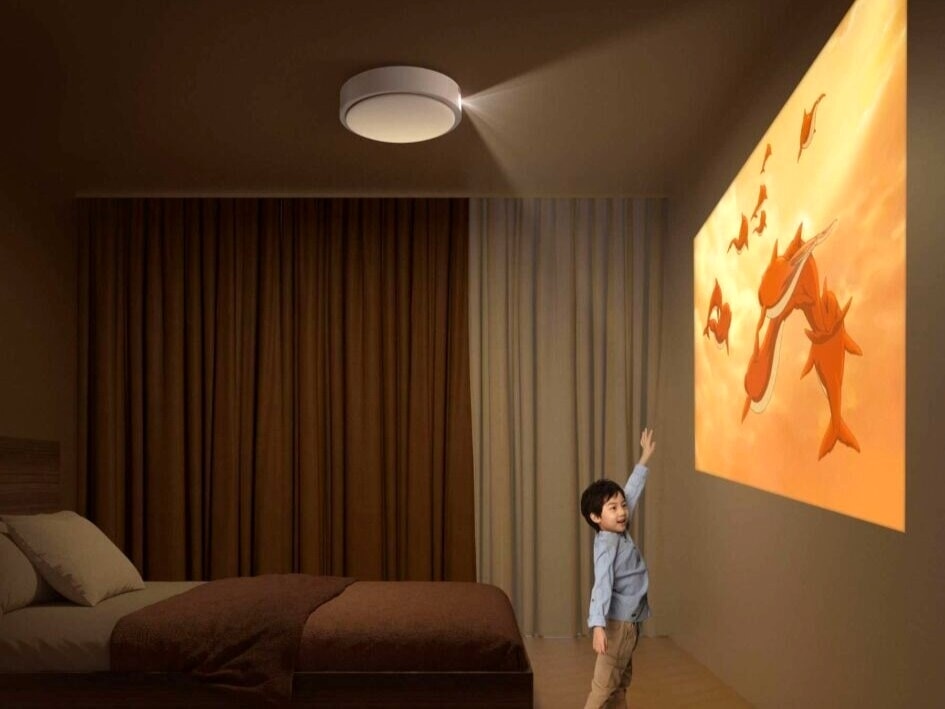
XGIMI’s Aladdin answers the question “Where do I put the projector?” by deleting the box entirely. It’s a three-in-one ceiling fixture: lamp, projector and 360° Harman Kardon speaker in a single disc. Day-to-day it reads as a neat ceiling light; press play and it throws a 100-inch image onto the wall.
It’s the opposite of a statement projector, treating cinema as infrastructure — integrated into the room like lighting or heating. For anyone who loves the idea of a huge picture but hates visible hardware, this is the stealth option.
For audiences who value the formal quality of objects as much as function, this might finally be the projector generation worth considering. They won’t dethrone the TV, but they’re quietly reshaping the edge cases of the living room — appealing to those who would rather fold image, light and sound into coherent objects than organise an entire space around a glowing rectangle.