


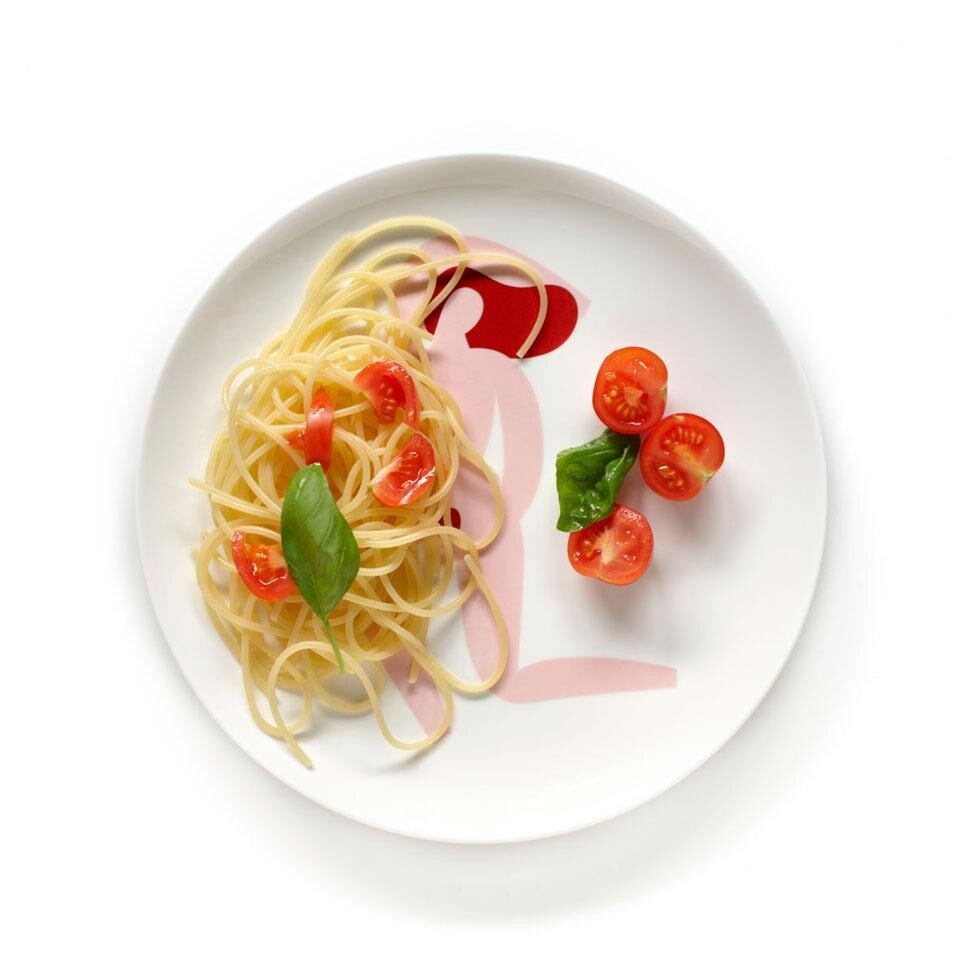
This is the story. To give substance to the idea, they had to find someone to produce the plates. It was obvious to think of two of the historically most important manufacturing districts in Northern Italy. A first attempt was made in Faenza (Zagnoli are originally from Romagna, in the center of Northern Italy), a city that boasts a tradition whose fame goes back to the Renaissance. Beyond its so-called artistic production and reproduction of traditional models, a certain number of companies also manufacture contemporary design. But Faenza was not the right place; the factories produce only in large quantities of at least 1,000 pieces of each pattern.
So then they went to Nove, another historic district with over three-hundred ceramics factories, one of which proposed a special mold which was paid for and tested. The result was entirely unsatisfactory because they conceive porcelain as pottery - thick and unevenly vitrified. Again, industrial agility was lacking, along with, apparently, the necessary culture to understand contemporary design.
Perhaps they had knocked on the wrong doors.
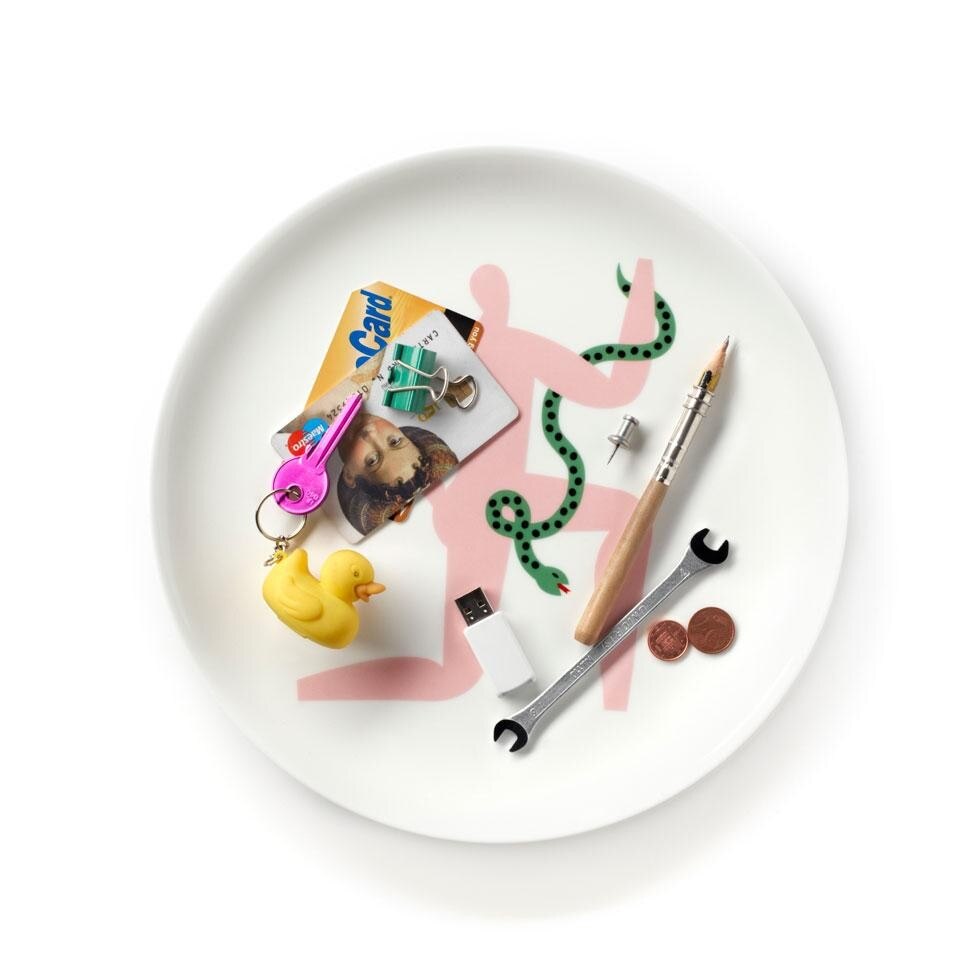
The factory was ready to manufacture the small-scale production: the plates have a nice form that resembles the famous white Rosenthal china designed by Gropius, the form-type that Zagnoli had imagined. Printing is digital, so they just need to send a file. Testing is done by the factory and corrections are not a problem. Certainly, the single dish costs a bit more but that is natural for small-scale production. Everything is sent by mail, using the same system that Clodomiro uses for customer delivery. Miro designed the packaging.

Launched just a few days ago, Clodomiro has already had some success with shoppers, among which is Vitra.
P. S. Given the theme of the illustrations, one can't help but think of an Oedipus complex!
