Urban transformations are increasingly occurring on the inside of buildings in a process that Andrea Branzi calls “Visceral revolution”, primarily manifested through the “interiorisation” of metropolitan space. “The quality of an urban space is therefore no longer formed by the effectiveness of its architectural setting, but rather by the sophistication of its various interior designs, by the products in its shop windows… the city’s viscera today are the core of its operating capacity” (Domus 897).
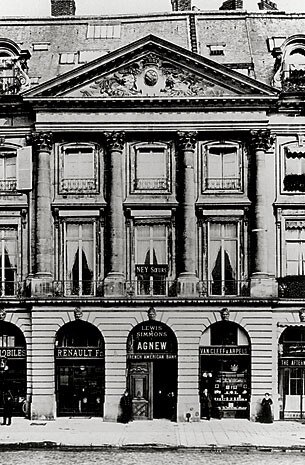
In this sense, the micro-projects that are constantly transforming metropolitan interiors, and particularly shops – as with Patrick Jouin’s project for Van Cleef & Arpels – are the barometer of this revolution. In 1906 Alfred Van Cleef, Estelle Arpels and her brother Charles opened their Salon at no. 22 Place Vendôme, in Hôtel de Ségur, which was constructed to a design by Jacques V. Gabriel, a pupil of Jules Hardouin-Mansart.
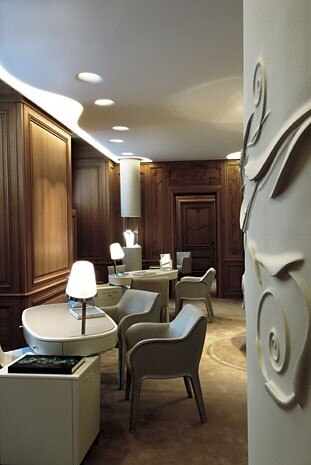
Patrick Jouin’s project touched on a portion (158 m2 in total) of this building, including the original spaces where the Maison was first established. Jouin explains, “Before embarking on any project, I observe the place and try to understand its history, its strong points and its weak points. Place Vendôme is unique: its concept – originally a square destined to contain a statue of Louis XIV – indisputably links it with glory and history, while the architecture is a magnificent example of 18th-century style. Moreover, Place Vendôme has always been associated with the exceptional and the utmost luxury… all this prompted us to conceive an interior project that would strike a balance between this rich tradition and contemporary innovation.” Patrick Jouin principally concentrated on the surfaces, shaping them, covering them and decorating them.
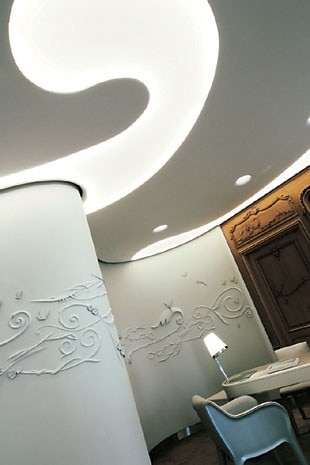
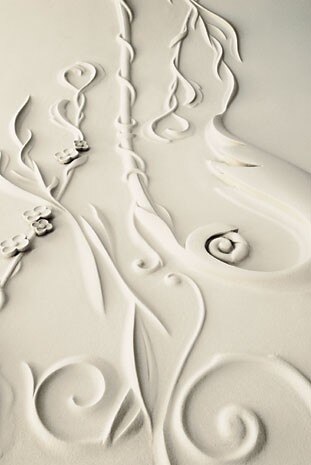
The two main techniques he adopted to achieve the desired effects involved wood panelling and ornamental stucco moulding, not to mention spectacular lighting. The parts in oak have subtle moulding, slightly in bas-relief, around the central panels. The decorative motifs are hand sculpted and all different, although each design seems to reach out towards the decorations on the adjacent panels. The overall effect is like that of a “fresco” of branches and flowers growing naturally towards the windows. Jouin has juxtaposed the orderly boiserie with a series of curved forms that stretch the full length of the boutique. These feature a long arabesque running at eye level along the back wall of the main salon.
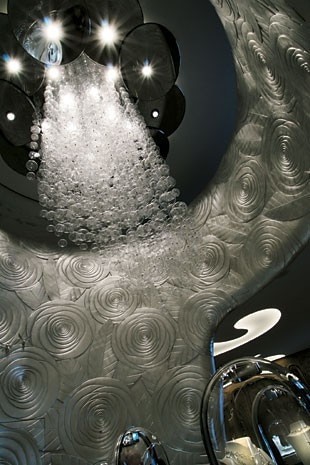
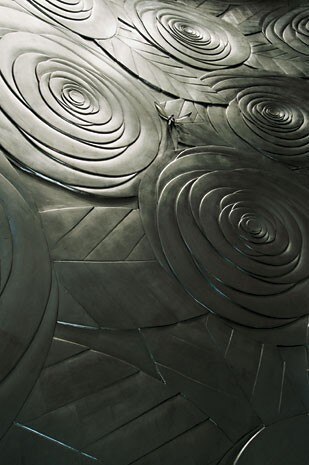
The arabesque represents a garland that seems to grow out of the arabesque itself; it was created with a plaster paste made out of chalk and vegetable fibres or fibreglass. The lighting is equally crucial in the design of the spaces and Jouin called on the assistance of Hervé Descottes for this element. The atmosphere is dominated by the phantasmagorical shimmer of a huge chandelier – formed from a myriad of hand-blown Murano glass balls – hanging in the circular opening of the rotunda on the second floor of the boutique. The dramatic effect is heightened by a shaped wall protecting the chandelier, which extends down to the floor of the space below. The stylised rose flowers covering it are gilded with 11-carat white gold leaf.