


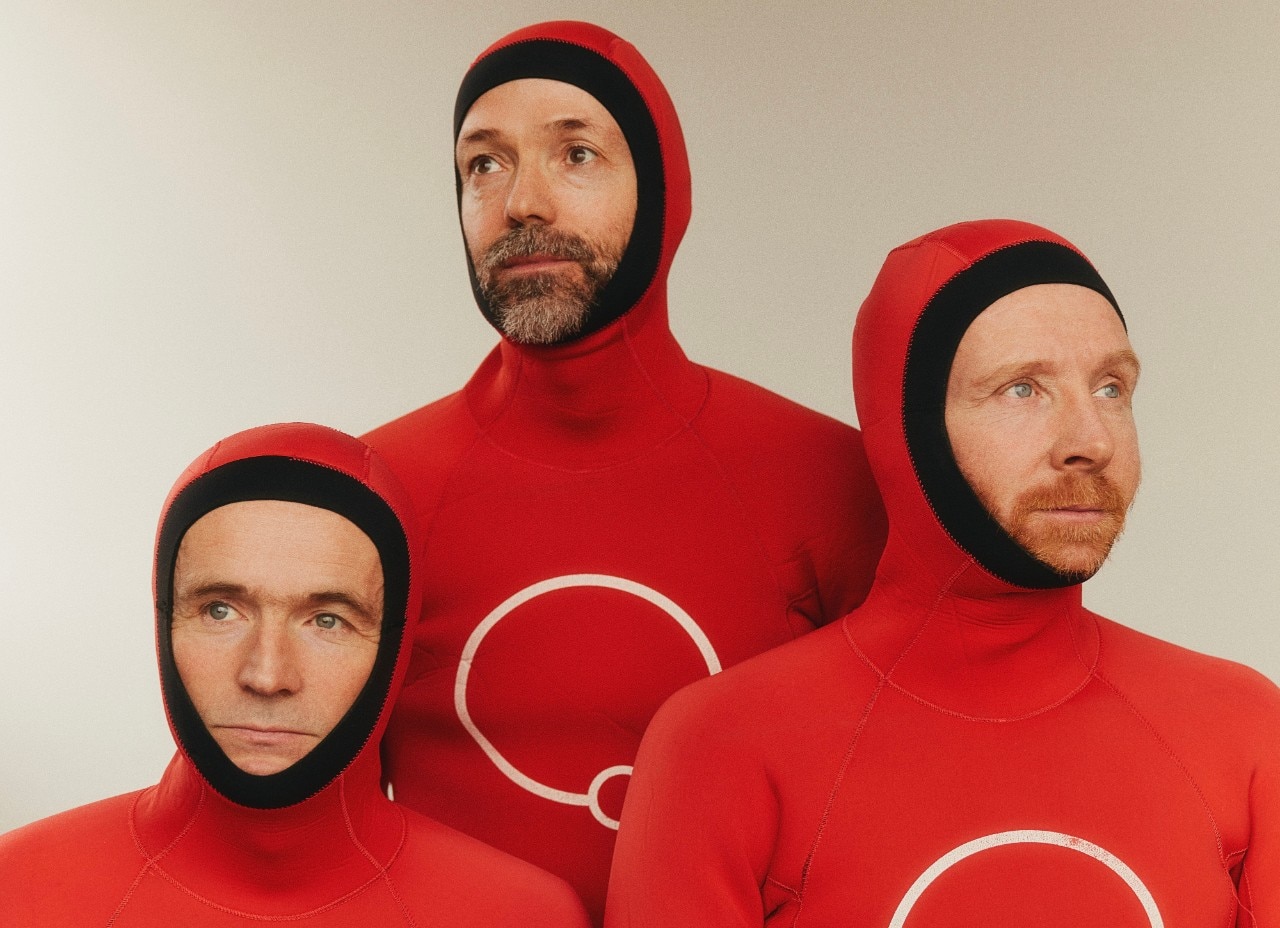

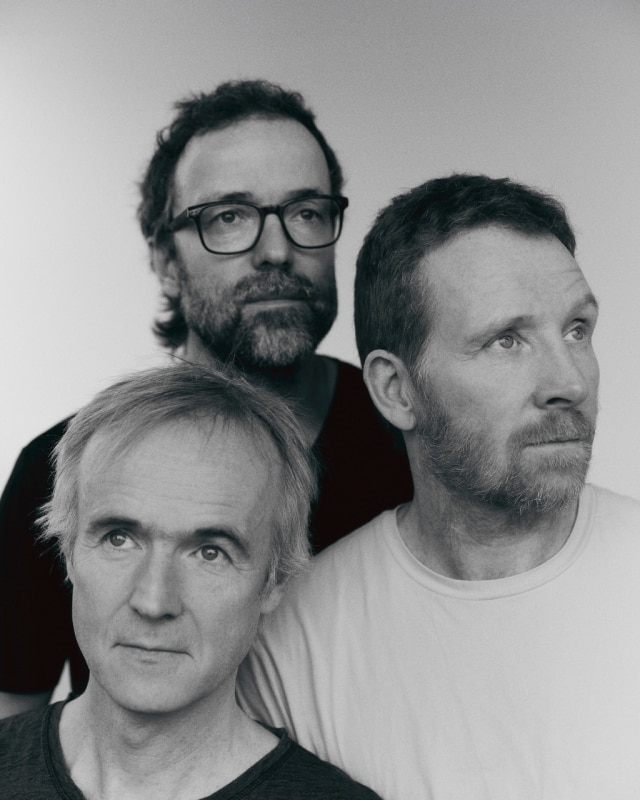
For thirty years, Superflex has been challenging one of the most persistent myths in art: the idea that creativity belongs to the 'lone genius.' Founded in Copenhagen in 1993 by Jakob Fenger, Bjørnstjerne Christiansen, and Rasmus Rosengren Nielsen, the Danish collective has built a practice that moves between art, design, architecture, ecology, economics, and speculative fiction. Its works have taken the form of energy systems, beverages, public spaces, films, sculptures, contracts, urban projects, and, more recently, architectures imagined not only for humans but also for fish.
The premise, as Rasmus Rosengren Nielsen defines it, is simple: 'aesthetics is something that happens between people; it does not come from within an individual.' In this perspective, art is not the expression of an isolated subject but 'a sort of cosmic ping-pong between artists, living and dead, in a continuous process.' For Superflex, the collective is not a stylistic choice, but almost an ontological condition: 'all art is collective.
This conviction has shaped the group from the very beginning. 'We were taught that whenever you encounter a problem, you form a group and try to solve it together,' they explain. 'So, when we were confronted with the problem called “art,” we simply did what we had been taught: we formed a small militia and tried to do something about it.'
Since the nineties, Superflex has treated art as a tool rather than an object. Early projects such as Supergas, Guaraná Power, and Free Beer explored alternative systems of production, distribution, and ownership. They were models to be used, copied, adapted, or contested. In this sense, Superflex’s career has always been political without becoming didactic: their works show how power circulates through commodities, infrastructures, brands, and images.
But the collective also resists being reduced to its founders. “Superflex is not me,” says Rasmus. “I see Superflex more as an avatar.” It is “like a character in a video game. There is a person behind it, of course, but it does not coincide with me.” This avatar can be inhabited by many subjects: artists, scientists, architects, engineers, communities, audiences. “Different people can work through the avatar over time. I am one of the regular participants, but it could also be a scientist or someone from a completely different profession.”
The idea may seem playful, but it contains a radical shift: what would architecture become if it were designed from the point of view of another species?
Over time, this expanded collective has grown beyond the human. In recent years, Superflex has increasingly worked with non-human perspectives, particularly with marine life. “If you are not making art only for people but also with people,” they explain, “climate change forces you to think differently.” In Denmark, a flat country surrounded by water, the future is not an abstraction. “In a few centuries, much of Denmark could be underwater. If that happens, the future users of what we build will not necessarily be human beings: they could be fish.”
This is where Superflex’s critique of anthropocentric culture becomes architecture. “Fish should not be considered only as clients but also as co-creators,” they state. The idea may seem playful, but it contains a radical shift: what would architecture become if it were designed from the point of view of another species?
For Rasmus, this question also means challenging the symbolic foundations of Western aesthetics. “When you enter an art school, one of the first things you encounter is Leonardo da Vinci’s Vitruvian Man,” he says. “It is presented as the embodiment of beauty and perfect proportion.” Yet, “it is also a trap because it places the human being at the center of everything.” If he were to summarize thirty years of work, he adds, “one of my ambitions is to destroy the Vitruvian Man.”
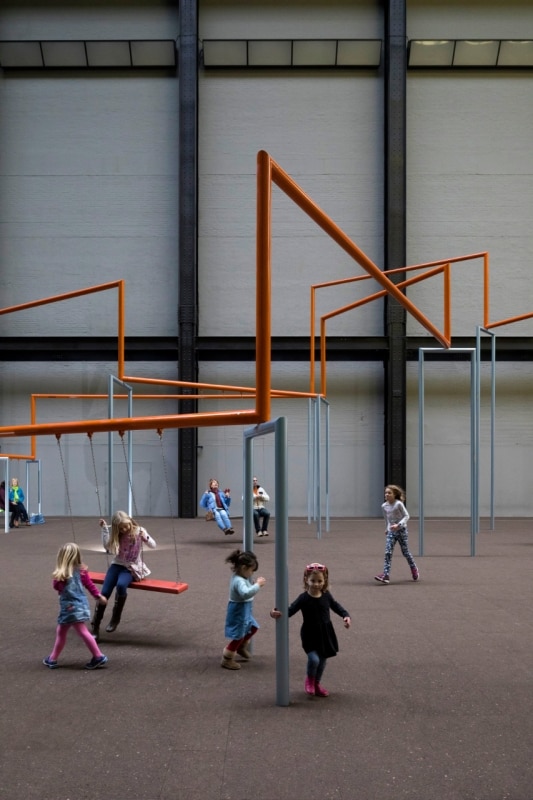
This anti-anthropocentric impulse runs through projects such as “Flooded McDonald’s,” “Vertical Migration,” “Interspecies Assembly,” “Superbrick Factory,” and “Fish Cube.” In these works, climate change is not a distant scenario but a material condition. Rising sea levels become a design, political, and aesthetic force. “Rising sea levels are redesigning the planet,” says Rasmus. “Water is not a theme I invented. It is something that humanity is producing through its own actions.”
This shift also changes the way the collective thinks about time. Modernity, they argue, has always struggled with time because it wanted to control it. “When time leaves visible traces on a modernist building, it often seems wrong,” they say. “A Le Corbusier building covered in patina can look out of place.” For Rasmus, this reveals “an unresolved desire to control time.” Modern aesthetics often “pretend that time does not exist. When time inevitably appears, the illusion breaks.”
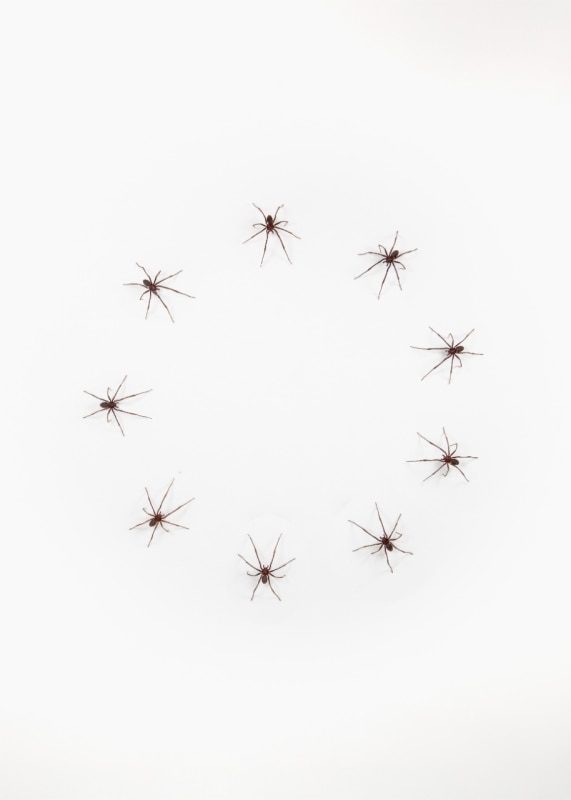
Against this illusion, Superflex works with geological time, evolutionary time, and non-human futures. “Human beings have become less interesting to me, while other life forms have become more fascinating,” he states. “I prefer reading a biology book rather than a history of ideas. It feels more magical to me.” Plants, fish, microbes, and oceans are no longer the backdrop of the human drama: they are protagonists.
Perhaps this is why water has become such a persistent element in their work. “Venice is a perfect example,” he says. “It is almost a laboratory of the future.” The same could be said of the Pacific, where communities living on very low-lying atolls experience climate change not as a theory but as an immediate reality. “Entire communities live on atolls that are only a few meters above sea level.”
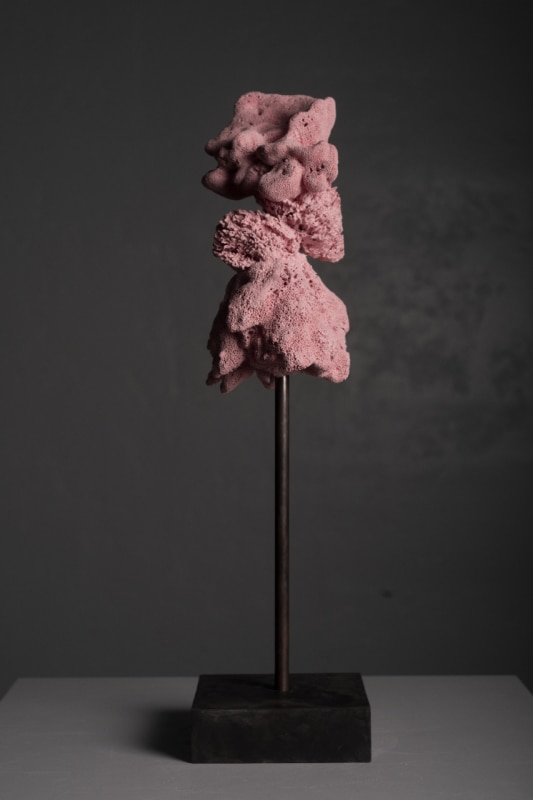
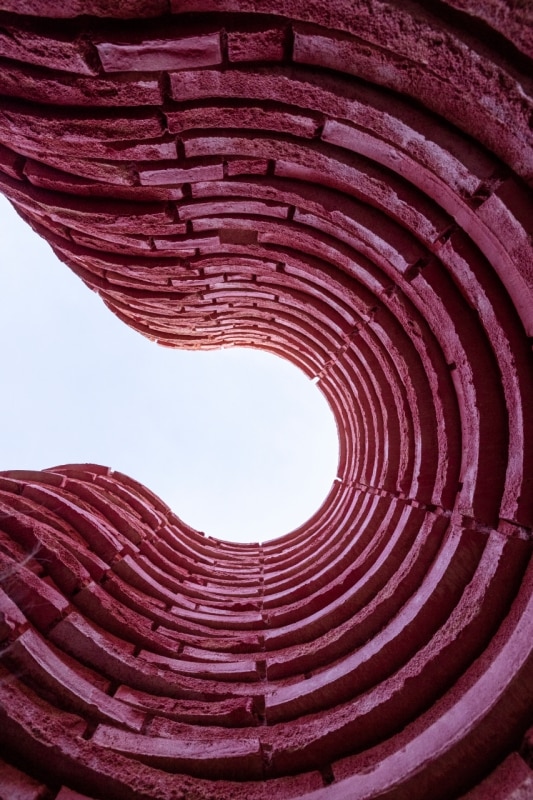
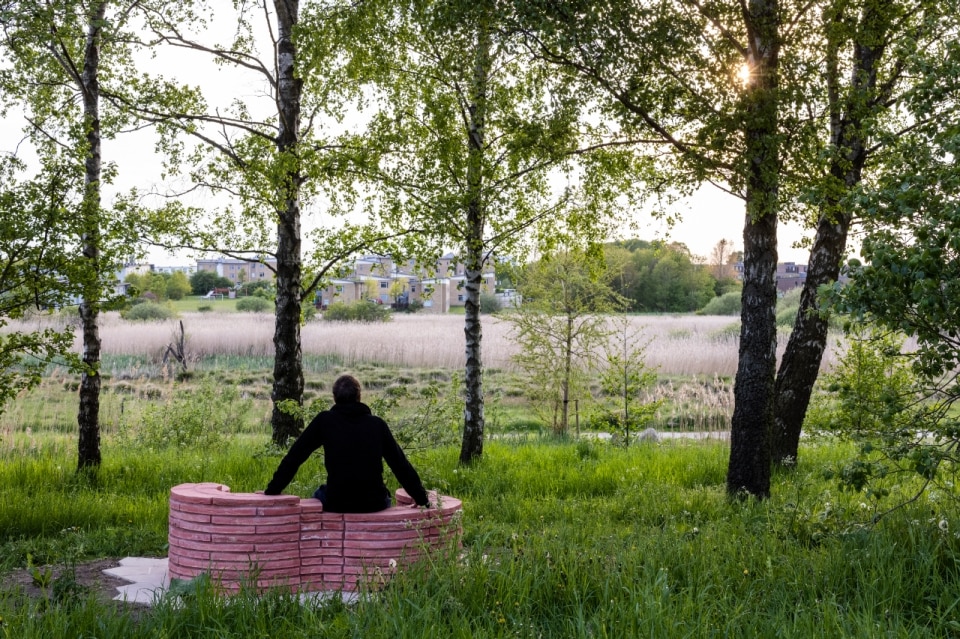
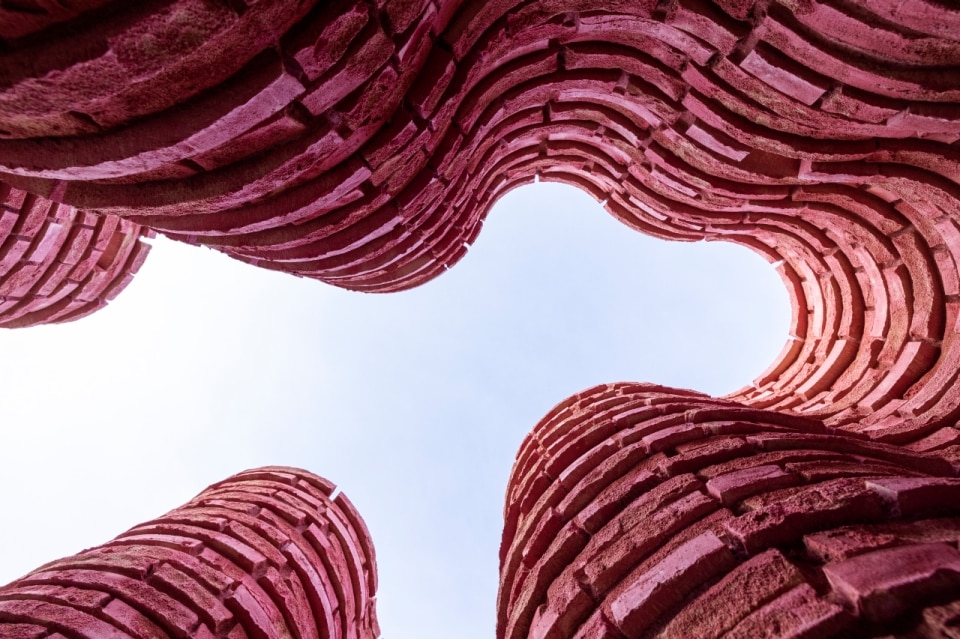
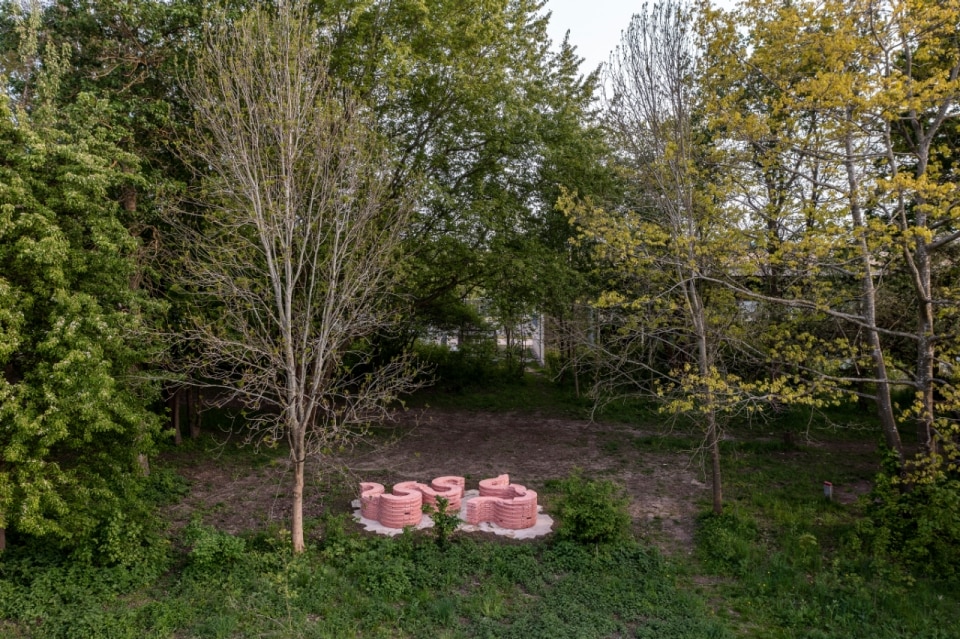
This vision finds particularly clear expression in “Super Kello,” the collective’s latest public work, installed in 2026 at the Kiviniemi fishing harbor in Kello, near Oulu, Finland, as part of the “Climate Clock” public art program for Oulu European Capital of Culture 2026. The bell-shaped stone sculpture looks out over the Baltic Sea like a lighthouse, creating what Superflex describes as “a bridge between the underwater ecosystem of fish and aquatic life and human habitation in the nearby houses.” Designed as a place to sit, rest, and reflect on alternative ways of measuring time, the work also welcomes fishermen and sailors in the harbor. Like many of the collective's recent projects, “Super Kello” blurs the boundary between the human and non-human worlds: it is designed for fish, as one day the sea level will rise to submerge it.
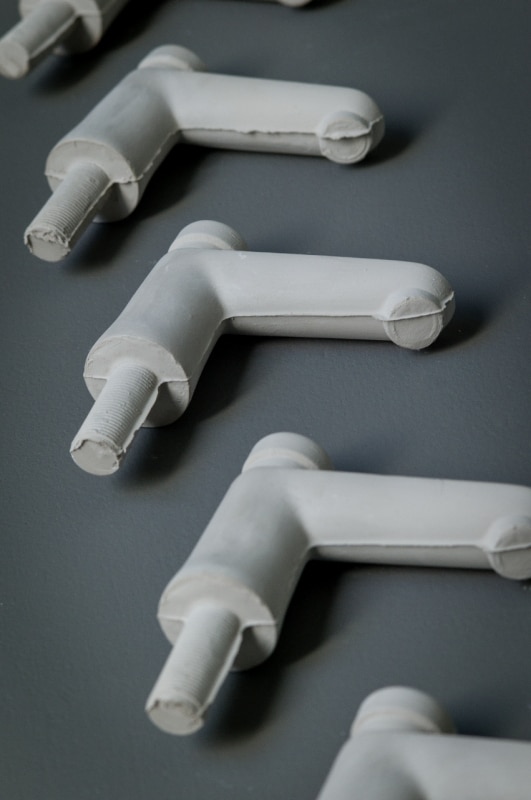
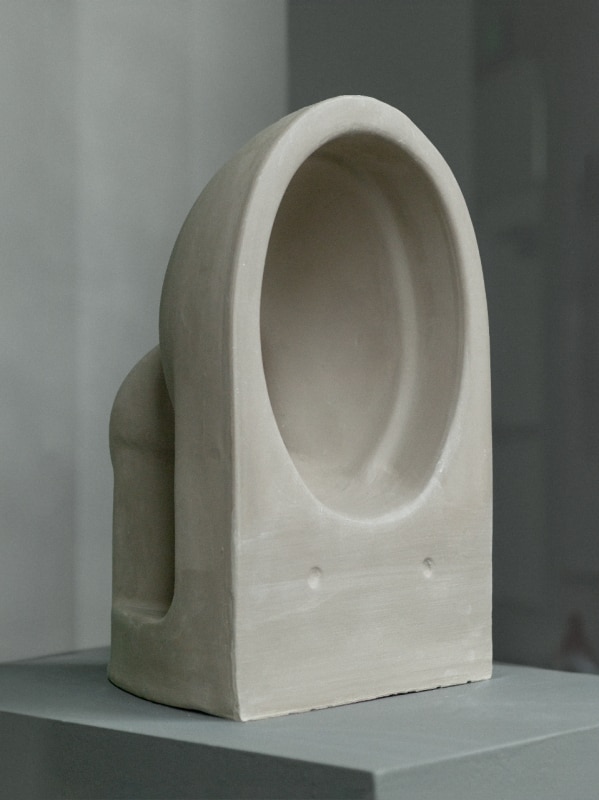
“Biologists told us that if we want to build architecture for fish, we have to consider certain conditions. We translated those conditions into forms.” In Denmark, they explain, stones were historically removed from the seabed to build houses and infrastructure. “In other words, we built houses for humans by dismantling the homes of fish.” The result was a loss of marine biodiversity. Today, “what fish need is surface.” Superflex’s response was to design building blocks that maximize available surface area, applying what they define as a “fish logic to human architecture.”
However, Superflex rejects pure catastrophism. “I always try to think of the alternative. What if the water were disappearing instead of rising? That would be even worse. At least there will be more water—and I love water.”
The statement is funny, unsettling, and strangely hopeful, like much of Superflex’s work. Their art imagines collapse, but also adaptation. It asks what forms of life might emerge after humans stop considering themselves the center of the world. “Sometimes I wonder if human beings might one day return to the sea, just as whales did millions of years ago,” he says. “In a sense, we all come from the ocean. We are fish with feet.”
For Superflex, the future of art may not lie in producing new images of humanity, but in learning to think alongside what is non-human. Their career can be read as a long attempt to move from the artwork as an object to the artwork as an ecosystem, from the artist as a genius to the artist as a collaborator, from the museum to the coral reef. And perhaps, in the end, the most important question posed by their work is not what art can represent, but with whom—or with what—it can be created.