


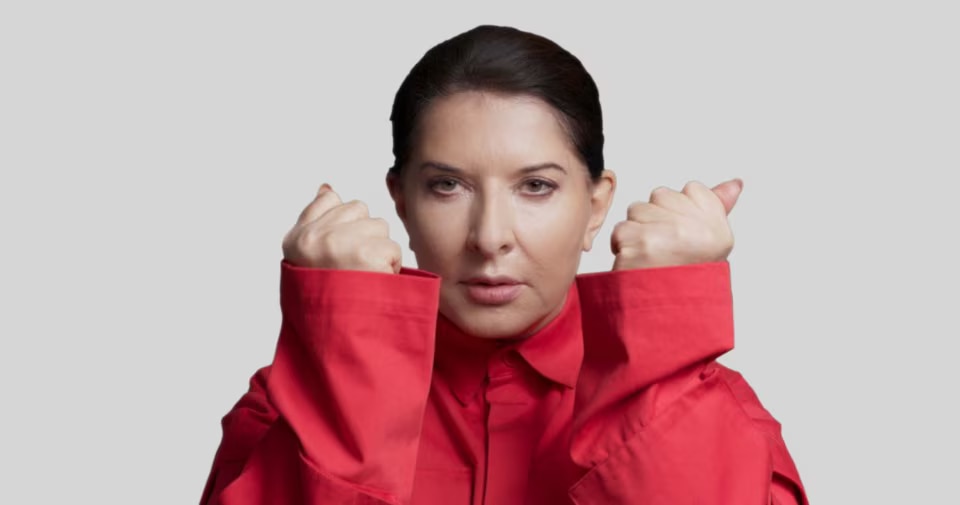
Eighty years of career that owe much to Venice and its Biennal: Marina Abramović is among the most anticipated names returning to the lagoon for the 61st International Art Exhibition, themed “Minor Keys”, scheduled from May 6 to October 19, 2026.
Her return also marks an important transition: Abramović will in fact be the first living female artist to exhibit with a solo show at the Gallerie dell’Accademia, one of the most historic Renaissance art institutions in Venice.
With works ranging from the Middle Ages to the 18th century – from Giovanni Bellini to Titian, from Tintoretto to Paolo Veronese – the Galleries are one of the most representative museums of Venetian painting and have rarely opened to the contemporary. The invitation to Abramović thus breaks a double custom: it introduces a living artist and, at the same time, a female presence in a context historically built on male figures.
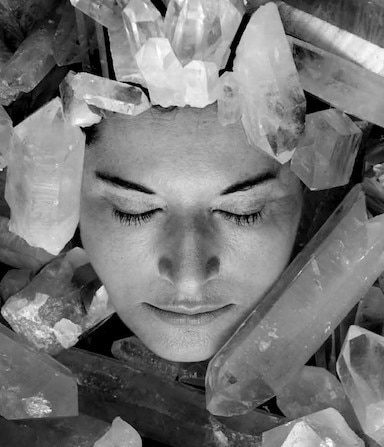
The exhibition, titled “Transforming Energy”, is curated by Shai Baitel, international critic and curator, currently artistic director of the Modern Art Museum (MAM) in Shanghai, and is designed as a widespread path through the entire museum. Here, Abramović’s contemporary and performative works enter into direct dialogue with the permanent collection, without sharp separations.
Installations, videos, and the so-called “Transitory Objects” – stone and crystal structures designed to be activated by the public – will build, from May 6 to October 18, an experience revolving around the central themes of the Serbian artist’s research: the body, perception, energy, but also the disturbing and the anomalous.
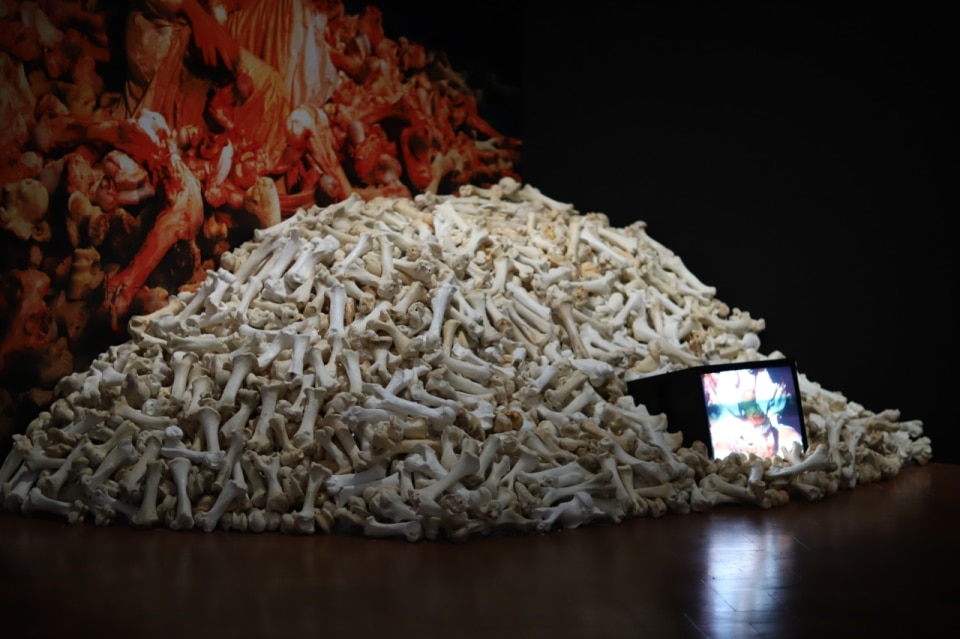
Alongside these works, the path will include some of the key performances of her career. Among these, Rhythm 0 (1974), the radical action in which the artist offered herself completely passive to the public, providing 72 objects – even potentially dangerous ones – to reflect on the limits of responsibility and collective violence; and Balkan Baroque, the performance that caused a scandal at the 1997 Venice Biennale, where Abramović spent days cleaning animal bones to remember the atrocities of the Balkan war.
Among the most anticipated moments is the direct comparison between Marina Abramović and Titian, built around two works. On one side, Pietà (with Ulay) (1983), in which Abramović stages her own body alongside that of Ulay – historical collaborator and partner, who passed away in 2020 – in a sort of contemporary deposition, entirely centered on relationship and fragility. On the other, Titian’s Pietà, a large canvas created between 1575 and 1576, considered his last work and completed after his death by Palma il Giovane, now preserved at the Gallerie dell’Accademia.
Opening image: Marina Abramovic, film still from Body of Truth, © Indi Film, 2019
- Exhibition:
- Marina Abramović: Transforming Energy
- Curated by:
- Shai Baitel
- Where:
- Gallerie dell’Accademia di Venezia, Venice
- Dates:
- 6 May - 19 October 2026