


This article was previously published on Domus 1106, November 2025.
For this contribution I am asked to consider my work – where I set everyday and industrial materials in motion through simple mechanical systems, making them produce sound and activating entire spaces acoustically – under the perspective of immateriality and digitality.
This may at first appear contradictory, since my works are neither digitally programmed nor controlled, and the resulting installations consist of physical materials conceived for and presented in specific architectural spaces, such as contemporary art museums. Despite these apparent contradictions, my works are regularly also discussed and presented in the context of digital art. Although my works move and are based on mechanical, and therefore “kinetic”, systems, I do not see them as connected to the field of kinetic art.
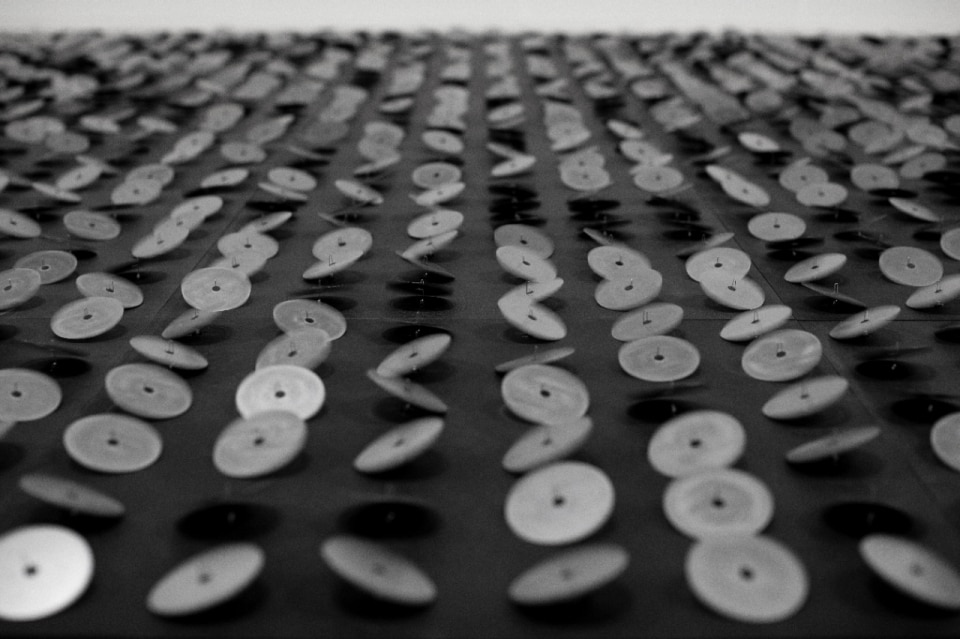
My reason for experimenting with mechanical methods and motion lies in the intention to generate three-dimensional sound fields in real time – accessible sound spaces – through simple principles. I am interested in building systems that, despite their underlying simplicity and sometimes even primitivity, unfold great complexity in their sonic and spatial behaviour.
In doing so, I investigate complexity through simplicity, which also raises questions about perception and even reality. We tend to perceive sound as immaterial, although we experience it physically; although matter-based systems are required to produce sound; and although these systems must set air molecules – again matter – into motion. These moving molecules are then registered by our ears, again a physical system, and the data is transferred to our brains. Seen this way, there seems to be no sound without matter.
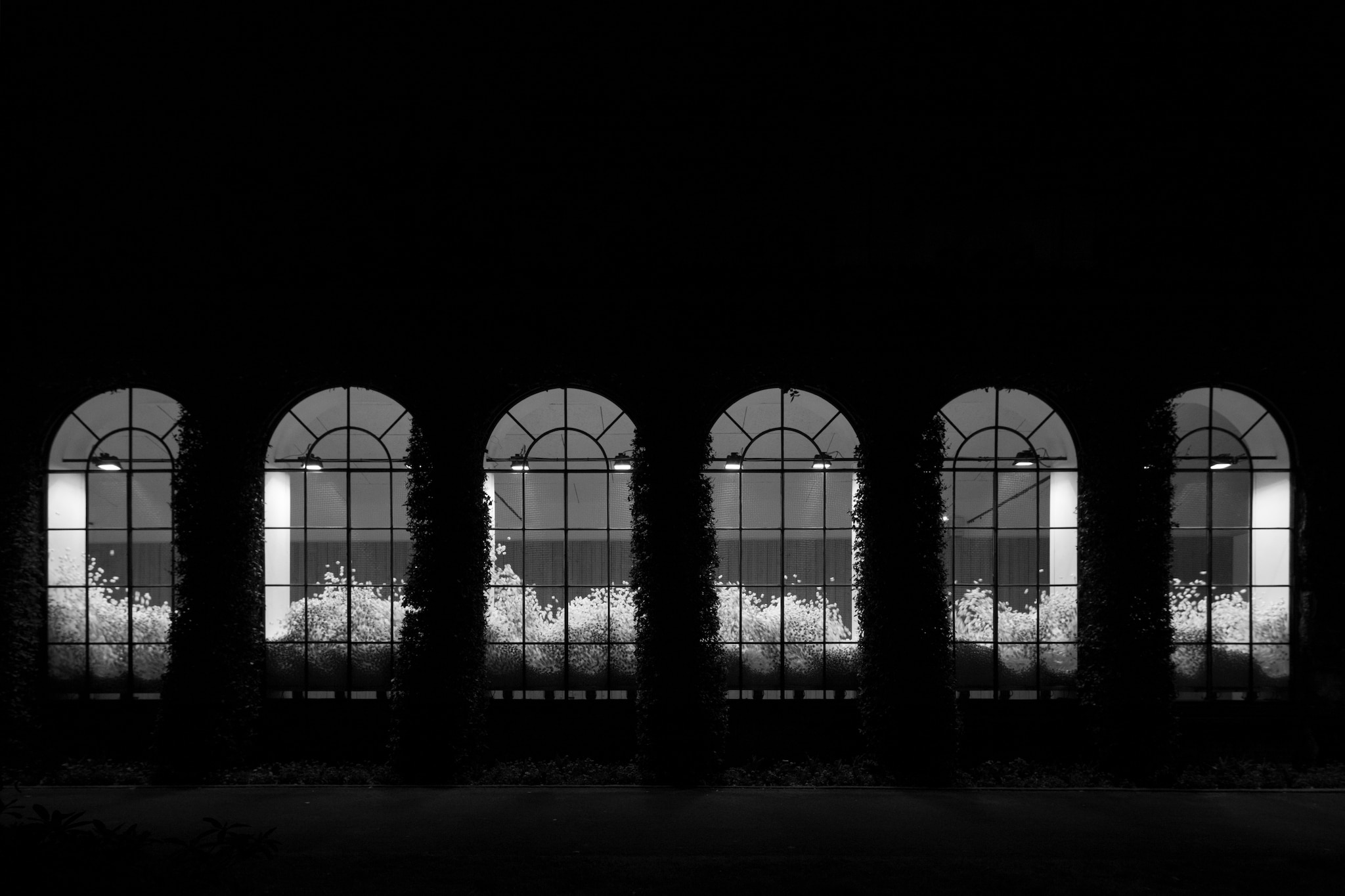
 View gallery
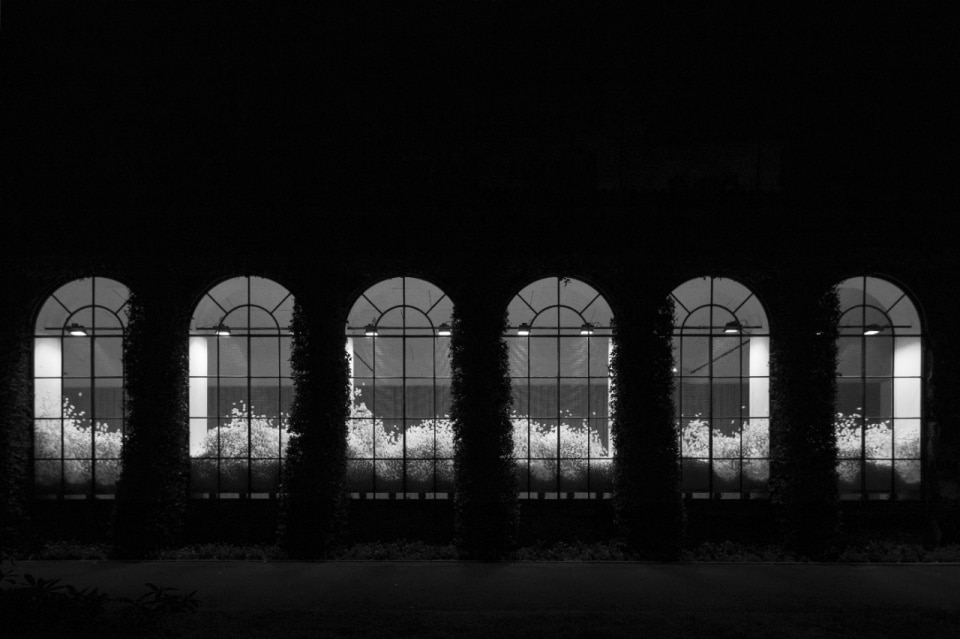


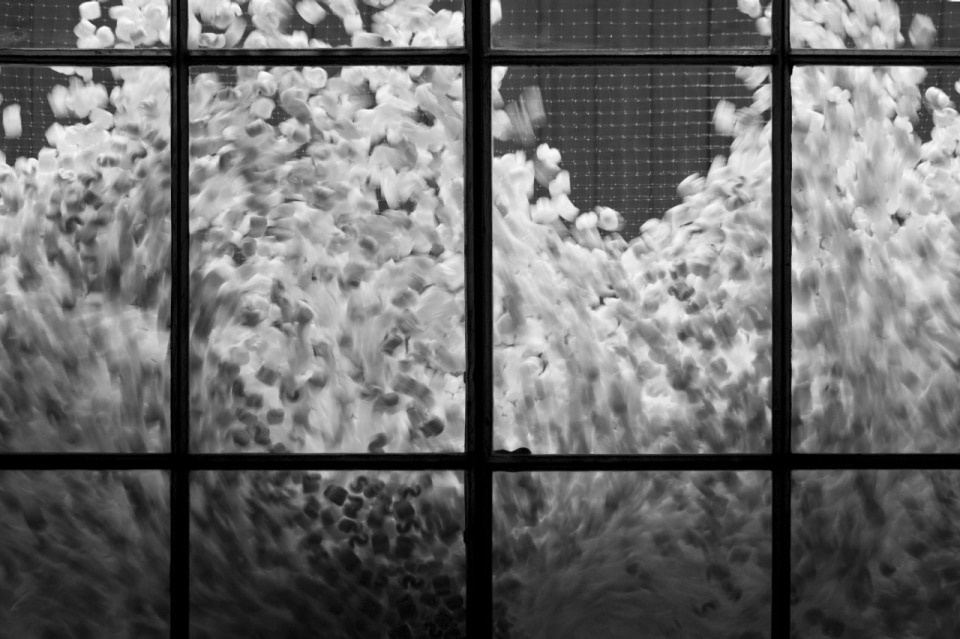
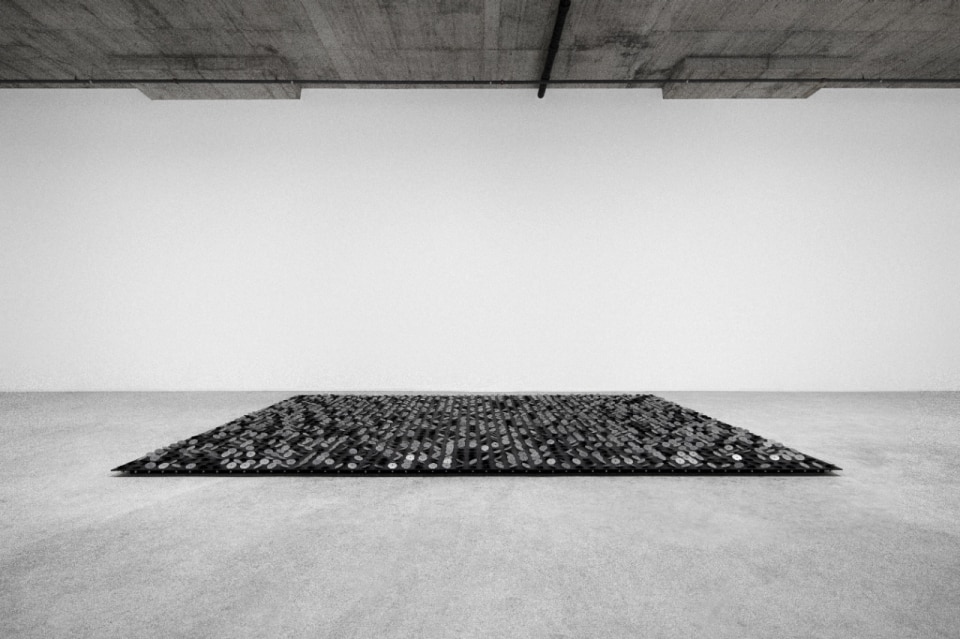
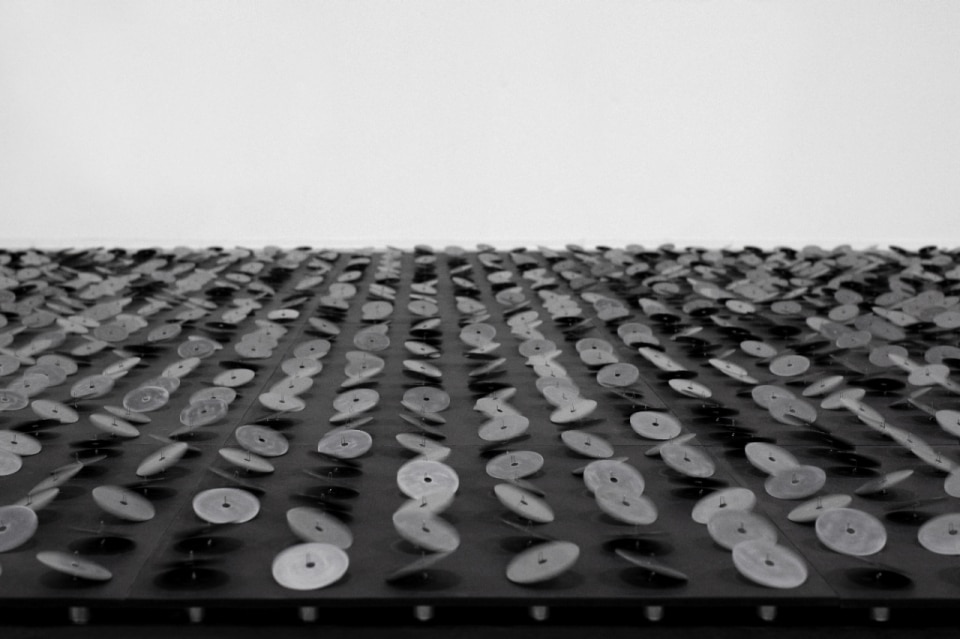
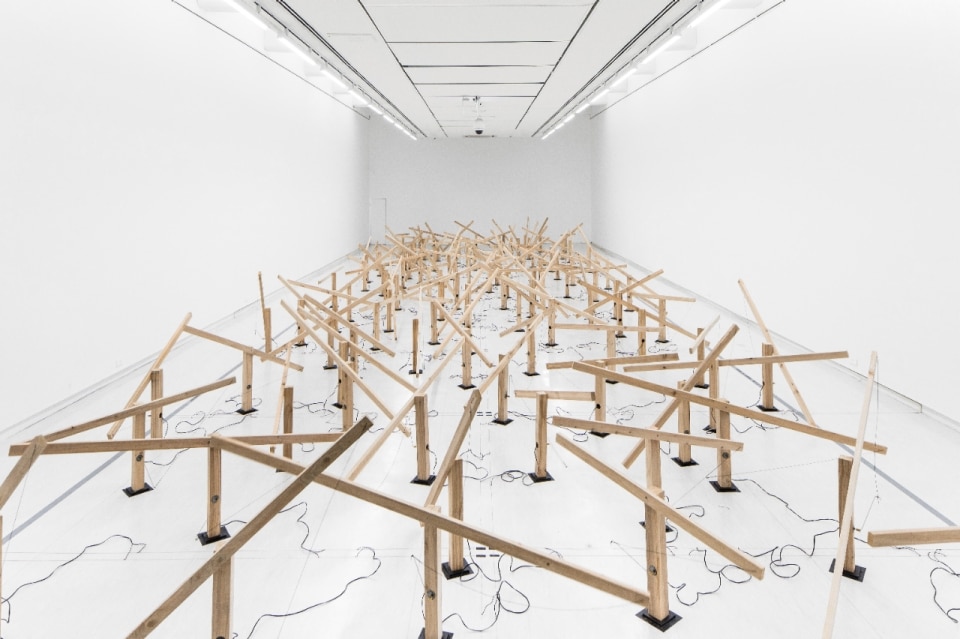
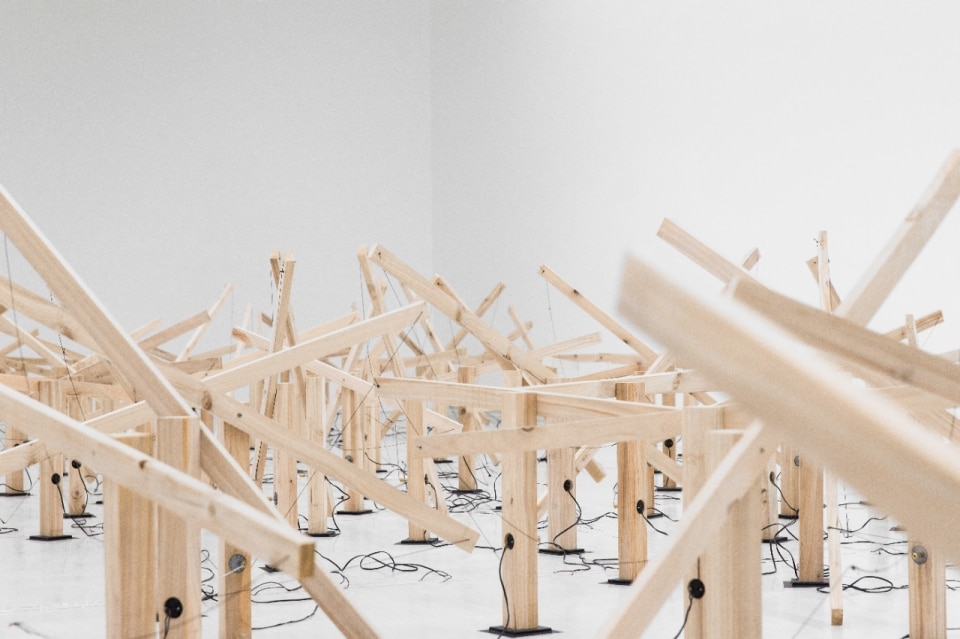
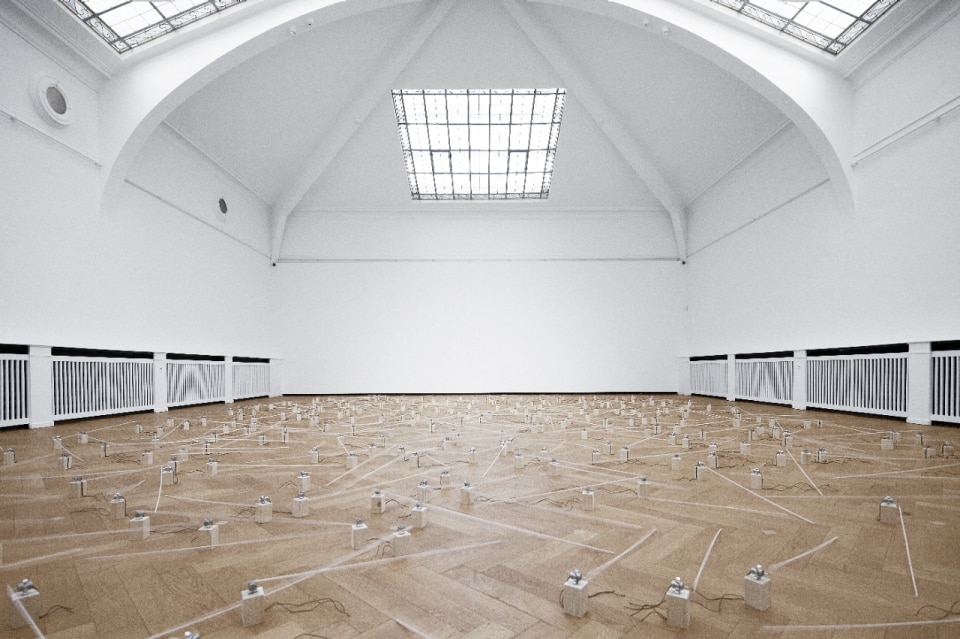
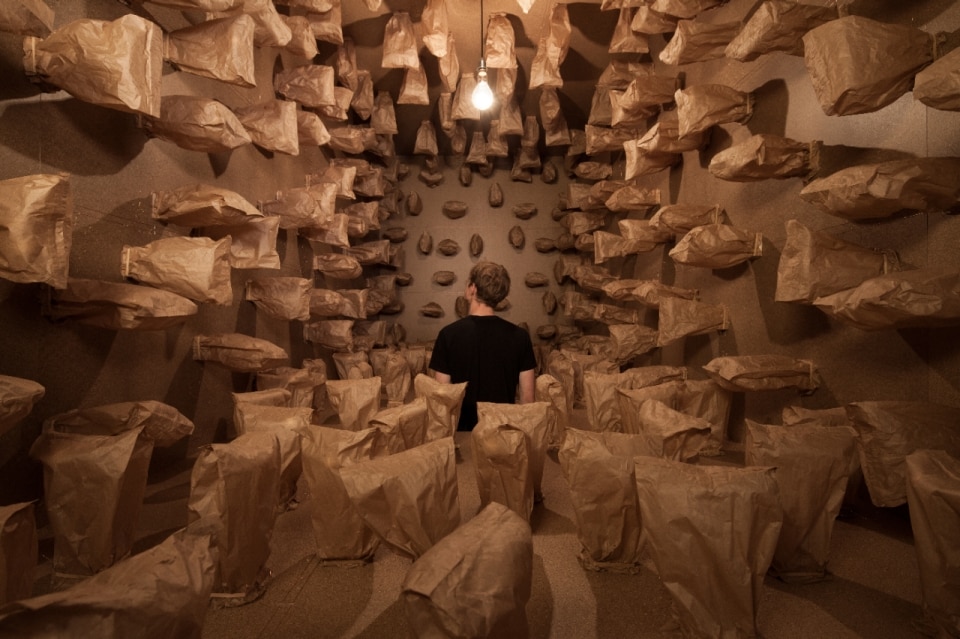

Let’s set aside for now that there are very interesting and inspiring approaches that seriously question the fundamental existence of matter, such as analytic idealism and various scientific experiments. The immateriality in my work does not lie in the absence of material, but in how material is used to make something invisible and ephemeral like sound tangible. Sound is not object but process. It arises in the moment, spreads in space, shifts with movement, architecture and position. From this perspective, my work is less sculpture than situation and state.
While digital processes often rely on abstraction and simulation, my work emerges from the direct physical interaction of motors, materials and spaces. Yet there are parallels: generative processes, serial structures, modularity and emergent patterns can recall algorithmic loops or systems.
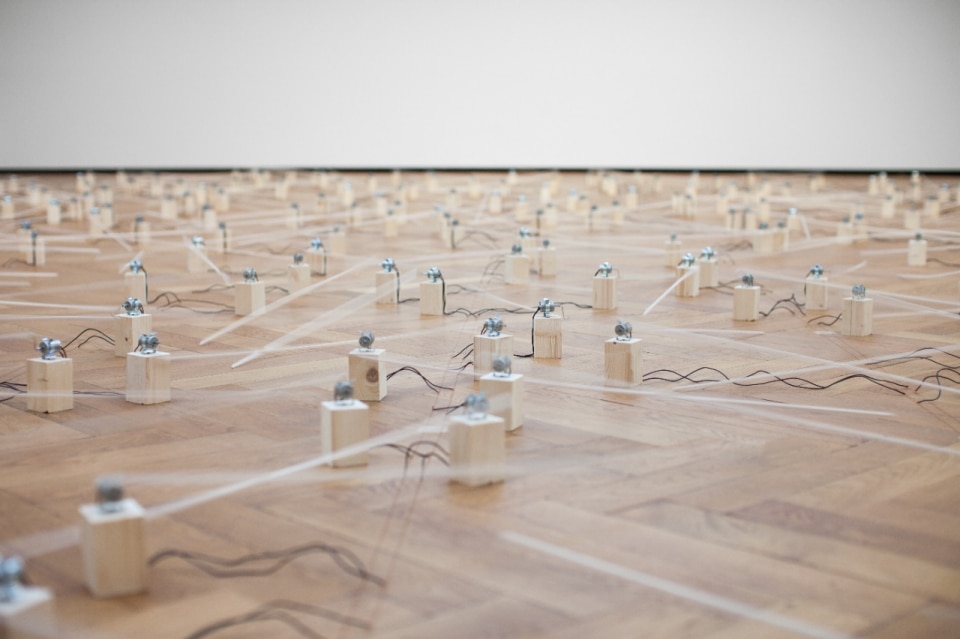
Complexity arises without digital programming, but through the physical and dynamic behaviour of matter – which itself can be understood as a form of programming and composition. Where digital processes usually unfold invisibly, the processes in my work remain observable: we hear what we see and see what we hear – vibrating wood, collisions of steel wire and crackling paper, or spatially orchestrated sound sources, acoustic reflections and resonances within architecture.