Ryumei Fujiki—a Japanese architect and director of F.A.D.S.—has a pure vision of creating architecture that he sums up very simply: "Architecture has always been harsh, heavy and rooted in the ground; despite this, when I think about architecture in the future I see it as soft, light and mobile." Fujiki backs up this programmatic statement by designing objects and spaces that do not have harsh, heavy structures but instead push in the opposite direction via the use of innovative materials and experimental forms.
The Japanese architect's production comprises both large-scale buildings and small-scale experiments that allow him to test visions that although quite abstract are not unfeasible. As well as Artificial Topography—presented here—examples of this research include his Floating Objects and Whole Plastic Architecture—architectural works also exhibited at the renowned Echigo-Tsumari Art Triennale, in the Tokamachi Exchange Center designed by Hiroshi Hara.
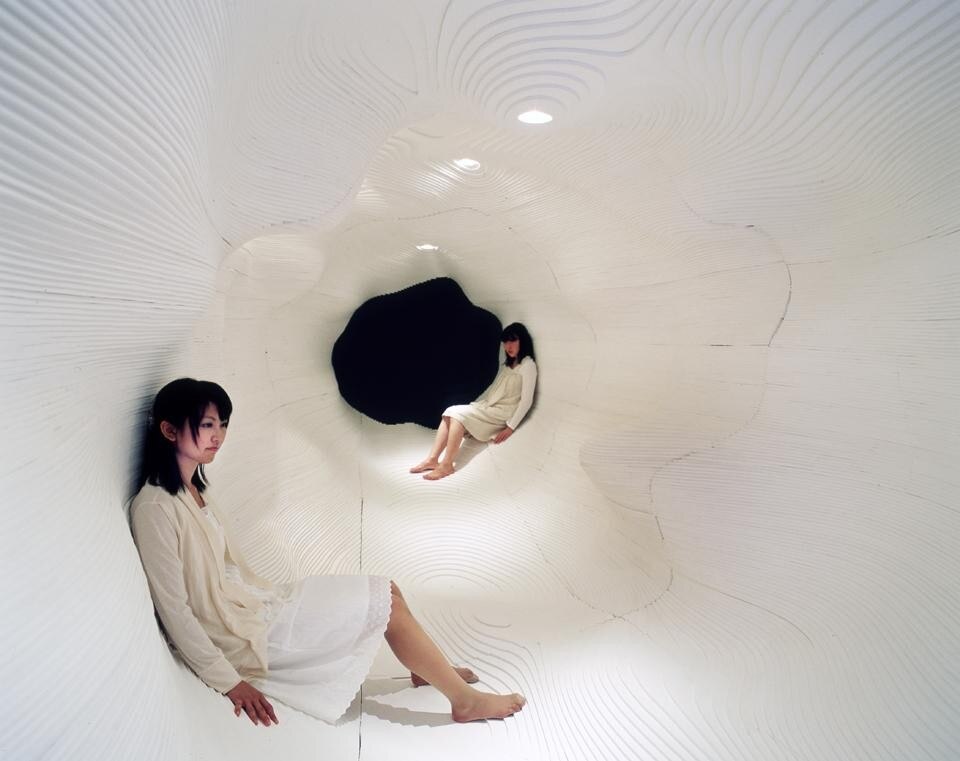
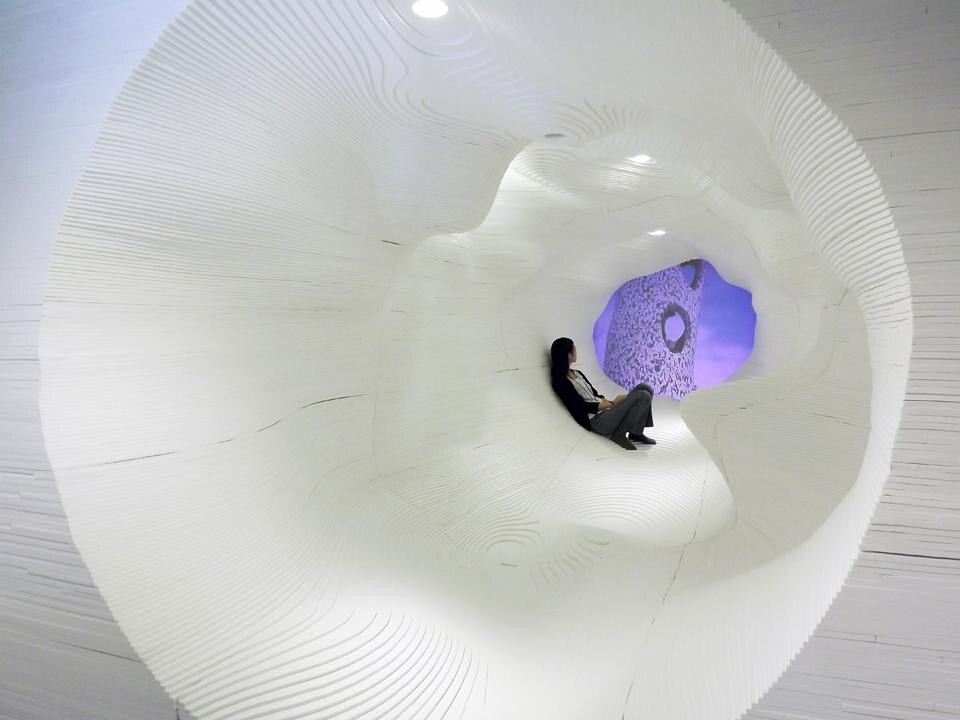
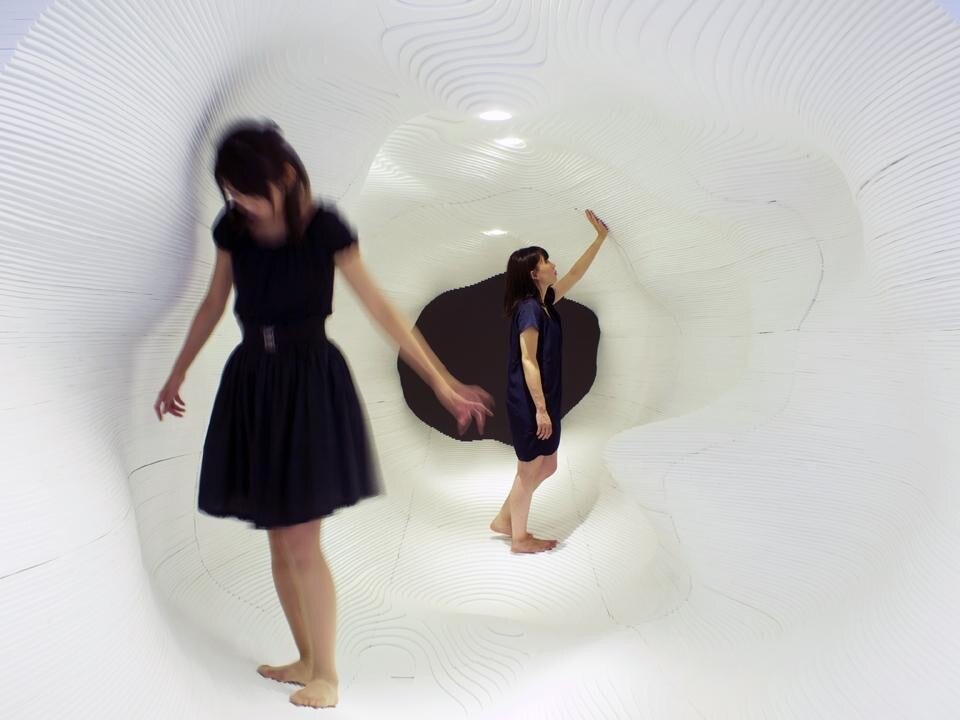
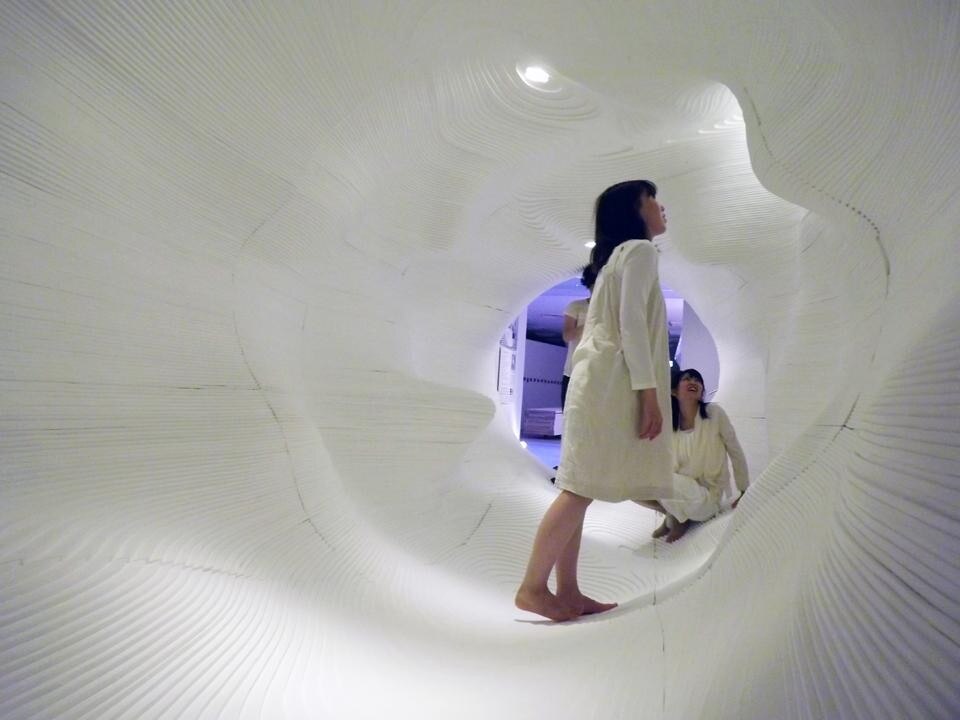
With Artificial Topography, which won the Grand Prize at the "Art in a Container International Competition" at the Kobe Biennale 2011, Fujiki confirmed his line of research by creating a landscape that is soft to the touch and on the eyes. To produce this work, the Japanese architect—aided by Yukiko Sato—started with a given volume—that of a container—which he treated as a solid to be hollowed out, matter to be purified by subtraction: "The idea of removing parts from a compact volume as large as the interior of a container while keeping it recognisable produces architecture that is both archetypal and modern." The protective image of the cave is coupled with the convenient function of the room-sofa, expressed via the sinuous curves traced by Fujiki. He has successfully created both the privacy required of an intimate environment and a certain sense of freedom, which stems from being inside a real albeit miniature landscape. The white landscape of Artificial Topography was made with more than 1000 sheets of soft plastic, cut along contour lines, and provides handholds and recesses that accommodate the bodies of those who enter it to rest. It falls outside the artwork category and can be classified as experimental architecture, a previously unseen hybrid cave-sofa-inner place.
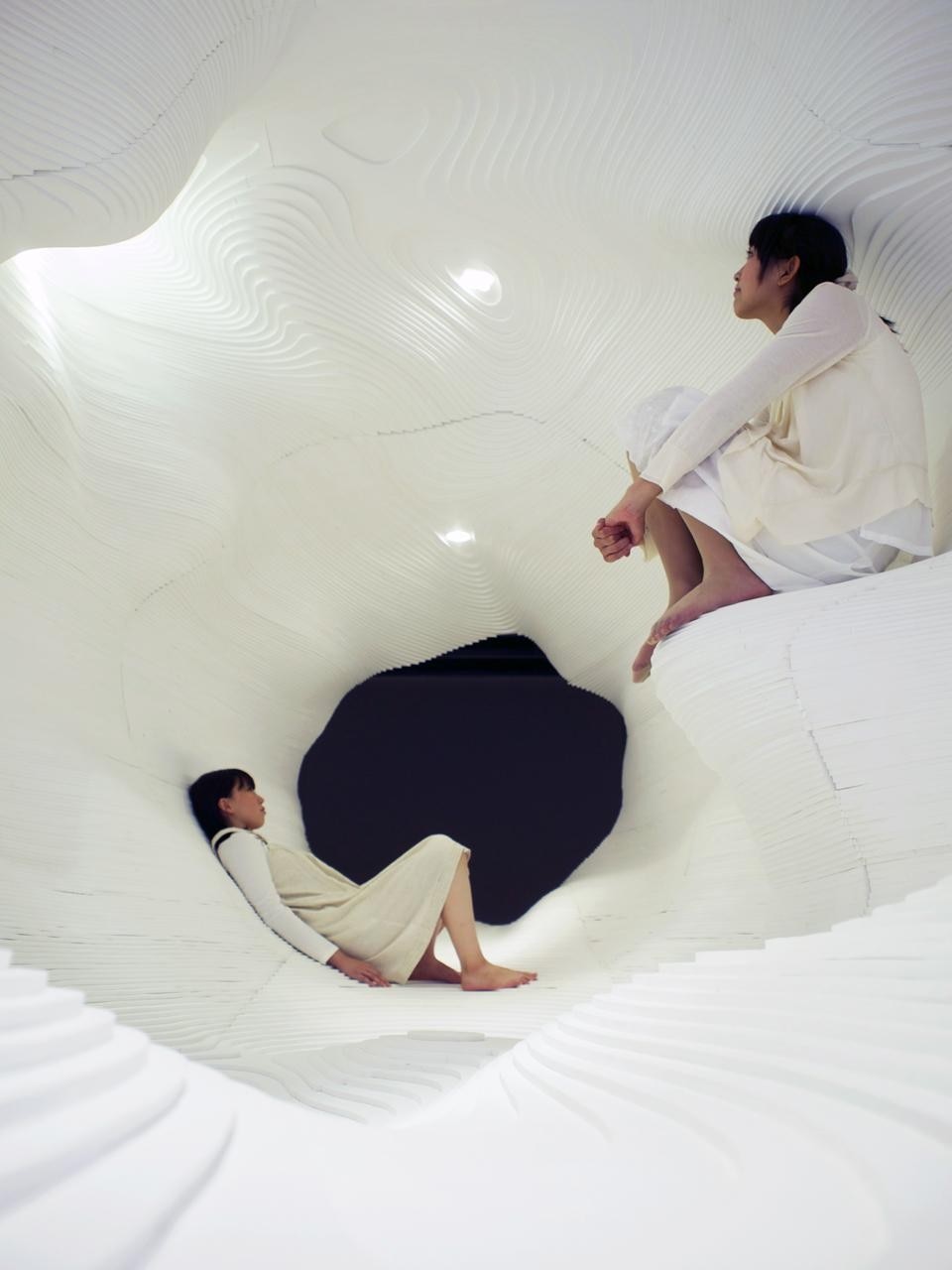
Fujiki's work differs from that of many other architects who produce fluid forms in the way he applies materials and design to make his small creations soft and light. This is not the hard and sculptural fluidity of Zaha Hadid, you understand, made of powerful reinforced-concrete lines, but a fluidity that ensues from small structures based on the relationship between natural systems and the human body. Not forces of nature used as destructive energies but nature that is harmony and calm, Japanese style. With his great interest in natural systems, Fujiki has fashioned a whole series of architectural experiments that create what he describes as "Nature-Oriented Architecture". It all started out as an excuse to take a closer look at natural phenomena and then adopt them as sources of inspiration. In an exhibition in England in 2009 he identified the eight categories "Solar", "Air", "Water", "Ground", "Crystal", "Biological", "Flower", and "Aurora" that form Nature-Oriented Architecture; Artificial Topography—which falls in the Ground Category—is the latest product of his research.
The idea of removing parts from a compact volume as large as the interior of a container while keeping it recognisable produces architecture that is both archetypal and modern.
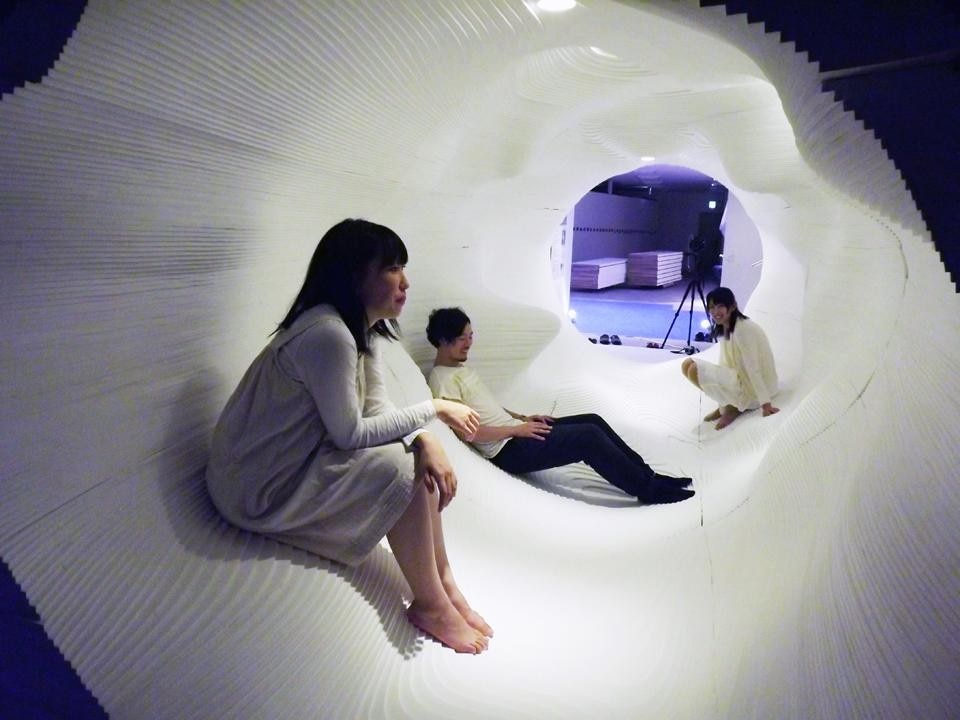
Award: Grand Prize of the "Art in a Container International Competition" at the Kobe Biennial 2011
Design team: Fujiki Studio, KOU::ARC, Kensuke Kawamura, Yoshiki Tachi, Shun Simoya, Kohaku Furihata, Yuki Sakurada, Toshihiko Hatori, Yoshito Fukaya, Yuji Uemura and Yuki Ishigami
Collaborators: Yukiko Sato (F.A.D.S)
Location: Kobe, Japan
Client: Kobe Biennial Committee
Material: Polyolefin firing resin board
Photographers: Masahiro Hoshida and Ryumei Fujiki