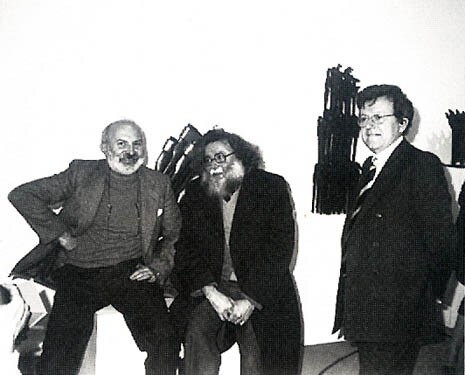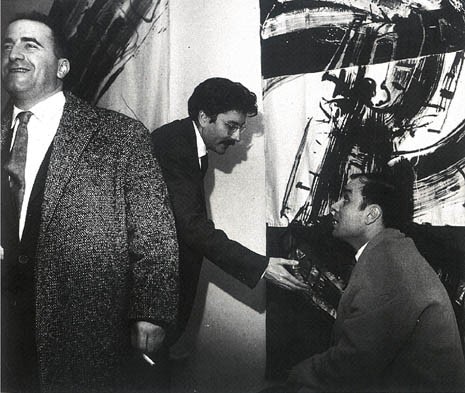
He was never content to be just an observer but was an active participant in the evolving landscape of art. He began collaborating with Domus in the early sixties, under the editorship of Gio Ponti who set up the magazine dedicated to architecture, design and art at an international level. It was around this time, in 1960, that he became involved with the Nouveau Réalistes, a group that included Arman, Cesar, Christo, Klein, Nikki de Saint-Phalle, and Tinguely, who were to shake the foundations of contemporary art in Europe. With actions of real “cultural warfare” the group held itself up against Anglo Saxon pop and abstract art in an attempt to rediscover nature in art in modern terms, combined with a belief in a humanistic view of industrial culture.
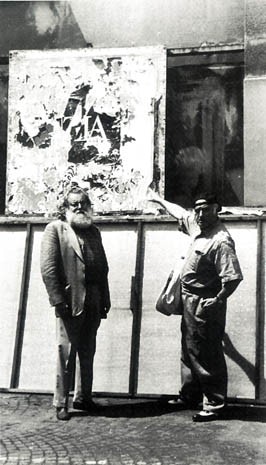
During the years that followed, Restany became a tireless champion of new voices in art, particularly of non western artists. He travelled extensively exploring various regions and cultures, one of which in 1978 found him in Brazil where he wrote the Manifeste du Rio Negro ou du Naturalisme Integral: a kind of spiritual testament in which he put forward a radical all encompassing vision of naturalism as a discipline of thinking and of perceptive consciousness. He was an extremely human character, bound by personal friendship and common interests to a great number of artists and intellectuals – from the Nouveau Realistes (who became some of the biggest exponents of contemporary art) to Mimmo Rotella, Jorge Glusberg and Alessandro Mendini – Restany leaves a great void in art criticism at an international level, but also a strong heritage of ideas, projects and aspirations with regards to the educational and liberating role of art around the world. Pierre
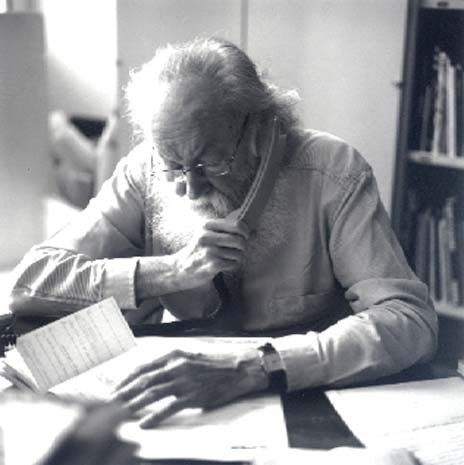
Restany was born in 1930. After a childhood spent in Morocco, he pursued his university studies in France, Italy and Ireland. From 1963 until the time of his death, he worked as a special correspondent for Domus, dividing his time between Milan and Paris. In 1984 took part with Maria Grazia Mazzocchi in the founding of the Domus Academy. From 1985, he directed the quarterly magazine d'Ars. Author of countless publications, including the first monograph on Yves Klein, he was also involved with many important art institutions. He served as jury president for UNESCO, president of the artistic committee for Open - the annual exhibition of contemporary sculpture held at the Venice Lido and was on the committee of a number of art biennales, including Venice (1999), Shanghai (2000) Havana (2000) and Istanbul (2001).