



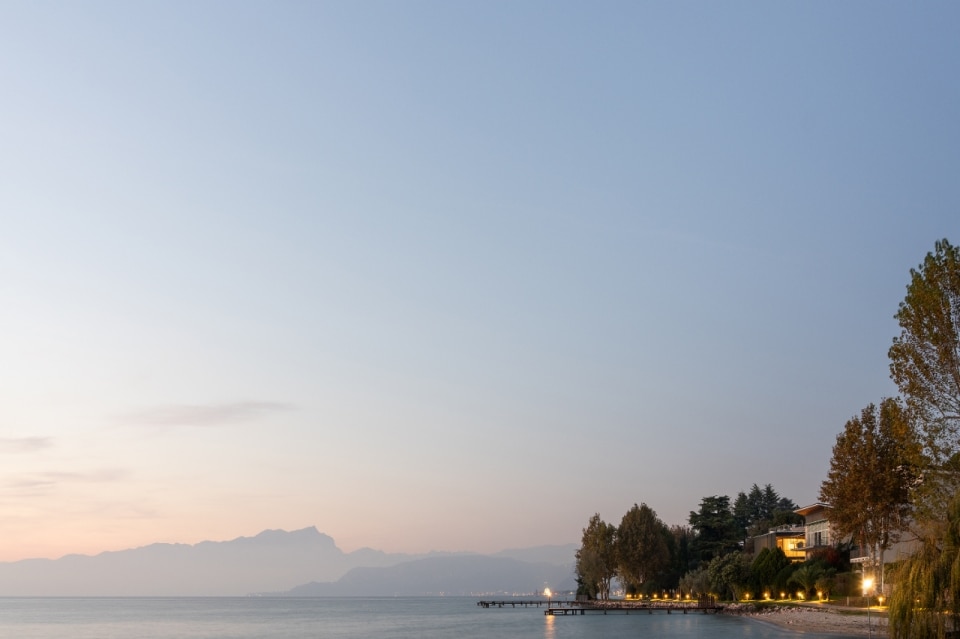
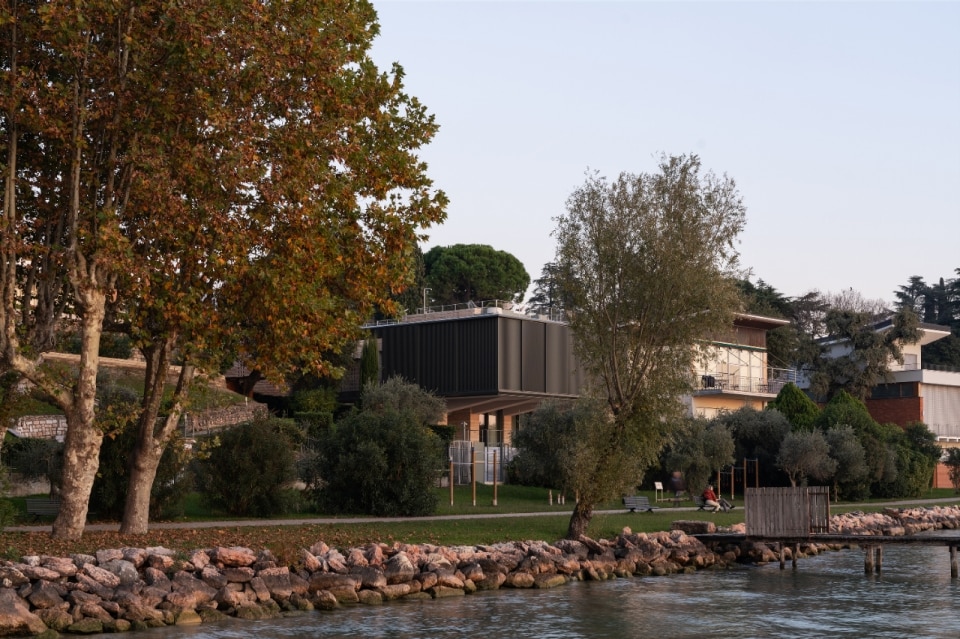
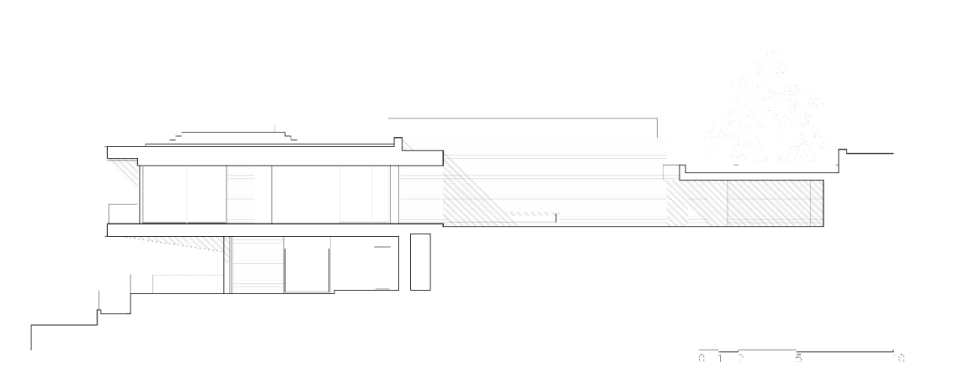
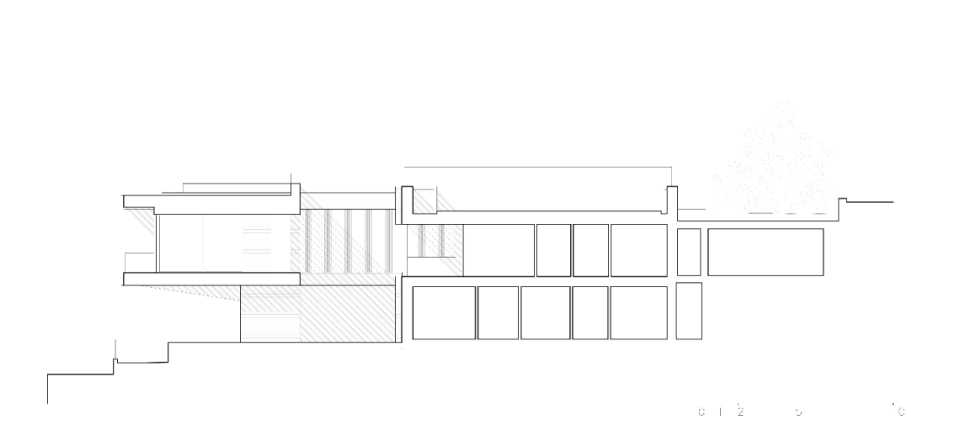
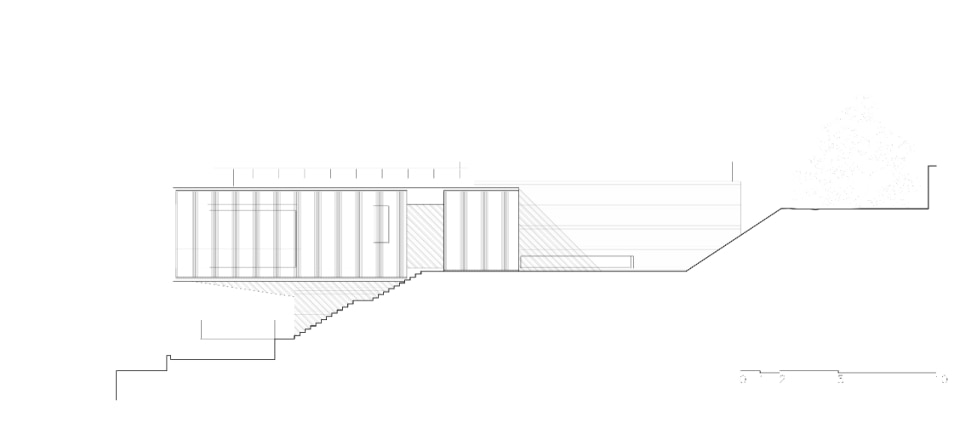
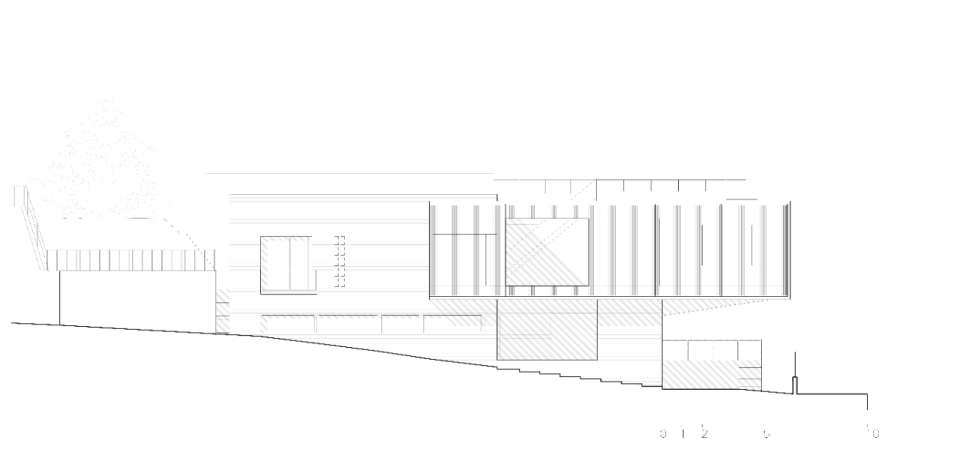
On the eastern shore of Lake Garda, in a landscape dotted with olive trees, cypresses and oleanders, Depaolidefranceschibaldan architetti (ddba) have carried out a renovation and extension of a 1960s villa that blends into the landscape through a play of contrasts between materality and dissolving effects.
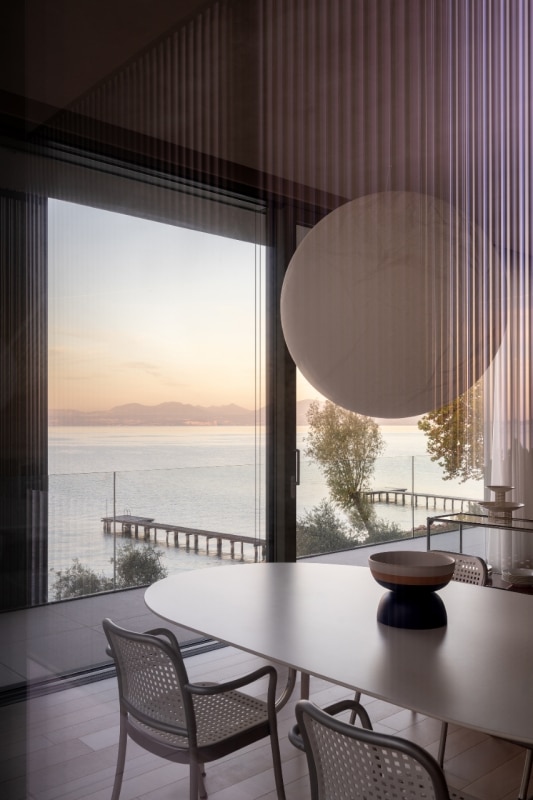
The architecture echoes the rough textures and warm colours of the local context, dematerializing them at the same time through the use of glass walls, visual screens and transparencies that blur perceptual and spatial boundaries, creating a lively dialectic between full and empty spaces, interior and exterior, gravity and lightness.
The textures and colours of the context dematerialize in glass walls, visual screens and transparencies, creating a lively dialectic between full and empty spaces, interior and exterior, gravity and lightness.
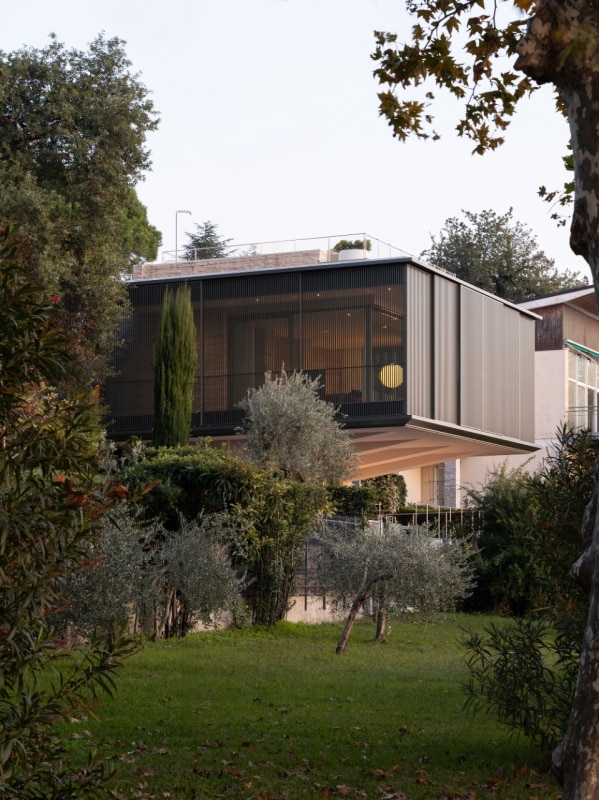
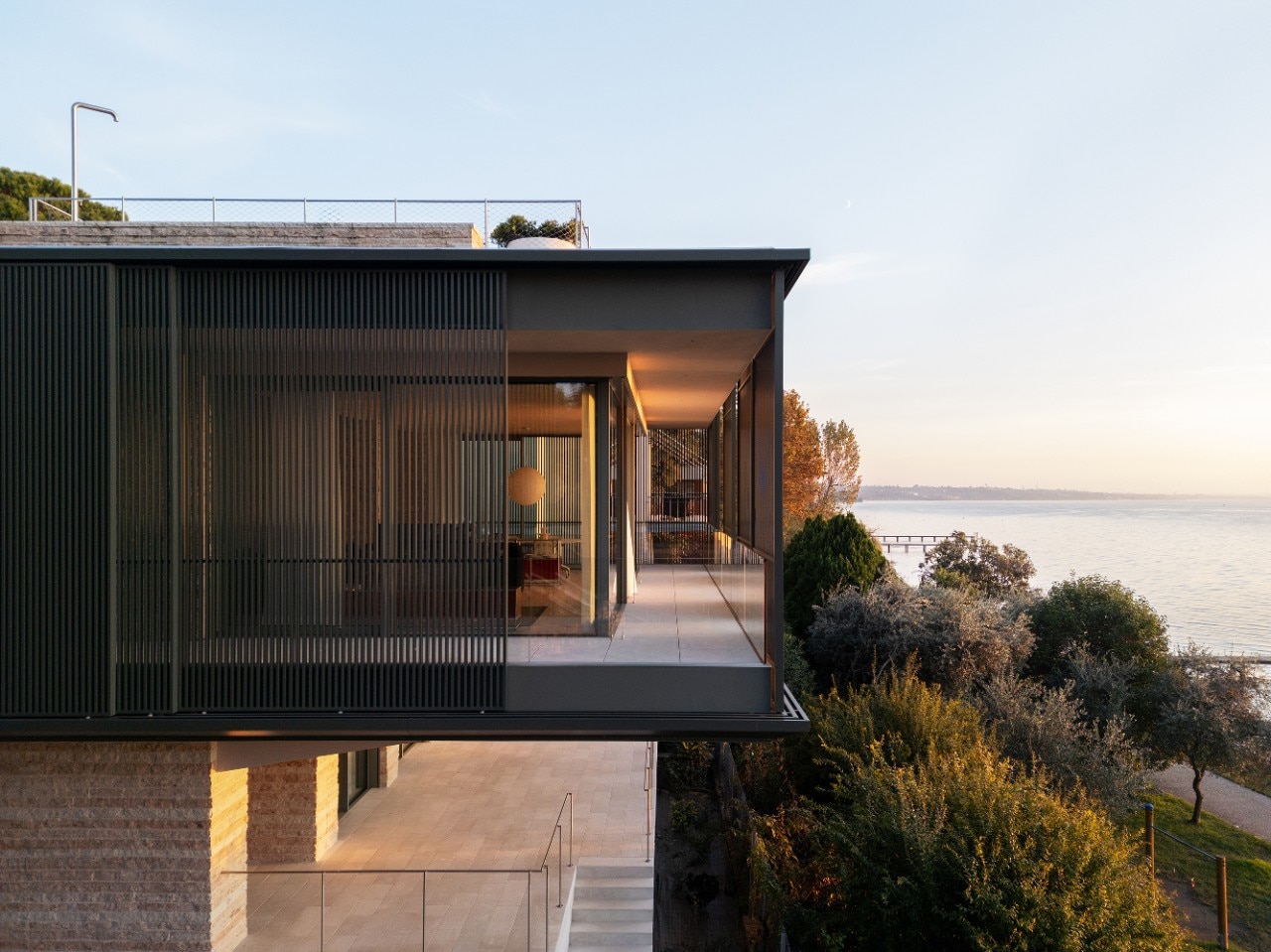
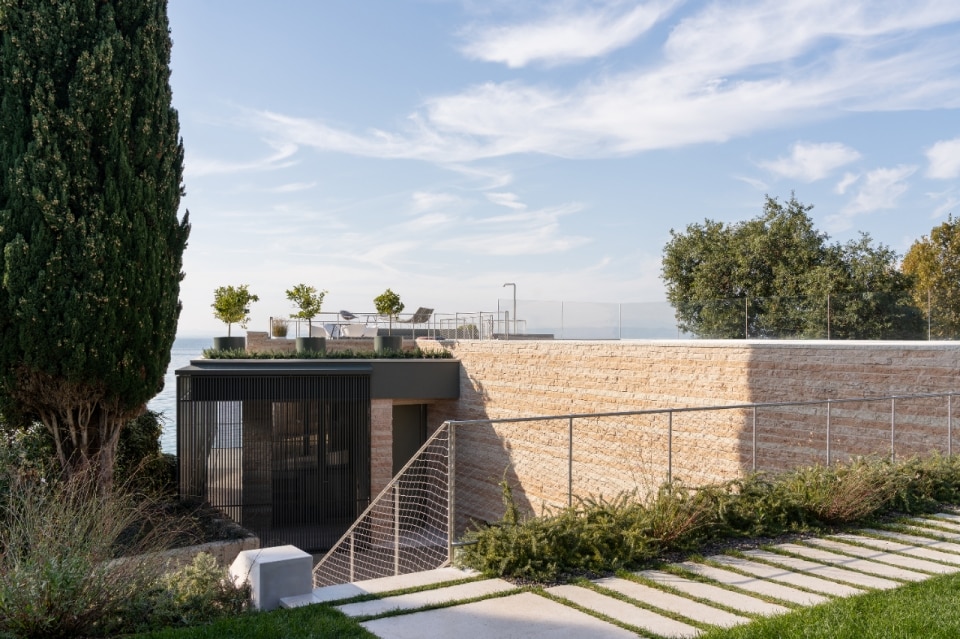
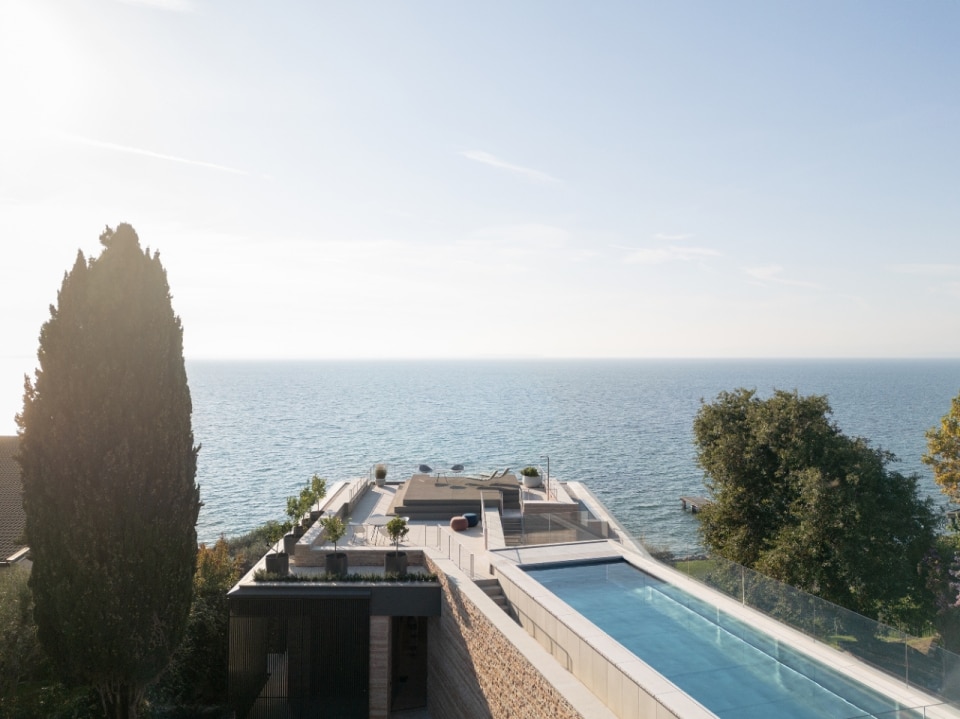
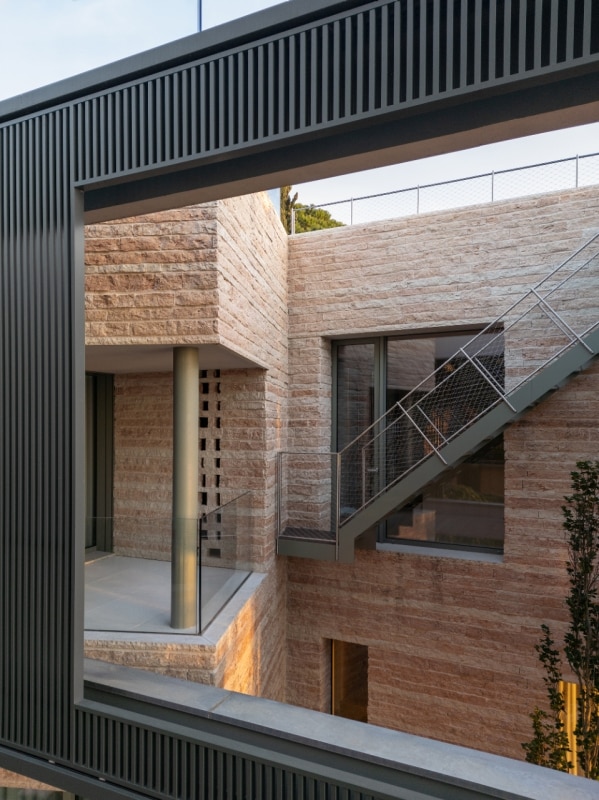
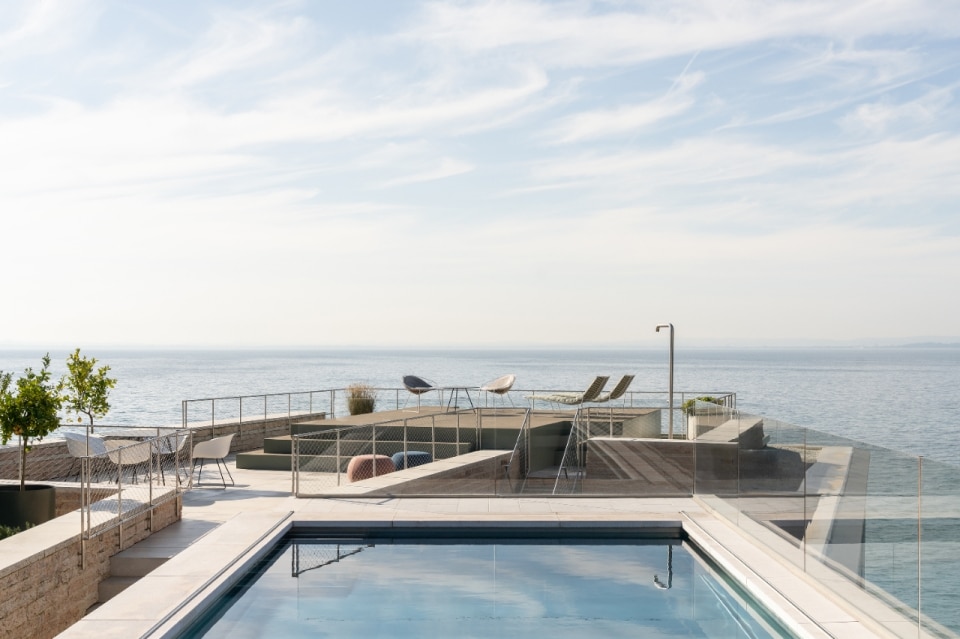
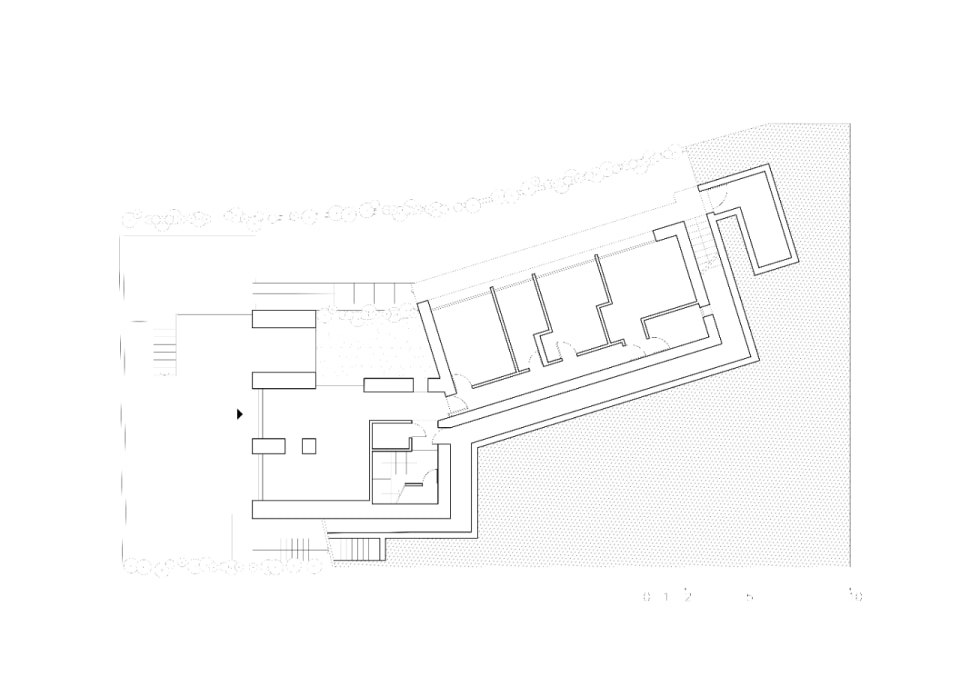
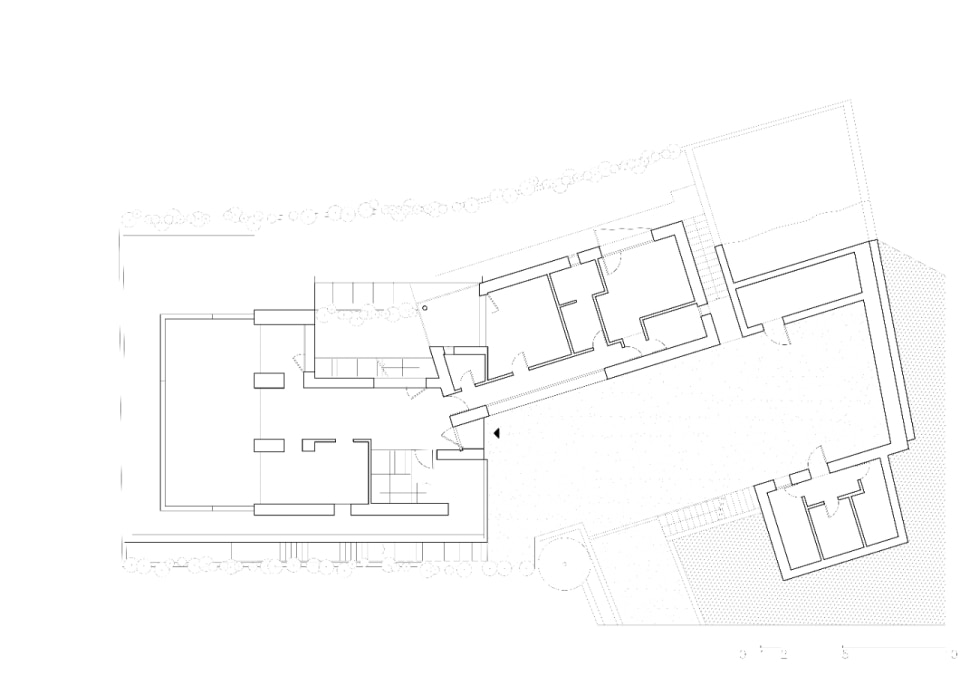
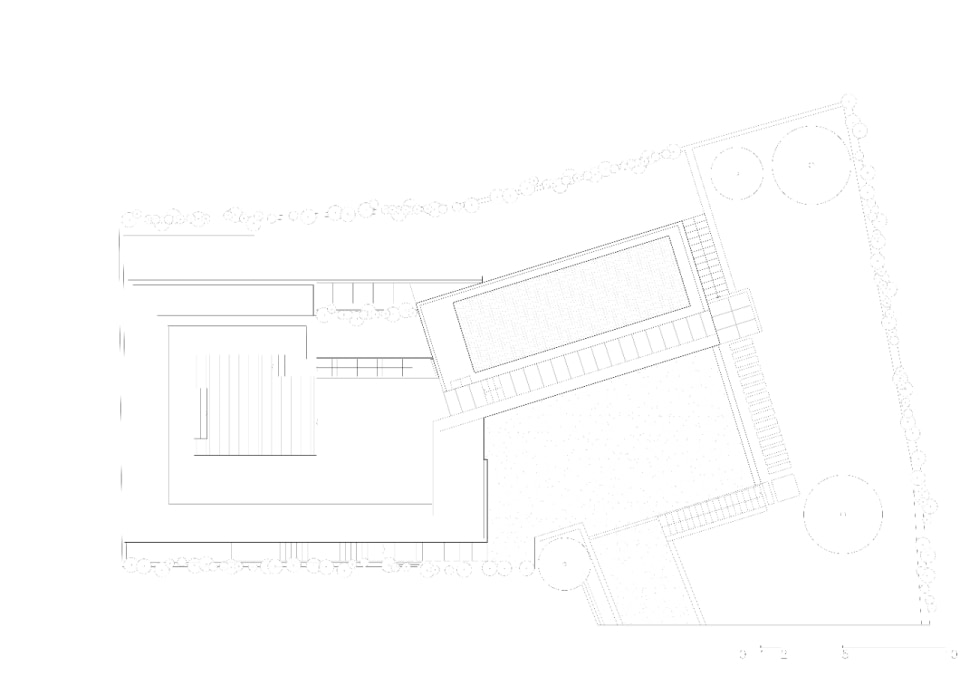
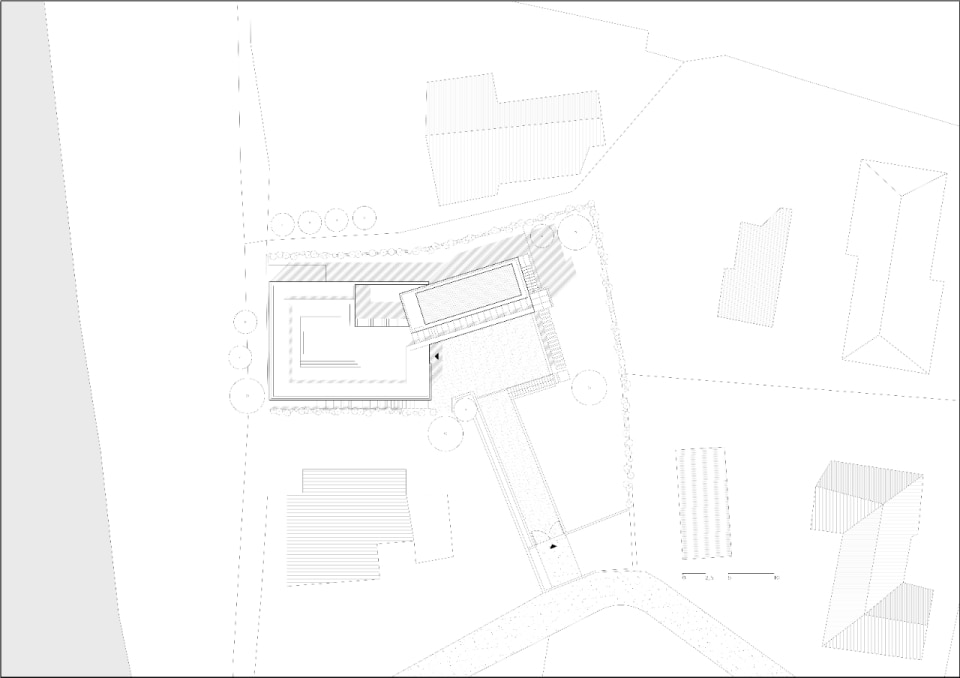
The complex is a cluster of essential volumes, arranged on two levels, that lie on the terrain, nestling into the slope: a main body, projected towards the lake, housing the common areas; a second, set-back volume, for private rooms; and a third, below ground, in extension, enclosing the entrance courtyard. On the roof, the solarium and swimming pool offer spectacular views of the lake and mountains.
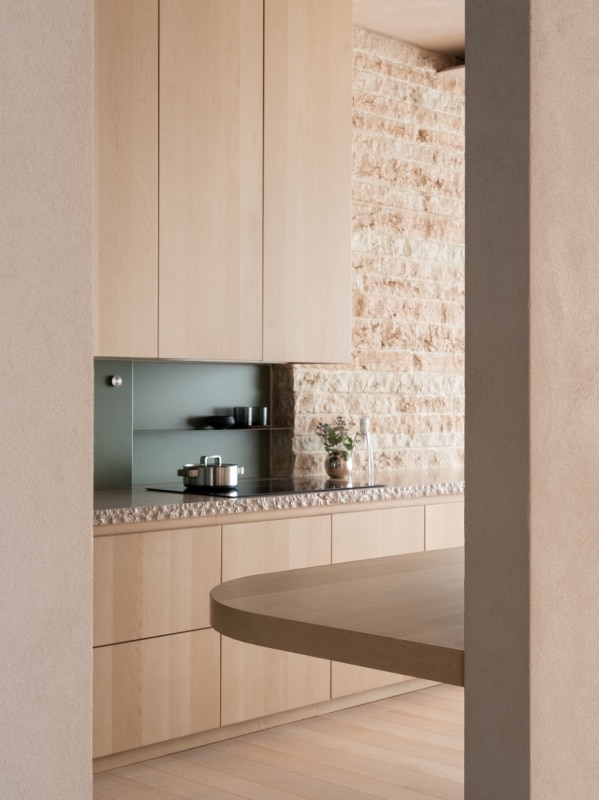
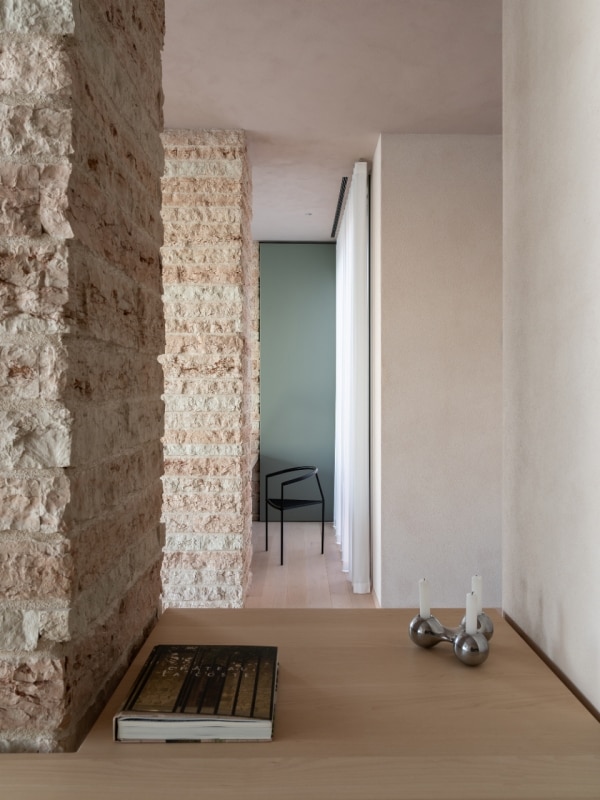
The dualism between material accents and vanishing effects enhances the composite character of the building. On the outside, the pink Lessinia stone cladding, laid on the side walls and on the base in horizontal bands with a split finish, recalls the stratifications of the hillside rock, vigorously rooting the construction in the colours and textures of the place.
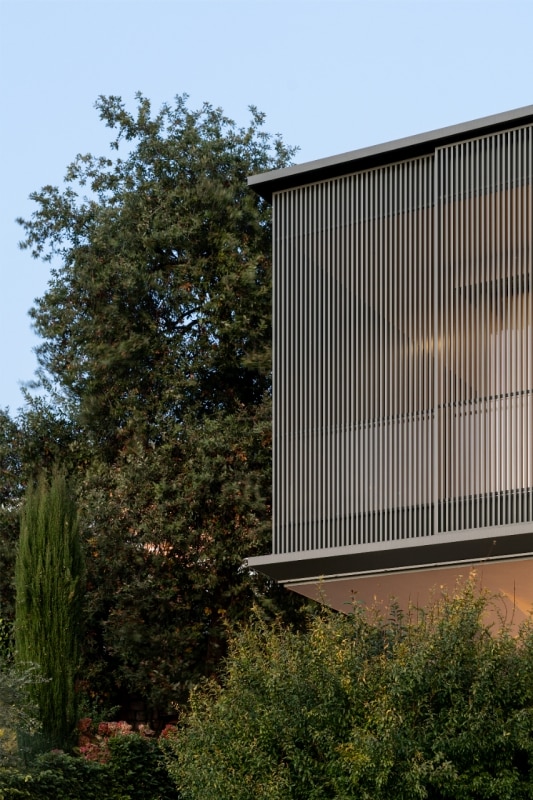
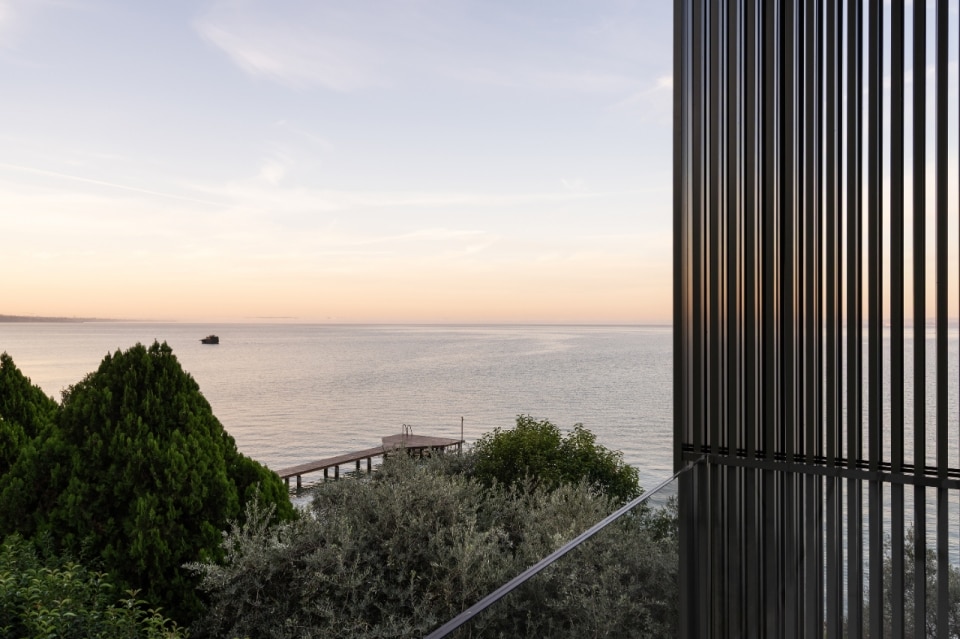
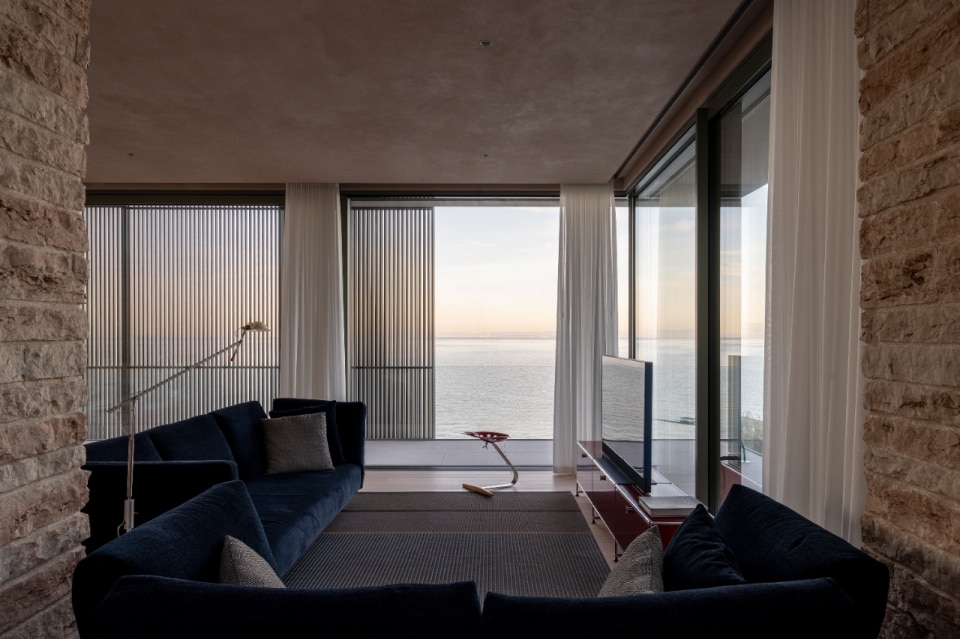
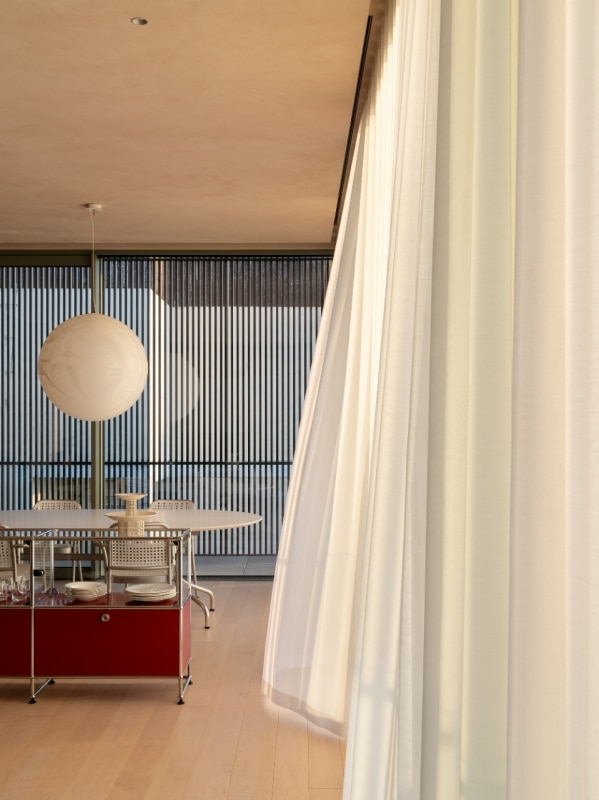
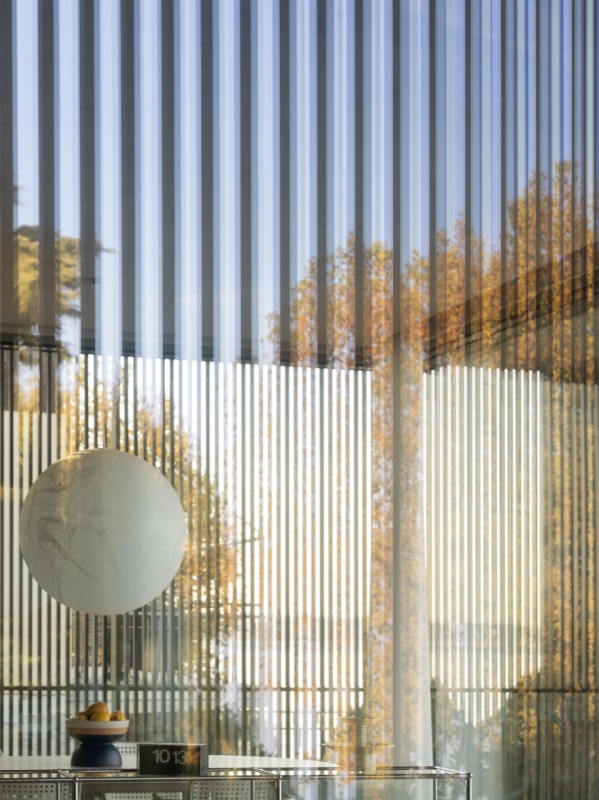
Towards the lake, the massive consistency of the construction dissolves into the shell of the main volume, where large windows open onto a perimeter loggia, screened on the outside by movable metal shading panels: a backdrop protecting domestic privacy which, depending on the needs, gradually opens up to the landscape, creating a diaphanous halo around the house and ensuring control of radiation and introspection.
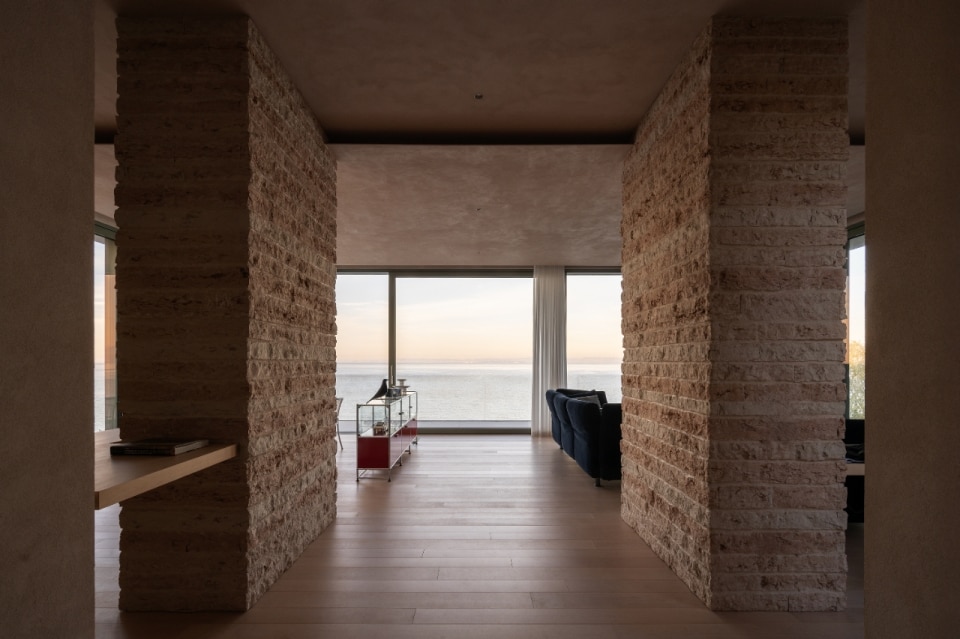
Inside, the material dialectic continues in the soft-toned stone cladding of the walls, and the domestic warmth brought to the rooms with the exposed wood finishes and floors, while the light filtering through the windows reverberates on white curtains and essential furnishings, giving the composition a radiant and peaceful character.