


.jpg.foto.rmedium.png)
.jpg.foto.rmedium.png)
.jpg.foto.rmedium.png)
.jpg.foto.rmedium.png)
.jpg.foto.rmedium.png)
.jpg.foto.rmedium.png)
.jpg.foto.rmedium.png)
.jpg.foto.rmedium.png)
.jpg.foto.rmedium.png)
.jpg.foto.rmedium.png)
.jpg.foto.rmedium.png)
.jpg.foto.rmedium.png)
.jpg.foto.rmedium.png)
.jpg.foto.rmedium.png)
.jpg.foto.rmedium.png)
.jpg.foto.rmedium.png)
.jpg.foto.rmedium.png)
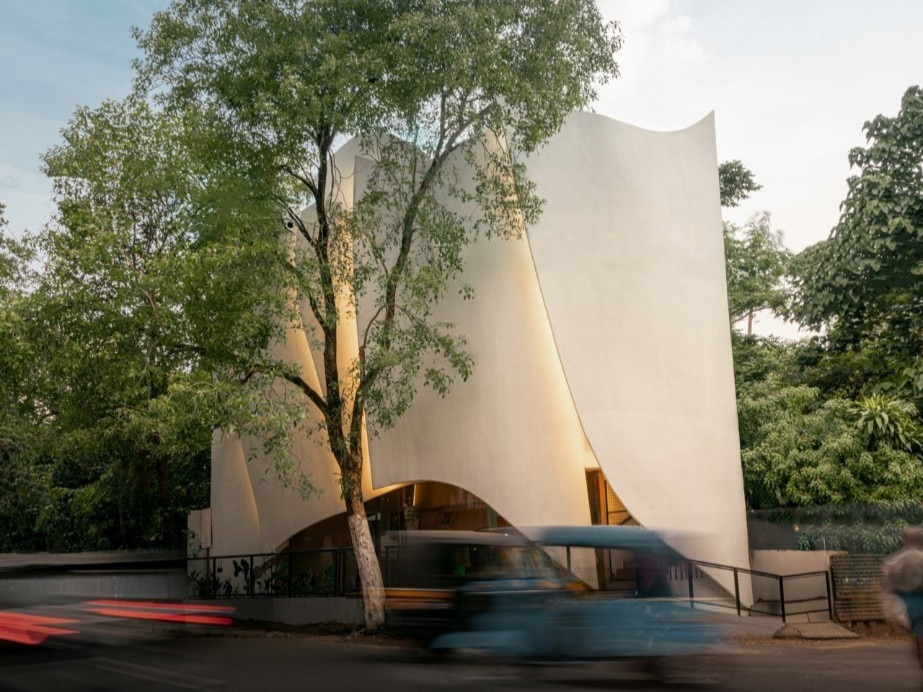
Anganwadis are small facilities in rural India dedicated to early childhood, offering spaces for health, basic services, and the first forms of learning through play. The word translates as “protected courtyards,” but they are rarely places of quality. The one designed by Fahed + Architects in Kochi overturns this notion, introducing unexpected spaces of value on a plot that appeared as a liminal urban void, compressed between the road and the trees.
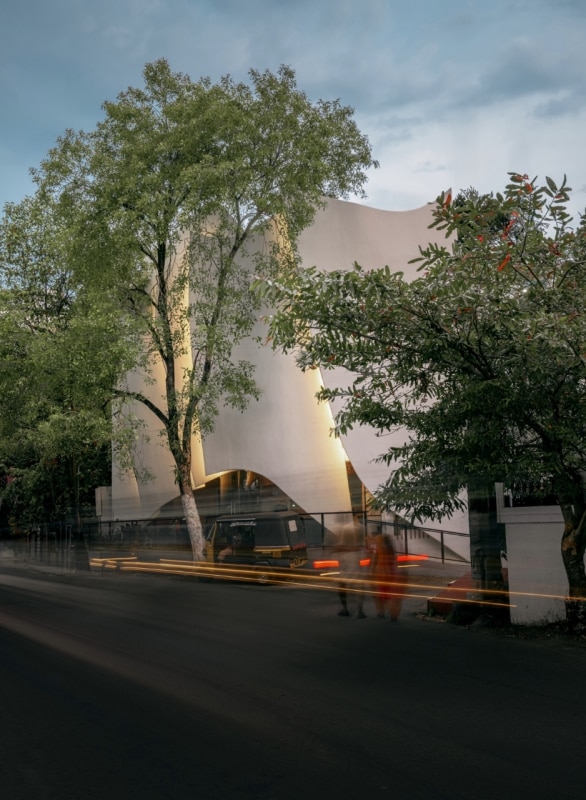
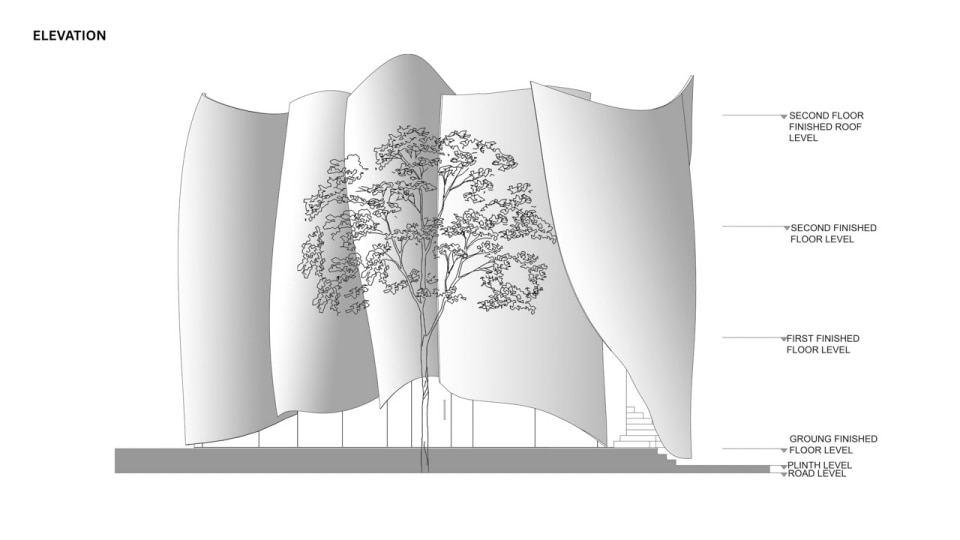
The new building unfolds as a sequence of material drapes which, lifting up, establish a visual connection on the ground floor between inside and outside. On the front side, by contrast, the surfaces remain bare, like canvases drawn by the shadows of neighboring trees. Between one “sail” and the next, full-height glazed openings reinforce the impression of lightness as one approaches.
Solar panels and strategies for natural ventilation help reduce emissions and consumption, integrated into this architectural sculpture among the trees. The reasons behind these unexpected forms do not lie in a will to astonish, but in the possibility of creating bonds of identity and belonging for the community that will use this facility dedicated to children — proving that even the simplest program can be approached with daring ideas.