



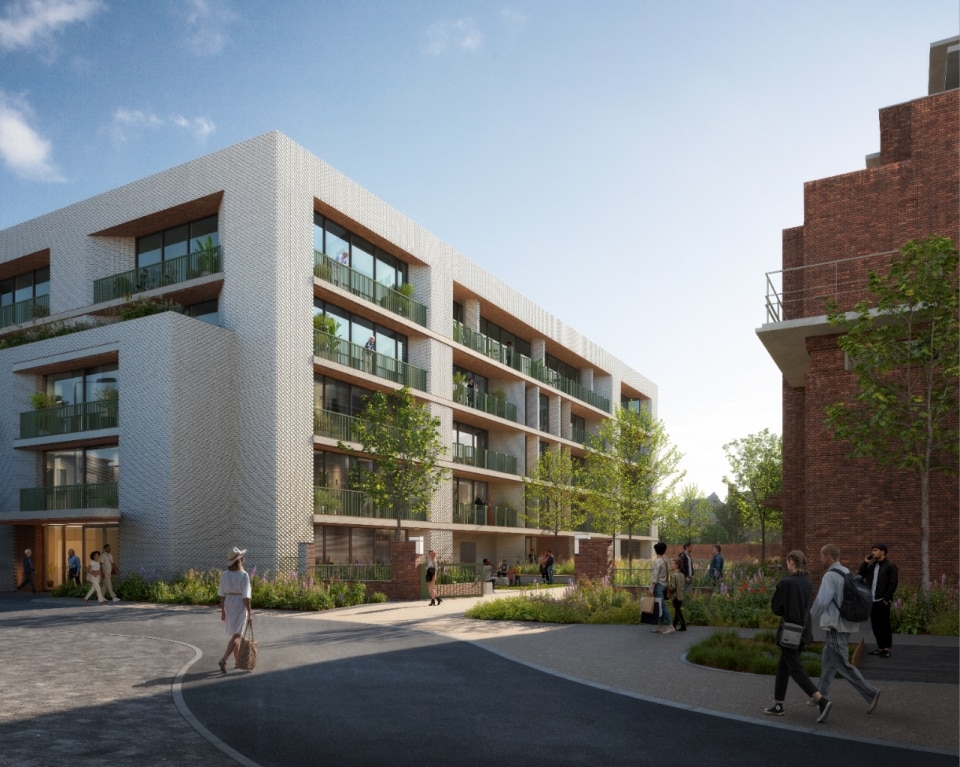
Is it ethically right to manipulate, transform, or demolish parts of a disused building that is considered “of special interest” and protected, if that means giving it a function again and bringing it back to life?
That is precisely what is happening in London, at the former Ravenscourt Park Hospital, a heritage building included by Historic England in the “Heritage at Risk” register as a Grade II listed property. After its final closure in 2006 and nearly twenty years of abandonment, London-based practice Spparc, on behalf of major property developer TT Group, has put forward a regeneration project that has already sparked debate.
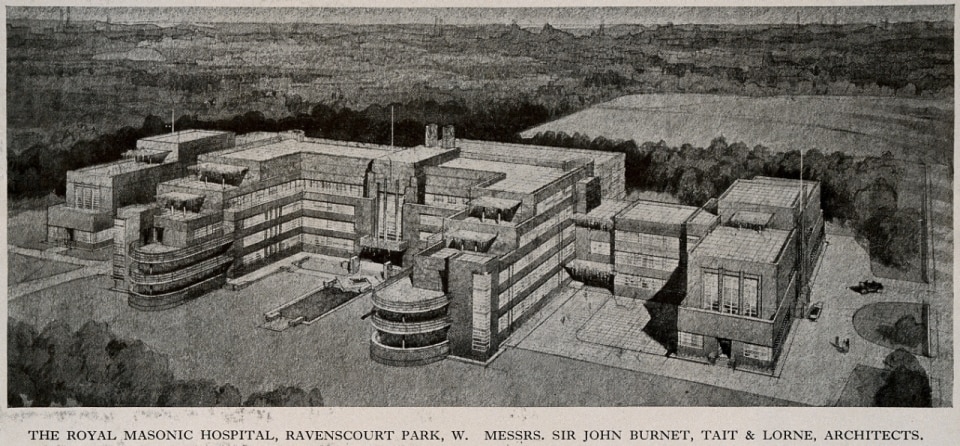
When it opened in 1933, the hospital, designed by Scottish architect Thomas S. Tait, had a different name and a clear purpose: the Royal Masonic Hospital, funded by the English Freemasons, offered 200 beds exclusively for lodge members (a sign of just how deeply rooted the United Grand Lodge of England still was, more than two centuries after its founding). The hospital quickly stood out for its innovative character, winning the RIBA Gold Medal in the same year—one of the most prestigious architectural awards—thanks to a sober, modern design that progressively distanced itself from ornament.
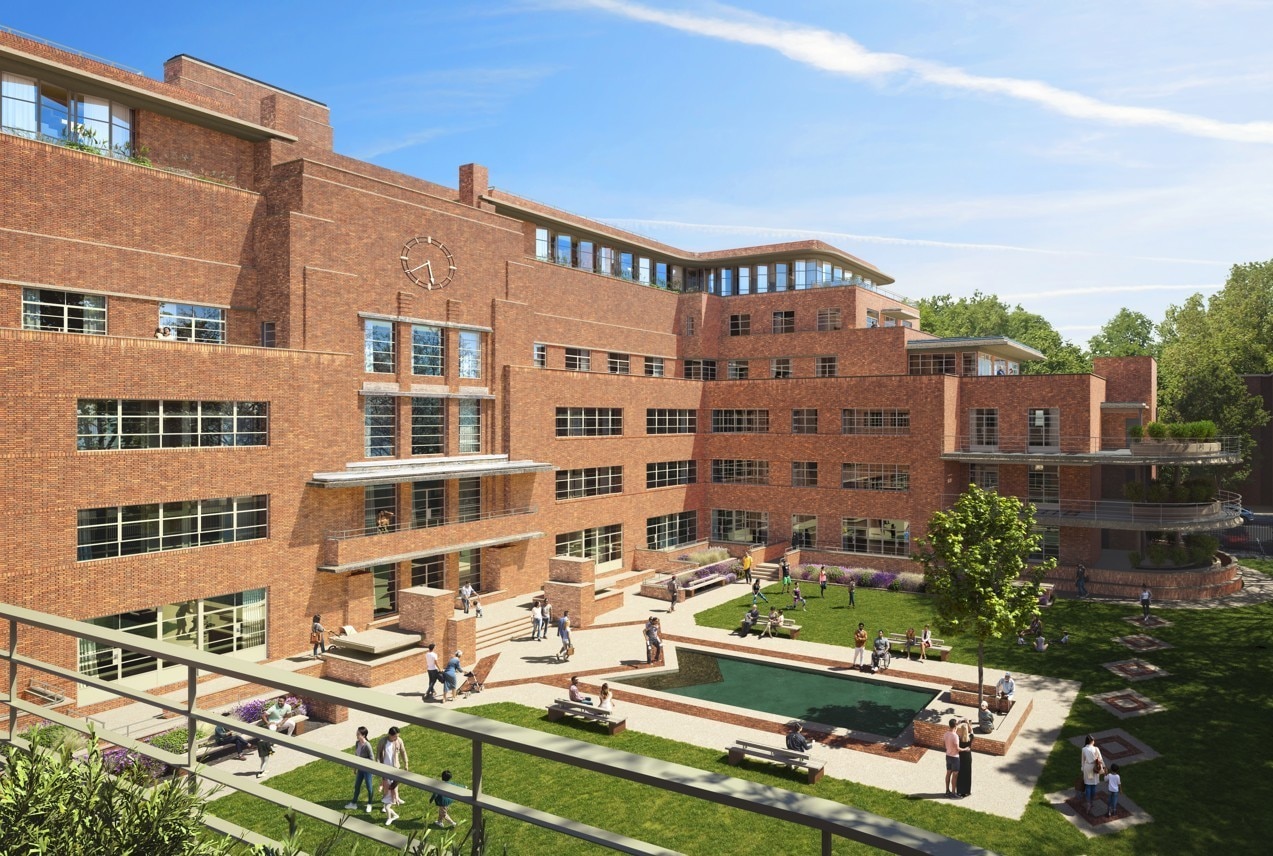
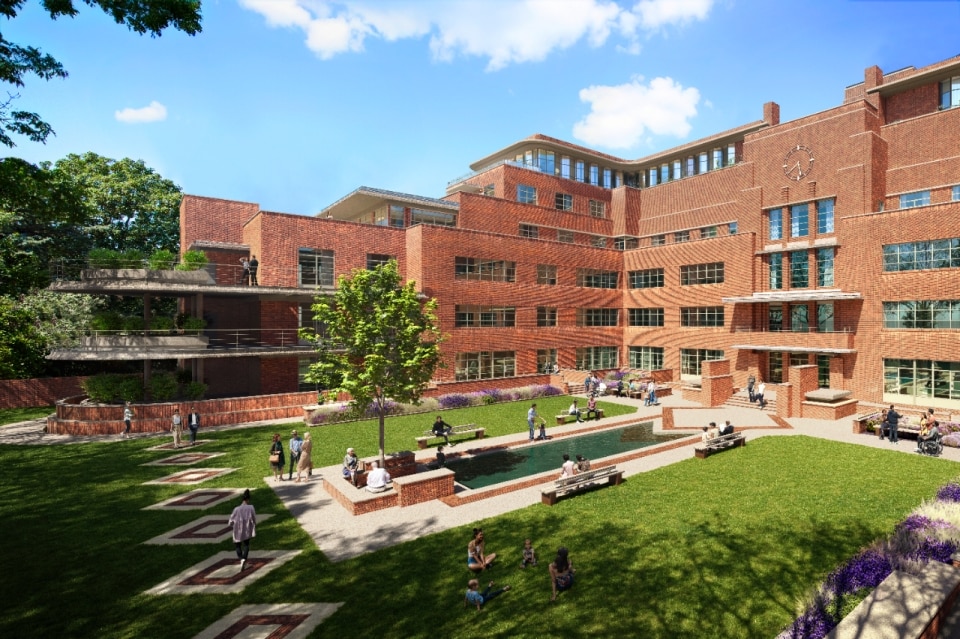
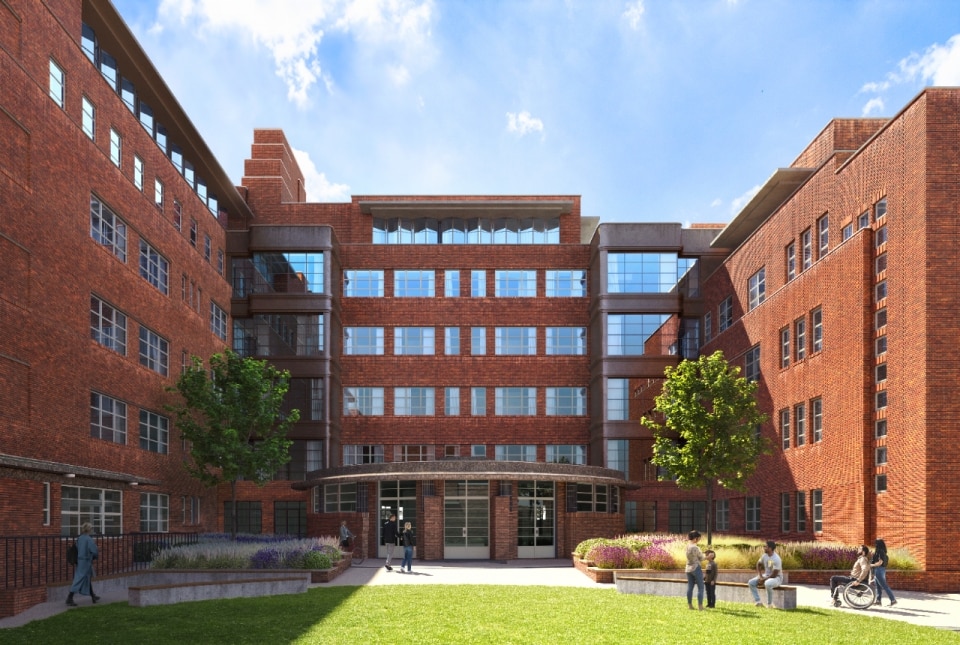
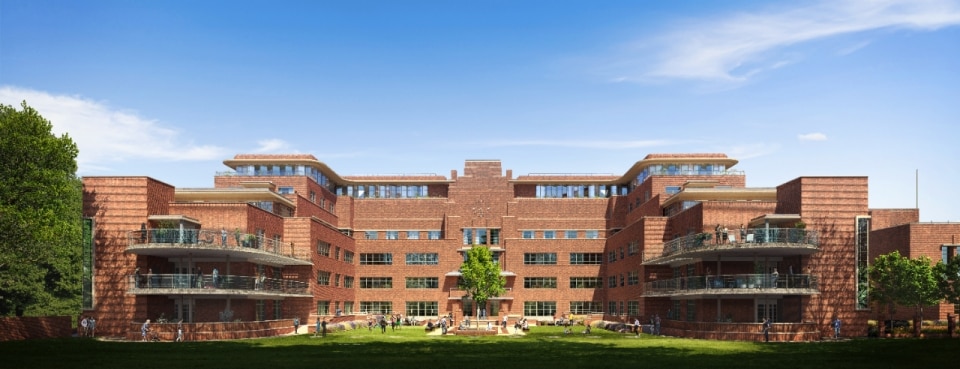
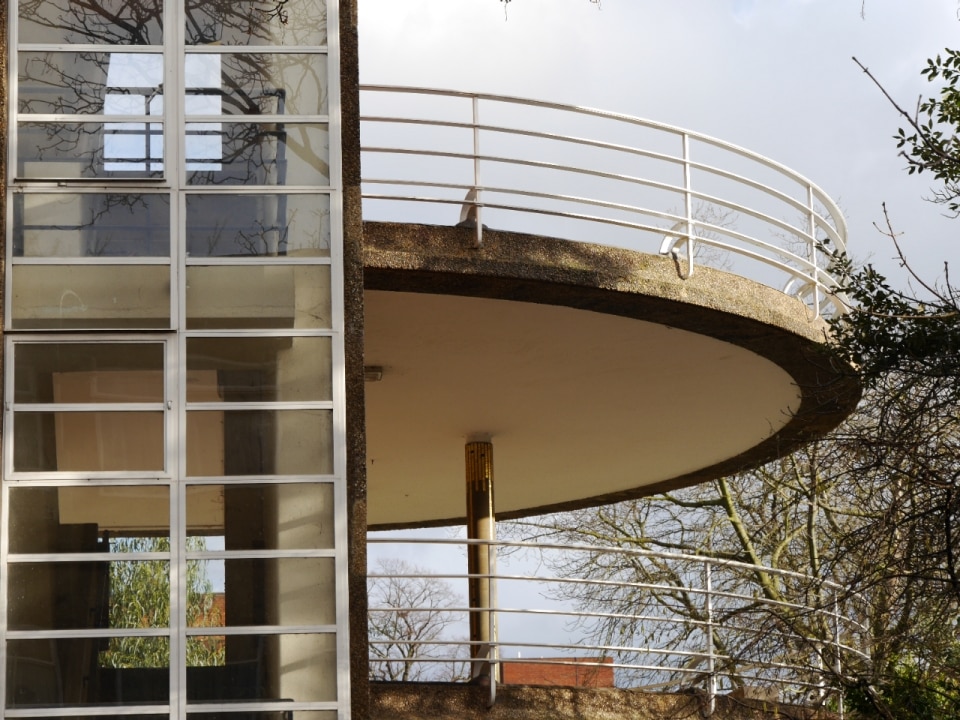
According to Trevor Morriss, director of Spparc, it is “one of the first British examples of the international Modernist movement,” with an imposing yet understated structure built in red brick and exposed concrete details. The new project is bound to preserve much of the complex, including the glazed bridges linking the blocks and the semicircular balconies, which will be repurposed as residential terraces. These features were crucial to the RIBA award, as they were built using an innovative welding technology that allowed, at the time, for large cantilevers with thinner concrete slabs.
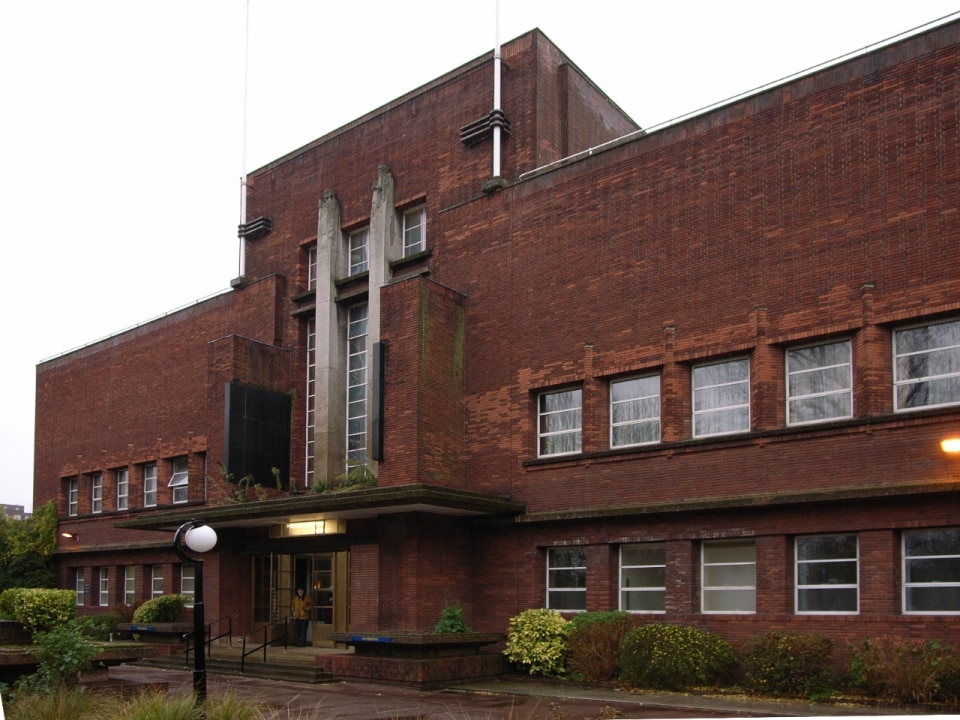
Not everything, however, will be preserved. Parts deemed “of little value,” such as the 1970s wing, will be demolished to make way for a specialist care home and new housing, breathing new life into a complex long left abandoned.
The hospital’s recent history has been marred by financial difficulties: it first closed in 1994, reopened as a public facility in 2002, but lasted only four years. In the meantime, it became a popular film set, appearing in The Queen (2006), the biopic Back to Black (2024) on Amy Winehouse, and earlier in episodes of Poirot, inspired by Agatha Christie’s novels.
Today, the regeneration project includes 140 homes, a 65-bed care home, and shared community spaces. Opinions, however, remain divided. According to the BBC, some residents fear that replacing Block E with a new building could spoil the neighborhood; others raise concerns about the impact on nearby residents’ privacy.
What remains clear is that the issue of regenerating historic buildings is far from resolved. One only has to think of the case of Battersea Power Station, also in London, where an abandoned industrial icon was transformed into a luxury residential and commercial complex: a project that breathed new life into a landmark, though not without controversy over its new identity.