



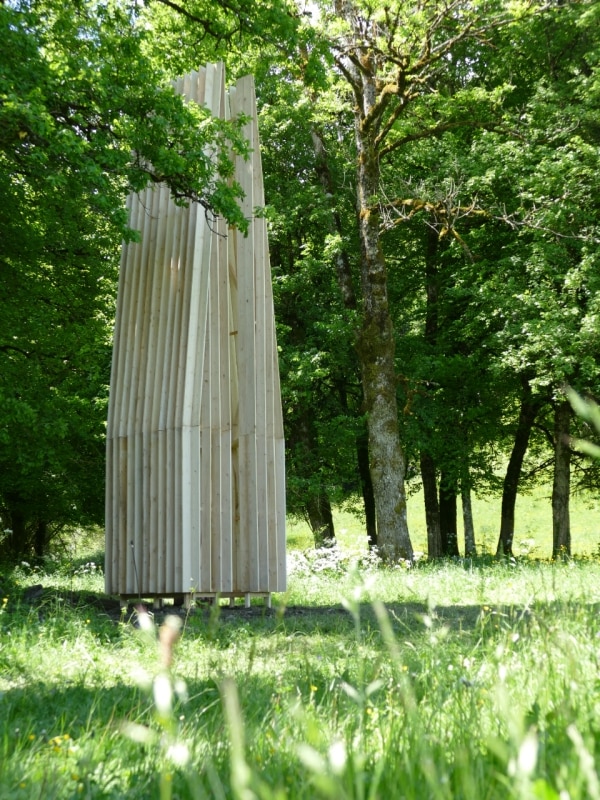
Living in a six-square-meter hut in 2025? Since 2016, “Le Festival des Cabanes” has been a meeting point for architects, landscape designers, and the public on Lake Annecy, in Haute-Savoie, welcoming ideas from across the globe. Over ten editions, with thousands of projects submitted, nearly 150 have come to life along the shores of the “purest lake in Europe,” by streams and on the slopes of this French borderland, just a stone’s throw from Switzerland and Italy.
According to 18th-century architectural theorist Marc-Antoine Laugier, the hut is the ideal union between nature and reason, the primitive archetype of dwelling. But what about today?
“In this historical moment, marked by profound economic, political, and ecological upheaval, huts matter not only for architects but for all of us,” Philippe Burguet, organizer of the festival together with architect David Hamerman and “Le Soierie”—a cultural and linguistic support association for immigrants arriving in Haute-Savoie—tells Domus. “We need places of refuge, buffer zones where we can rediscover ourselves, reinvent ourselves, and look to the future with greater serenity.”
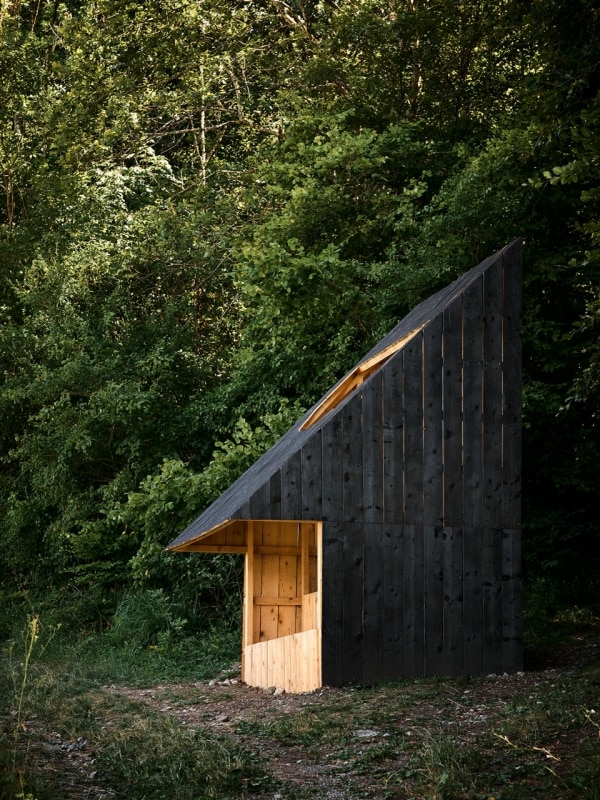
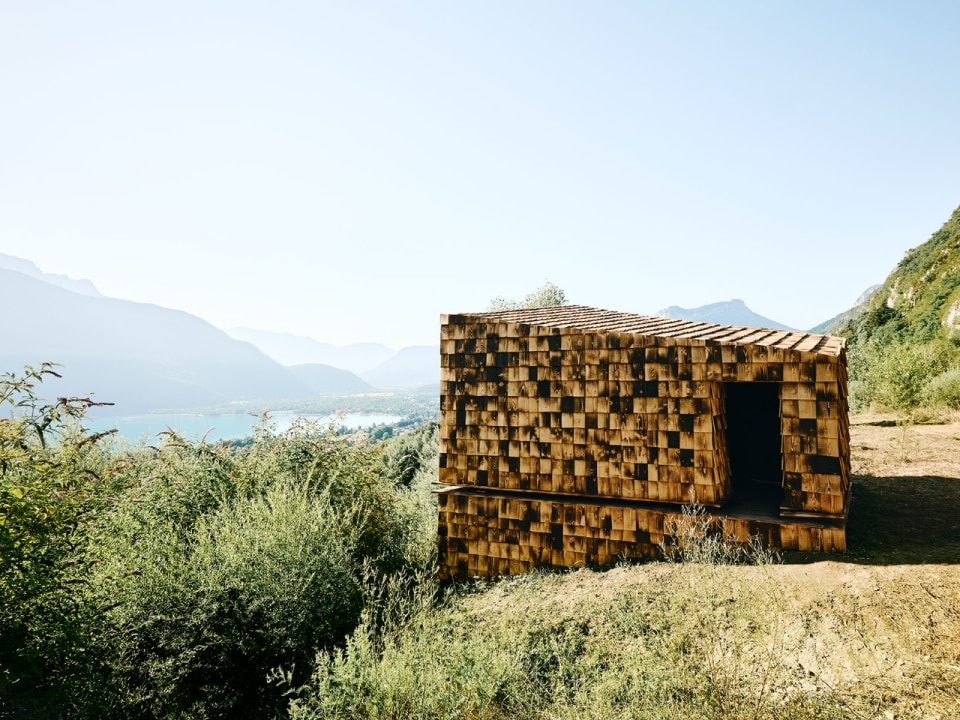
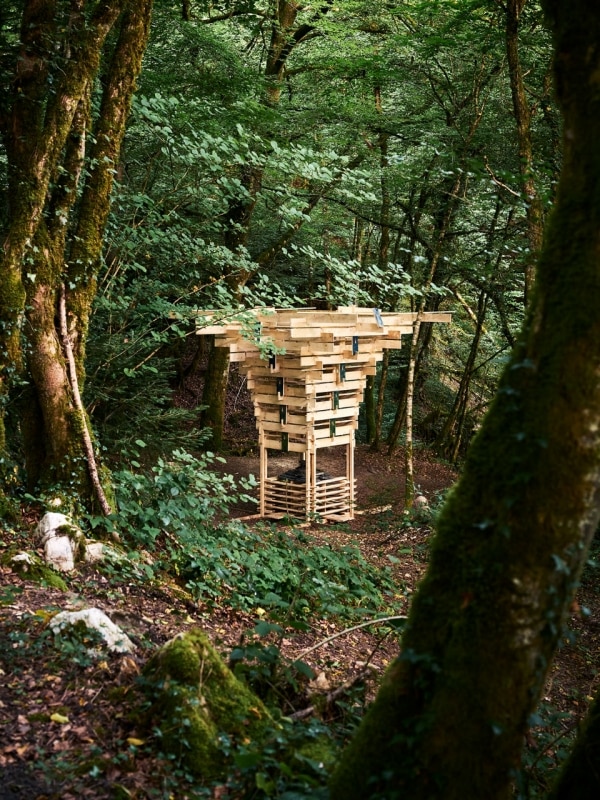
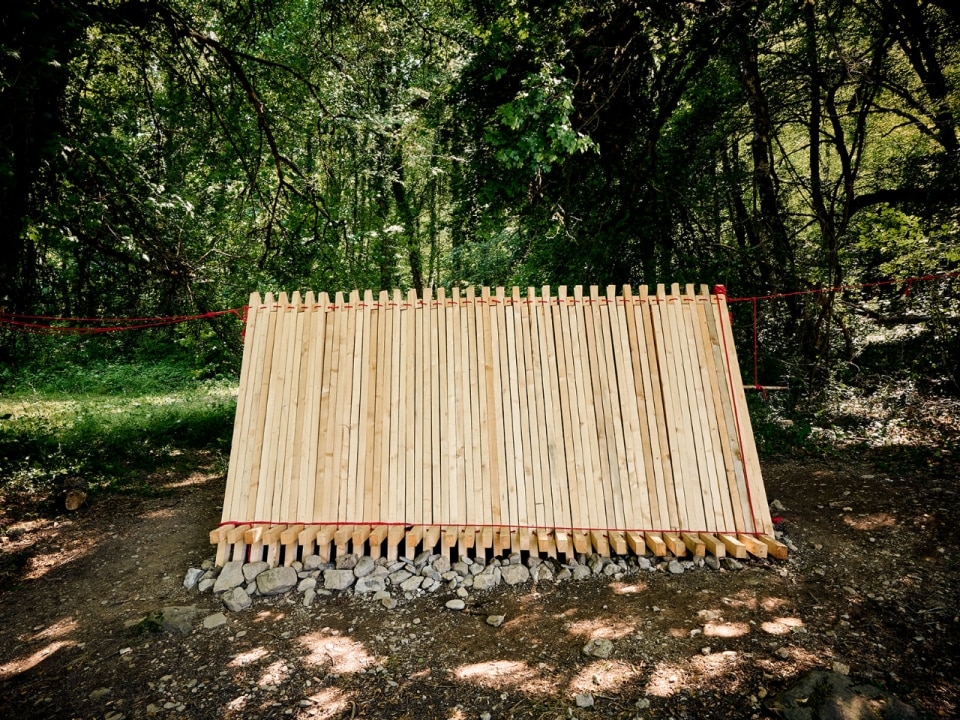
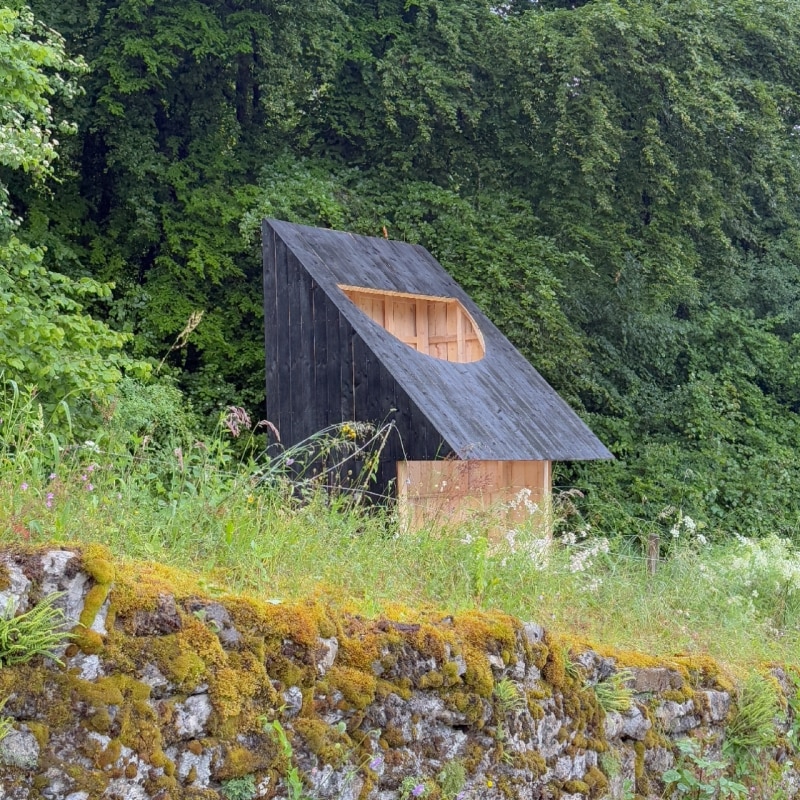
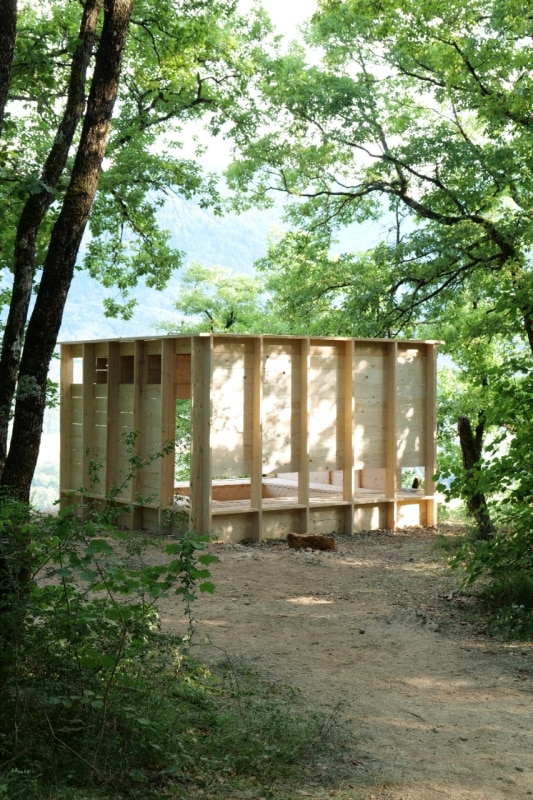
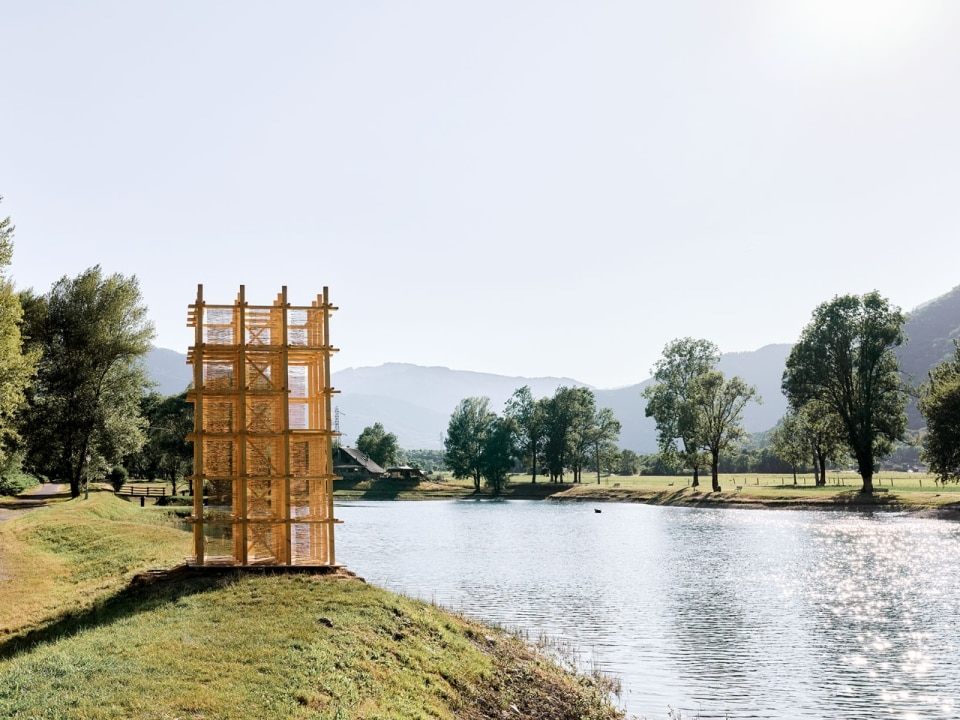
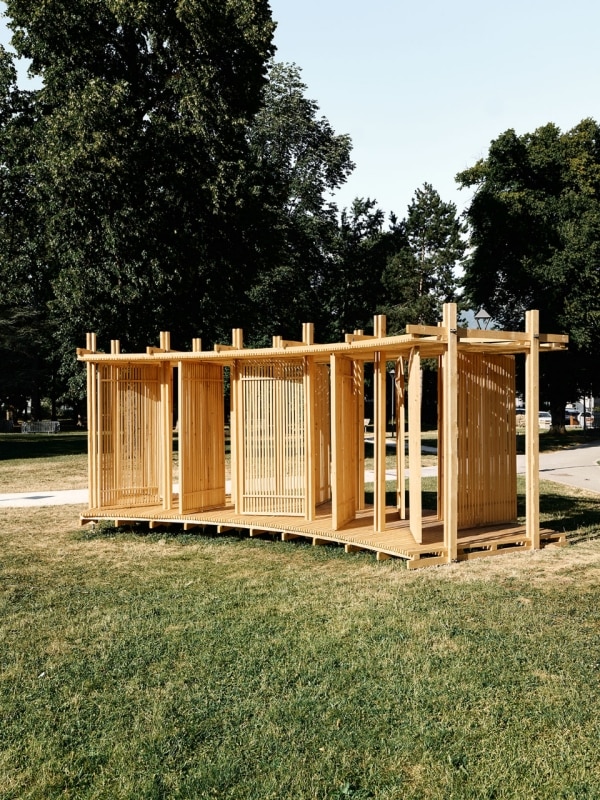
This year, thirteen huts are spread along a 20-kilometer route between the municipalities of Lathuile and Faverges. What unites them all is a symbiotic relationship with their surroundings: among them, “Le Carrières”, a cube set on a hillside blending into rock and vegetation, and, at the other end of the spectrum, the “Meditation Cabin”, which stands out for its lightness.
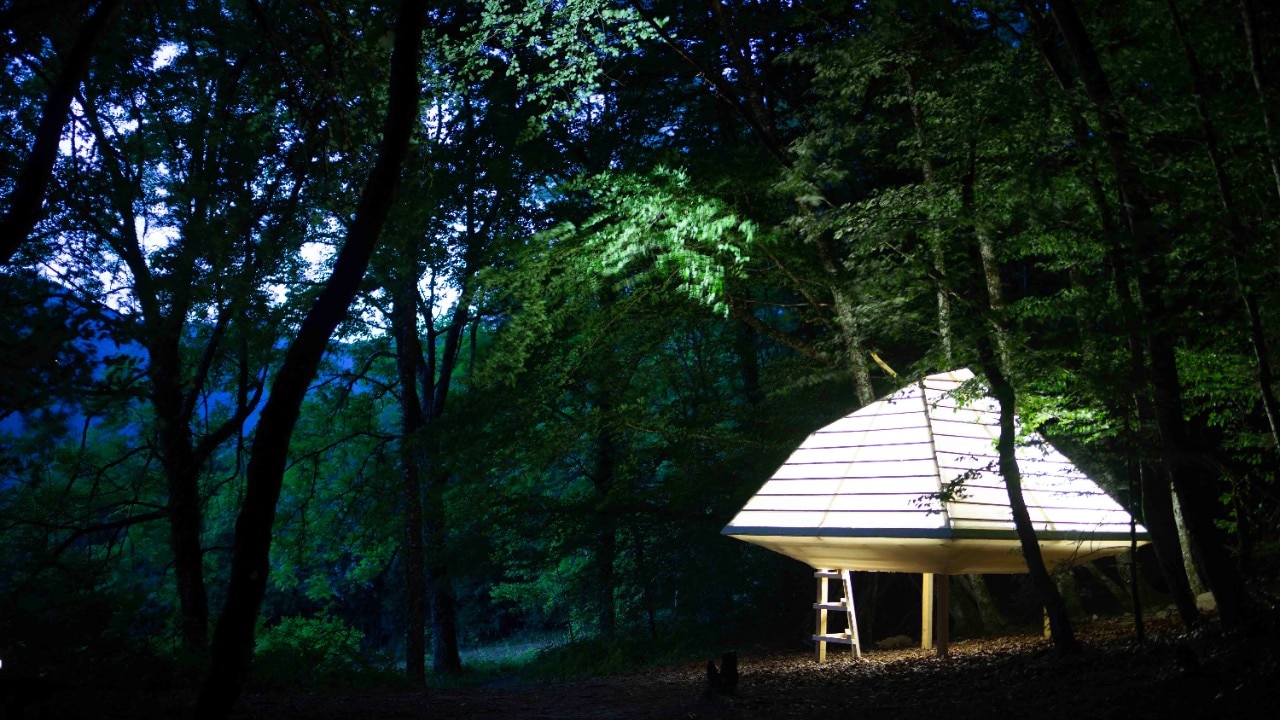
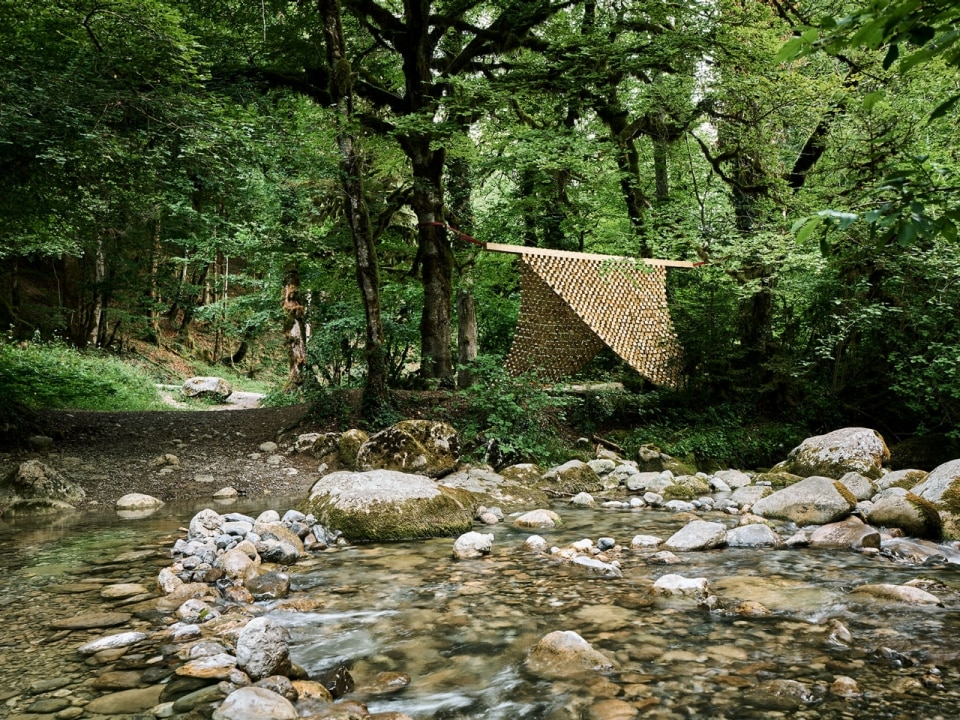
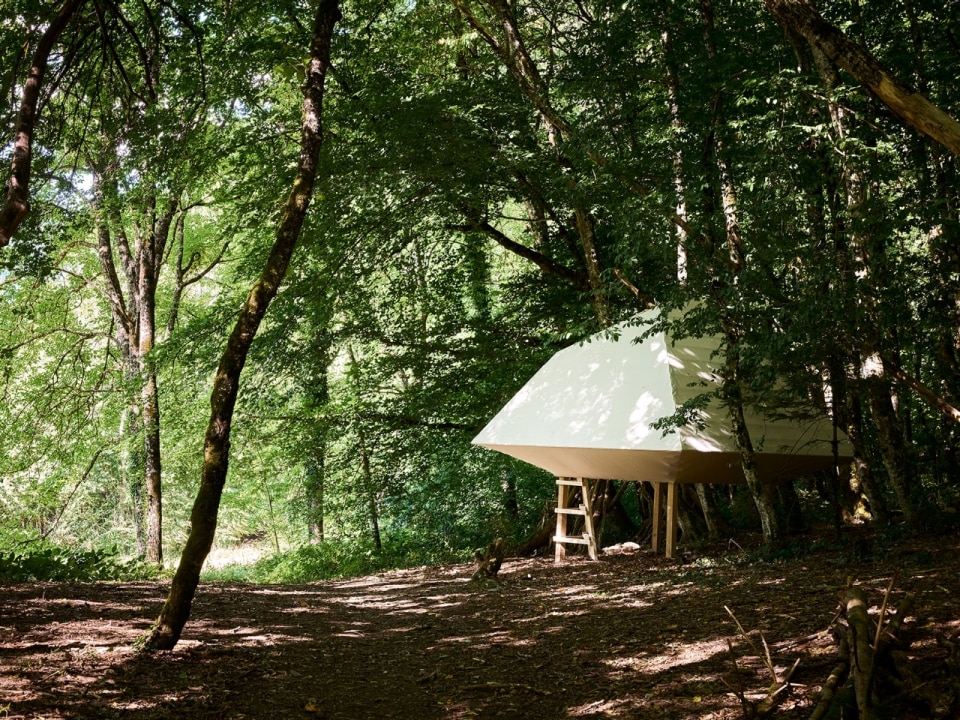
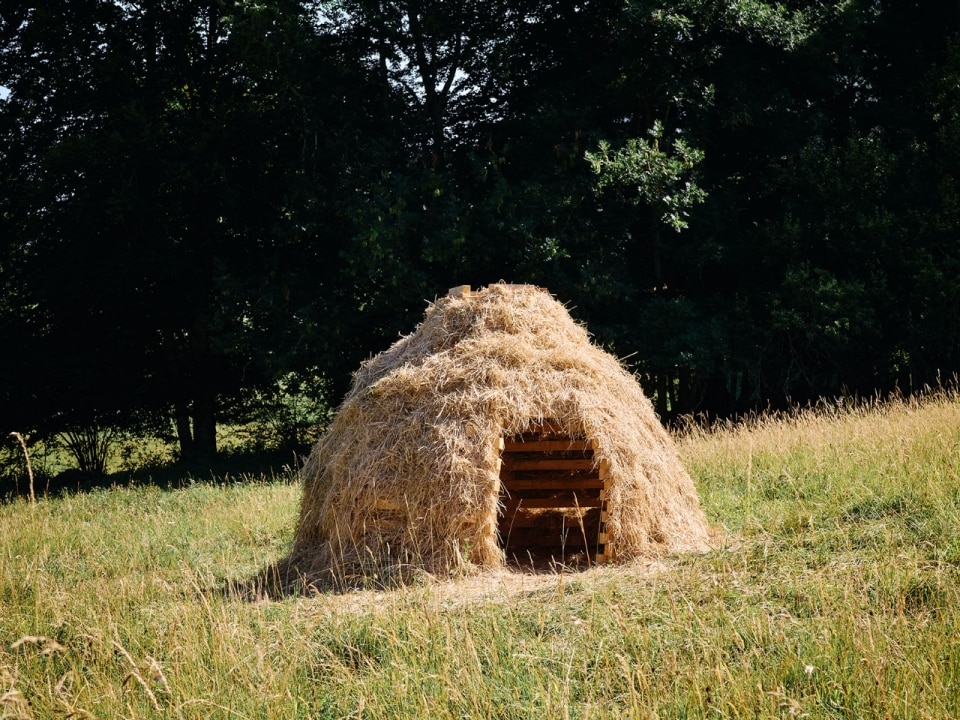
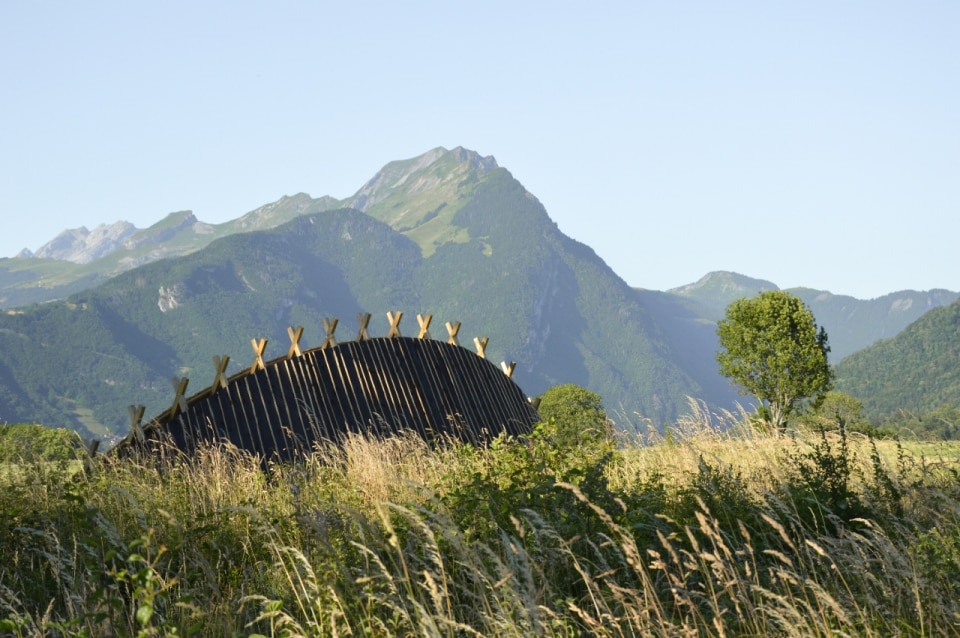
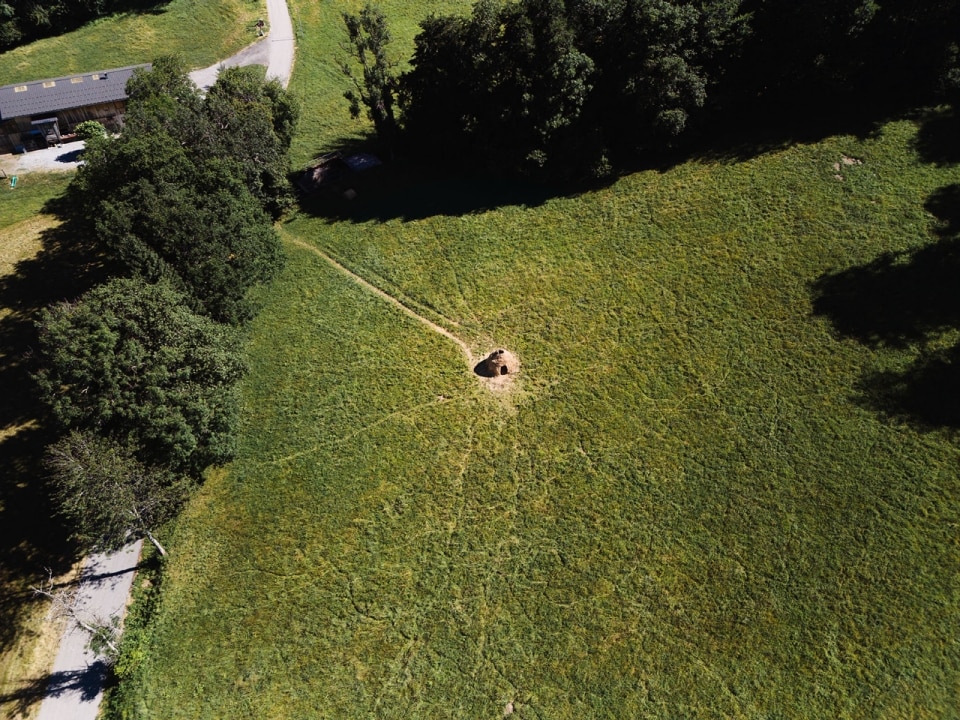
“Huts, with their ability to reconnect humans to the essential, but also to provide isolation while preserving contact, have become, for architects, powerful symbols of our era: modest spaces rich in meaning, capable of accompanying both individual and collective transitions,” Burguet emphasizes. Light remains a central design element: filtered through the hay covering “Myà”, an octagonal haystack-inspired hut recalling Monet’s Haystacks; almost entirely darkened in “Lima”, a seemingly extraterrestrial object “fallen” into the Annecy valley; or, in “Au fil de l’Ire”, shielded by a lattice of small wooden cubes.
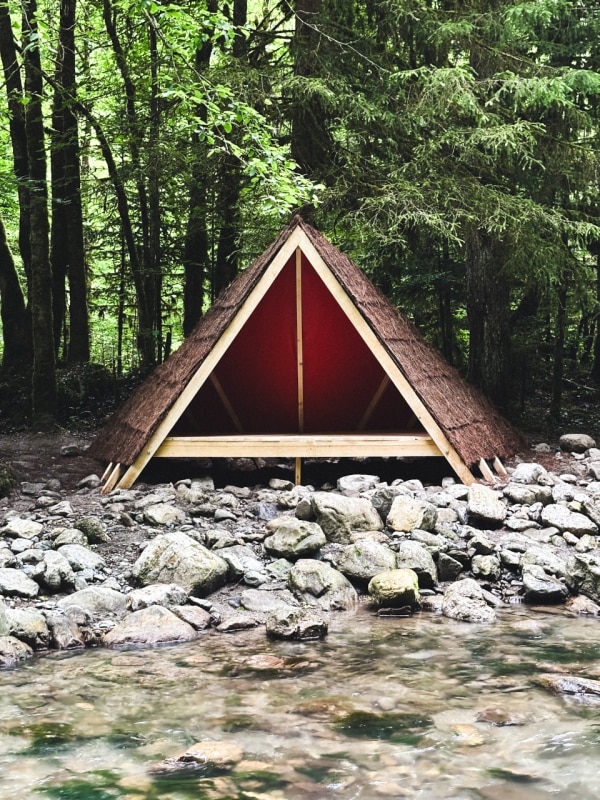
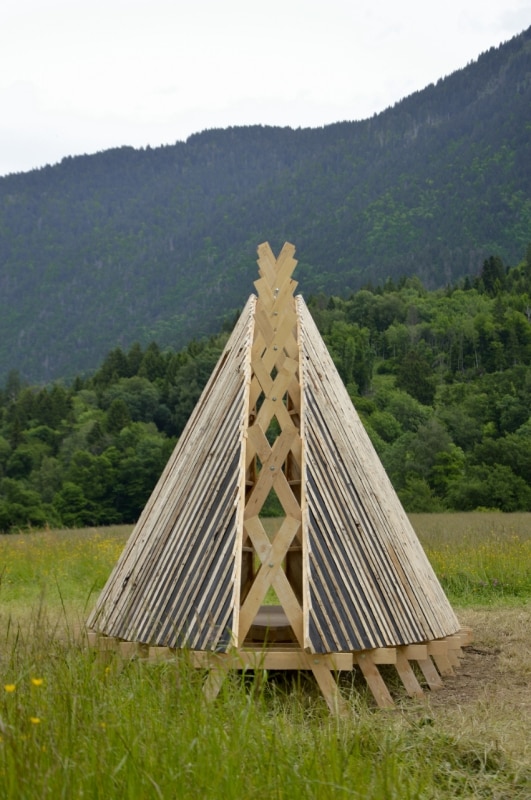
Some huts adopt the triangular structure of a tent, others offer more generous spaces, allowing travelers to pause and take in the view of the valley. At the end of the festival, the huts are dismantled and the timber is left to local residents. Yet some reappear elsewhere—such as in 2024, in front of the Grand Palais in Paris, and since 2022, with the “Festival des Cabanes” temporarily hosted at Villa Medici in Rome.