


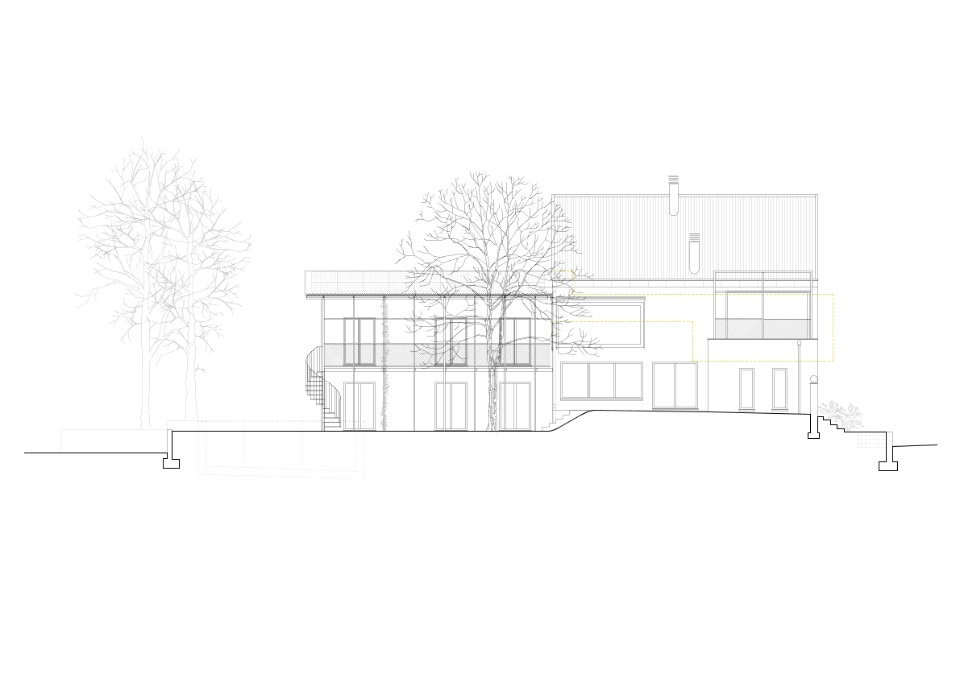
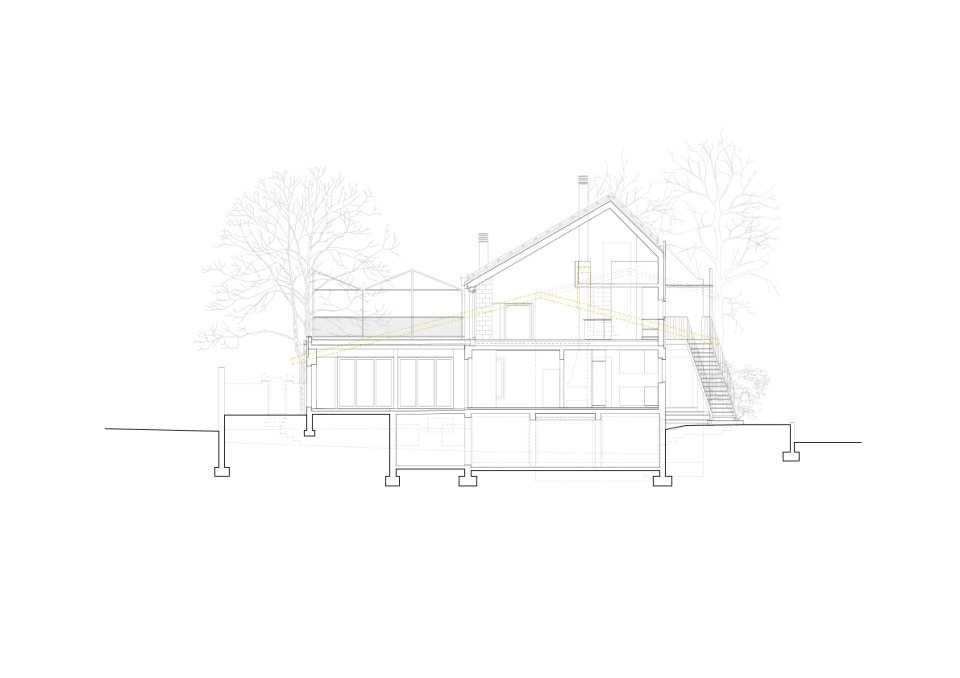
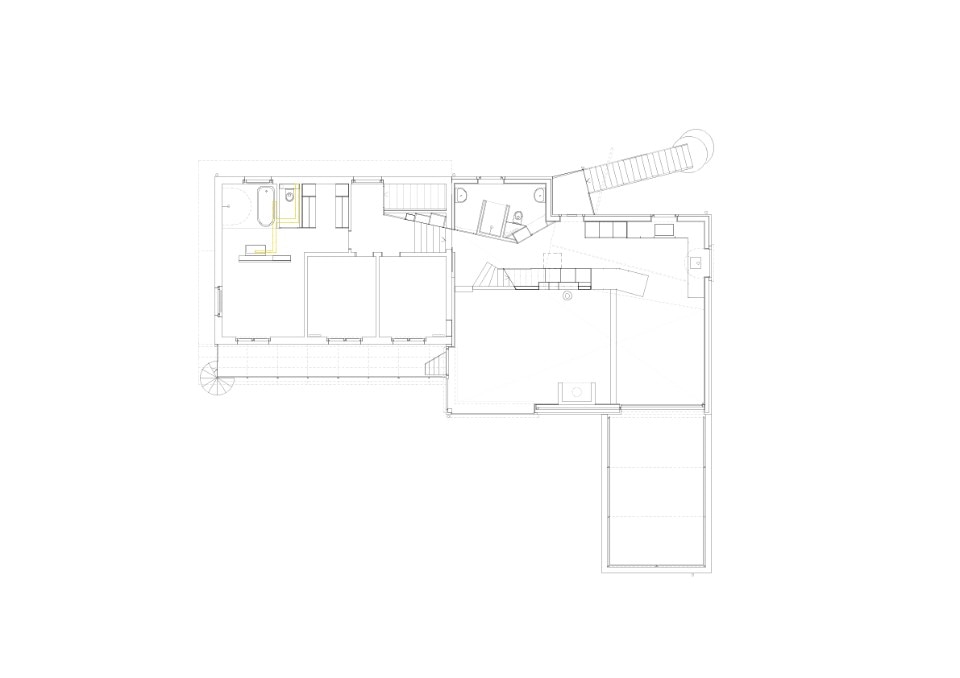
Liechtenstein, one of the smallest countries in the world, lies along the border between Switzerland and Austria. Its fortunate location between two architectural “superpowers” makes it fertile ground for precise, careful and cultured experimentation. In Schaan, Oberland district, the most populous municipality in the small Alpine state, a house from the 1960s has been transformed into a “multigenerational residence” through a project that works by subtraction and emphasis. Liechtensteiner architect Dominic Spalt has designed a project that, with a few precise gestures, manages to give a new character to an apparently anonymous building.
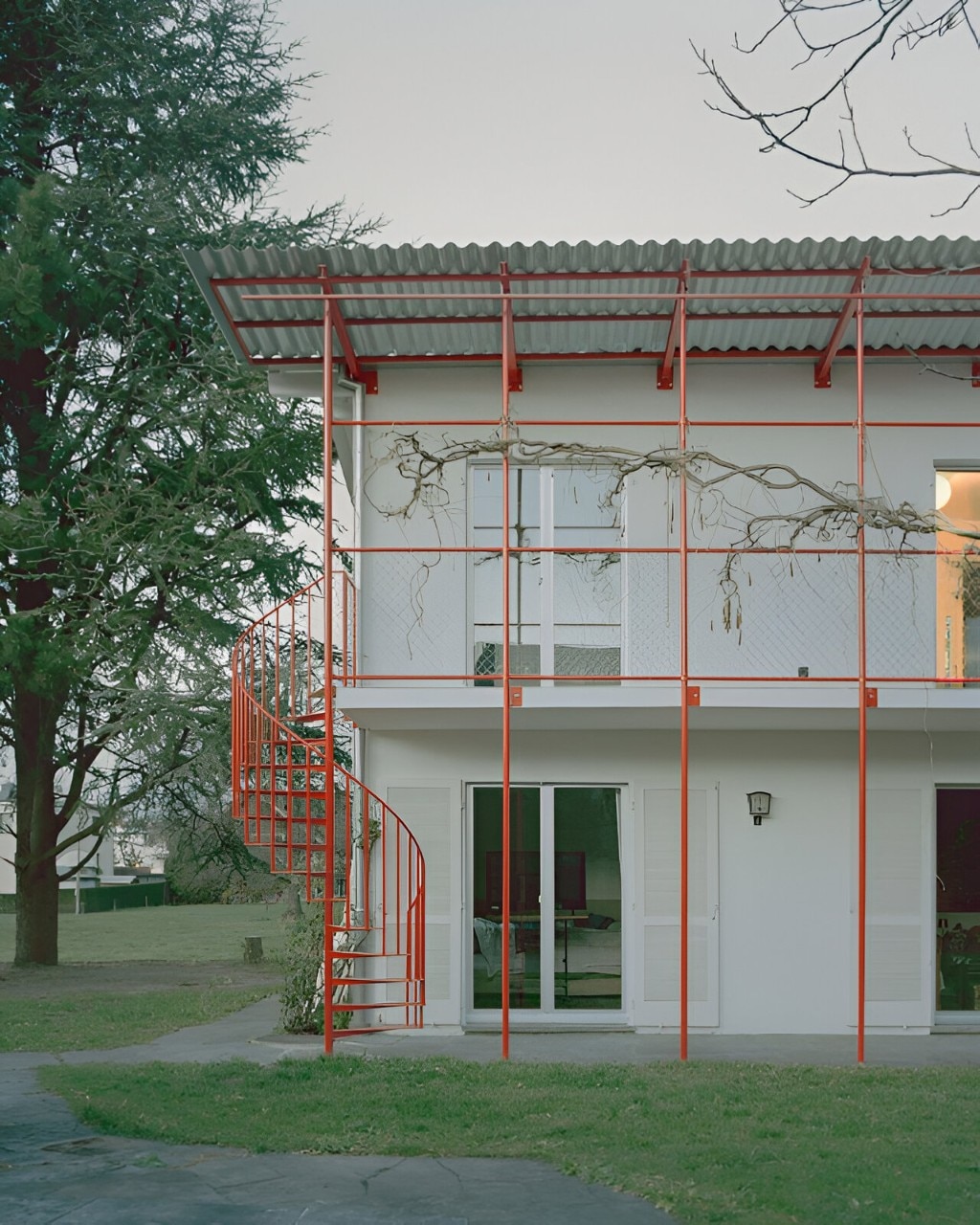
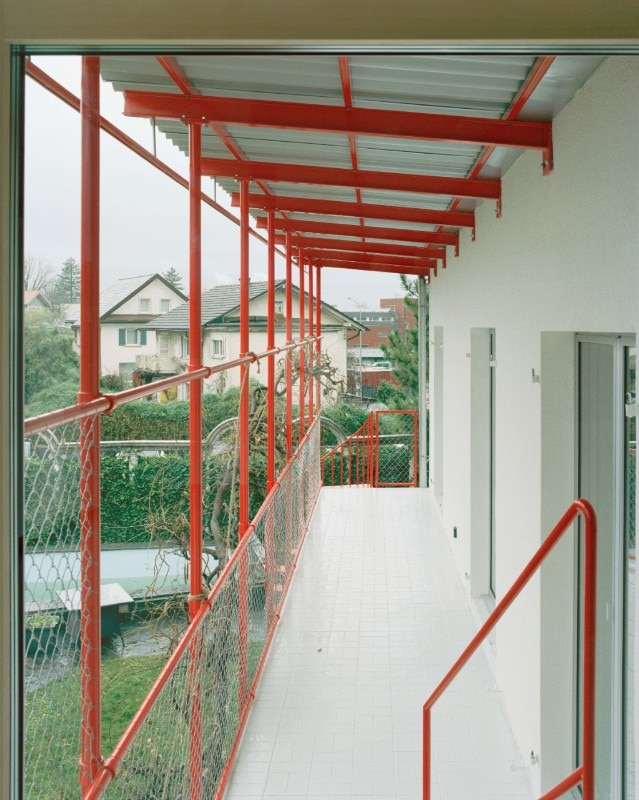
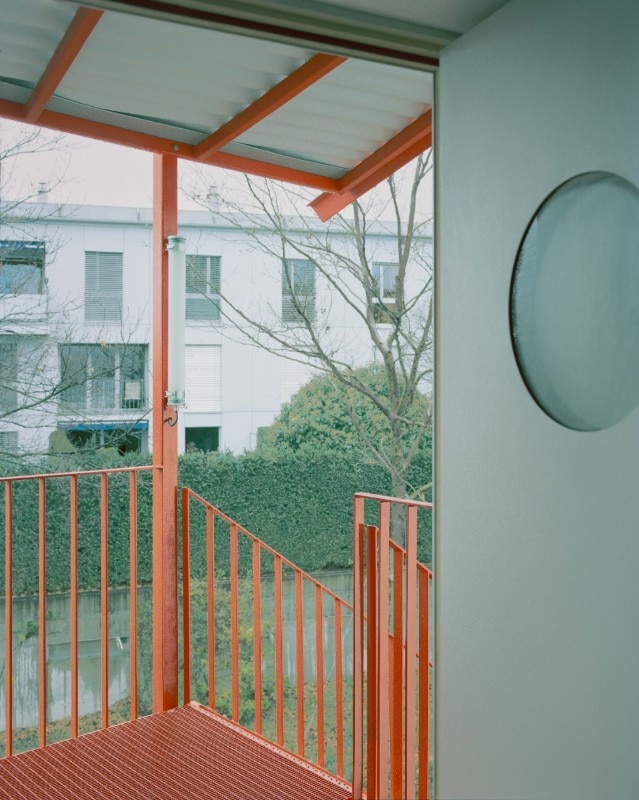
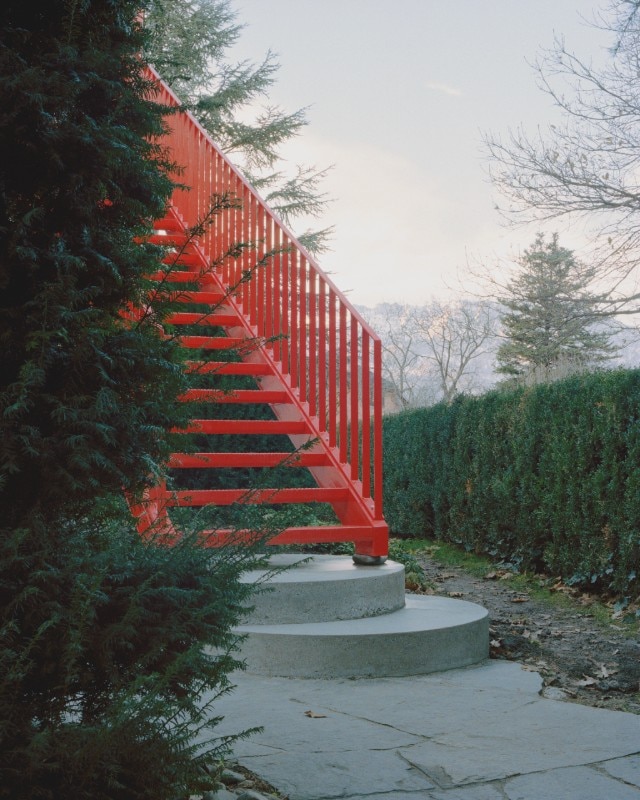
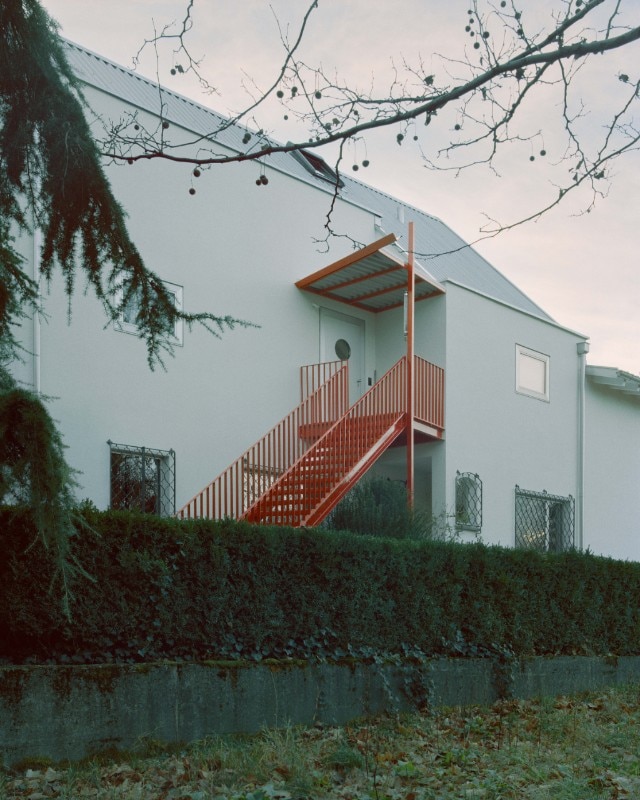
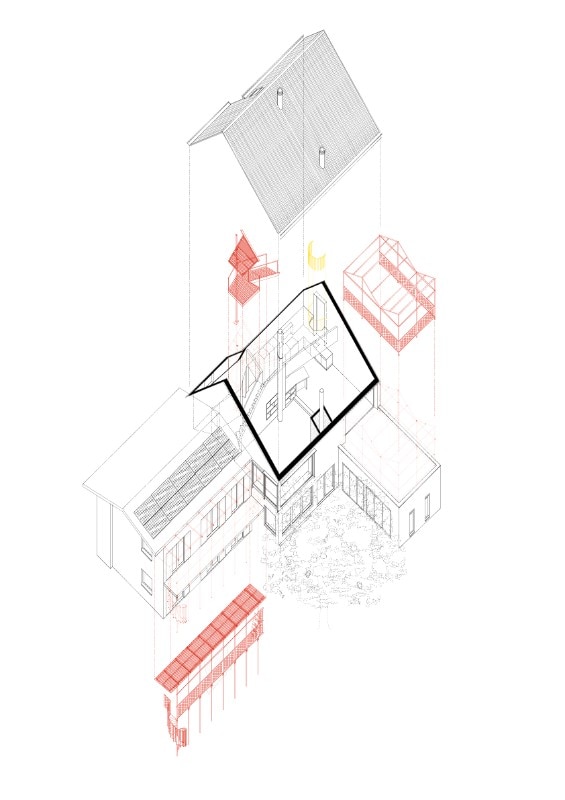
Some striking red steel elements, visible and unmistakable, mark the transformation. These are structural signs but also narrative devices: they welcome visitors, articulate the circulation and act as a link between the existing and the new. The balcony, juxtaposed with the façade, echoes – albeit on a smaller scale – Lacaton & Vassal’s Grand Parc in Bordeaux, becoming the defining element of the façade. The two external staircases, one spiral climbing up the side towards the internal garden, and one straight resting elegantly on the ground via two pebbles smoothed by the river current on the street side, also look at each other as if in dialogue or opposition.
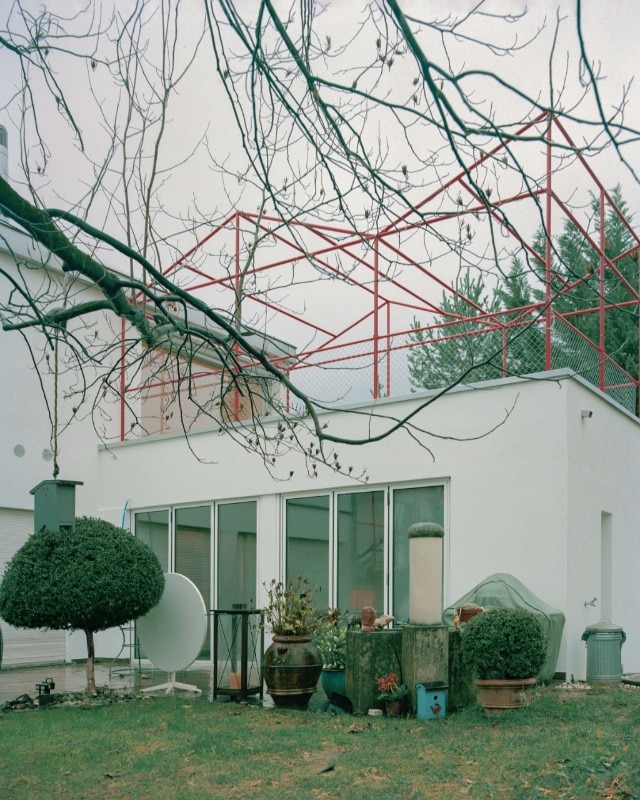
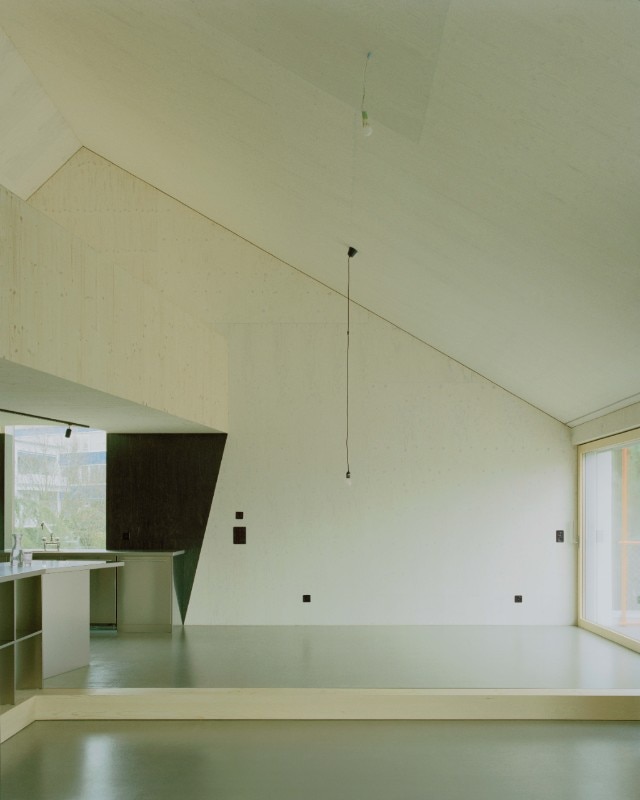
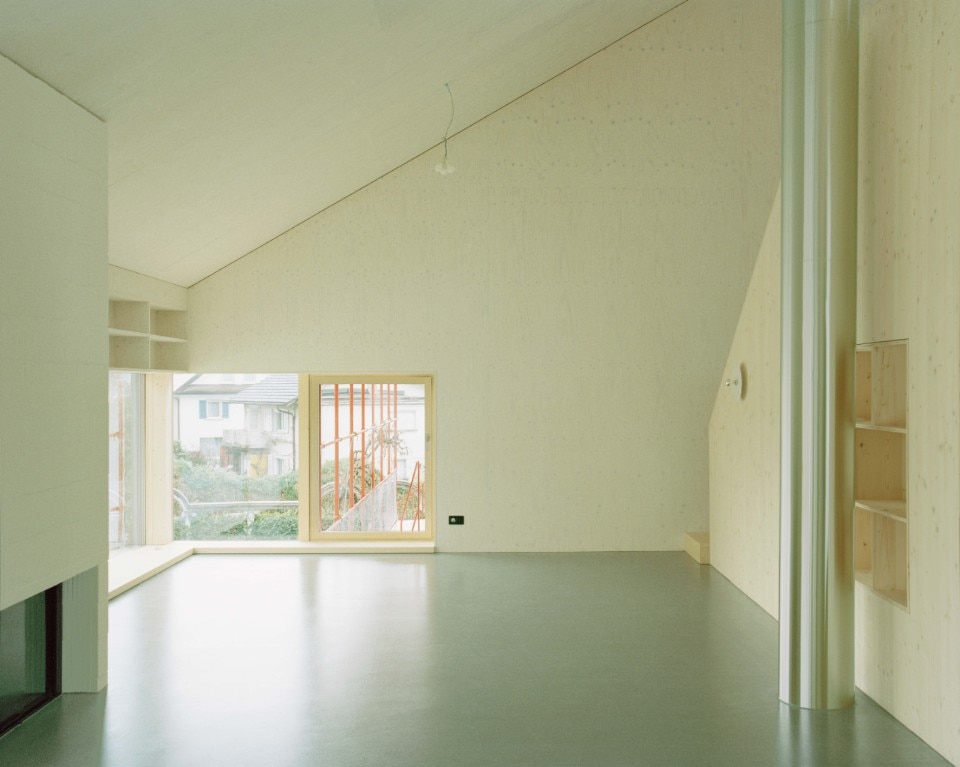
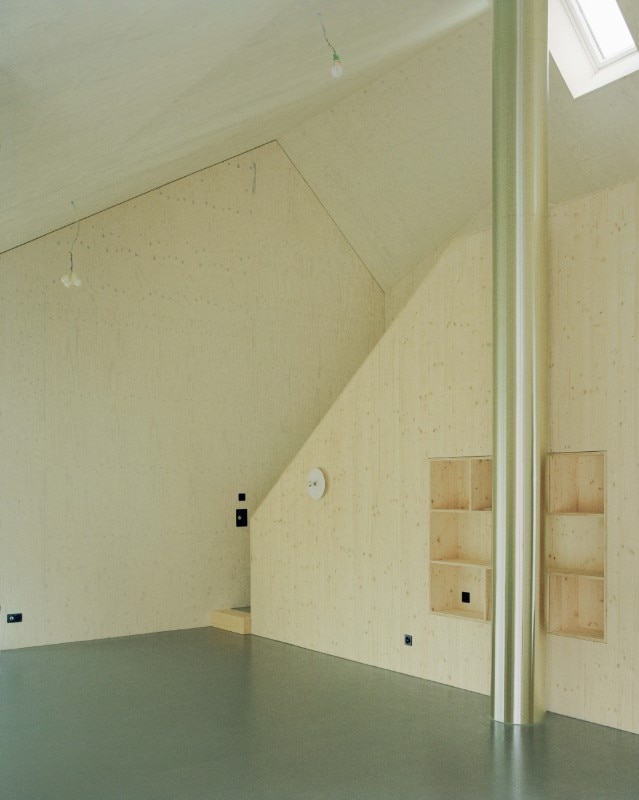
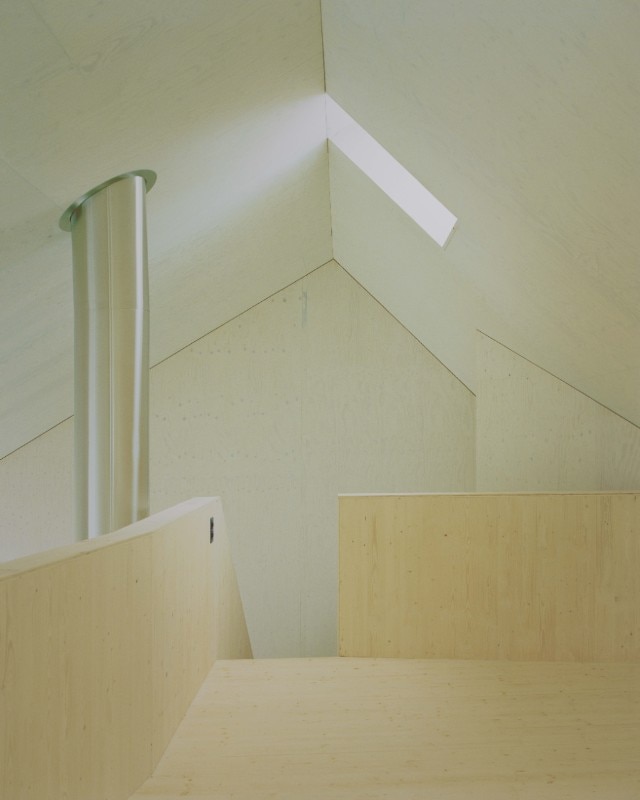
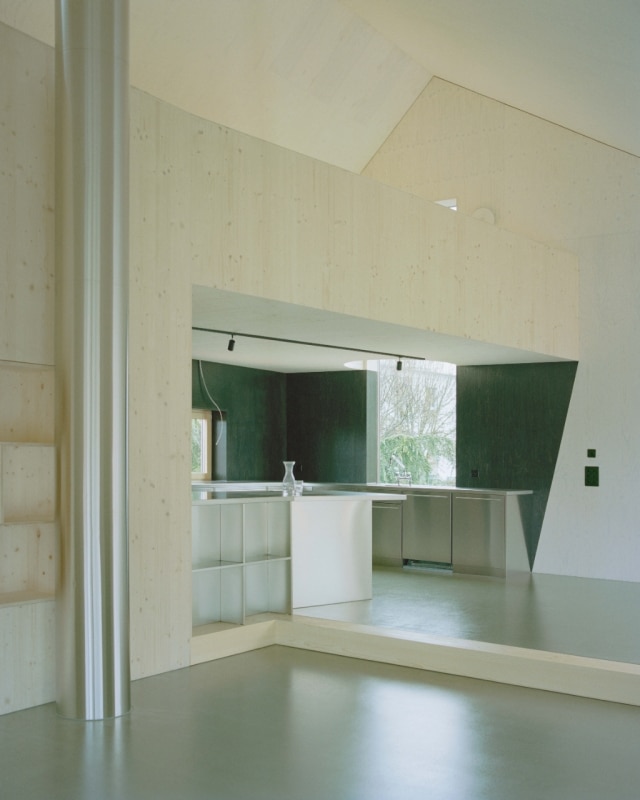
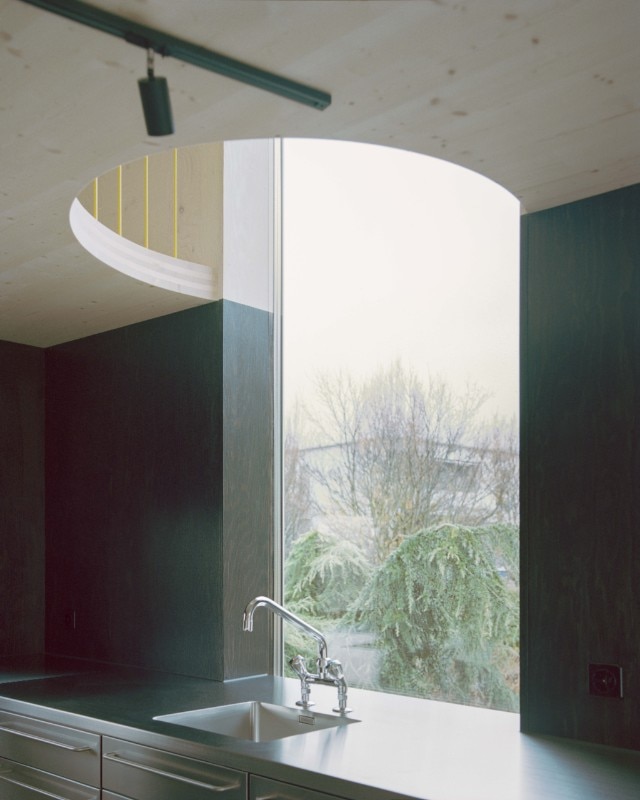
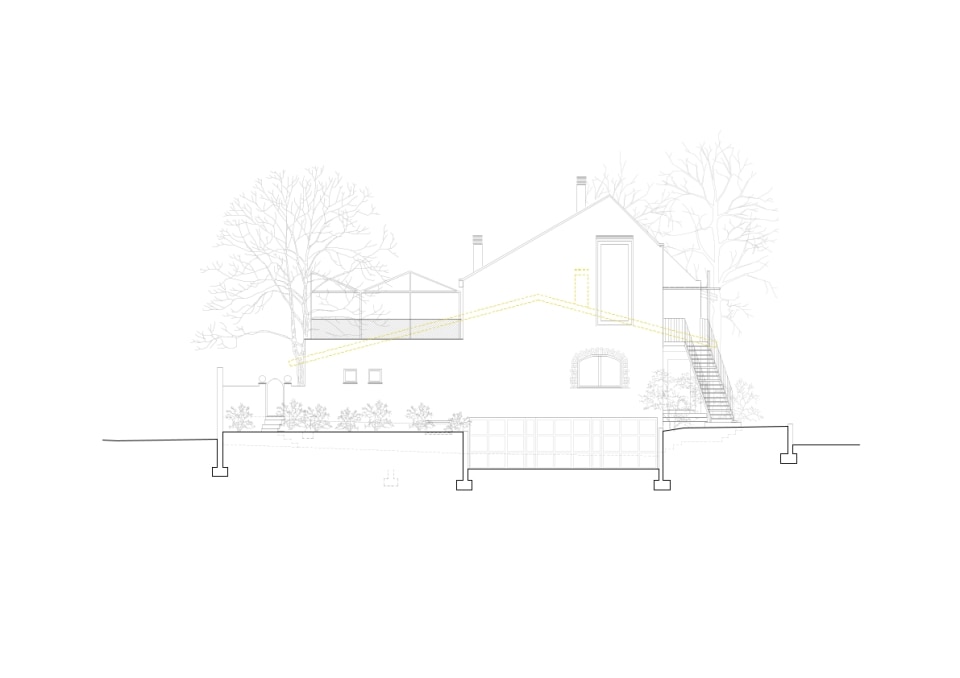
The house is now divided into two stacked residential units: the lower one, accessed from the garden where a centuries-old tree dominates the open space, has remained unchanged; the upper one, on the other hand, while maintaining the original layout of the rooms, has undergone a more radical transformation. The old pitched attic has been demolished and replaced by a large double-height living space, which opens up through carefully cut windows and skylights that frame the garden, the Three Sisters mountain range (Drei Schwestern) and the sky.
The new terrace, located on the top floor, is configured as a composition of small dematerialised houses with pitched roofs, of which only the outlines remain, as if they were marks traced in the air. This play of light geometries is also reflected in the layout of the intervention: a few lines, slightly rotated with respect to the orthogonality of the original building, break the existing rigidity and introduce a new spatial tension.
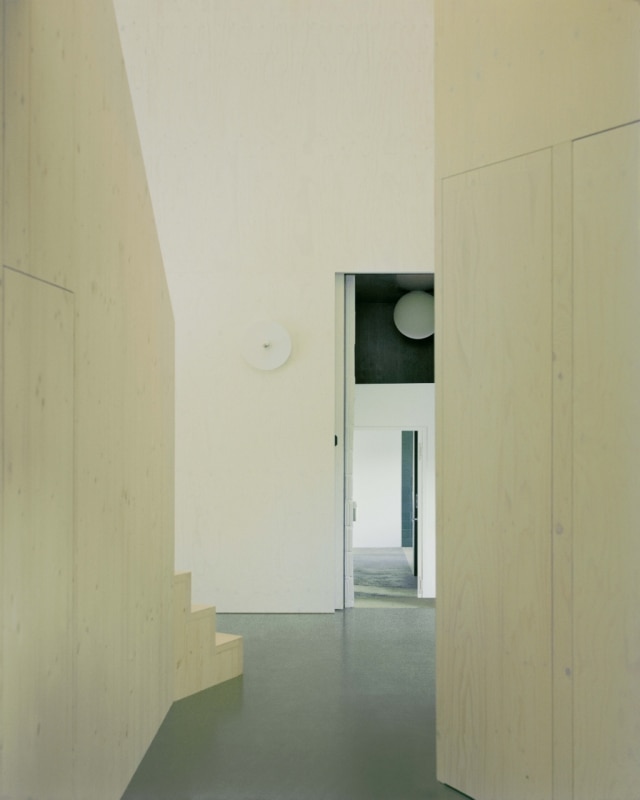
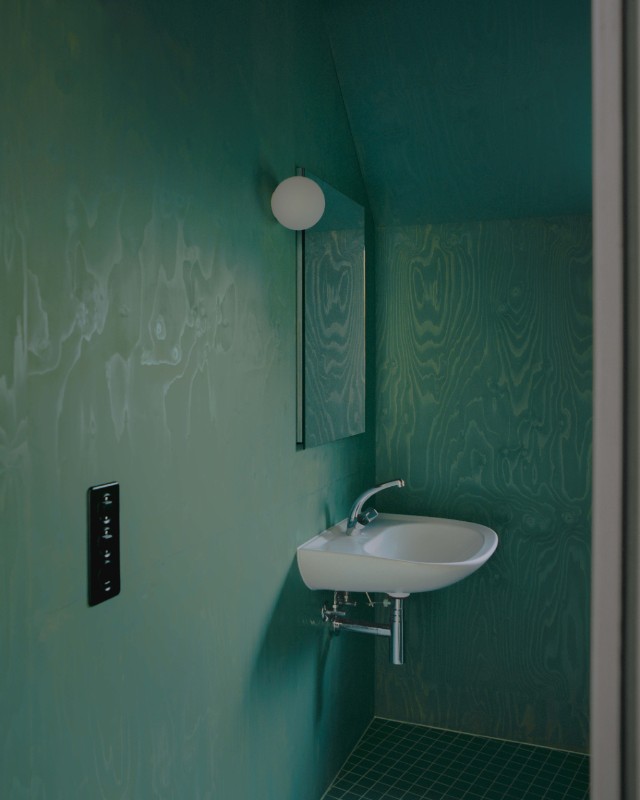
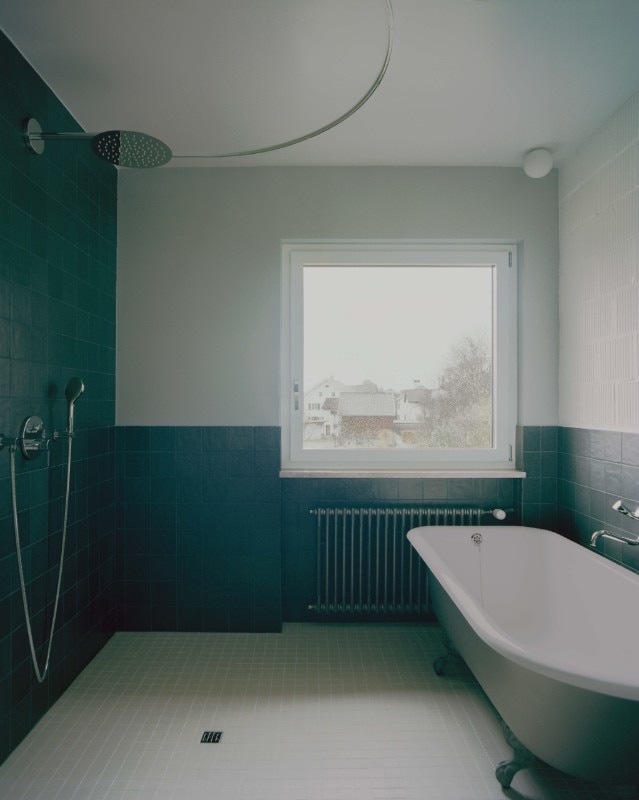
Particular attention is paid to the materials. The light wood that characterises many of the interiors changes tone depending on the room: warmer and more natural in the bedrooms, it darkens and takes on deeper shades in the kitchen and bathroom, interacting with the ceramic surfaces and the grazing light. An enamelled bathtub, salvaged from a pre-existing dwelling, adds further memory and delicacy to the project.
In an apparently anonymous urban context, between an old printing house and an office building, this house demonstrates that even the smallest intervention can become an opportunity to showcase contemporary architecture.