

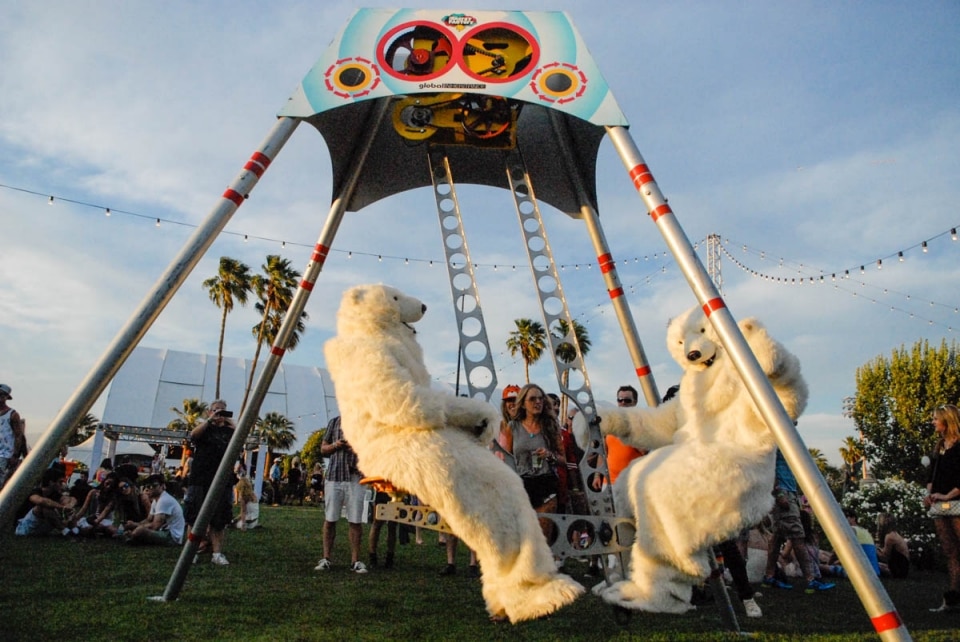
Every April, the Coachella Valley Music and Arts Festival — the huge music event held at the Empire Polo Club in Indio, California — brings the Coachella Valley back into the global spotlight for two weekends. It may be credited with shining a renewed light on this stretch of desert, yet the valley is much more than the festival that now defines it in the popular imagination.
About a two-hour drive from Los Angeles, it overlaps with the Greater Palm Springs area and includes nine cities, among them Palm Springs, Rancho Mirage, Palm Desert, and Indio. What sets it apart is a landscape of palm oases, mountains, mineral springs, and desert preserves, onto which one of the most recognizable versions of California modernism was grafted.
It is here that architects such as Albert Frey, E. Stewart Williams, Richard Neutra, John Lautner, and Donald Wexler defined an idea of living that would become iconic, grounded in lightness, transparency, shade, and continuity between inside and outside. Add to that tourism, golf, and a long history of winter retreats that for decades have attracted celebrities, collectors, and political leaders.
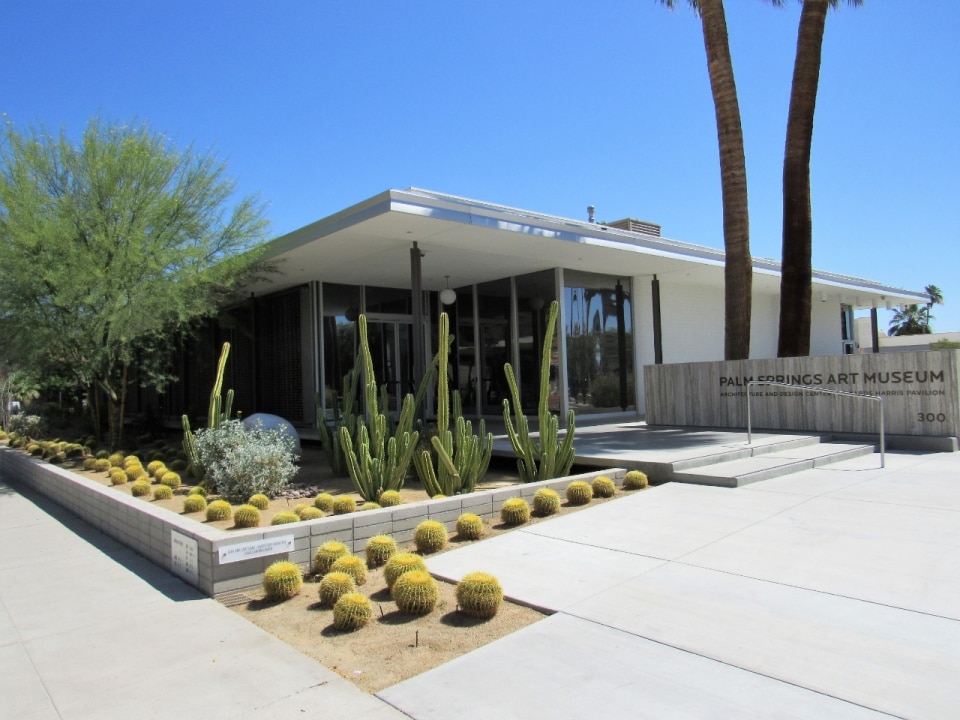
Palm Springs Art Museum
If there is one place to start, it is the Palm Springs Art Museum. Not only because it is one of the valley’s central cultural institutions, but because it brings together art, local history, and the construction of the desert imaginary.
The museum’s main building, in downtown Palm Springs, was designed by E. Stewart Williams, one of the defining figures of the city’s modernist architecture.
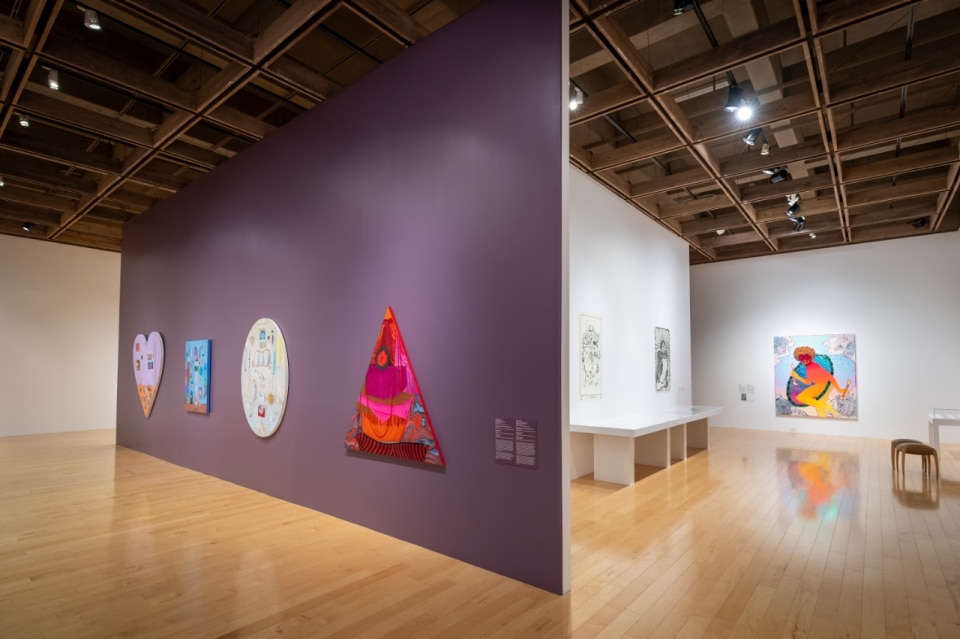
Through October 18, 2026, the museum is hosting A Queer Arcana: Art, Magic, and Spirit, an exhibition exploring the relationships between queer practices, alternative spirituality, and esotericism—a useful reminder that people do not come here only to look at the desert, but also to understand how the desert has helped shape a certain contemporary visual and ritual culture.
Architecture and Design Center
Five blocks away, the Palm Springs Art Museum also operates the Architecture and Design Center, Edwards Harris Pavilion, perhaps the most useful place to understand why Palm Springs continues to occupy such a key place in the American architectural imagination.
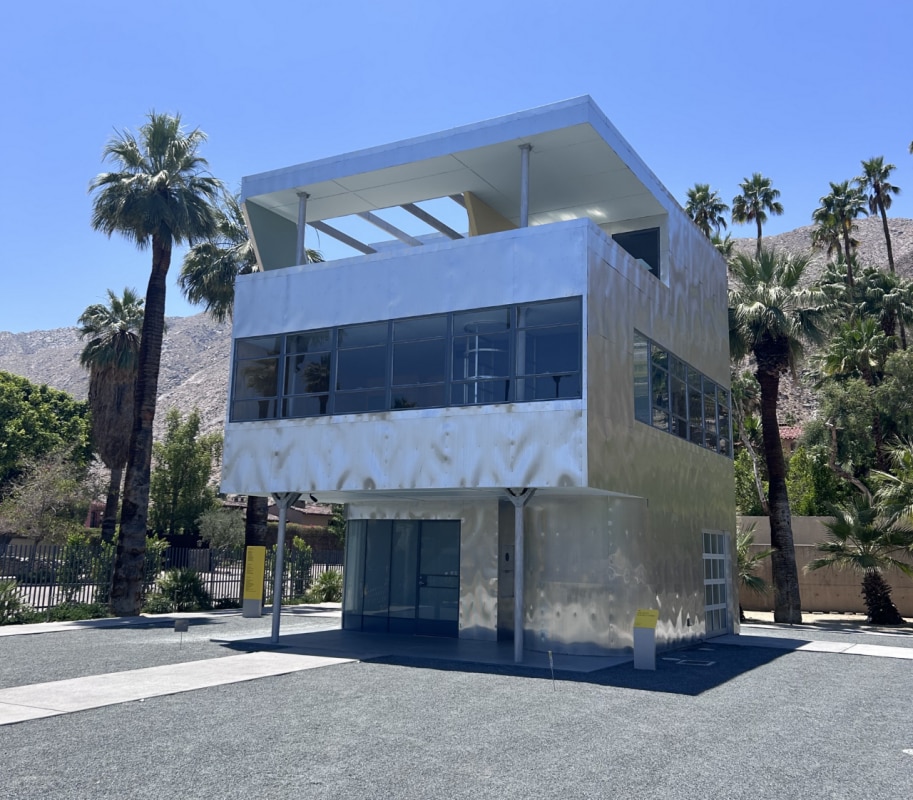
E. Stewart Williams’s name returns here too, while the museum’s broader architectural orbit also includes Albert Frey’s Frey House II and Aluminaire House, a 1931 modernist prototype now rebuilt in Palm Springs and part of the permanent collection.
Taken together, these buildings show how desert modernism was not simply a picturesque backdrop, but a direct, design-led response to climate, light, and a way of living grounded in continuity between indoors and out.
Desert X
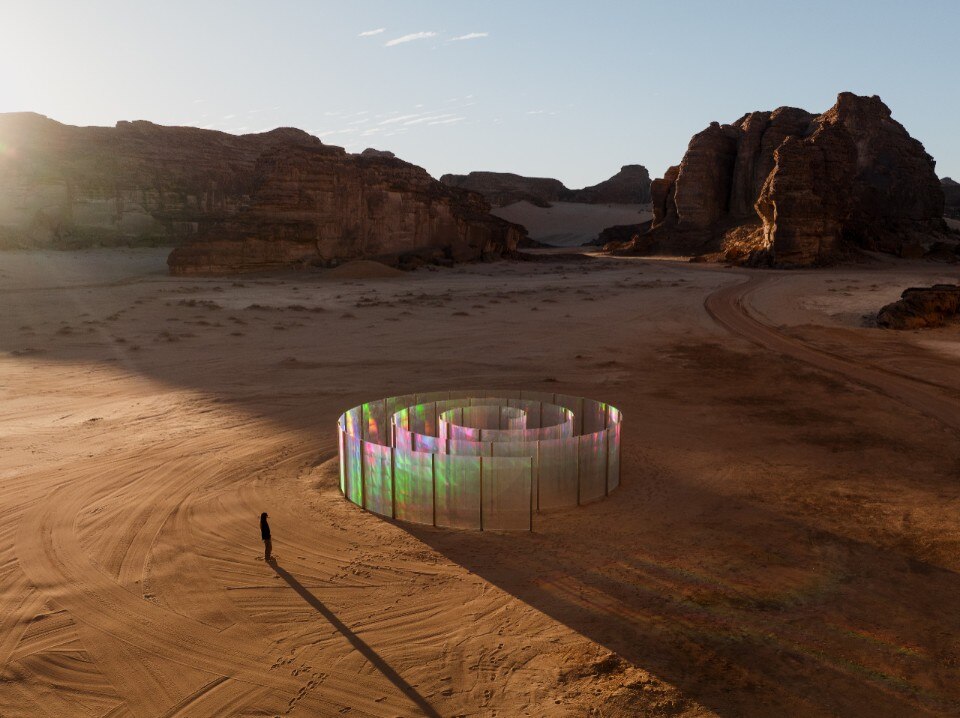
Even when it is not on view, Desert X remains one of the clearest signs of why the Coachella Valley has, in recent years, drawn the art world’s attention.
The exhibition uses the desert as a space for contemporary site-specific installations and works, treating the landscape not as a mere backdrop but as a living material at the core of the artistic project. In doing so, it revives the American tradition of land art in a contemporary key.
The next edition is scheduled for 2027.
 View gallery


Sunnylands
In Rancho Mirage, Sunnylands tells yet another story. For forty years it served as the winter residence of Walter and Leonore Annenberg, influential American diplomats, philanthropists, and art collectors, who left behind not only a world-famous estate but also a lasting commitment to education, culture, and the arts.
If Coachella represents the valley’s more pop side, Sunnylands reveals its more institutional, exclusive, and even strategic dimension. Today the estate can be visited on guided tours, and in recent years it has also hosted high-level political meetings, from Barack Obama and Xi Jinping to the U.S.-ASEAN summit.
Agua Caliente Cultural Plaza
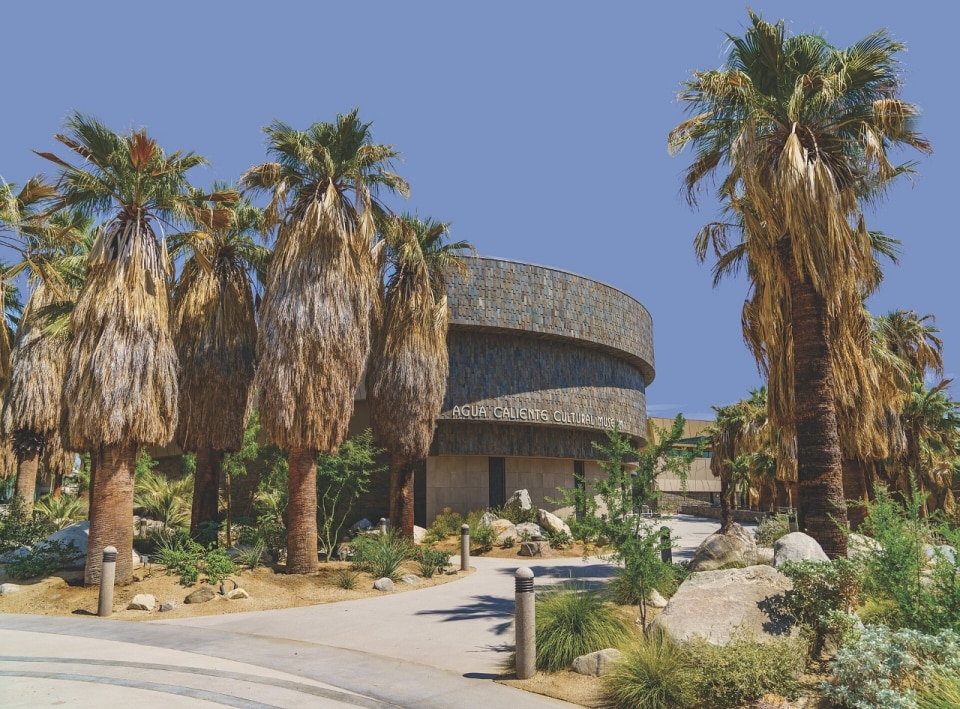
The last stop is the Agua Caliente Cultural Plaza. Here, the Coachella Valley shifts perspective, as the focus returns to the history and culture of the Agua Caliente Band of Cahuilla Indians.
With its open spaces, the Séc-he mineral spring, and the museum dedicated to the local Indigenous community, the plaza serves as an essential reminder: beyond the festival, the valley is a place shaped by a much longer history and tradition.