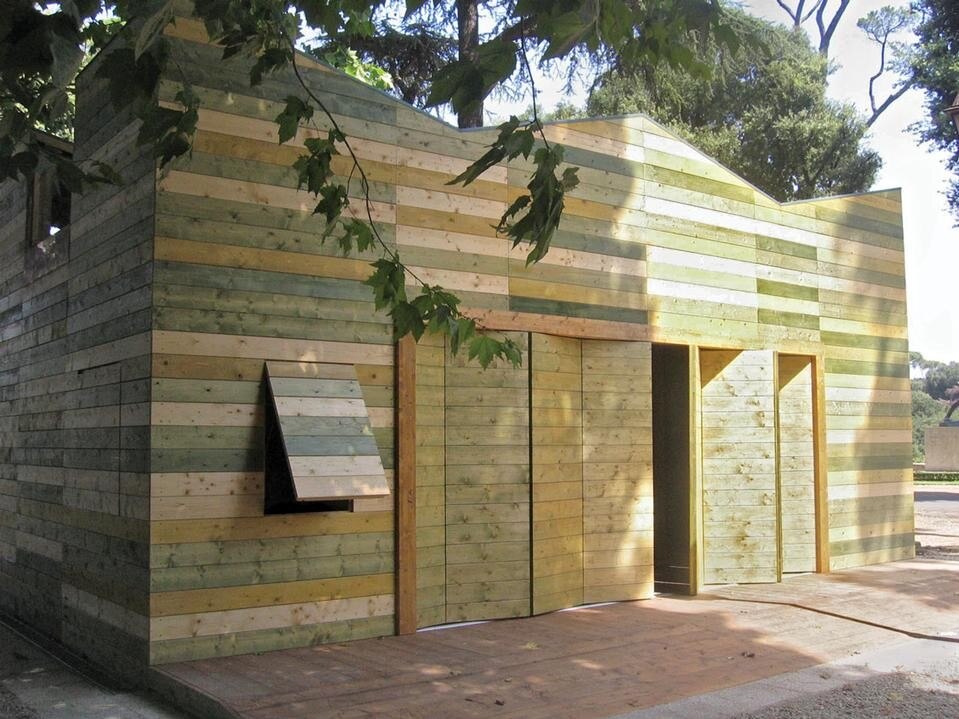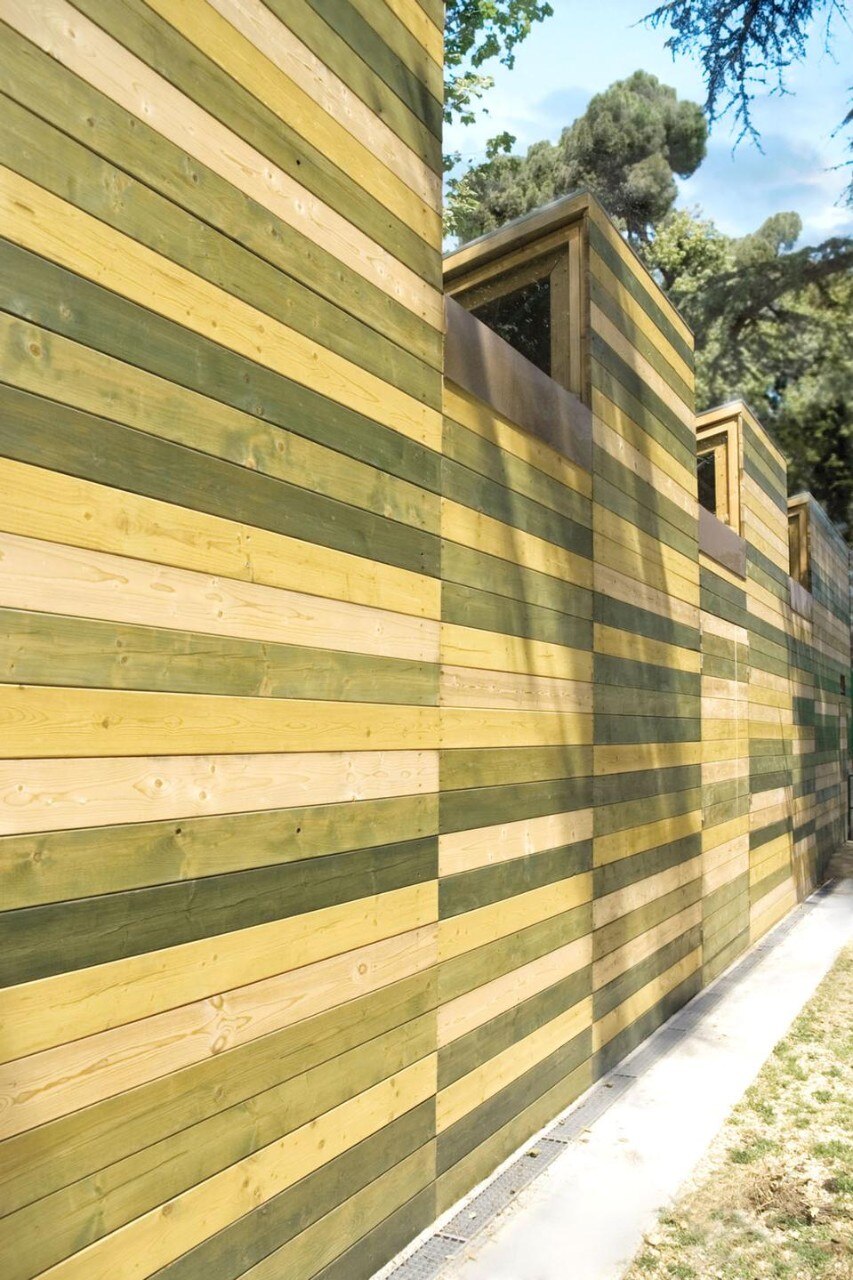
The theater seeks to address its context creatively, and establish a dialogue with the users - the children - by its use of colors and through the shapes of the pavilions. If the chromatic treatment colors attempts to engage the characteristic green shades of the Villa, then the pavilions, aluding to forms of the late nineteenth- and early twentieth-century, re-interpret them along the concept of lightness borrowed from origami.
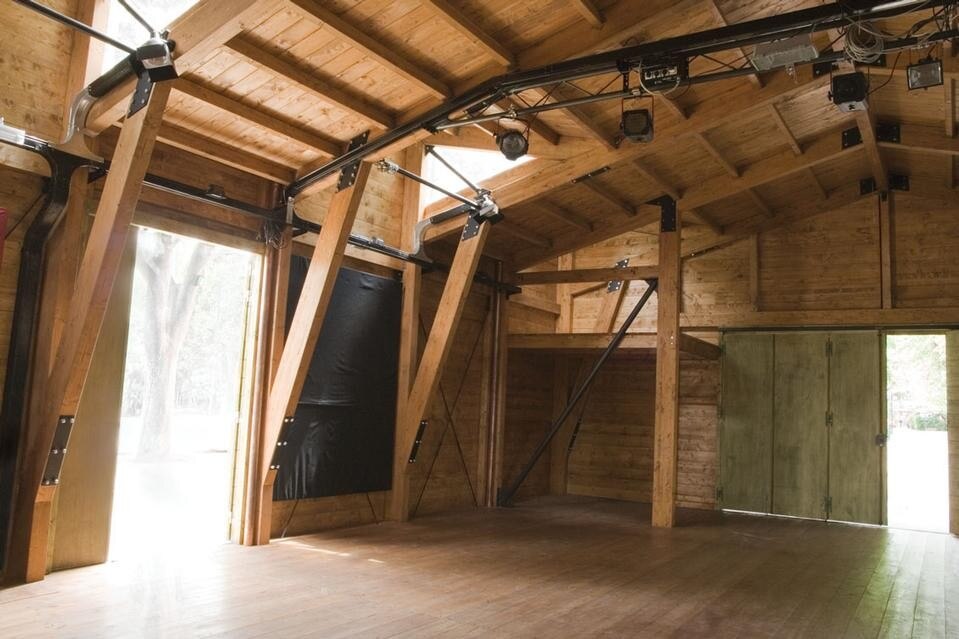
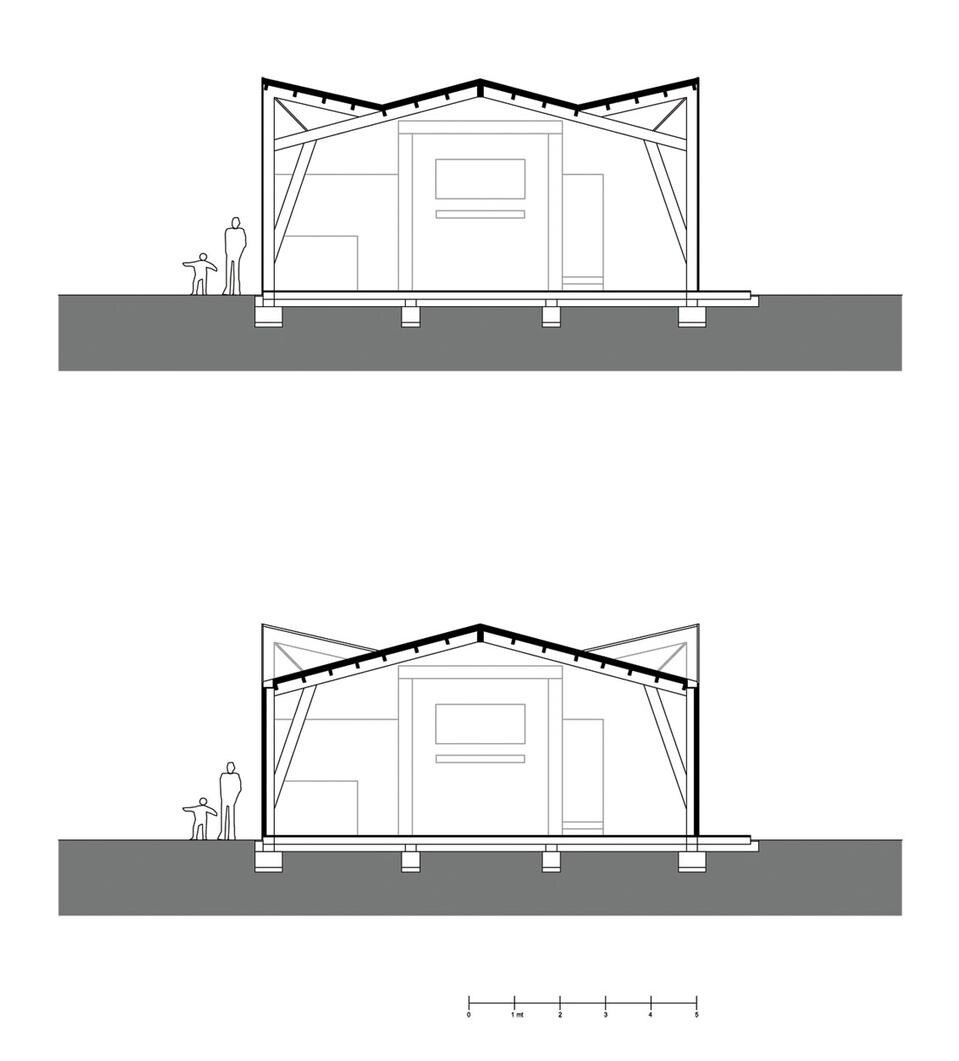
The placement within the context was guided by the belief that it is possible - always - to produce contemporary architecture that can communicate with its historical context. Respecting the mandate to provide a covering for and to protect the seats of the old theater without losing the sense of being outdoors, we made a shell of wooden planks, treated with colored water-based primers, that shield the hall from the elements, without actually enclosing the space itself. At the same time, the need for the theater space to be intimate, protected from the outside elements, led us to base our work on the concept of closure and openness in the search for flexibility of use, of light and air.
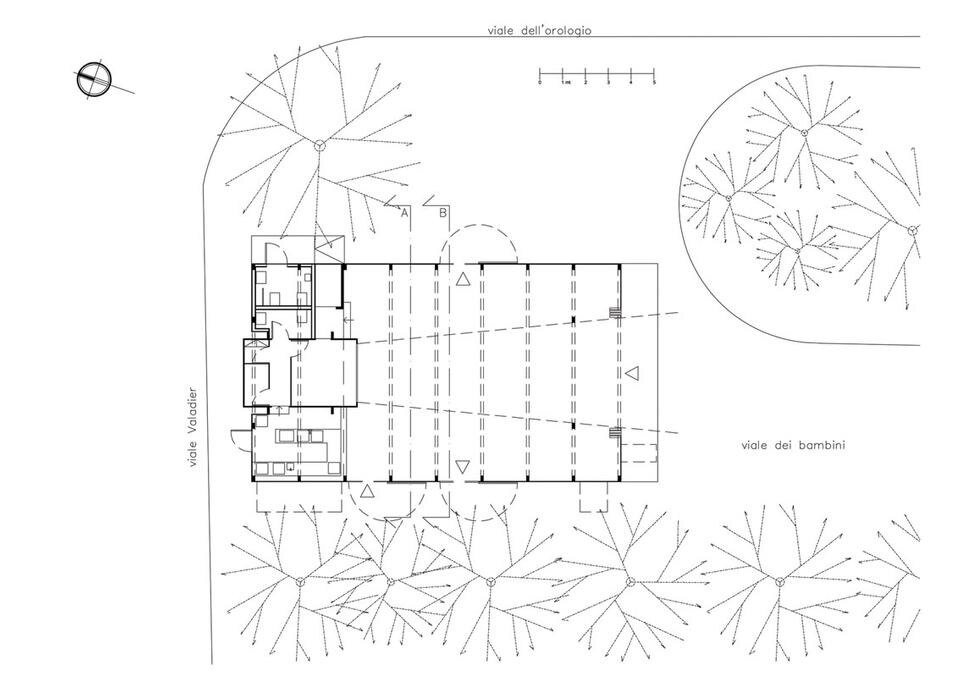
The lateral openings organize the circulation pattern and ensure respect for the evacuation criteria, in case of an emergency, while the main entrance serves to elongate the hall towards the exterior in order to define an osmotic relationship between the theater and the Villa.
Finally, skylights serve to let both light and the green of the trees into the room, creating a pleasant, natural illumination and the sensation of being inside a green area. In addition, if opened, they allow the hot air to escape through the "chimney effect", mitigating the effects of summer heat.
San Carlino Theatre, Villa Borghese, Rome
Architects: 1AX Architetti Associati / Alessandro Banci, Fabio Ceci, Mauro Manna, Antonello Piccirillo, Luca Piccirillo