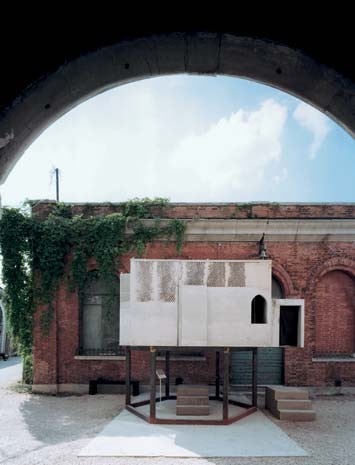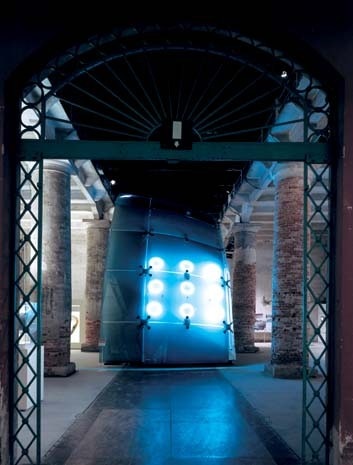
The Venice Architecture Biennale has always faced a conundrum. On one hand it has to represent the broad sweep of contemporary architecture (and respecting the egos of celebrities plays no small part in this: it is an unwritten rule that all the big names must be accounted for). On the other it is expected to give a direction to and define the future, following the lead of the very first Architecture Biennale in 1980, which anointed postmodernism with the famous Strada Novissima, in which the stars of the day put up facades in the style of the moment.
It is supposed to be encyclopaedic and narrative, broad and focussed. Subsequent directors have struggled bravely with titles that impart gravity and import – The Architect as Seismograph; More Ethics, Less Aesthetics – but the spreading, multiform nature of the Biennale tends to dominate. The former was brought down to earth by the Japanese pavilion, which, taking as its subject the devastating Kobe earthquake, made any metaphorical readings of seismography seem trivial. The latter, with Massimiliano Fuksas’s great and gorgeous video wall, rich in images of conflict and poverty, succeeded in aestheticizing the ethical.
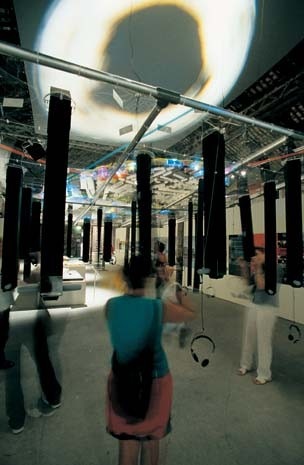
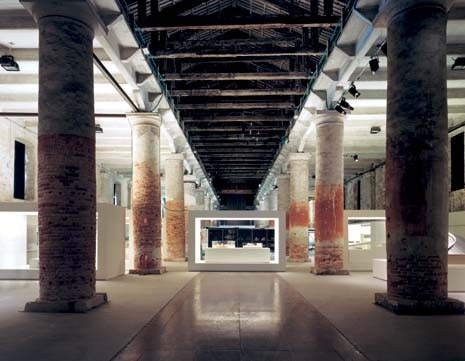
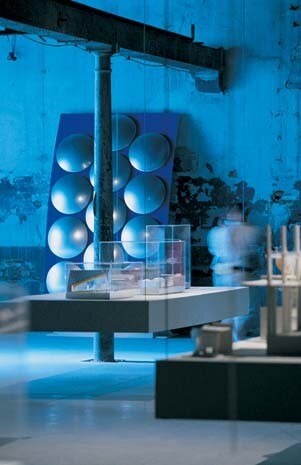
Deyan Sudjic, with the Anglo-Saxon bluntness of his native England, has decided on a theme that is not a theme: Next, a word that describes only movement in time and requires you to look past it as soon as you read it. As an exhibition, Next is an honest statement of the Biennale’s encyclopaedic character. It shows you what is going on in the world, without comment, although with some assumptions. In an age of baroque exhibition installations, it returns to the traditional methods of presentation: drawings, models, full-scale reconstructions of building elements. John Pawson’s exhibition design leaves you to draw your own conclusions.
Projects are categorized by type: housing, museums, etc. It cuts, with a naturalist’s detachment, through the anthill of contemporary architecture, revealing a vivid and active world well-fed on a decade of American-led prosperity. Never before in the history of the Biennale would Sudjic’s slice have revealed such a profusion and diversity of ideas, most of which will become reality. It reflects a time, perhaps ending, in which the sheer number of museums and civic ventures means that theorists like Diller + Scofidio may now build and young practices like MVRDV and FOA can become substantial and prolific enterprises. What’s more, the skills of the architect are no longer seen as fit only for pleasing essays but also for major urban interventions, in the form of museums, villas and projects like Herzog & de Meuron’s Barcelona Forum and Tenerife port reconstruction and Zaha Hadid’s Singapore master plan.
Architects are given the freedom, too, to be makers, artists and inventors. Indeed, it is required of them. They are invited to do architecture at increasing levels of intricacy, so the Holls, Itos, Sizas and Sejimas come to the fore. There is also a convergence, albeit incomplete, between makers of magnificence like Zaha Hadid and the quieter, more contemplative practices. Hadid’s work is becoming more material, and it makes its moves at a wider range of scales. The Holls and Sizas seem to be learning from Hadid the uses of cantilevered, flying and suspended elements. Preferable though it is to poverty, there are dangers in this opulence.
The phenomenon of architecture for architecture’s sake, in the astonishing superstars’ banquet in Guadalajara and the Millennium Palace in Qatar, promises to fly off into the realms of fantasy, whether or not these projects are actually built. Creativity is made a commodity, and a hugely enjoyable one at that (I would love to see these pleasure domes made flesh). But a puritanical voice nags that at some point a certain friction needs to be reintroduced, some contact with other realities. Which is why, of the national pavilions, Israel’s stands out.
A work of extraordinary courage and some skill, it argues that the spatial design of Jewish settlements on the West Bank is a major factor in the current conflict. It is always tempting for architects to harness politics to give power to architecture, and it is often done in a spurious and unconvincing way, but here the connection is real. For a project paid for by the Israeli government to dissent so boldly from that government’s official policy is simply astonishing. Yugoslavia and Brazil, with varying degrees of success, also address the political, while the Greek Pavilion departs from official definitions of architecture by focussing on the disregarded modern quarters of Athens.
Most political of all – potentially – are the two takes on the rebuilding of Ground Zero, in the American Pavilion and at the end of the Arsenale show. The pavilion, with a laziness that is startling given the circumstances, recycles the Max Protetch Gallery’s exhibition of counterproposals. The Arsenale shows designs commissioned by the New York Times. Both presentations are busy with ideas, and one or two projects, such as those by Raymund Abraham and Allied Works, stand out, but somehow one is left feeling that the best solution for Ground Zero, whatever it might be, is not here.
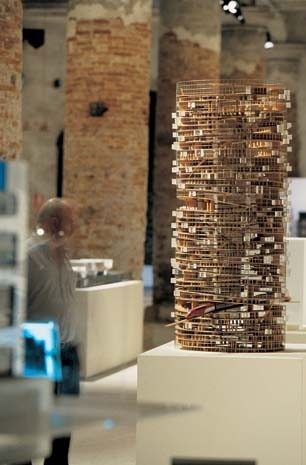
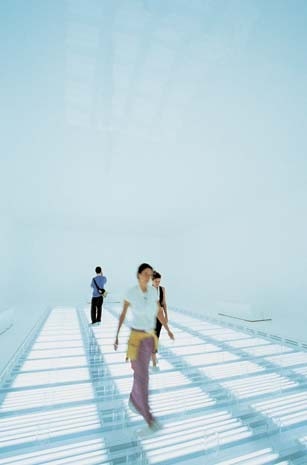
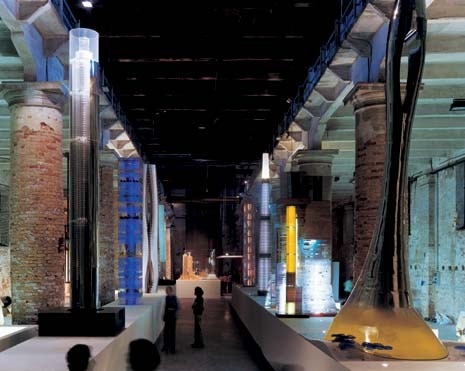
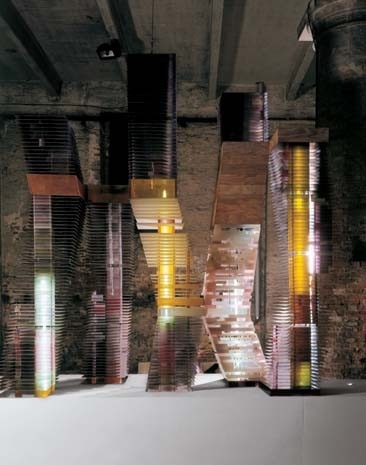
Ultimately, the dominant experience of the Biennale is the celebration of the designing and making of buildings, culminating in the rich, immersive display of FOA’s Yokohama Port Terminal in the British Pavilion. The deadpan, quasi-neutral presentation in the Arsenale is preferable to the superimposition of tenuous themes, and it is an intelligent response to the Biennale’s conditions of space (too much rather than too little), time and cost. It allows the richness of the material to make this the most rewarding Biennale in years. But there are times when the visitor longs for a level of interpretation that cuts across the deadpan. An opportunity was missed with the one speculative part of the Arsenale show, a ‘city’ of imaginary towers by famous architects. This, as it could only be, is an exercise of object-making that adds nothing to the real tower projects exhibited nearby.
City of Towers
Deyan Sudjic on the Biennale’s exploration of the future of the skyscraper
To argue, as some people have done, that we should stop building high after the attack on the World Trade Center is as untenable as suggesting that we should stop building reservoirs. If we are going to live in cities of any kind, we depend on a certain degree of trust in, and optimism about, the future.
There have, of course, been a range of complaints against the idea of building tall that are more telling than the threat of terrorism. Towers were once represented as a form of cultural imperialism – as an American imposition on the world’s collective imagination, like the Coke bottle or the Marlboro man. And for just as long it seemed that nobody but the Americans could build a convincing skyscraper. Other cultures succeeded in nothing more than a pallid parody of the authentic original. Towers were said to be anti-urban, driving out the diversity of the traditional city. It is interesting that the hold such views have on architects is clearly weakening.
The first two years of this century were characterized by a general acceptance of the tower – not just in Asia, where the tower has become a badge signalling civic ambition and corporate ego, but also in Europe. Cities as diverse as London, Barcelona and Vienna have embarked on the construction of a wave of towers. They had their opponents: people who argued from sincere motives that Europe’s cities needed to stay as they were if they were to retain their distinctive character and with it secure their economic future. But they were facing a losing battle, and architects demonstrated a new interest in exploring the potential of the tower.
It was only America, the culture that invented the high-rise, that became bogged down in a mindless repetition of the forms that it already knew.
It took the loss of the twin towers to make it clear how feeble the ambitions of American developers and architects really were. At the end of 2001 it seemed inconceivable that anything as exceptional could ever be attempted again.
It was from a mix of all these concerns that the Biennale took the decision, with the help of Alessi, to commission eight architects to take a fresh look at the tower as a building type. Some of the architects selected have already built tall structures. Jean Nouvel’s Dentsu tower in Tokyo succeeds in dematerializing to a condition of apparent weightlessness. Denton Corker Marshall has built two of Australia’s most impressive towers and completed a design for what would have been the world’s tallest high-rise in Melbourne.
Others, such as Future Systems, have explored the tower as an exercise in research into form, structure and materials. Still others – Toyo Ito, David Chipperfield and Zaha Hadid – are just beginning to consider the high-rise as a design issue almost as challenging as that of the individual house. And from America, Thom Mayne’s California perspective provides a novel take on the tower.