

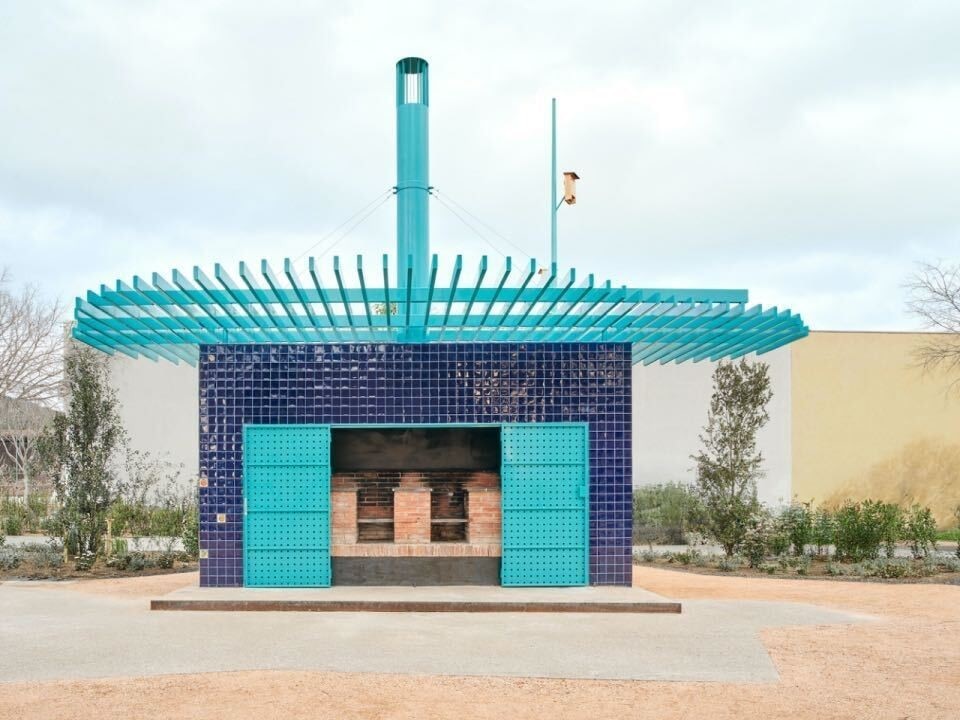

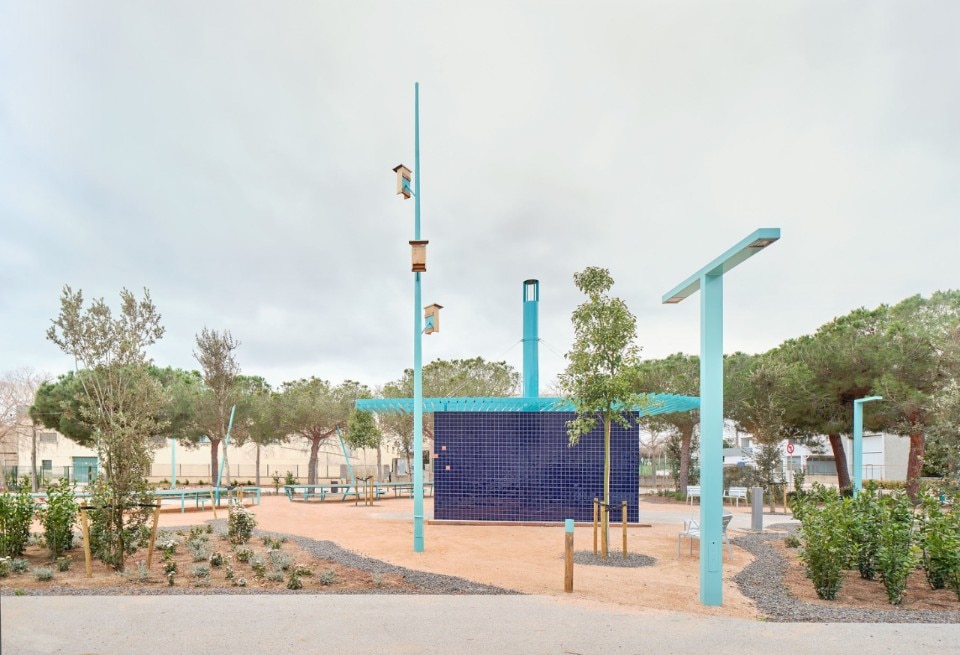
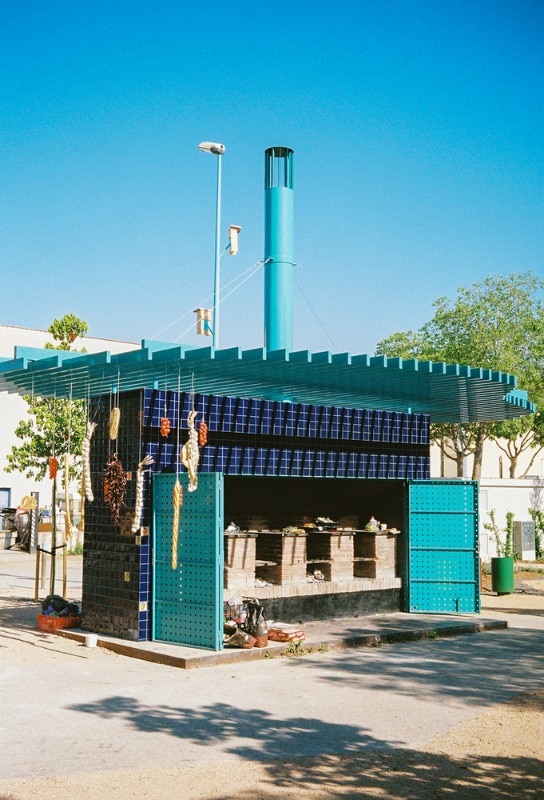
In the heart of the Costa Brava, Barcelona-based firm h3o architects has transformed a disused 1,700-square-meter parking lot in Castell d'Aro into a public plaza named after its most recognizable element: La Barbacoa Comunal. The project grew out of a marginal place, initially conceived as an access point to the Vía Verde del Carrilet and later occupied by cars, where a barely visible and sparsely used municipal barbecue had been placed. It was precisely around that element, which only came back to life at spontaneous community lunches, that the architects identified the outline of a possible shared space.
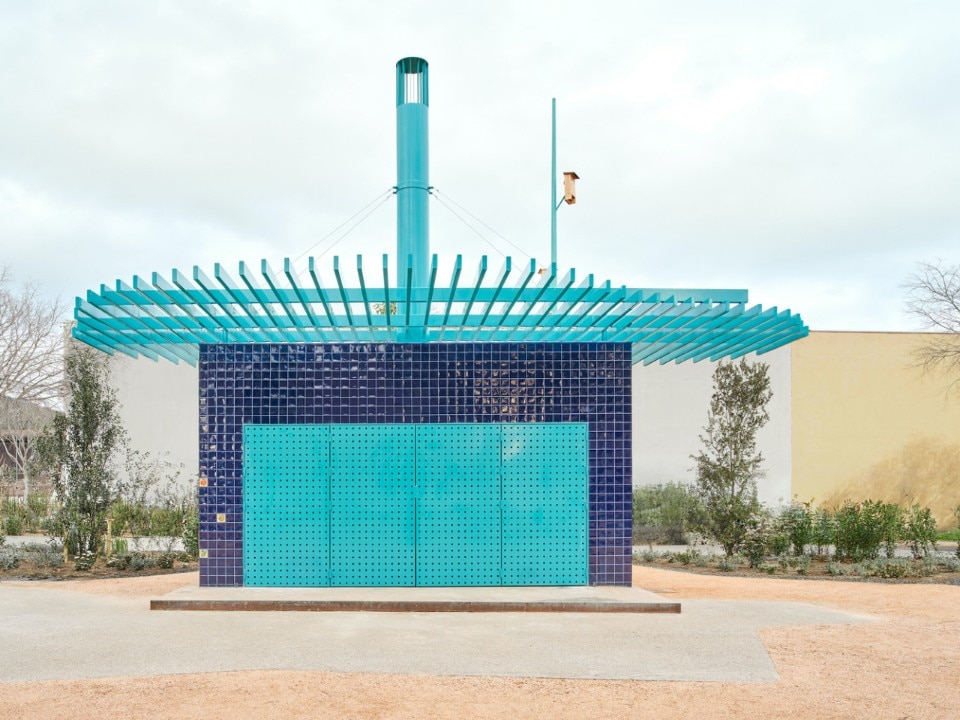
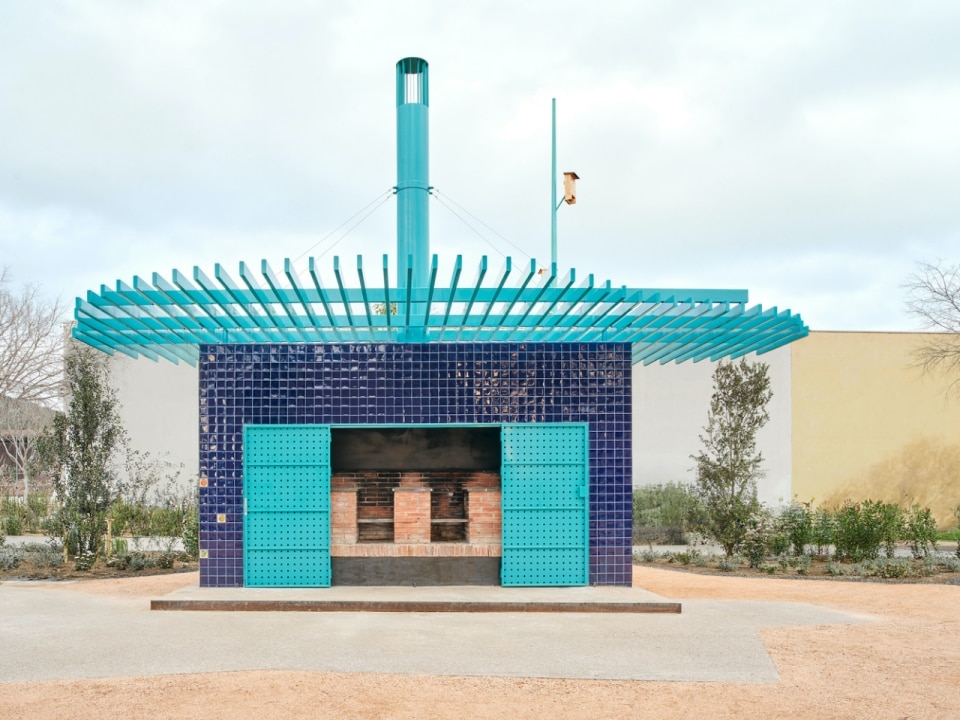
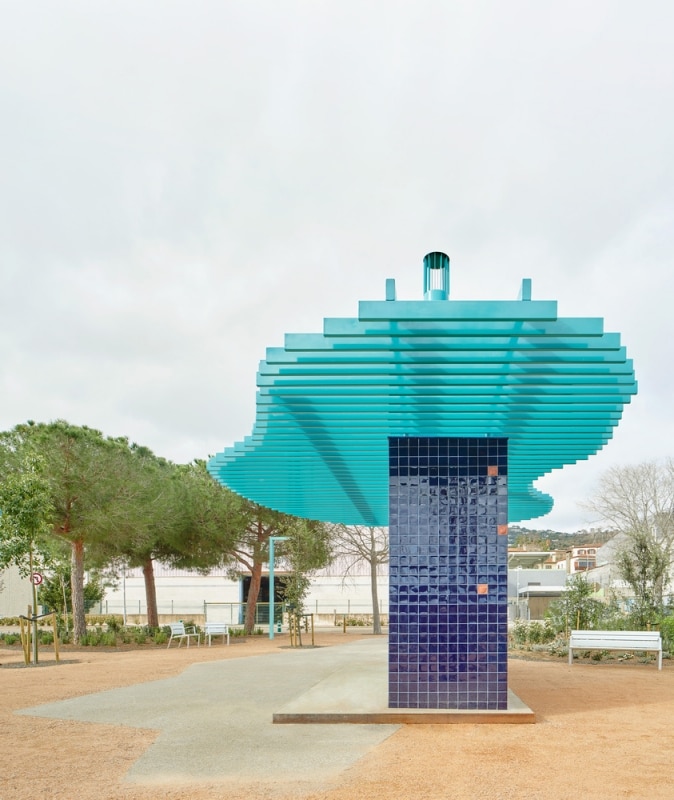
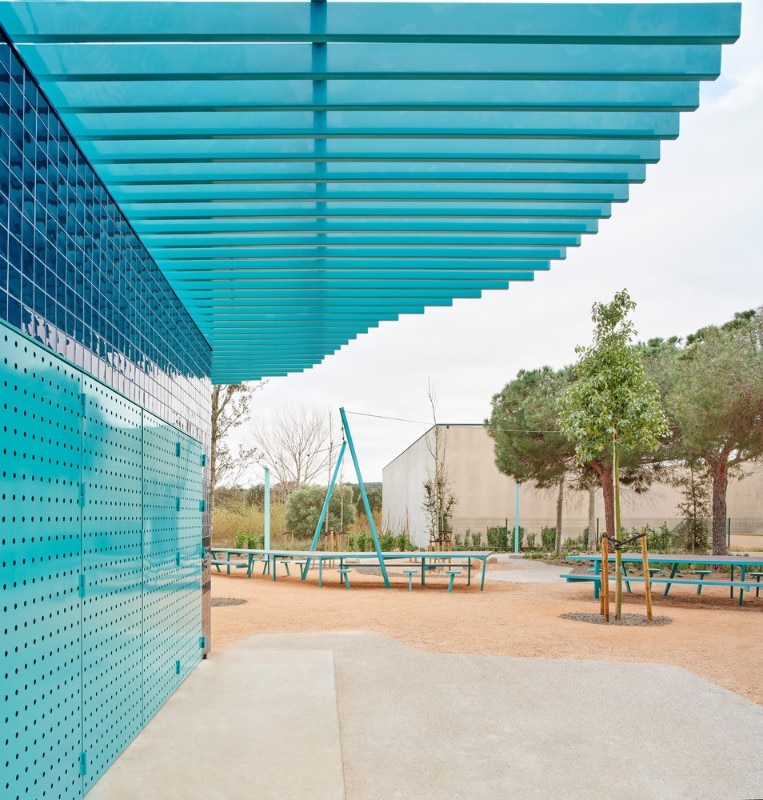
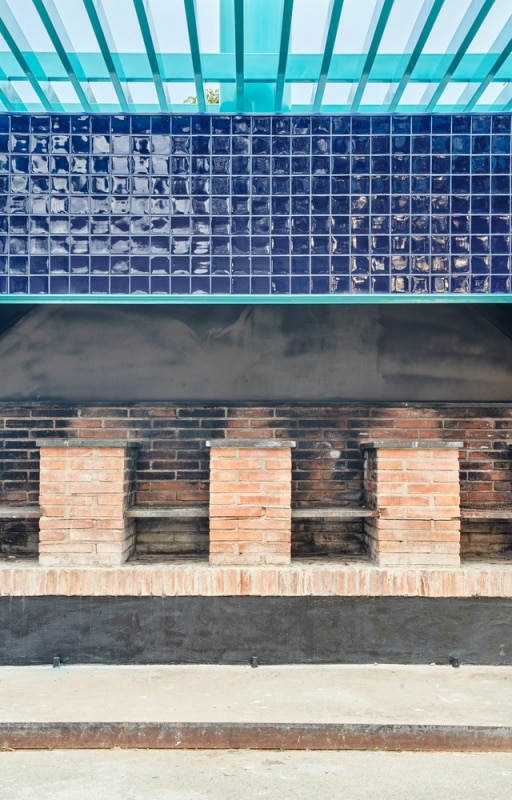
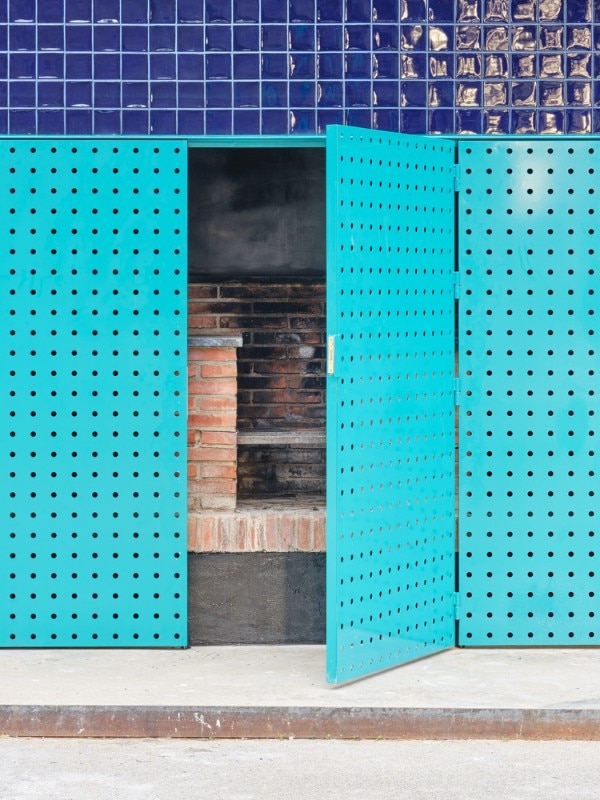
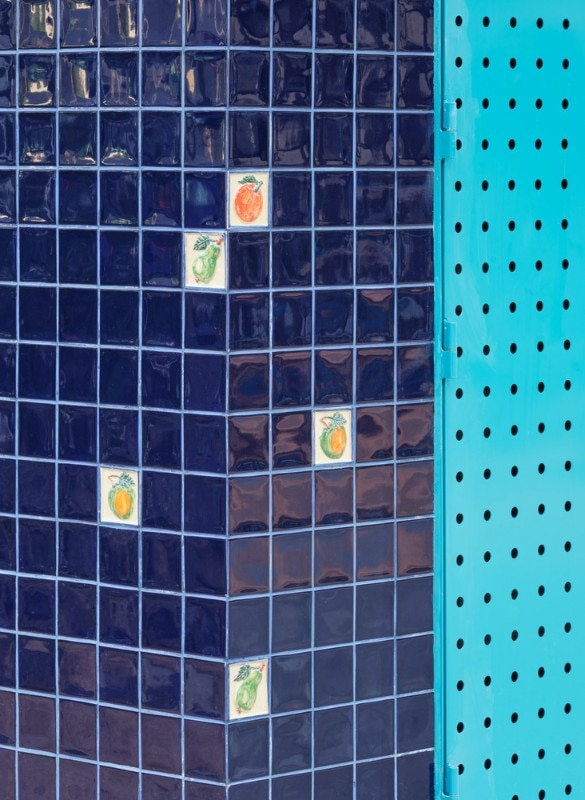
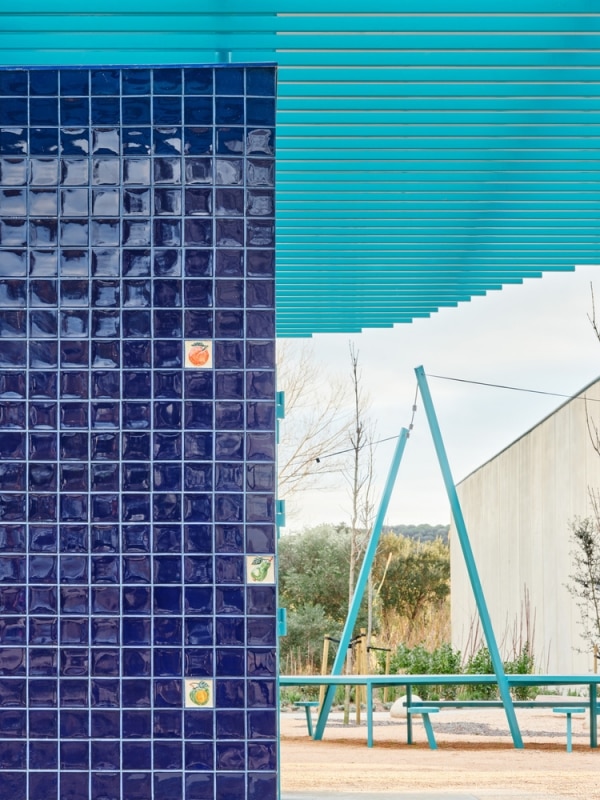
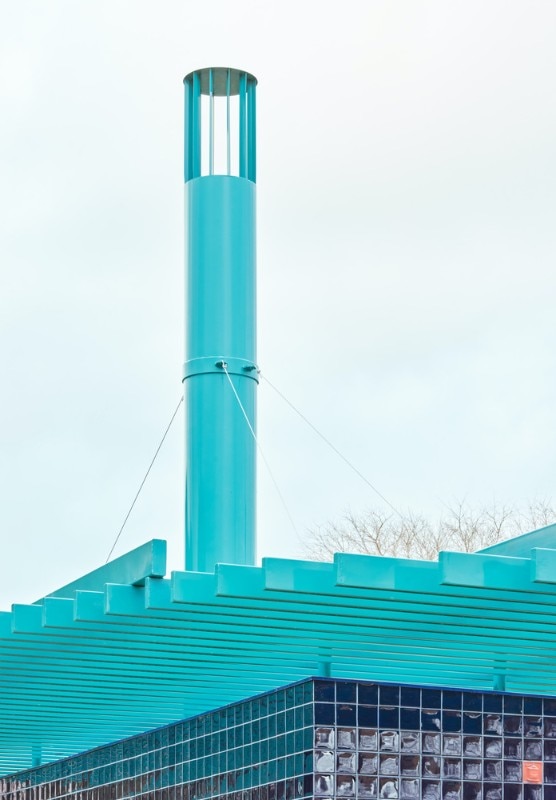
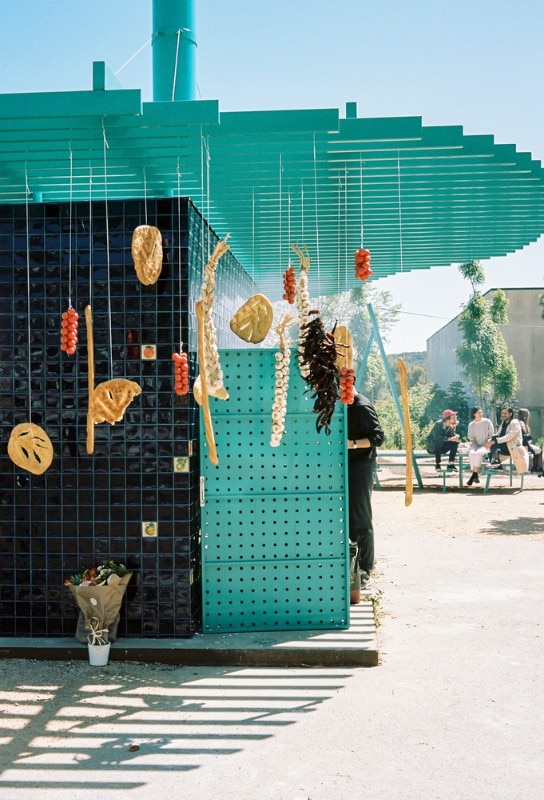
The barbecue thus becomes the centerpiece of the new urban intervention, reinterpreted as an architectural and symbolic sign. Covered with blue tiles and ceramic details, it takes on the colors of the Mediterranean, while an organic steel and wood structure towers over it, offering shade to those who cook. The pergola culminates with a fireplace that serves as an orientation point and makes the plaza recognizable from afar.
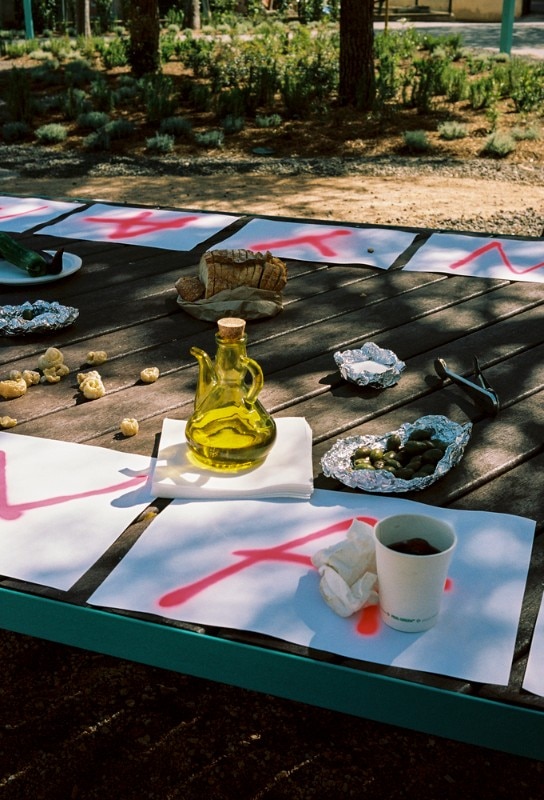
"Collective meals have always been a central pillar of community identity and social cohesion in our Mediterranean culture," the study explains. "Street dinners during local festivals, calçotades with friends in February, Sunday barbecues, or blowing out candles with classmates in a park: these are all moments that strengthen community through food."
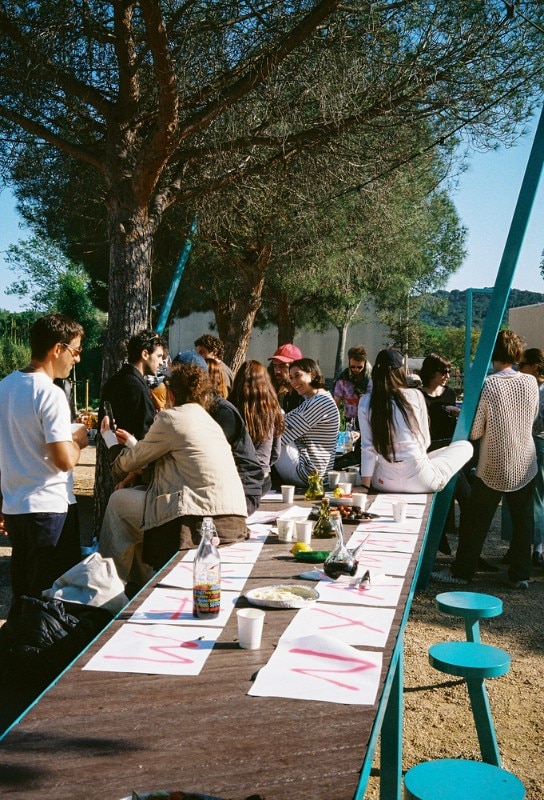
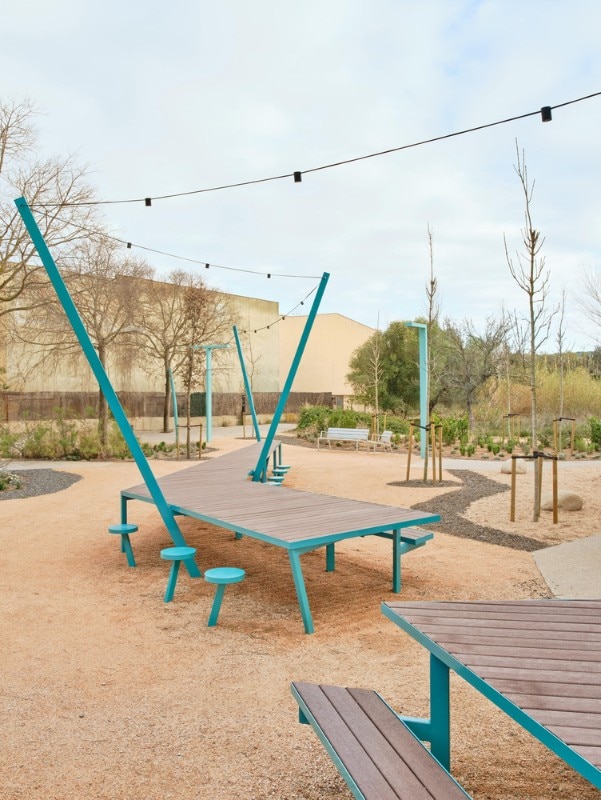
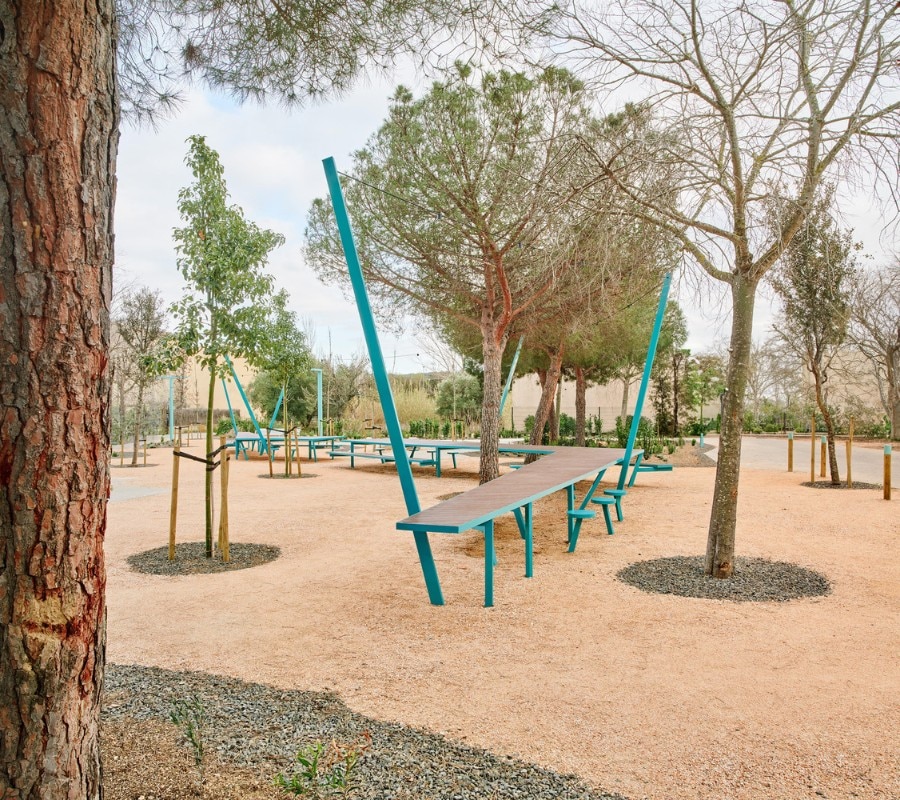
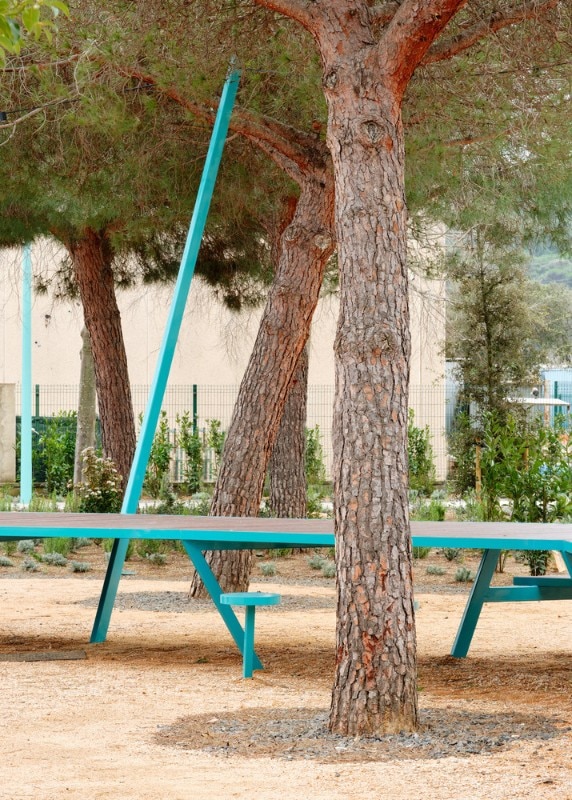
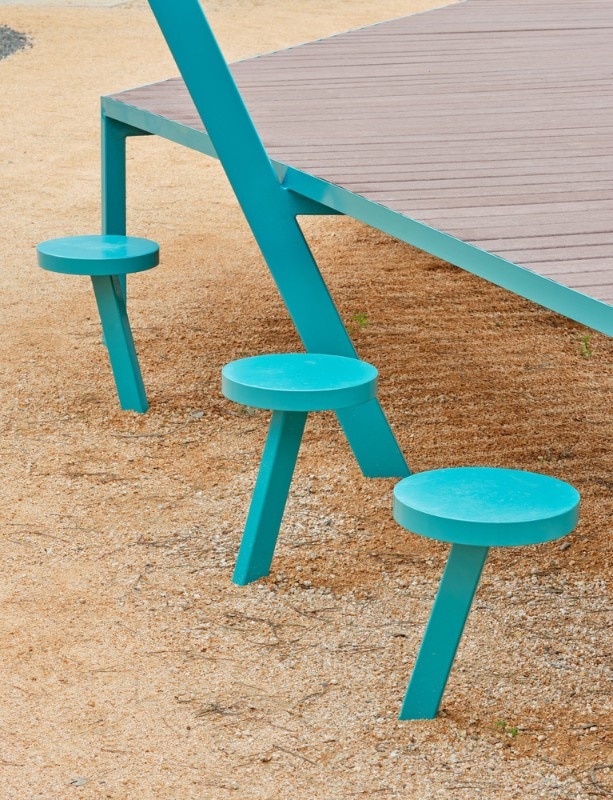
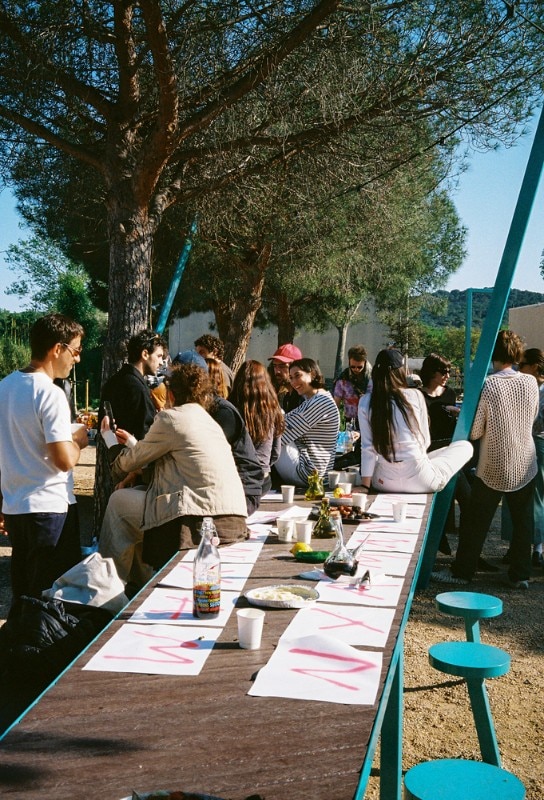
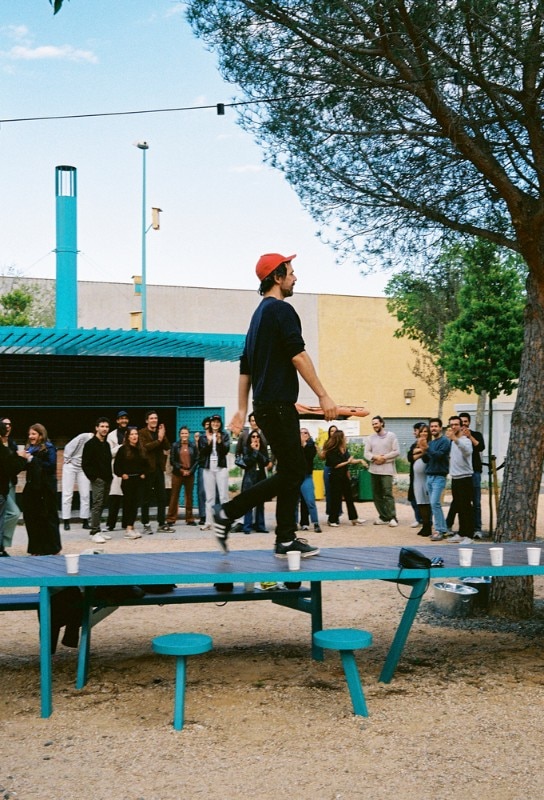
The design of the space revolves around three gestures: a barbecue-sculpture, a large collective table, and the renaturalization of the ground. The long zig-zag table, capable of seating up to 50 people, runs through the vegetation and breaks at the trees, generating free spaces for flexible and accessible use by different groups. The intent is not only to provide furniture, but to build a social device that encourages conviviality outdoors.
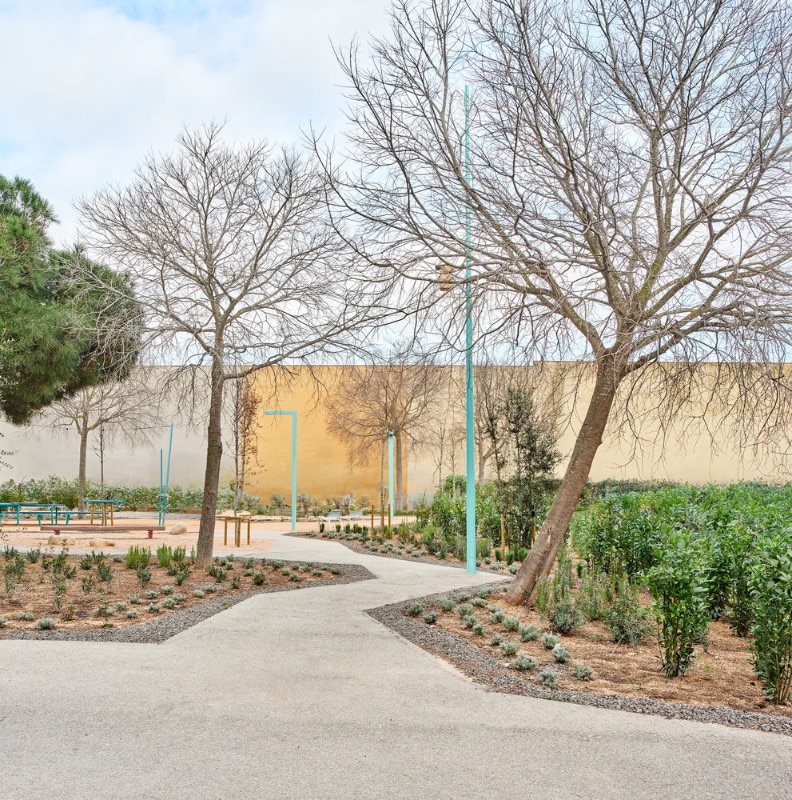
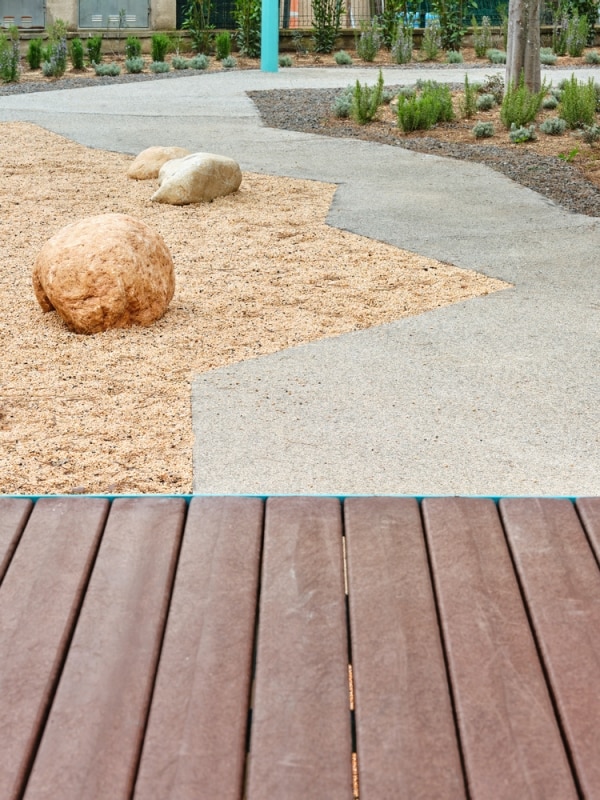
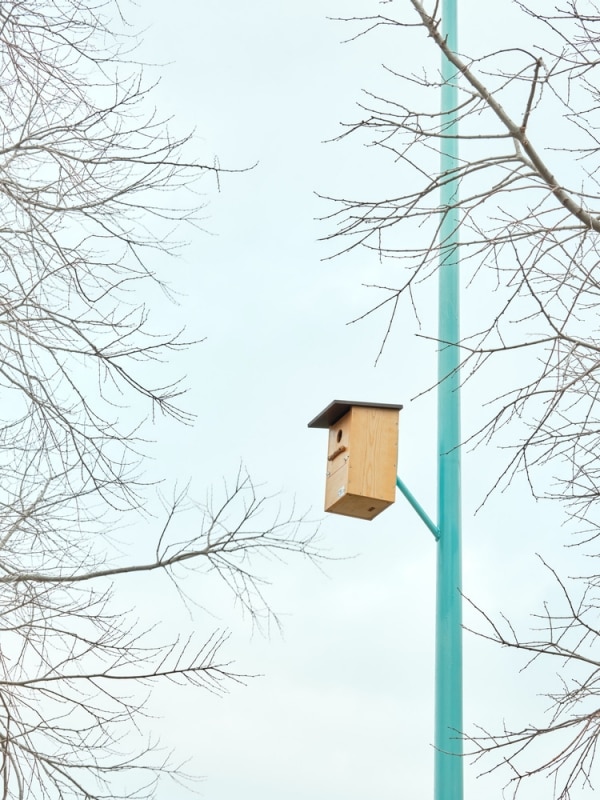
On the landscape plan, the intervention includes the preservation of existing trees and the introduction of native species that encourage nesting and pollination. Stone blocks of varying sizes reinforce the geometry of the project, while the asphalt surface has been largely removed and replaced by vegetation. Two main paths cross the plaza, connecting it to the urban fabric and the Vía Verde nature walk, improving permeability and climatic comfort and reducing the "heat island" effect.