


Metal is an ancient and natural material that has been used throughout the history of construction. Established since the Industrial Revolution, this material has since “built” (together with glass) the solid foundations of modern architecture based on high structural performance, economic efficiency and lightness.
Over time, technology has expanded its scope of application through the use of alloys, making it an optimal material not only in structural applications but also as a cladding “skin”, thanks to its high energy standards, durability and total recyclability (and therefore environmental sustainability), as well as its unlimited figurative potential.
However, as demonstrated by the Tin Man in “The Wonderful Wizard of Oz”, who constantly bursts into tears of emotion despite thinking he has no heart, beyond its seemingly cold and sharp “skin”, metal has a warm beating “heart”. A heart that, moving from fairy tales to architecture, can be seen in this material's ability to give “soul” to a project and can be heard beating loudly in the Mazzonetto Spa factory in Loreggia (Padua): here, among presses and welding machines, laboratories and training rooms, the company founded in 1982 by Diego and Andrea Mazzonetto explores the technical and expressive potential of metal – from sheet metal work to roof and façade cladding at a wide variety of scales, from interventions on historical heritage to new constructions – embracing Paul Valéry's statement that “the deepest thing in a human being is the skin”. There are four production lines: from the most noble natural copper (the “Cuprum” line), to titanium zinc (the “Zincum Titanium” line) and pre-painted steel (the “Mavis” line), to the lightest and most versatile pre-painted aluminium (the “Vestis” line).
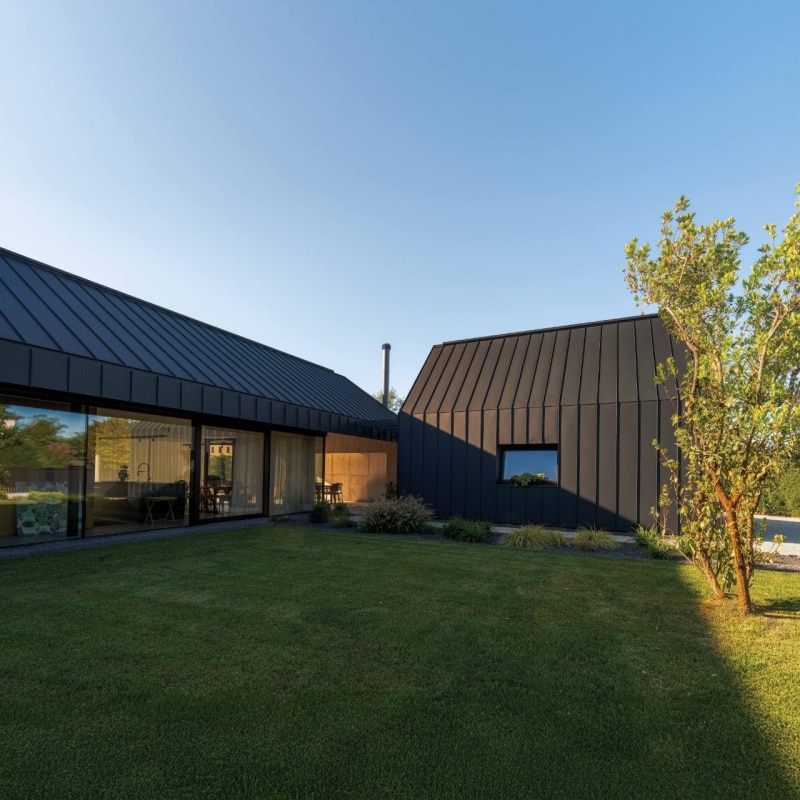
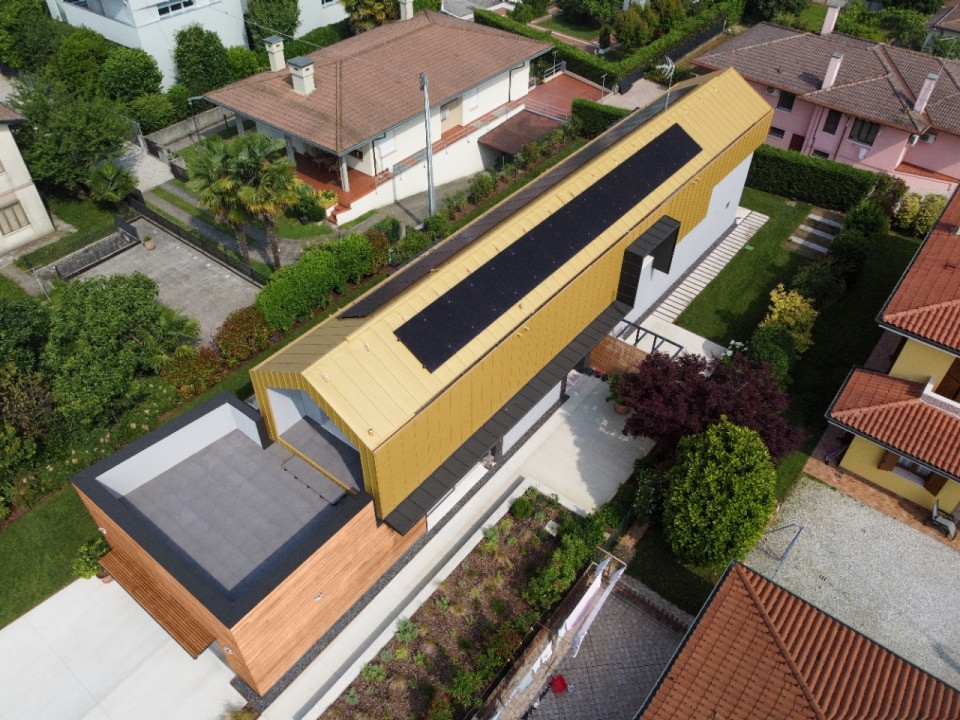
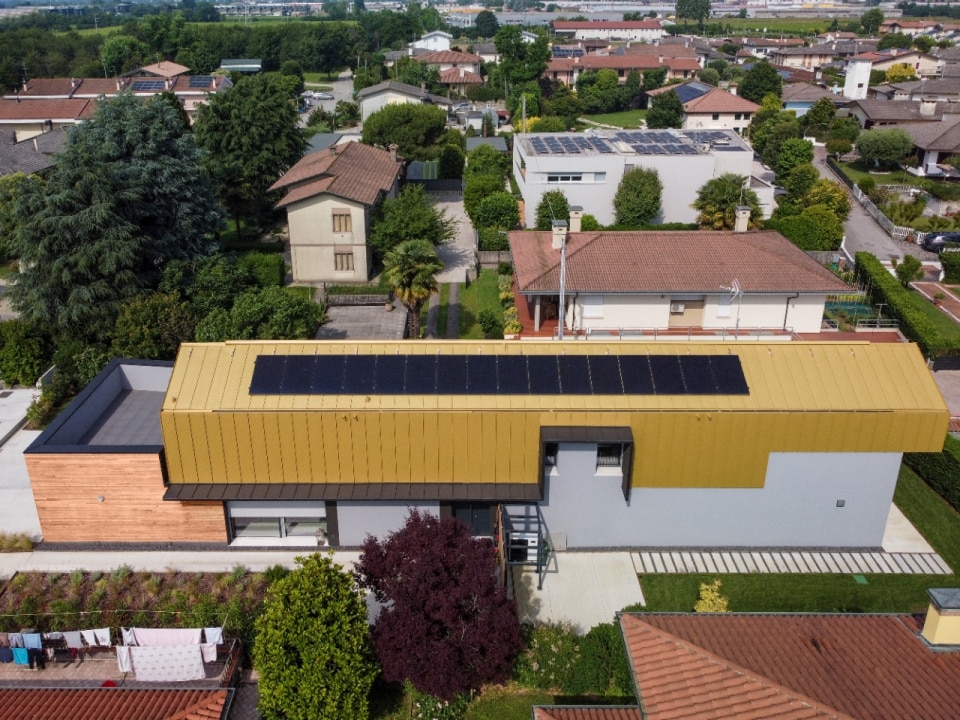
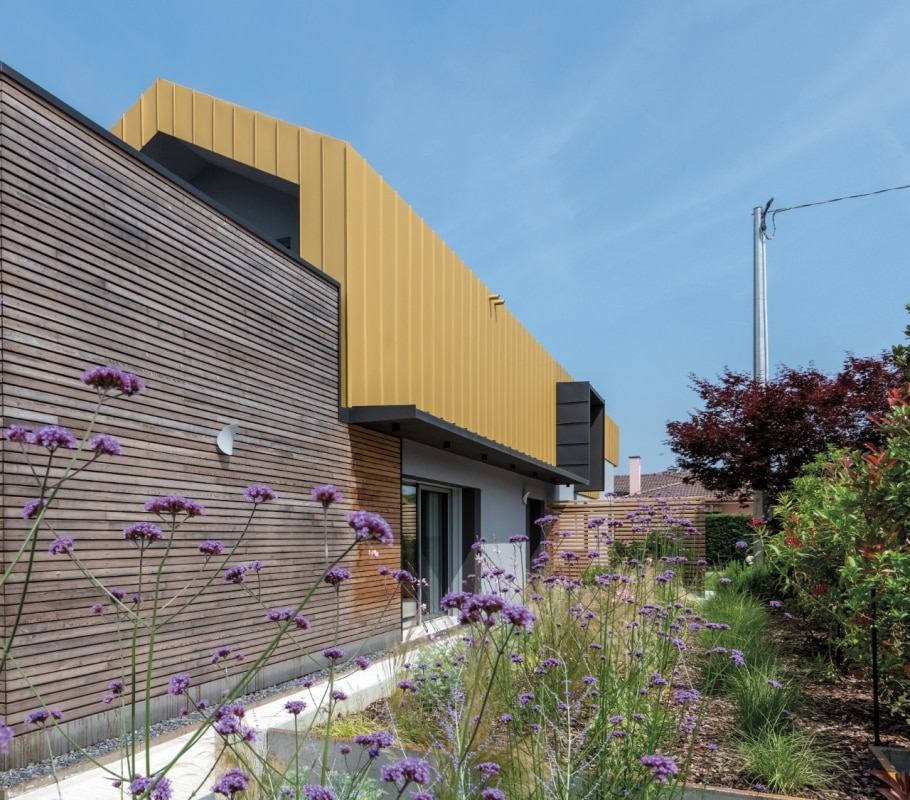
Architect Jacopo Mazzonetto recounts his family's adventure in the "Wonderful World of Metal" (to paraphrase the fairy tale mentioned above) to Domus. He followed in his father Diego's footsteps (an architect and designer) and inherited his passion for this versatile material. He talks to us in the garden of “Casa D'Oro”, a single-family house in Castelfranco Veneto (Treviso) that he designed together with the company's technical team and which has recently been completed: simple volumes, clearly aggregated to create an effective functional layout, where the “skin” of painted aluminium crimped sheets shapes the golden-coloured roof (Vestis Gold) and the overhanging graphite black veil, standing out vigorously against the grey concrete body of the house and giving the building a distinctive and captivating character. As Mazzonetto says: “The skin is the first element you notice in architecture; it divides the interior from the exterior but, above all, it shields and protects the architecture itself. There are many examples of iconic architecture that have enhanced the use of metal “skin” as cladding, from Frank Gehry's Guggenheim Museum in Bilbao to Renzo Piano's Nemo in Amsterdam and Daniel Libeskind's Jewish Museum in Berlin: in all these projects, metal becomes the main feature of the design and the architecture itself, sometimes even contrasting with the existing structure".
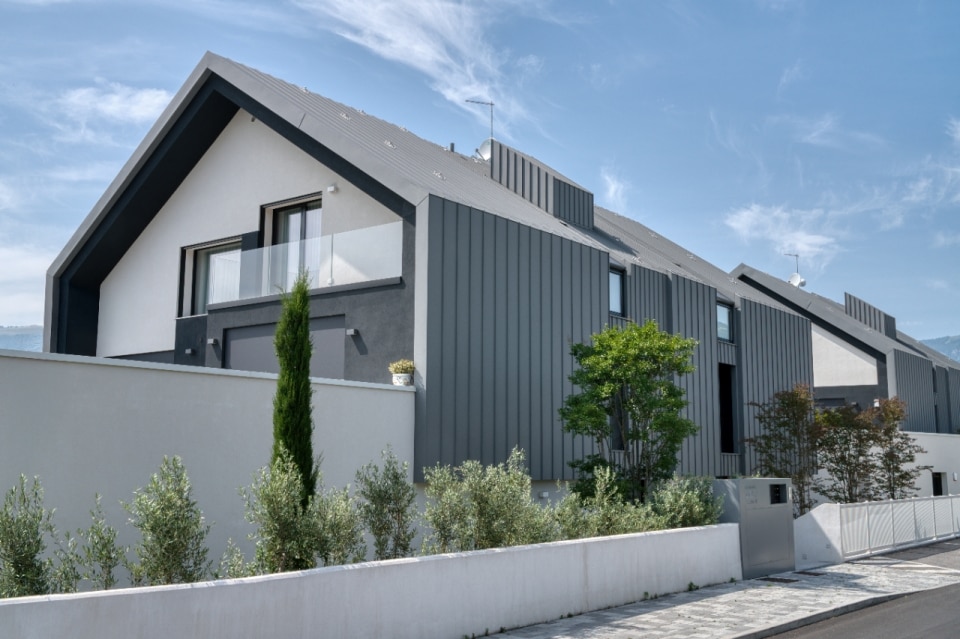
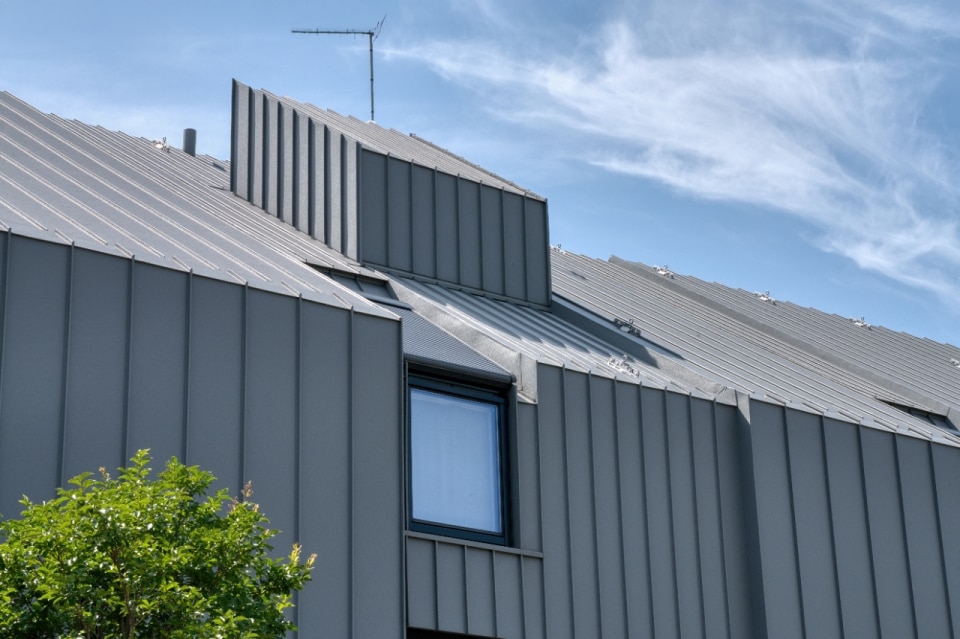
There are many technical variations which the company adapts according to the specific context and the designer's preferences. As Mazzonetto notes: "Each metal has its own characteristics and relationship with the location, which determines whether one metal is used over another. In northern Europe, titanium zinc is widely used but in Italy it is not very common, mainly due to the complexity of installation. In Italy, copper has a long history, although its high cost has reduced its use. Prepainted steel is more widely used, especially in mountainous areas due to its high resistance to atmospheric agents, as well as prepainted aluminium, currently the “leading material” due to its lightness, durability, ease of installation and lack of market fluctuations".
And, even from a formal point of view, metal “skin” offers a variety of solutions, especially in relation to the passage of time: from copper which, like titanium zinc (albeit in a minor degree), changes colour, to pre-painted steel and aluminium which maintain their appearance over time, offering a wide range of colours to suit every need. A relationship with time that, in any case, reflects the “indifference” of this material (and of those who use it) to the ephemeral cycles of fashion, emphasising the value of architecture designed to protect and endure: "our home is the place where we live and where we must feel safe. In a constantly changing society where everything is transient, for us metal cladding represents a certainty of protection, safety and solidity", confirms Mazzonetto.
To convey these concepts and highlight the role of metal in architectural cladding, Mazzonetto launched “The Skin”, a project that codifies the principle behind the company's products: the skin as a metaphor for a technical and aesthetic element under which the heart of a building beats. Related to this is the Academy, dedicated to updating and perfecting the use of metal in cladding and sheet metal work, offering training and technical support both during the design phase for professionals and the execution phase for installers. “The Skin” – explains Mazzonetto – is the first multi-metal training centre for both installers and professionals. We involve university lecturers, industry experts and other companies operating in the field of cladding. We offer five types of courses for installers; with professionals, we adopt the 3P method (Preliminary analysis with feasibility study, Project development, Pose/Insallation), without influencing the designer's choices but accompanying them towards the most coherent solutions".
The courses, held in a separate building from the offices, range from theoretical lessons in the classroom to practical work in the workshop where, among platforms and mock-ups, lathes and hammers, you can feel the energy of a Renaissance forge in which “knowing” and “making” are intertwined like metal alloys. Not far away there is the production plant, where automated equipment and human know-how shape, move and store slabs, tubes and strips stacked like giant totems, ready to be shipped from Loreggia to clad the soul of architecture all over the world.
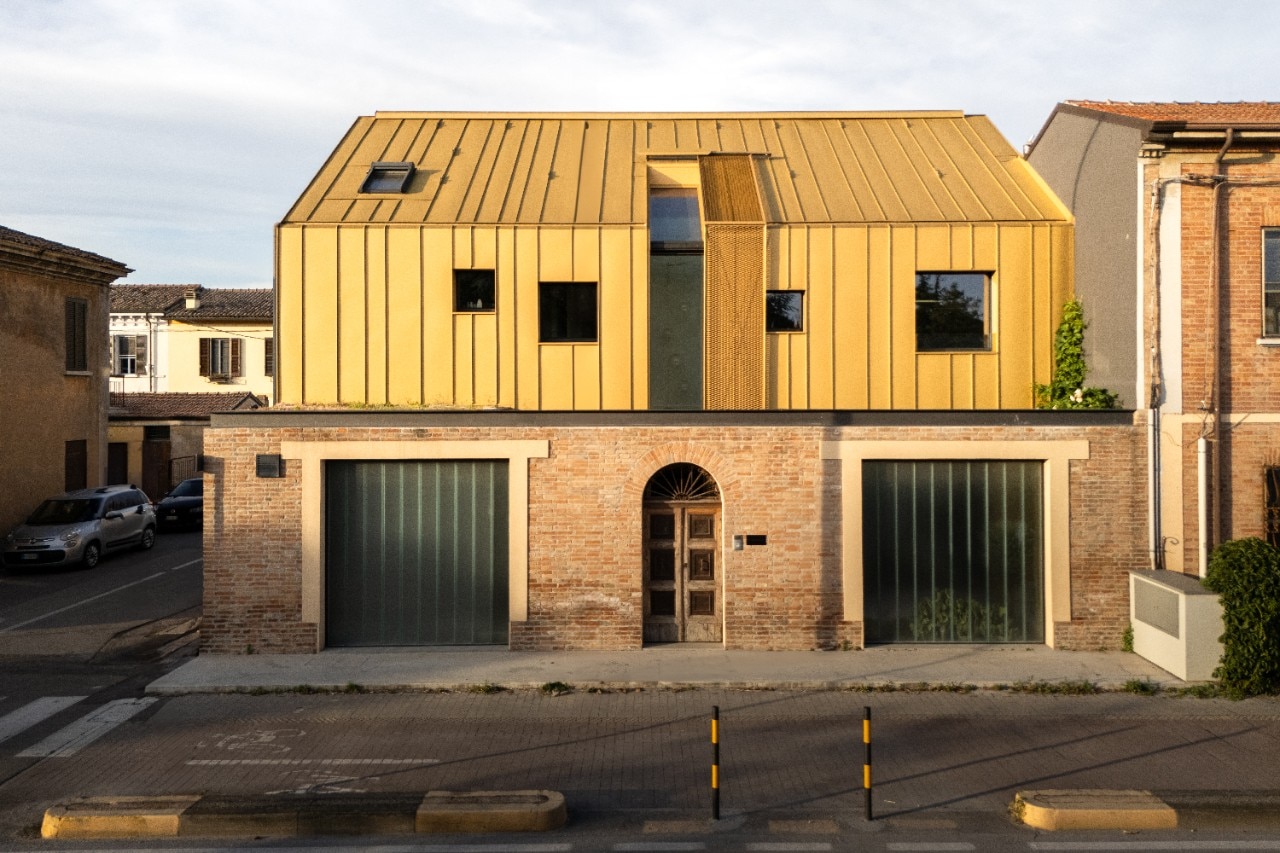
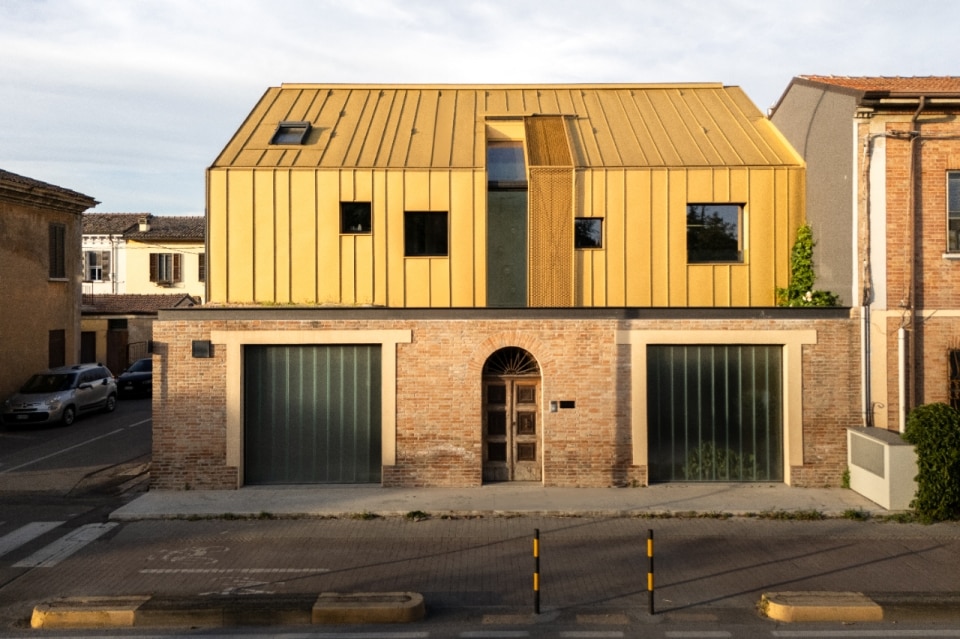
On the cover: Piraccini + Powerful Architecture, The Gold Inside, Ravenna, Italy 2023. Photo Urbana Production