


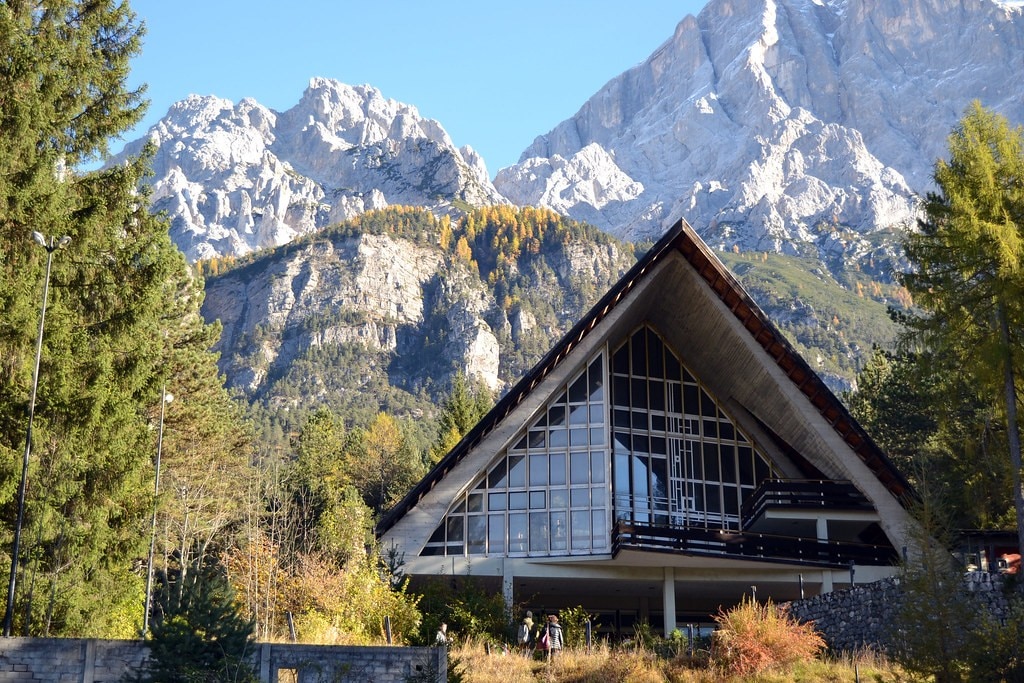

When people think of Enrico Mattei’s Eni, they usually picture Metanopoli, Agip service stations and the massive infrastructure projects that helped fuel Italy’s postwar economic boom. Far less well known is one of the company’s most visionary undertakings: a holiday village in the Dolomites where factory workers, office employees and executives spent their vacations together, regardless of rank.
More than sixty years after it was built, part of that social utopia is once again open to visitors. In Borca di Cadore, just a few kilometers from Cortina d’Ampezzo, travelers can now stay at Hotel Boite, designed by Edoardo Gellner between 1961 and 1963 as the centerpiece of the Eni Holiday Village.
The Eni village in Borca di Cadore
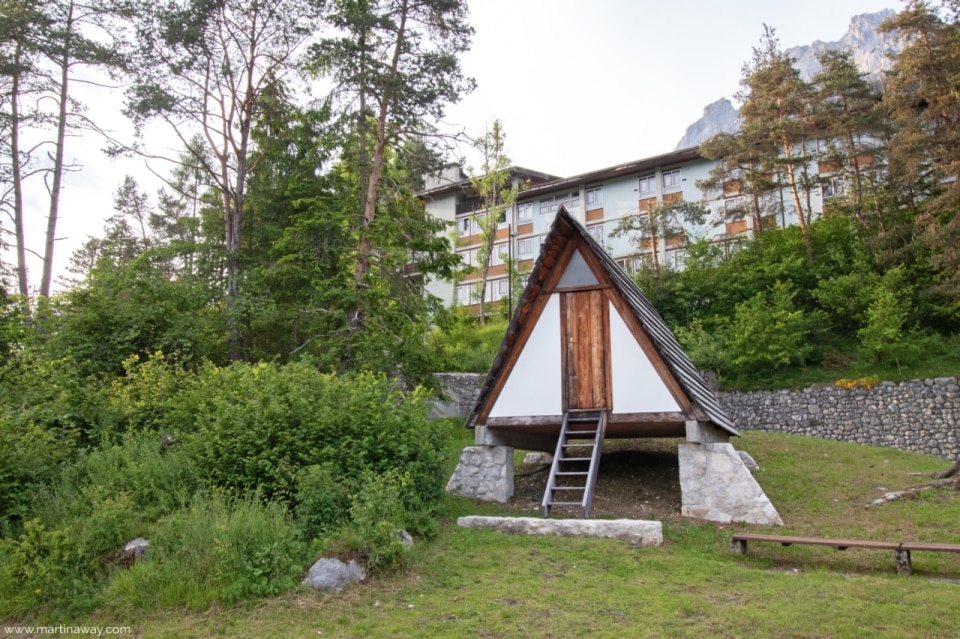
In the late 1950s, Enrico Mattei commissioned Gellner to design far more than a tourist resort. The brief was to create an entire holiday town capable of accommodating up to 6,000 people. The masterplan included 280 cabins nestled in the forest, a summer camp covering more than 30,000 square meters, a youth campsite, the Residence Corte apartment complex and the Church of Our Lady of Cadore, designed together with Carlo Scarpa.
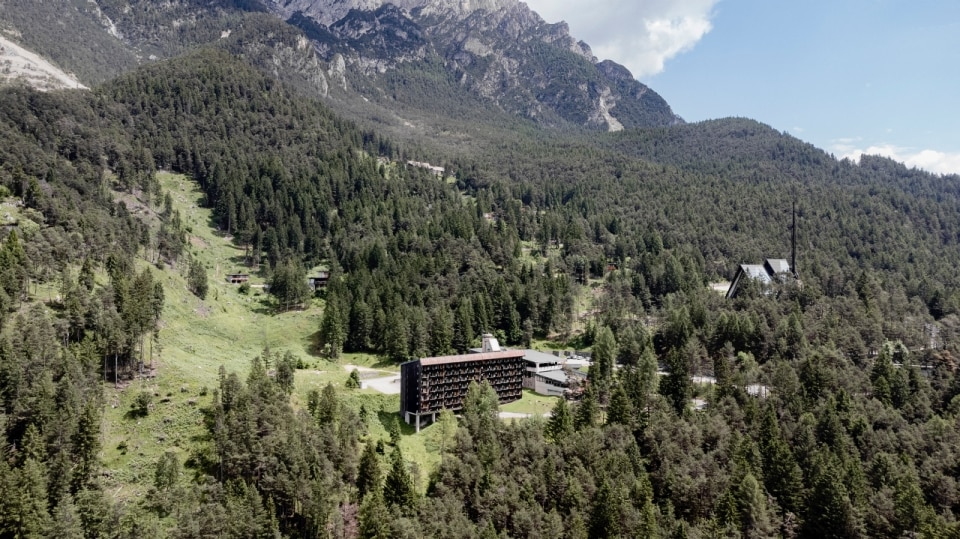
For Gellner—who had recently completed Cortina d’Ampezzo’s landscape plan and the Agip Motel built for the 1956 Winter Olympics—the project meant imagining a city within a city: a pioneering model of corporate welfare where architecture, landscape and communal life came together without social hierarchies.
The cabins, built from stone, timber and concrete, were assigned according to family size rather than company position. They were carefully arranged among the trees, following the natural contours of the terrain in continuous dialogue with the Dolomite landscape.
A holiday village in the Dolomites where factory workers, office employees and executives spent their vacations together, regardless of rank.
For the children’s summer camp, Gellner embraced color. Red, blue and yellow defined both the architecture and its furnishings, a visual language the architect later linked to the influence of Richard Neutra. Nearby, the Church of Our Lady of Cadore, designed with Carlo Scarpa, translated the same spirit into a liturgical setting by placing the altar closer to the congregation, anticipating an arrangement that would become widespread after the Second Vatican Council.
Sleeping inside an Italian modernist masterpiece
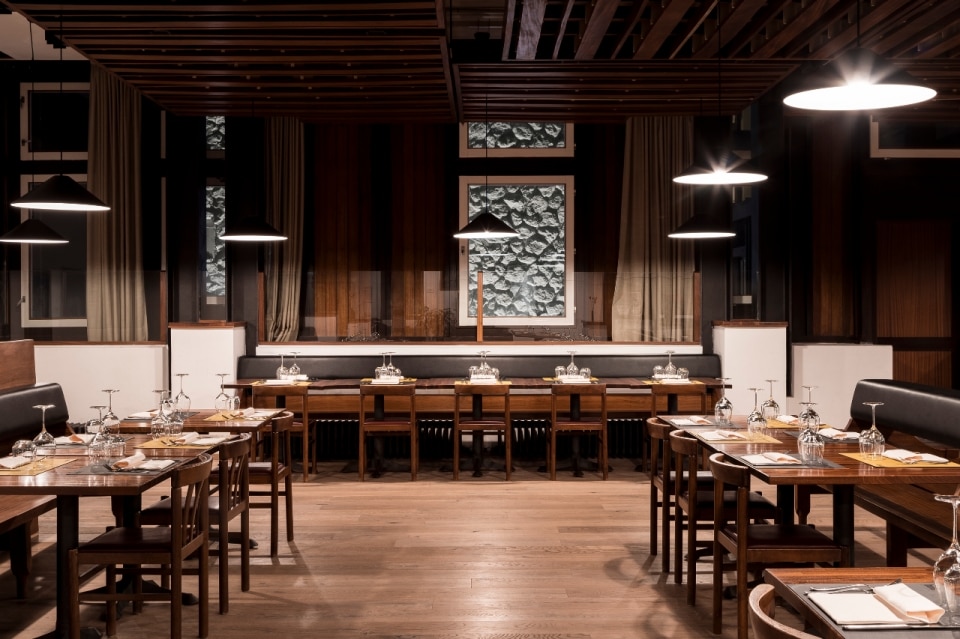
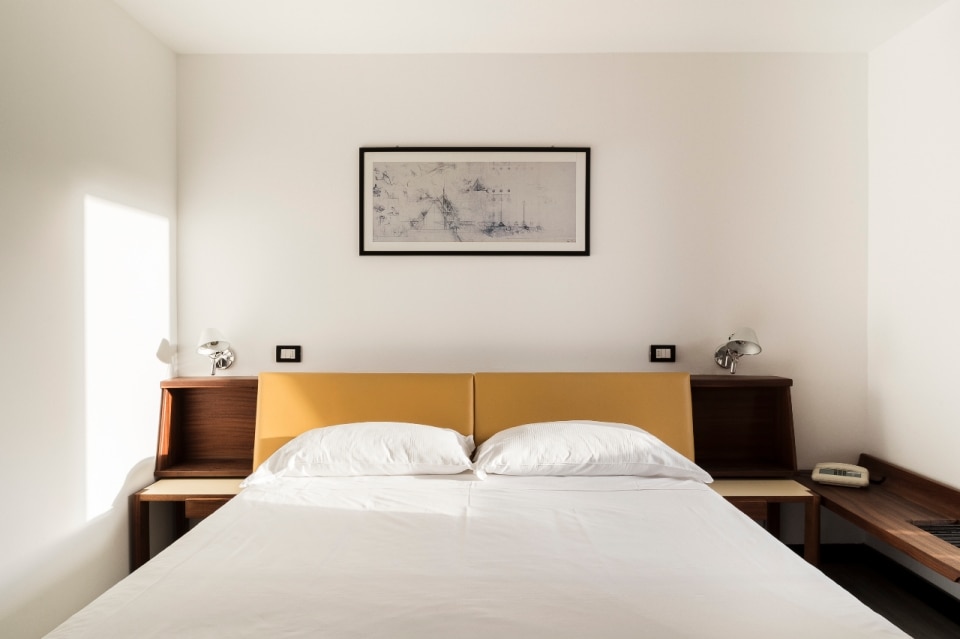
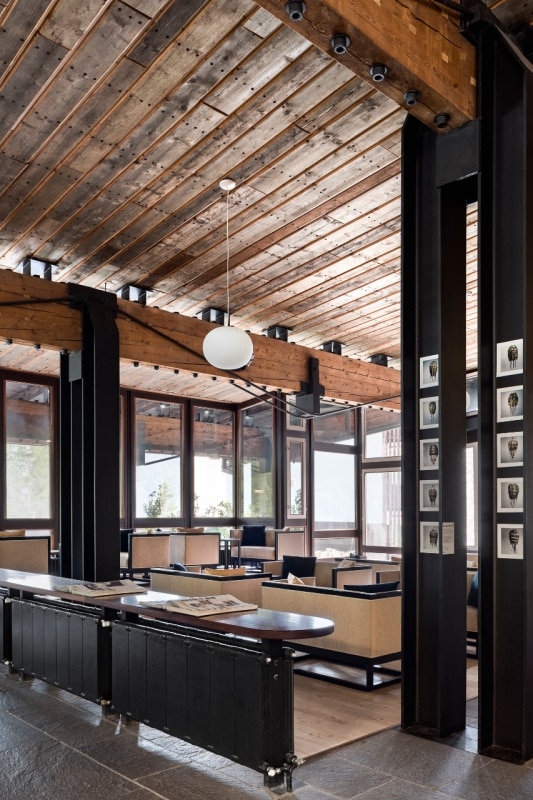
Named after the Boite River, which flows through the Cadore Valley from Cortina to Pieve di Cadore, Hotel Boite was the social heart of the village. More than simply a hotel, it embodied Gellner’s vision through a seamless relationship between architecture, design and landscape. The building was conceived around collective life. Large communal areas designed for social interaction contrast with compact, bright and functional guest rooms, reflecting the community-focused philosophy that shaped the entire Eni Village.
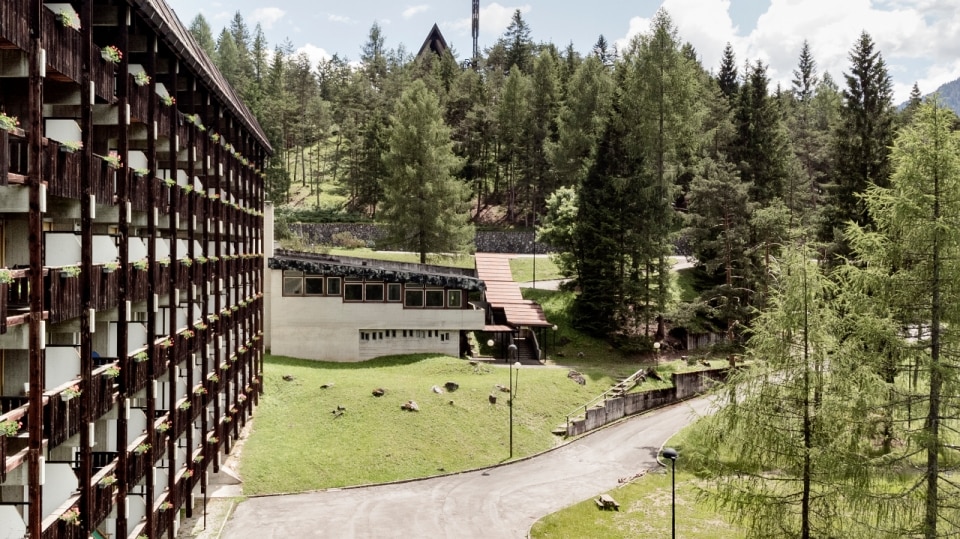
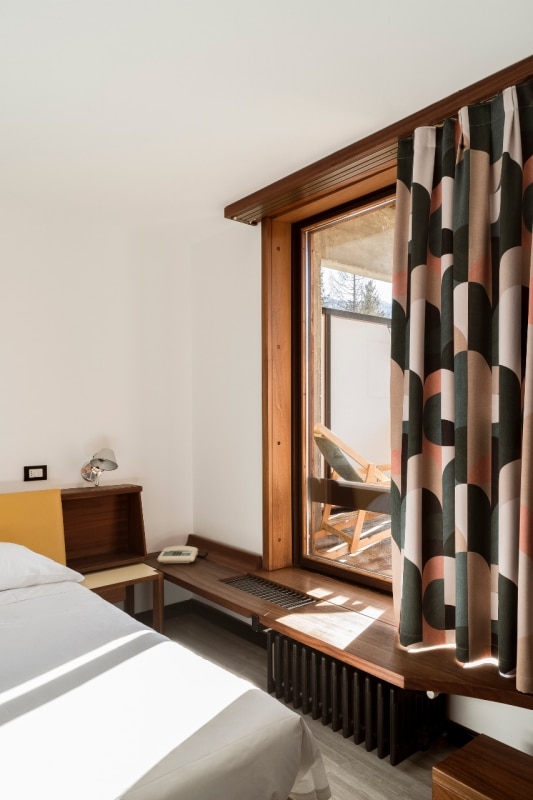
Today, the hotel welcomes guests once again while preserving much of its original identity. Its 78 rooms still feature elements of Gellner’s original interiors, including Fantoni modular furniture, mahogany furnishings, parquet floors and a number of authentic 1960s details. The original spatial concept also remains intact: all rooms face south and receive natural light from above through terraces raised above the interior floor level.
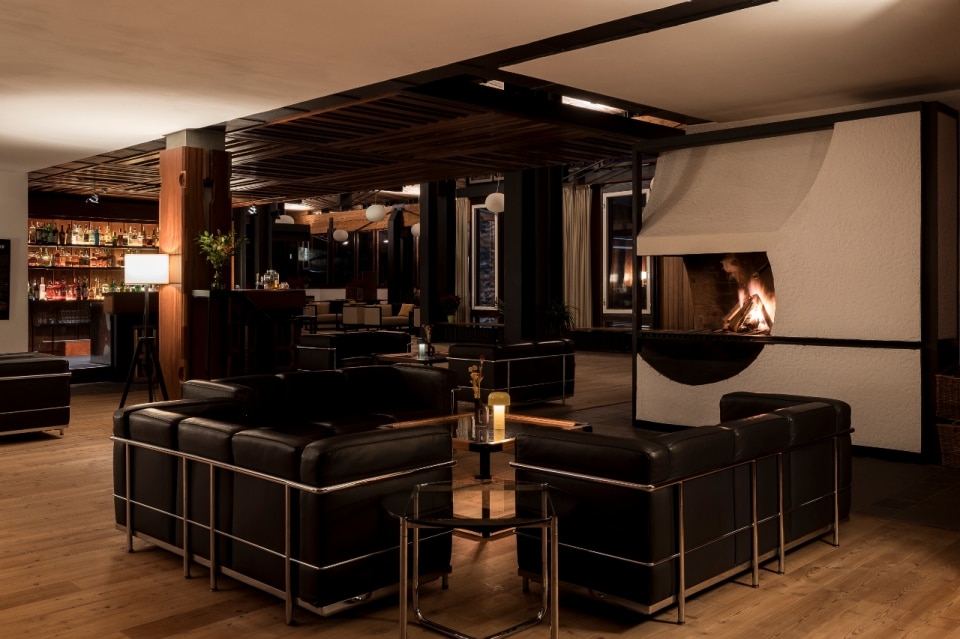
The shared spaces retain the monumental fireplace, the original bar counter, wooden benches and expansive windows overlooking the valley. In the lobby, one of the building’s most remarkable structural features still stands: Gellner’s large timber beam, an innovative solution that anticipated the principles of glued laminated timber. Above it, the ceiling preserves wooden boards reclaimed from the formwork originally used to cast the concrete.
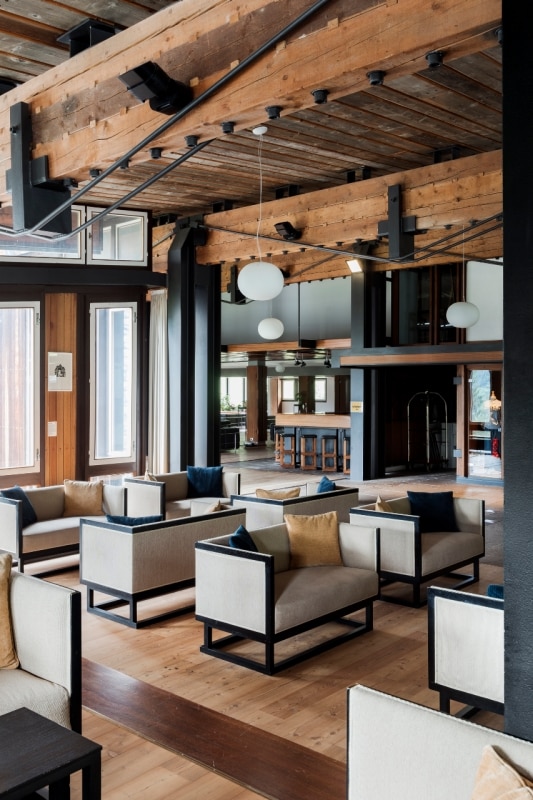
Rather than transforming the property into a contemporary boutique hotel, the restoration prioritized conservation over reinvention. The result is one of the rare places where visitors can still experience Italian modernist architecture almost exactly as it was conceived more than six decades ago.
Italy’s industrial utopias become habitable again
After Enrico Mattei’s death in 1962, the Eni Village was never fully completed. It nevertheless continued operating as a corporate holiday resort until 1992, when Eni officially decommissioned the complex. Over the following decades, many of its buildings were sold to private owners and other companies, while the vast summer camp—the largest structure within the development—remained largely abandoned.
Today, Borca di Cadore appears to be entering a new chapter. The reopening of Hotel Boite is part of a broader revival of the Eni Village that also includes Residence Corte, a spa, an adventure park and Progettoborca, an artist residency housed within the former summer camp buildings.
The renewed interest comes at a time when Italy’s great industrial utopias are being reassessed. Following Ivrea—the ideal city envisioned by Adriano Olivetti—and Crespi d’Adda, the 19th-century company town now undergoing a new regeneration process, Gellner’s masterpiece is once again being recognized not only as a symbol of Italy’s economic miracle but as a living architectural heritage ready to be inhabited and reinterpreted.
Opening image: The Eni Village in Borca di Cadore. Photo by Ilaria Ripamonti from Flickr