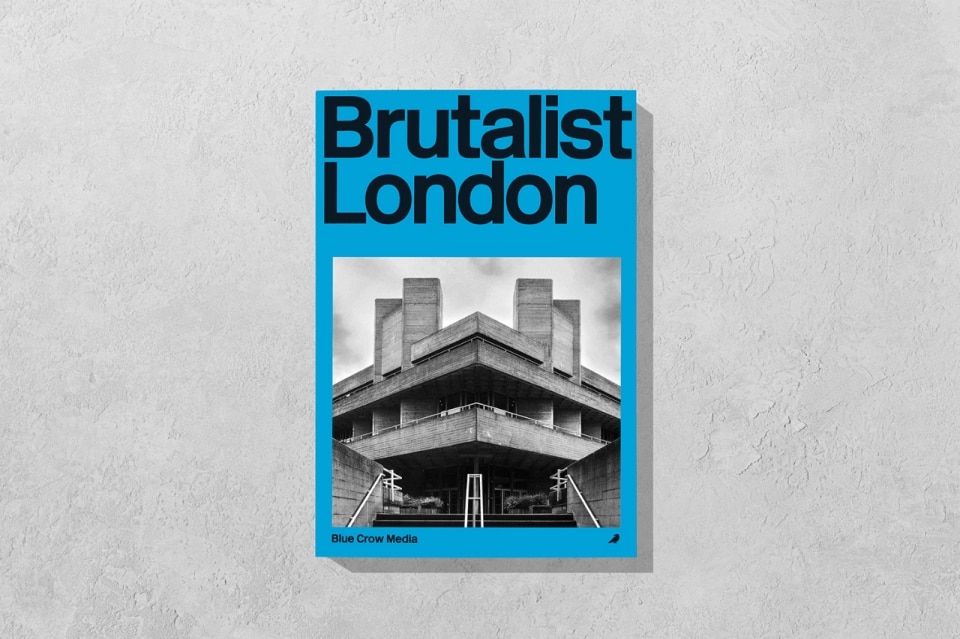

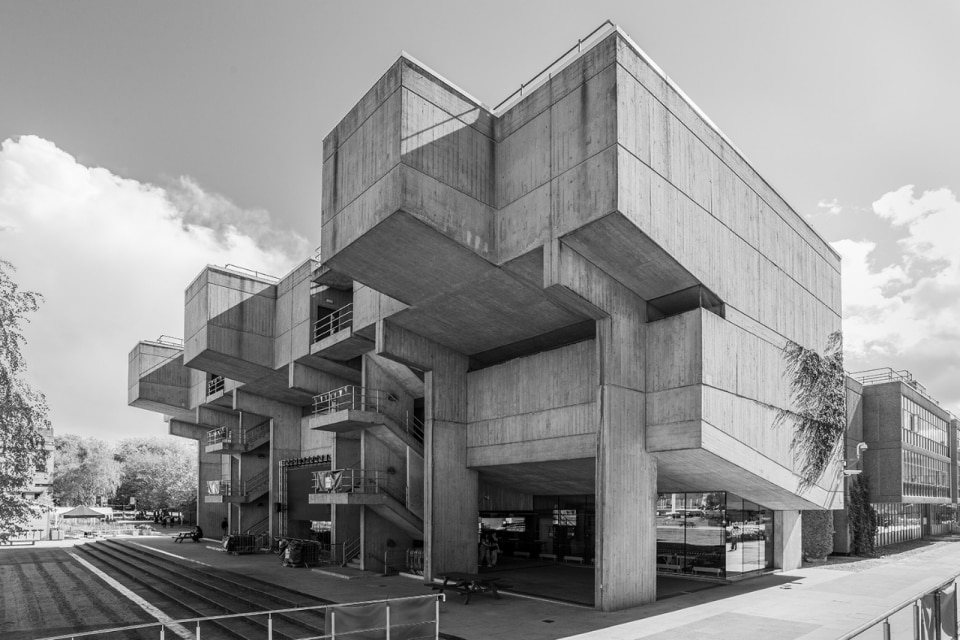
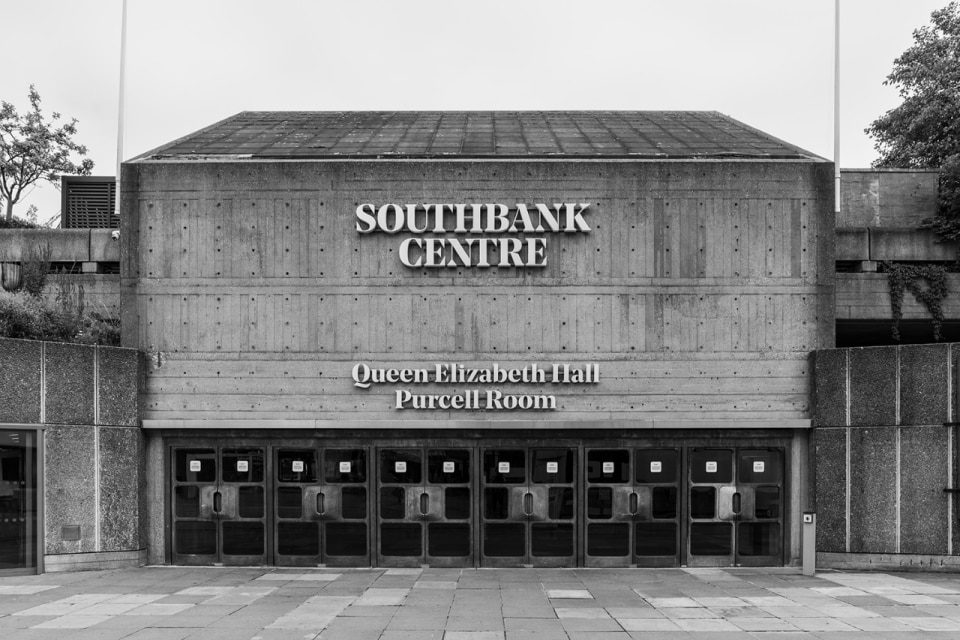
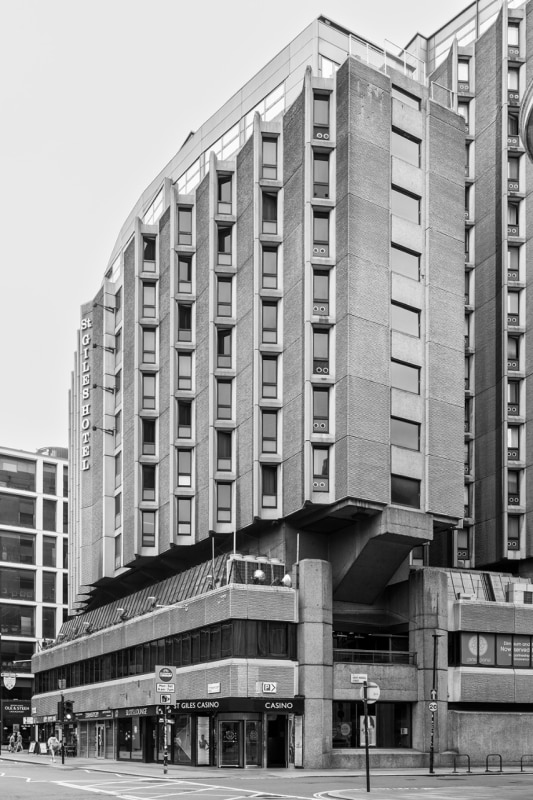
It feels like stepping into a 1970s film. Or perhaps into a future that never arrived. This is the sensation conveyed by many of the architectures collected in Brutalist London, the new volume published by Blue Crow Media and dedicated to over fifty post-war buildings in the British capital.
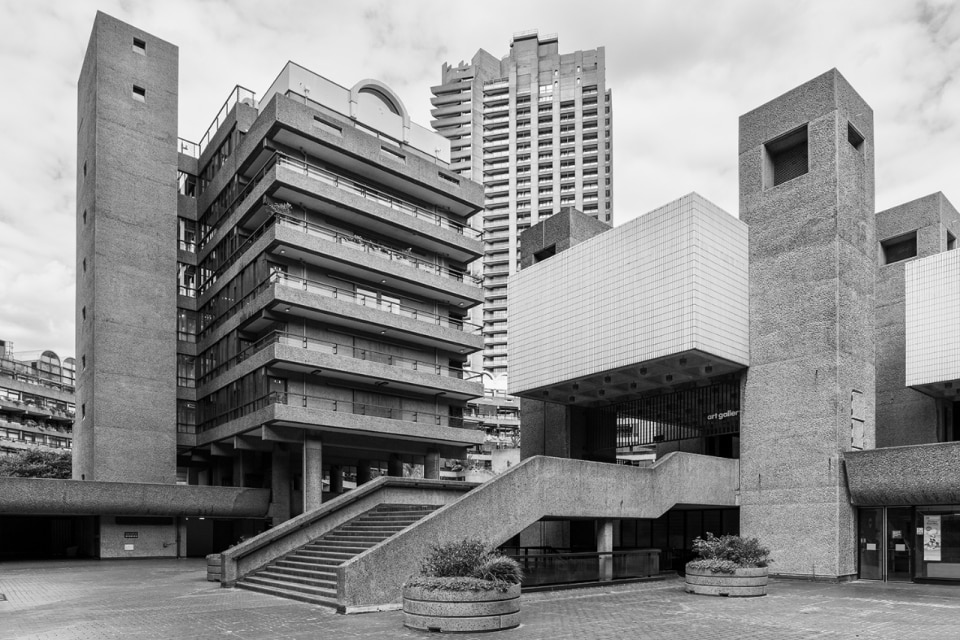
From the most iconic complexes, such as the Barbican Estate, to lesser-known cases, the book constructs a journey through a London different from the contemporary one: a city marked by the welfare state, by great public institutions, and by an idea of architecture understood as a tool for organising collective life.
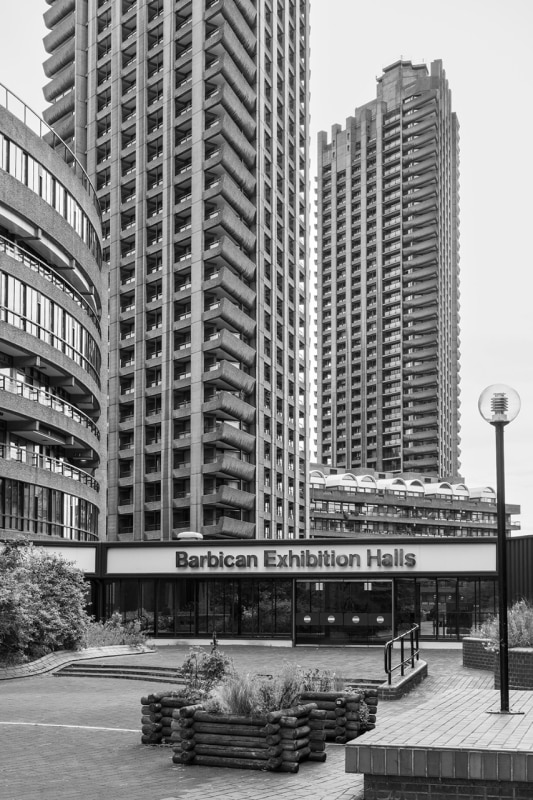
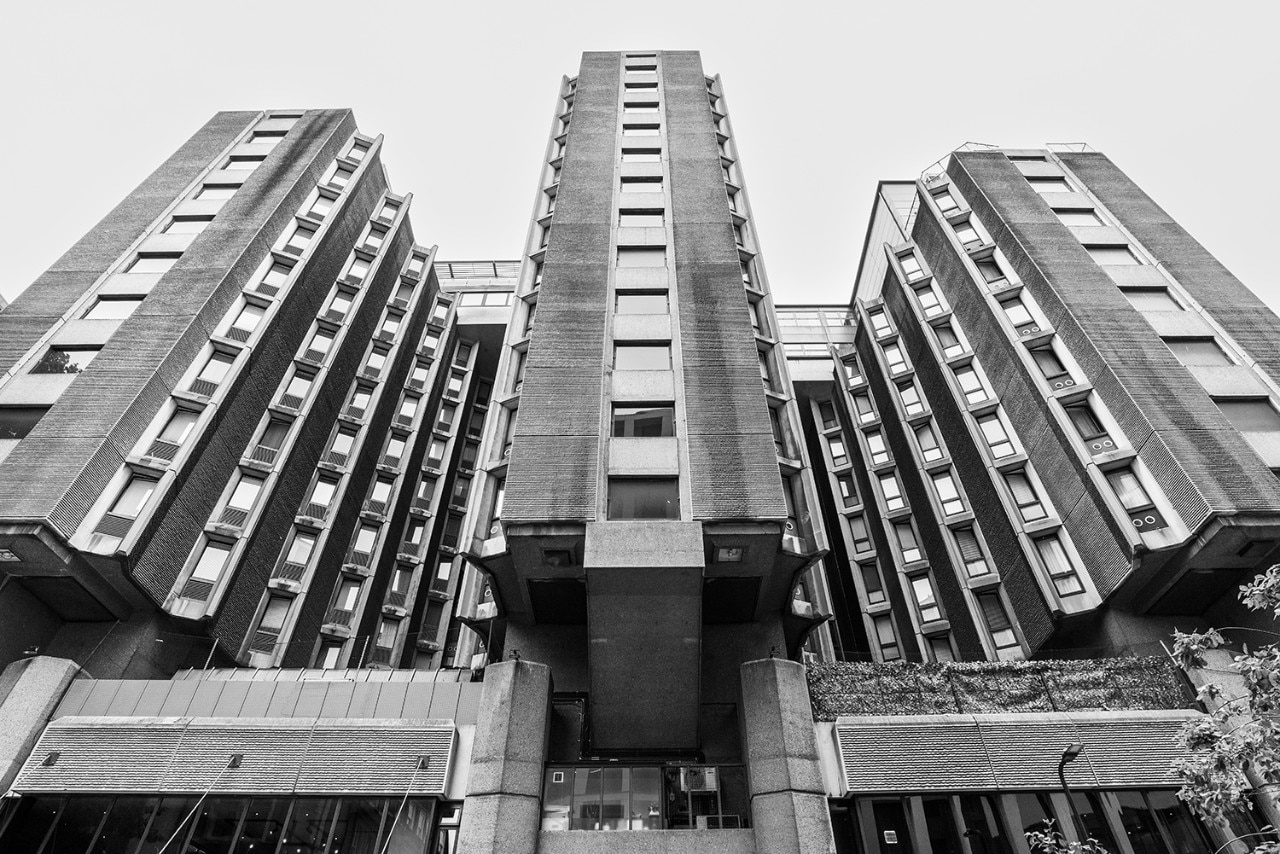
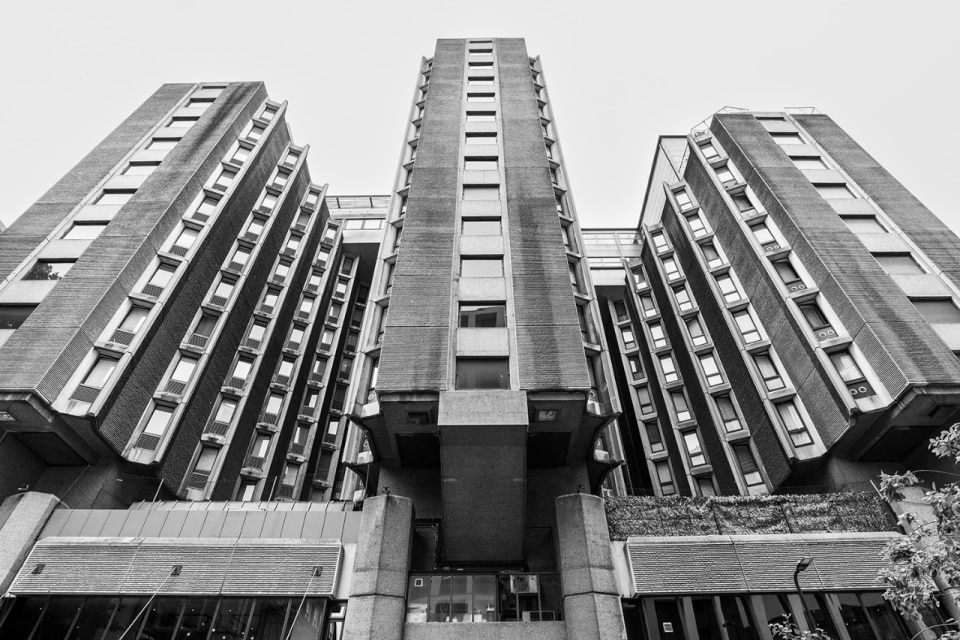
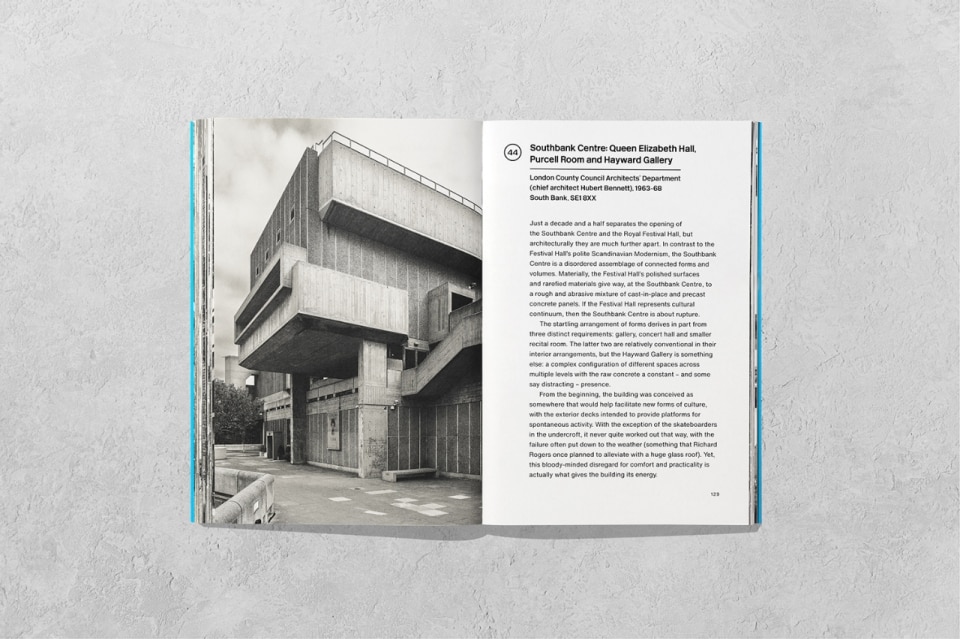
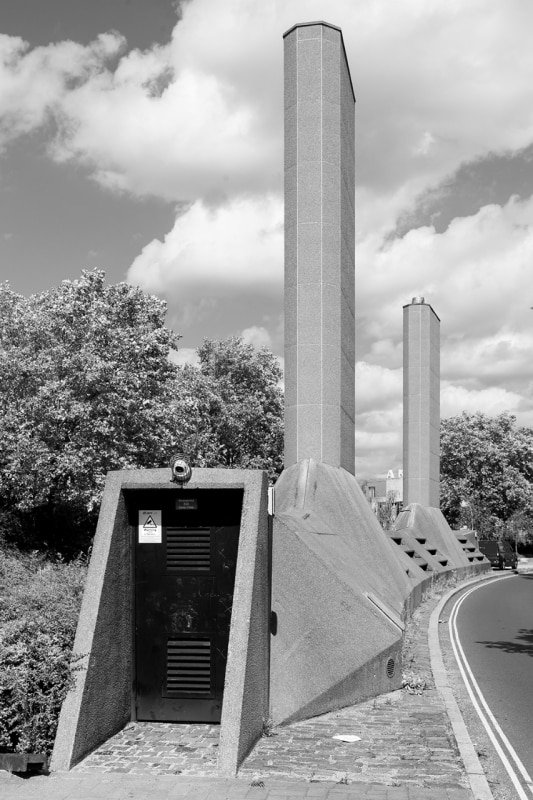
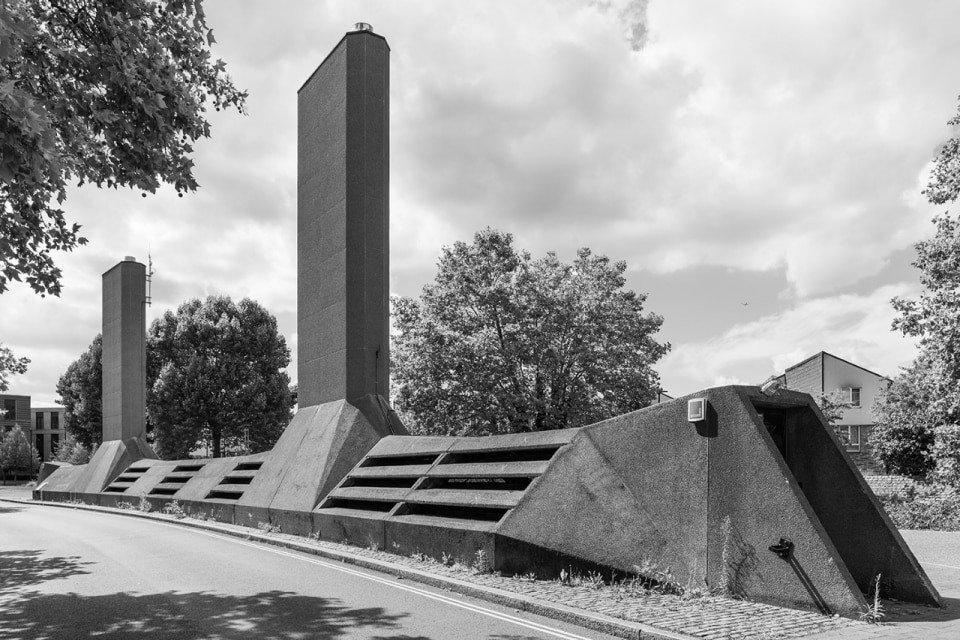
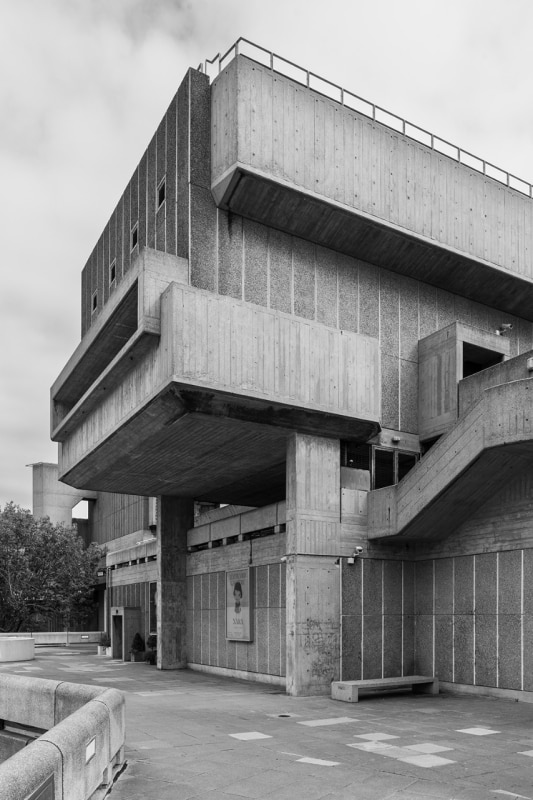
Through Nigel Green’s black-and-white photographs— attentive to surface, matter, and rhythm — and Owen Hopkins’ texts, the volume provides a less rigid image of London brutalism. Not a uniform language, but a set of attempts, even very different from one another, to give shape to a new city — and, above all, to a different idea of coexistence.
Social housing before the 1980s
It's not possible to talk about Brutalism without mentioning social housing, the great laboratory through which London tried to respond to the post-war housing crisis. Concrete became the material of a promise: to build quickly, but also to imagine new ways of living together.
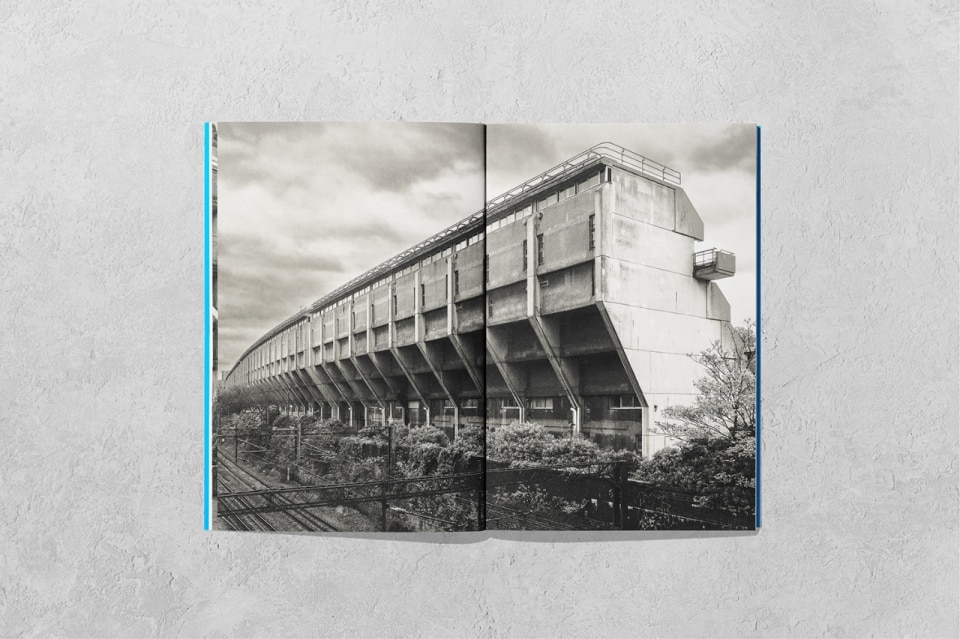
At the beginning, in the 1950s, this promise took shape in projects such as the Alton Estate, a series of linear buildings immersed in greenery, directly influenced by Le Corbusier’s experiments. But within a few years, everything changed scale and became centralised.
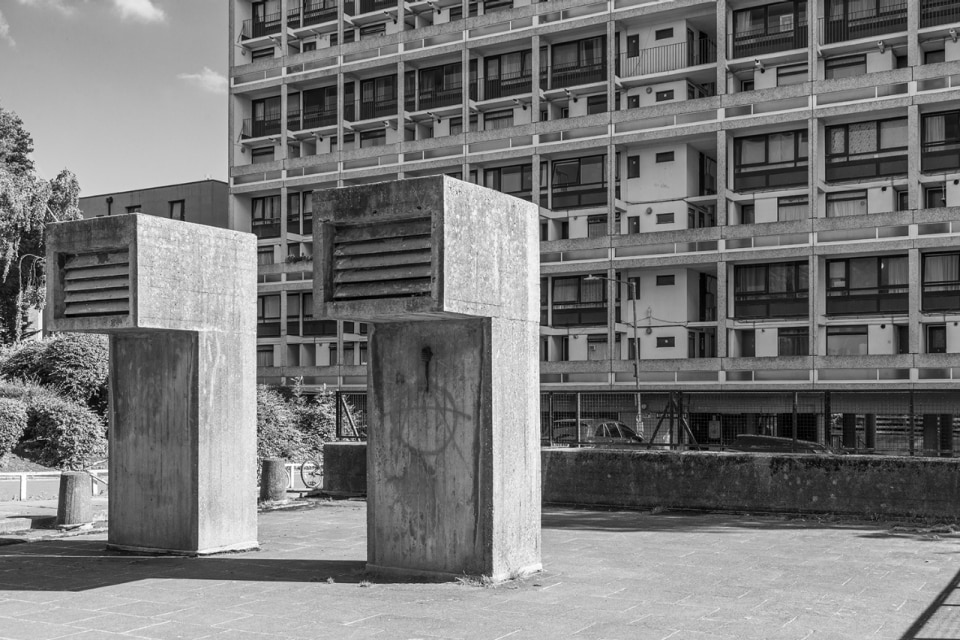
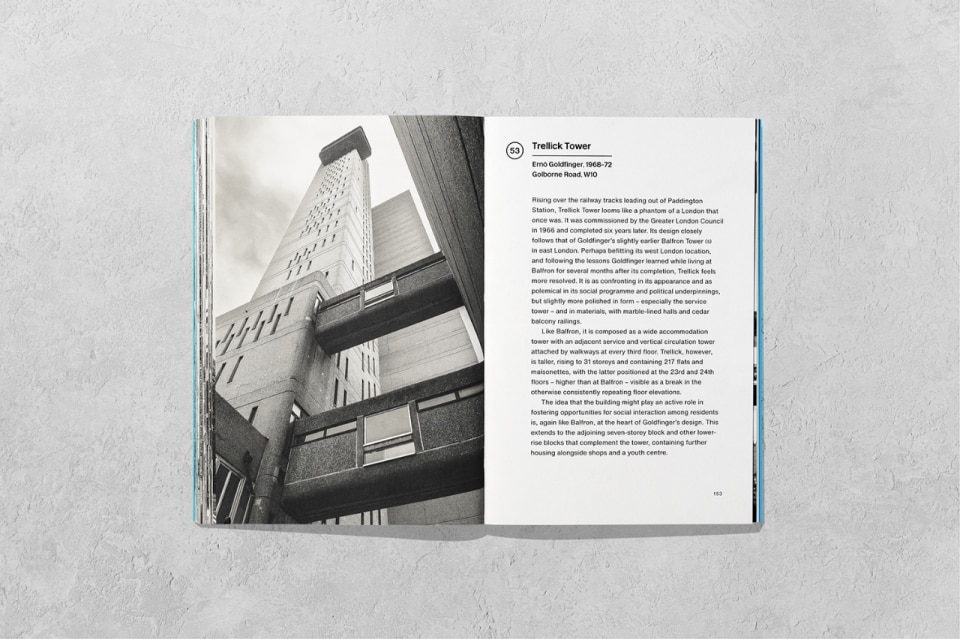
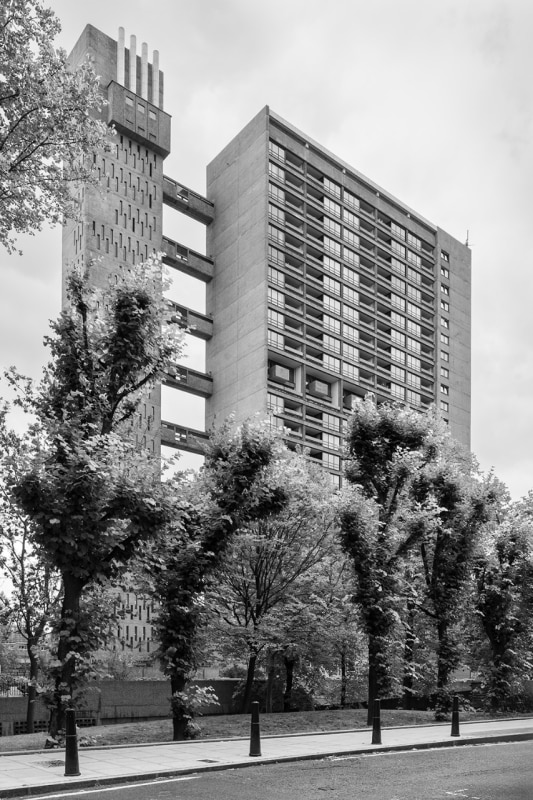
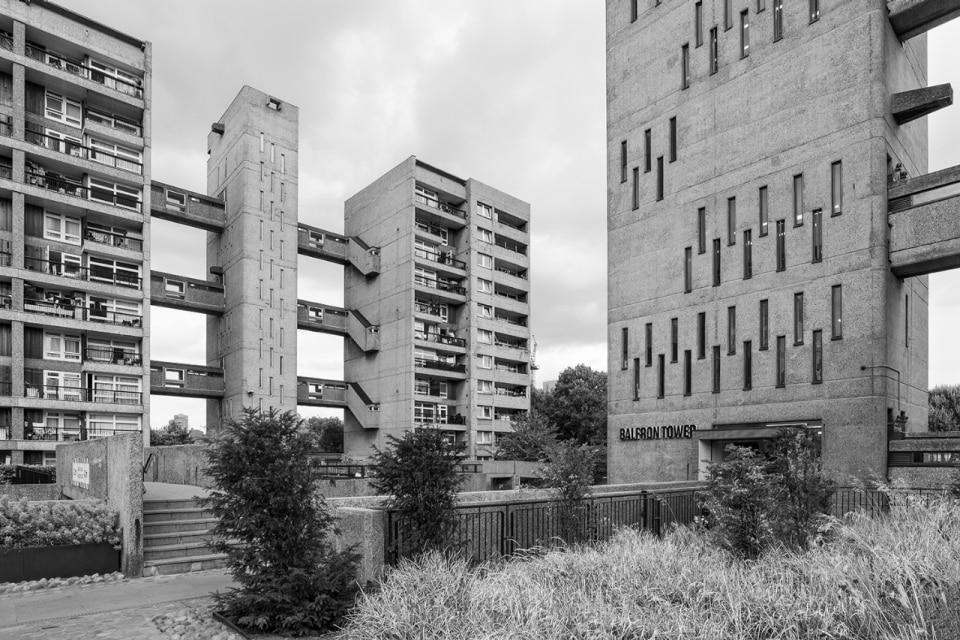
From the Barbican Estate, the large autonomous city built to bring citizens back to the financial centre, to Trellick and Balfron Tower — both designed by Ernő Goldfinger — an era emerged in which architecture was configured as an urban machine: autonomous buildings, cities within the city, which over time have become cult objects and, simultaneously, places marked by social tensions.
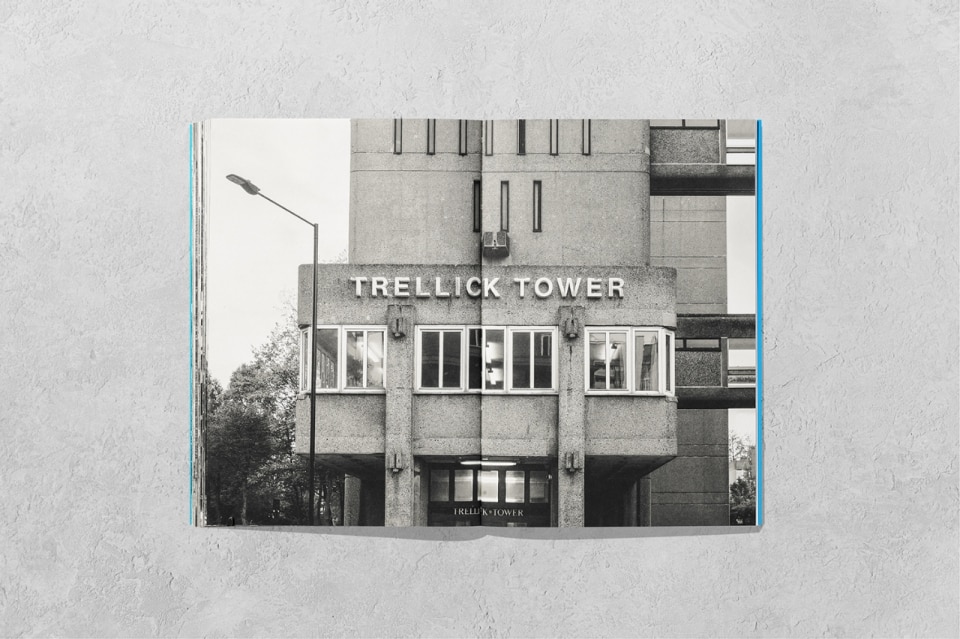
The Trellick Tower, designed between 1966 and 1972, is perhaps the most emblematic example: 31 floors, more than 200 flats, and an unmistakable design that separates the main body from the service tower via suspended walkways. Located in what was then a fragile and peripheral area, it has become over the years a symbol both of modernist utopia and its contradictions.
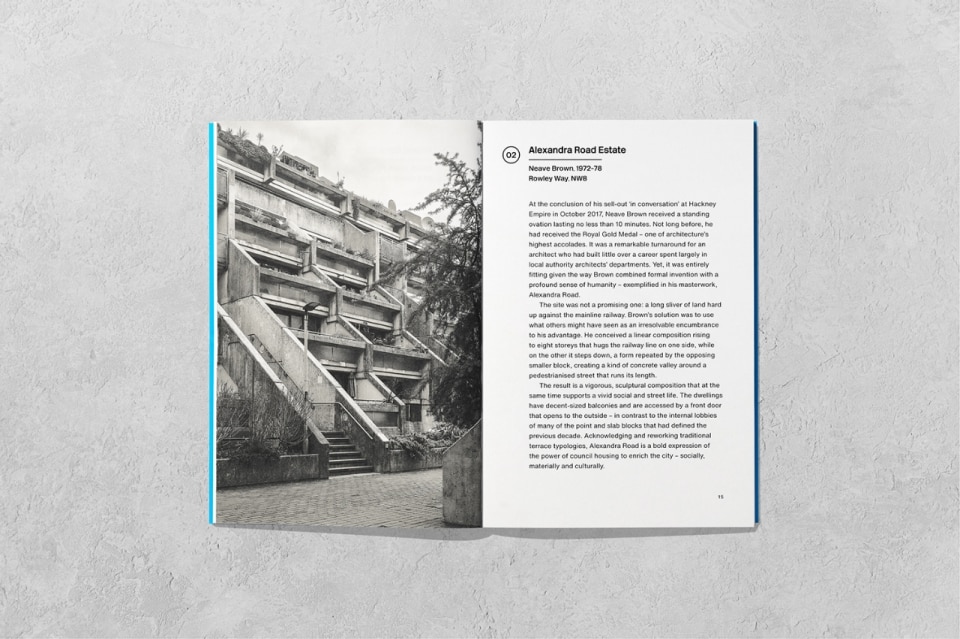
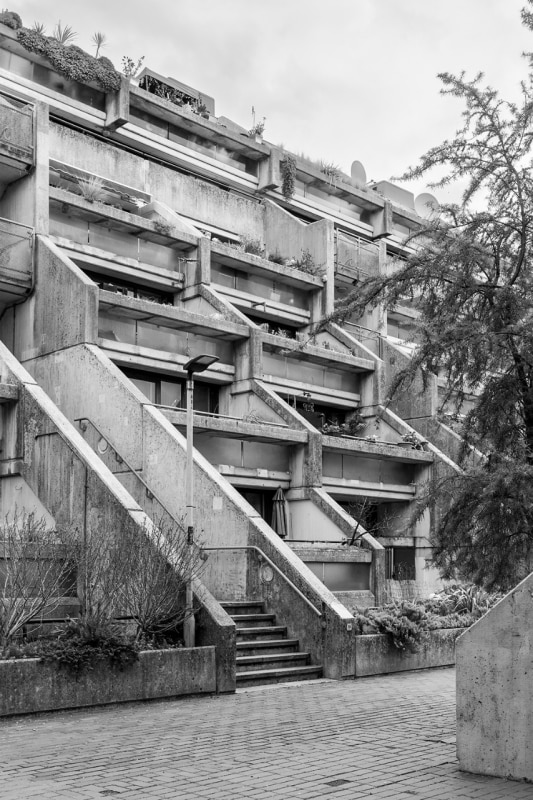
Alongside these examples, there are also more “successful” cases of social housing, designed as an alternative to the anonymity of the large towers. The Alexandra Road Estate, designed by Neave Brown between the late 1960s and the 1970s, or Dawson’s Heights, designed by Kate Macintosh, show more articulated approaches, often inspired by informal urban models and a greater attention to the community dimension.
Minor infrastructure and architecture
While the Barbican and Trellick Tower are the most recognisable images of London Brutalism, Brutalist London also insists on a less celebrated but equally significant family of buildings: infrastructure.
Concrete became the material of a promise: to build quickly, but also to imagine new ways of living together.
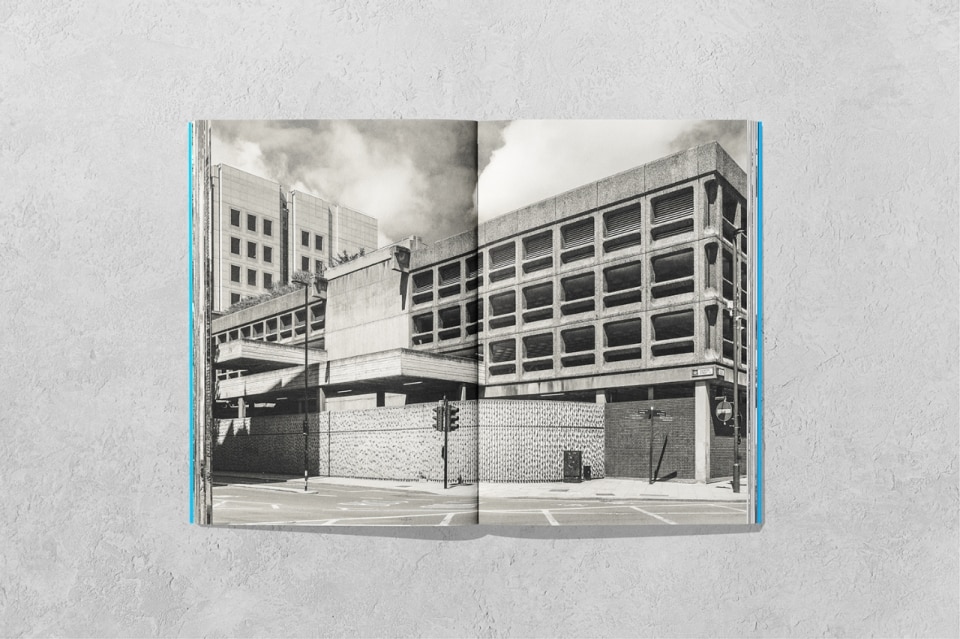
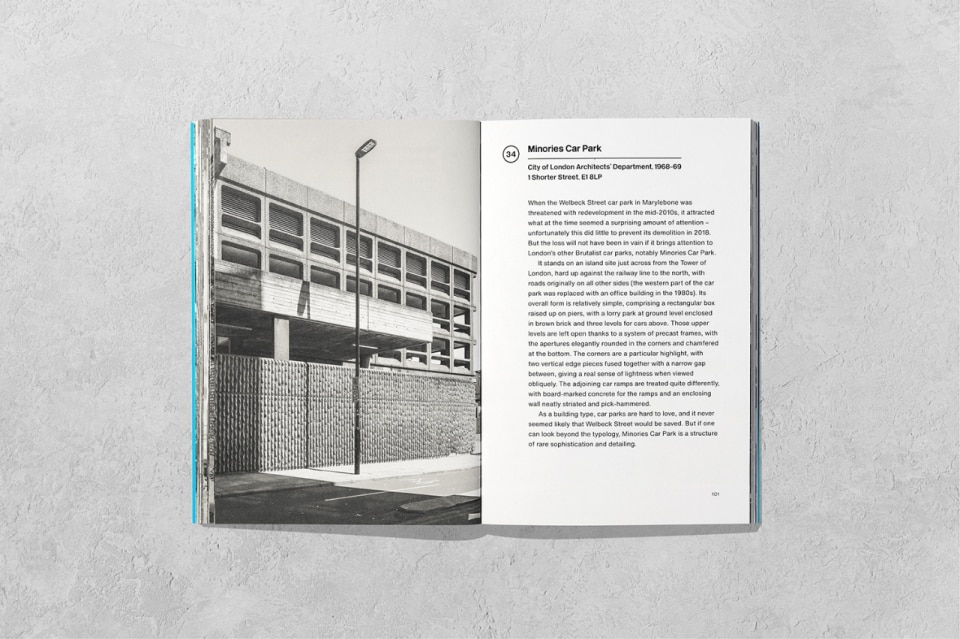
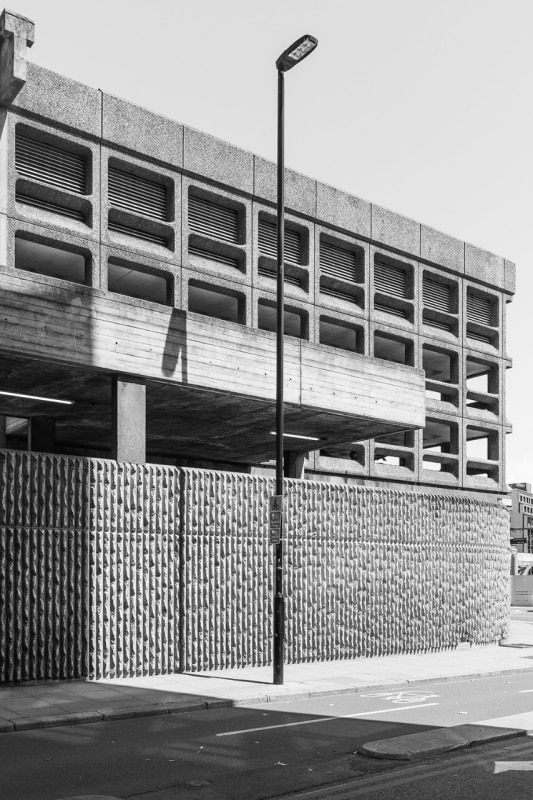
Among these, the Minories Car Park is one of the most interesting examples. Built at the end of the 1960s, just minutes from the Tower of London, it was born at a time when major British cities looked to the car as an inevitable future. The structure is apparently simple — a modular grid, open floor plans — but, observed closely, it reveals an almost obsessive precision in the design of the elements, in the rounded corners, and in the relationship between solids and voids.
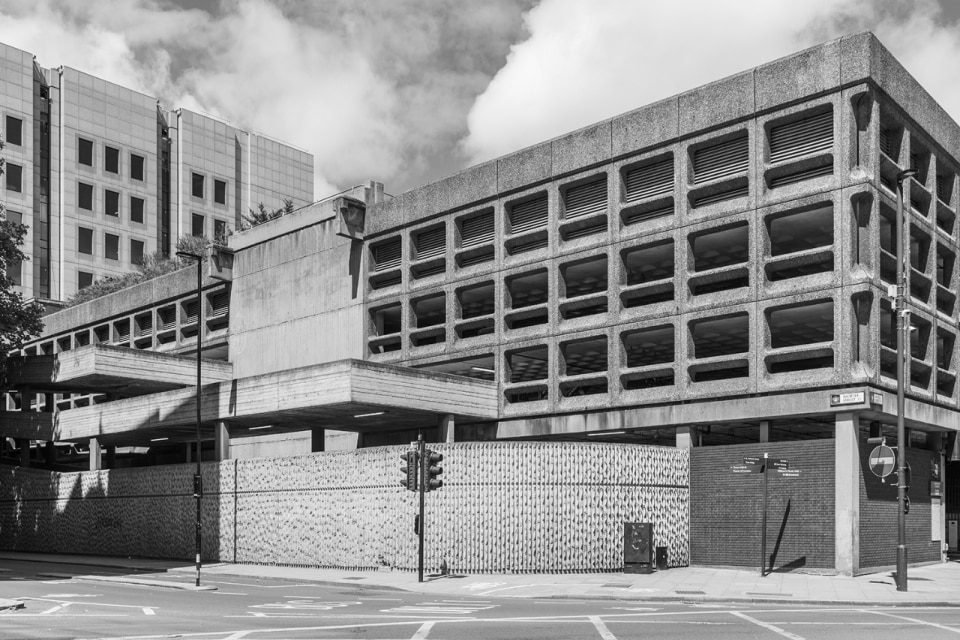
It is a less iconic Brutalism, and precisely for this reason often more fragile. The case of the Welbeck Street Car Park, demolished in 2018 despite international protests, clearly illustrates the ambiguous fate of these architectures: long neglected, today the object of a belated rediscovery.
A domestic scale
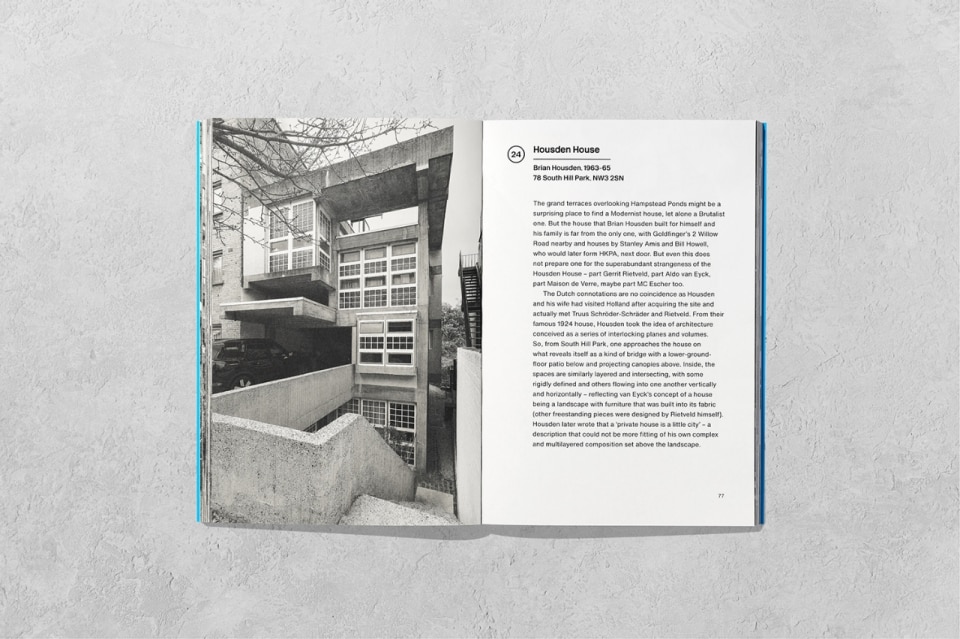
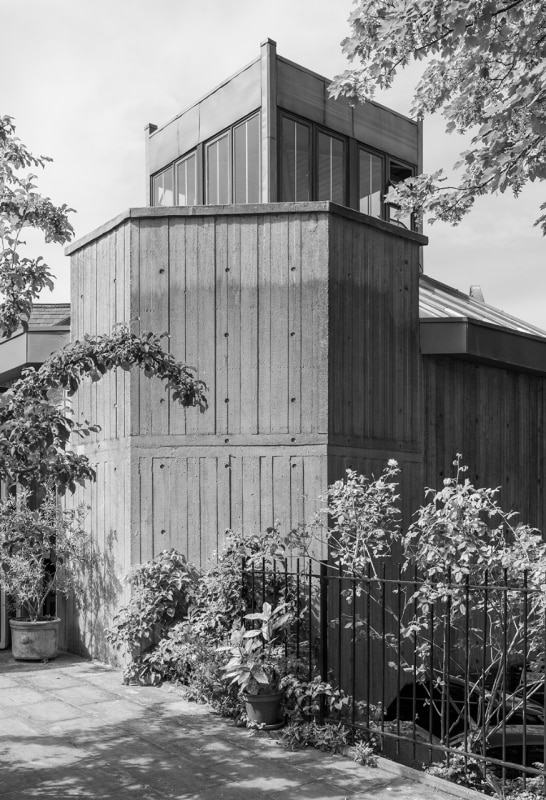
Inside the book there's space for more unexpected objects, deviations from the common vision of Brutalism. Housden House, in North London, is one of these.
Designed by architect Brian Housden for himself, it appears as a compact and discreet volume, almost invisible from the street. But it is in the layered interiors — not only in concrete, but also in wood, micro-tiles, and bricks — that its spatial quality is revealed.
It feels like stepping into a 1970s film. Or perhaps into a future that never arrived.
Far from the monumentality of public interventions, the house suggests a more nuanced reading of Brutalism: not a single aesthetic, but a set of practices and experimentations that cross different scales, programmes, and intentions.
Today, as European cities return to face the housing crisis and the role of public space, this heritage appears in a different light: not only as a testimony of an era, but as a trace of a moment when architecture aimed to be an active instrument of social transformation.