






In 1974, Eduardo Longo was just over thirty and had recently graduated from Universidade Presbiteriana Mackenzie in São Paulo. Around him, both the architectural scene and the city were in a state of transformation: the masters of Paulista modernism, such as Oscar Niemeyer and Lina Bo Bardi, were gradually giving way to a new generation of architects deeply influenced by pop culture, science fiction, and the technological utopias of the 1960s.
At the same time, radical experiments with new housing systems were taking shape in Europe and Japan—from the research of Archizoom in Florence to the modular capsules of the Nakagin Capsule Tower in Tokyo. In this climate, Longo imagined a new kind of humanity living in prefabricated spheres instead of conventional houses, leaning against curved walls rather than corners and suspended above the city.
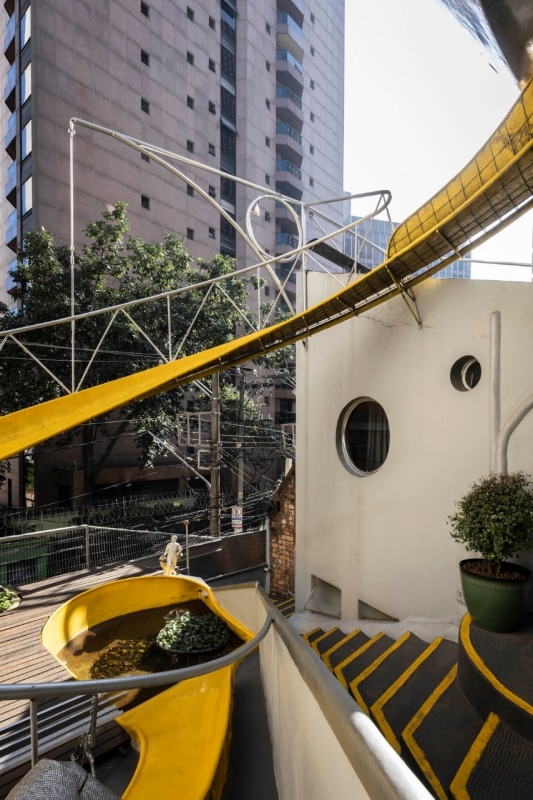
For the architect, the choice of form was not simply aesthetic. The sphere represented the most structurally efficient volume: the shape capable of enclosing the greatest amount of space with the least amount of material. In his vision, these spherical units could have become lightweight, repeatable housing modules.
For the architect, the sphere represented the most structurally efficient volume: the shape capable of enclosing the greatest amount of space with the least amount of material
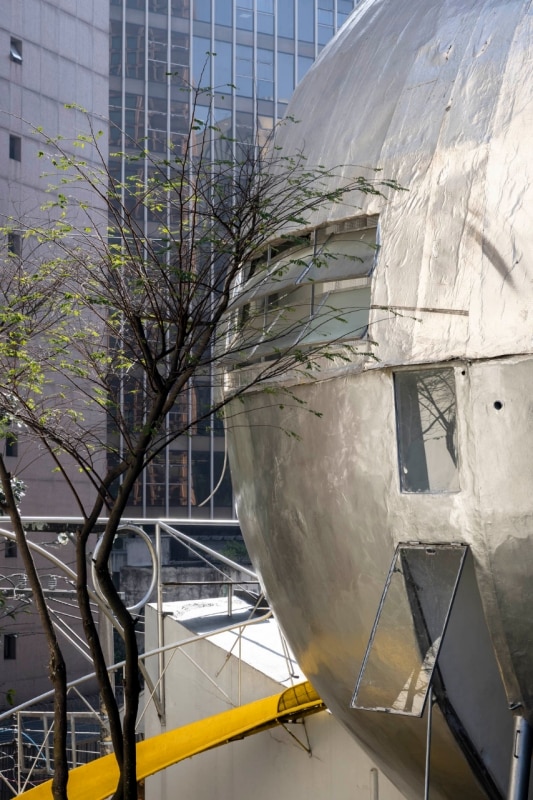
What remains today of this utopian experiment is a single prototype built in the Itaim Bibi district of São Paulo. Casa Bola, constructed between 1974 and 1979, is a sphere approximately eight metres in diameter, made of ferrocement shaped over a steel-tube structure. Its continuous shell integrates walls, furniture, lighting, and even sanitary fixtures, turning the interior into a single architectural organism. Despite its radical form, the house was genuinely inhabited. Longo lived there for decades with his family, transforming what began as an experimental prototype into a real everyday home.
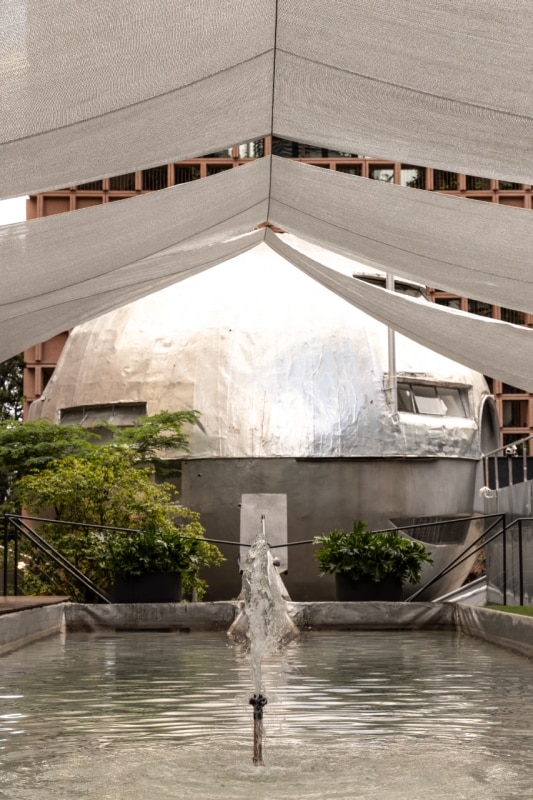
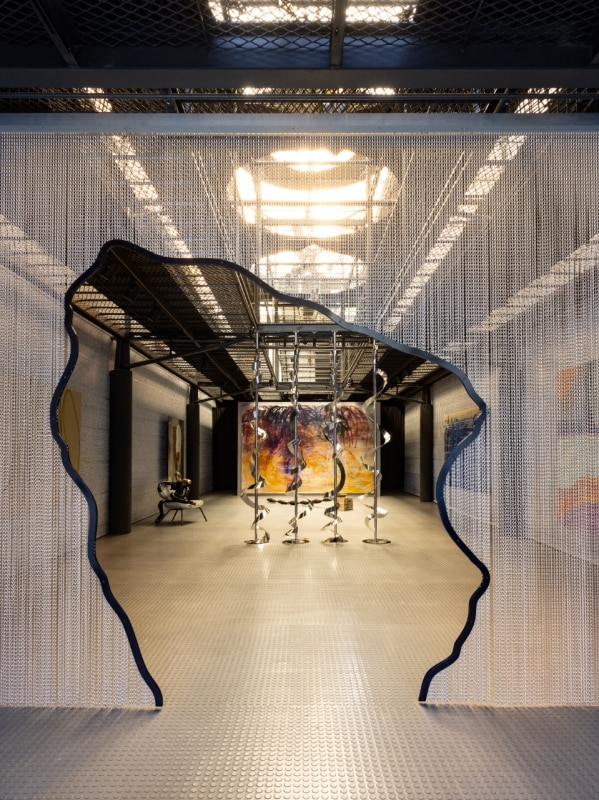
It is precisely this prototype that Aberto—an itinerant platform that brings contemporary art and design into dialogue with the history of modernist houses—has now opened to the public after more than forty years. The reopening takes the form of a group exhibition in which artists quite literally occupy every corner of the house imagined by Eduardo Longo.
The works are spread across the entire building: inside the sphere, organised over three levels connected by a central staircase, as well as in the spaces designed by Longo beneath the suspended structure. Installations, sculptures, and archival materials dedicated to the architect’s project are presented here.
The exhibition Aberto5, curated by Filipe Assis together with Claudia Moreira Salles and Kiki Mazzucchelli, brings together more than sixty works by around fifty Brazilian and international artists. Most of the pieces were commissioned specifically for the occasion and conceived to engage directly with the geometries and the futuristic imagination of Longo’s house.
The Aberto format, now in its fifth edition, is simple: take iconic houses of modernist architecture and temporarily open them to the public, transforming them into exhibition platforms. In the past this has included a residence designed by Oscar Niemeyer in São Paulo, a house by João Batista Vilanova Artigas, and in 2025 the Maison La Roche in Paris, designed by Le Corbusier and Pierre Jeanneret.
For many years, before its rediscovery, Casa Bola remained a curiosity known mostly among architecture students in the city. Around 2010 the house began circulating again in magazines and on social media, alongside a renewed international interest in Brazilian modernism.
Aberto’s exhibition marks the first true public opening of Casa Bola after decades of private life. It offers a rare opportunity to step inside one of the city’s most visionary pieces of architecture—and, at least for a moment, to imagine what the future of living might have looked like through Eduardo Longo’s eyes.