


We’ve come to realize over the past few years that – contrary to common belief – it isn’t all that difficult to “go and live in a Le Corbusier”. A steady turnover of residents seems to characterize the recent life of the Unité d’Habitation in Marseille, the Cité Radieuse that stands as a Brutalist-era masterpiece by Le Corbusier. Two duplexes came onto the market in 2025, followed at the start of 2026 by another pair combined into a loft with raw, minimal aesthetics.
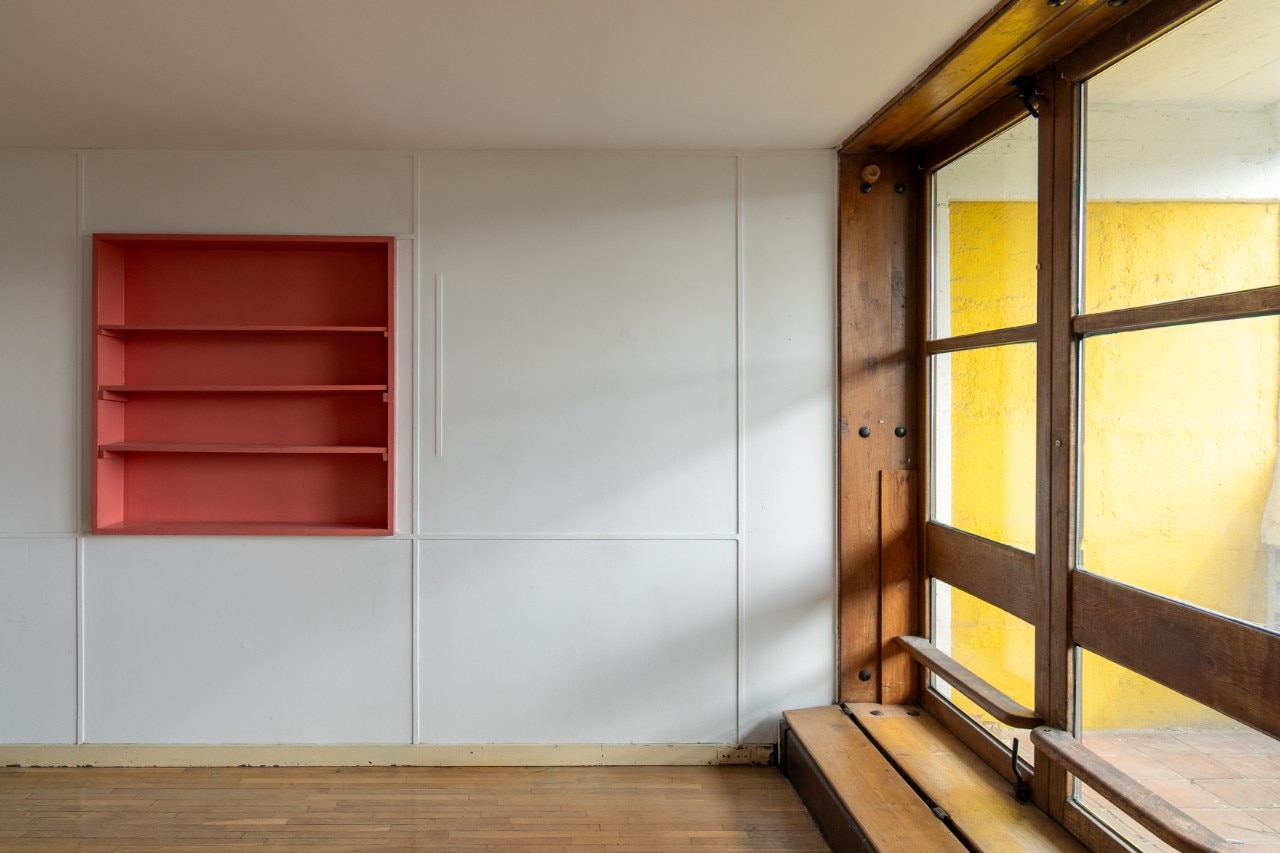
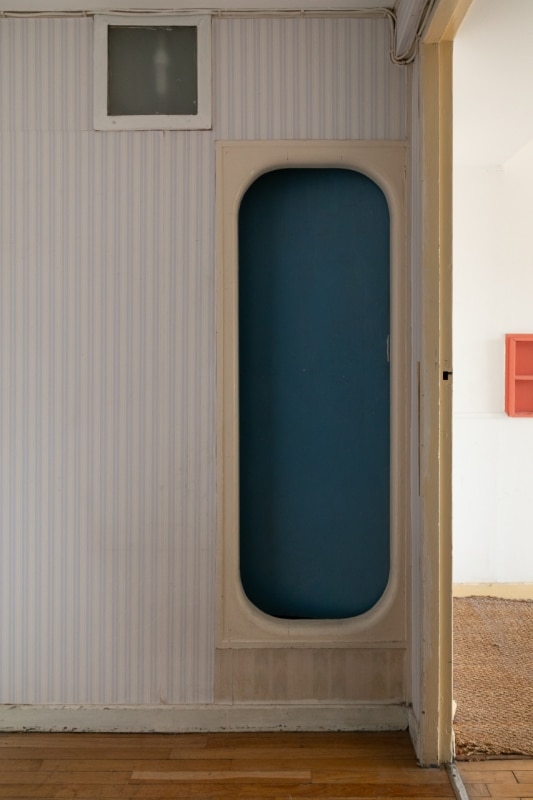
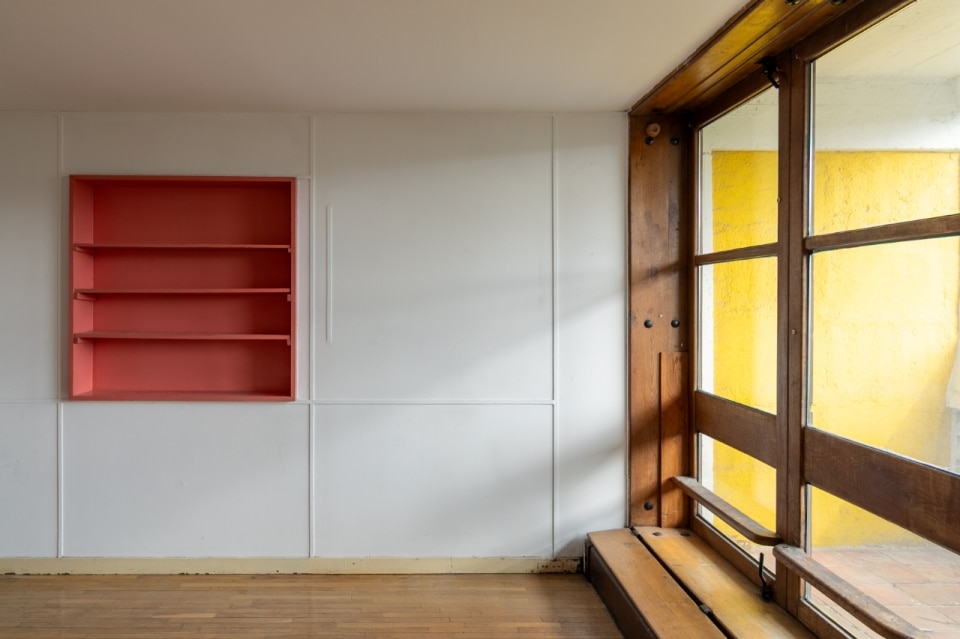
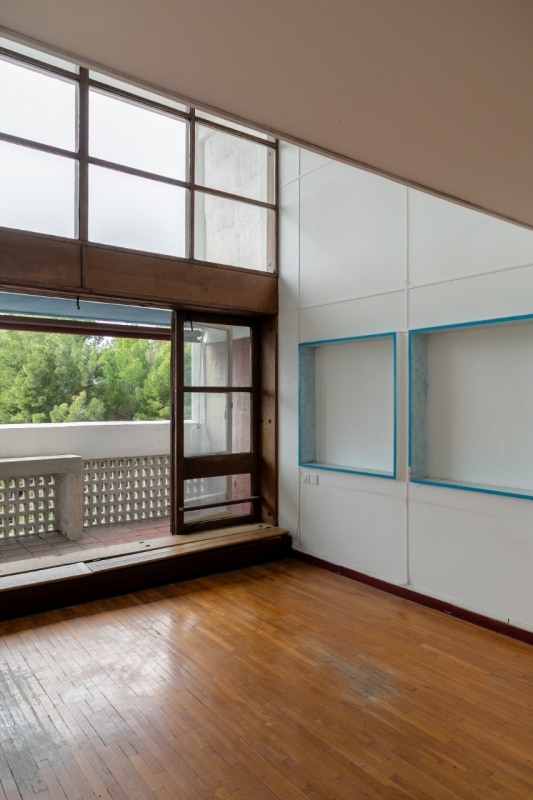
Now another apartment joins this series of listings, handled by the Paris-based agency Architecture de Collection. This time, however, there is a twist: according to the listing, the apartment needs some renovation. Yet where the mainstream market might see only a property to restore, it’s easy to recognize that the home still preserves a condition close to its original state, at least in the principles and visual landscape it generates. One might even read here the pure manifesto quality that runs through the Unité itself, among the milestones of modern design shaped by Le Corbusier, Pierre Jeanneret, and Charlotte Perriand.
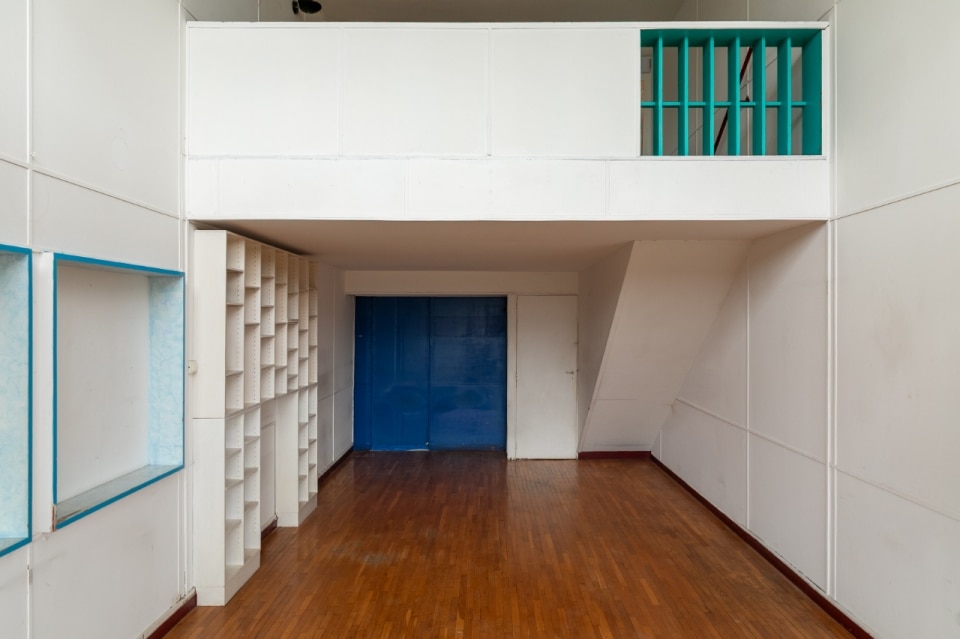
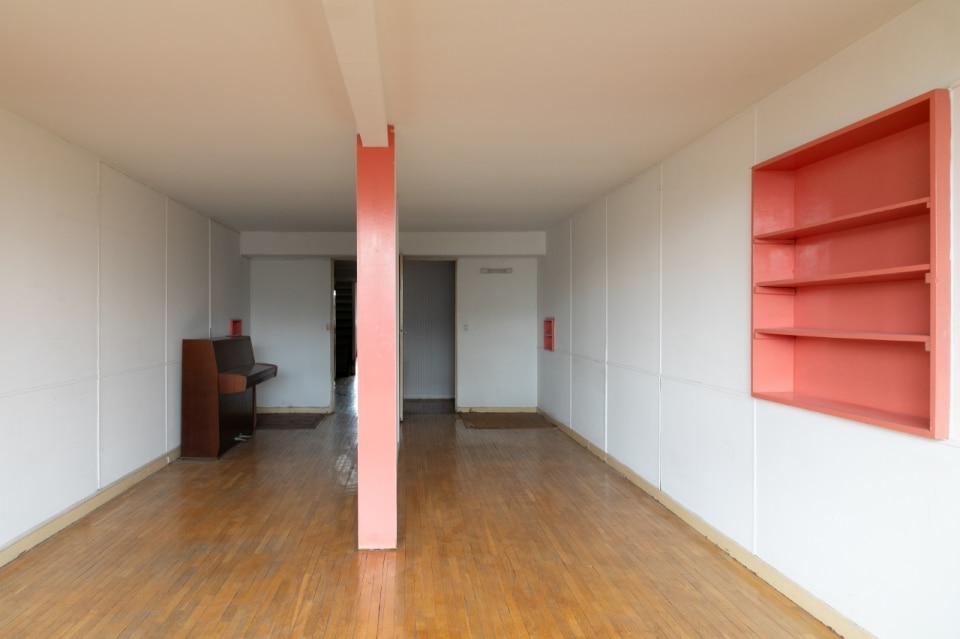
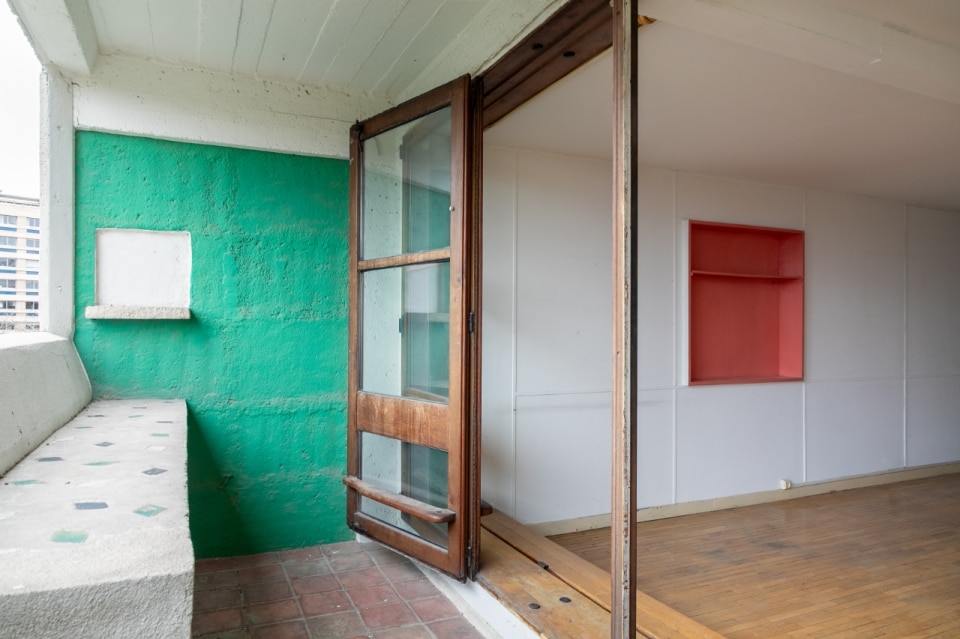
The apartment is a Type “E” duplex. The Unité is organized in stacked three-story blocks, with a central internal corridor embraced above, below, and to the sides by interlocking pairs of L-section duplexes. In the Type “E” units, entry is from the upper level. Immediately beside the door is the kitchen, and beyond it a compact living platform that projects like a gallery over the double-height space facing the façade, which in turn opens almost seamlessly onto the Marseille landscape through a bright loggia. On the lower level – running beneath the corridor and crossing the building – there are two small bedrooms, both with access to another loggia on the opposite side, along with the bathrooms, including the compact shower cabin known as the “bateau”.
The opportunity here is therefore to inhabit the very heart of an experiment at the moment it moves from theory into practice [...] not the ‘usual’, transformed, Unité d’Habitation.
Right at the entrance, the kitchen tells the story of the radical experimental spirit of these apartments without mediation. Charlotte Perriand conceived it as a furnishing system in direct continuity with the dining and living areas. That might feel ordinary today, but at the time it was groundbreaking: the design went beyond functional and ergonomic concerns, such as those addressed by the Frankfurt Kitchen in the late 1920s. The kitchens in the Unité were intended to maintain contact between those preparing meals and those gathered at the table, rather than relegating cooking to a closed-off service space. The act of preparing food became part of convivial life. At the time, this still meant work primarily carried out by women. Perriand was not a legislator but a designer. Her field of action was architectural space, and through it she gave form to a political idea. Social innovation, after all, was always central to her work, as her daughter Pernette recently recalled in conversation with Domus.
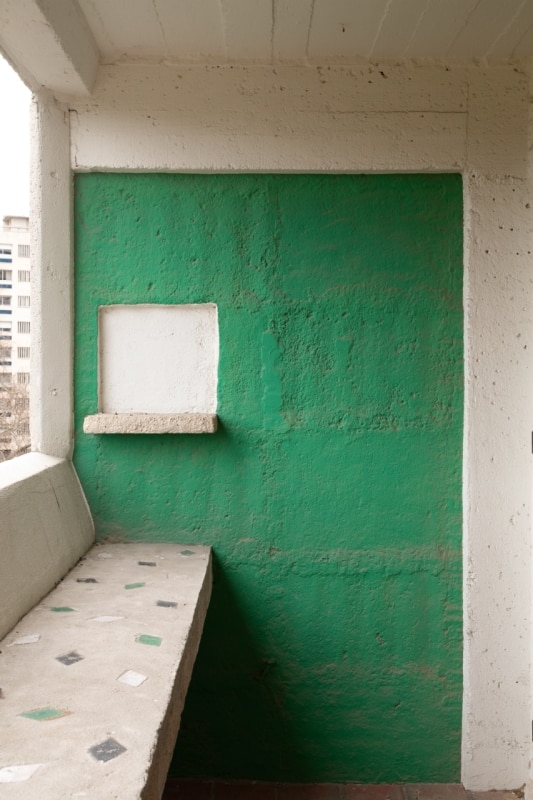
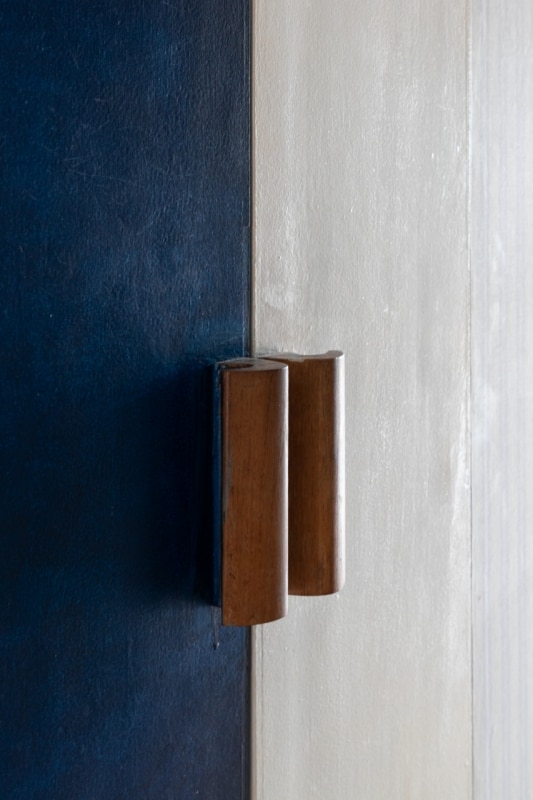
Then comes the furniture. The built-in elements of the duplex embody the concept that had defined Jeanneret and Perriand’s interiors from the outset: the so-called casiers standard. These modular units are integral to the composition of volumes and voids in an interior that operates much like the architecture itself, like that famous “free play of volumes in light,” celebrated and criticized in equal measure over the decades. More concretely, and above all, furniture in this house simply supports and contains. As Renato De Fusco once described it, it is “a limb”: a functional extension of the human body.
The opportunity here is therefore to inhabit the very heart of an experiment at the moment it moves from theory into practice, something almost unique among famous residential architectures, and even within the Cité Radieuse itself. In short: not the “usual “, transformed, Unité d’Habitation.