

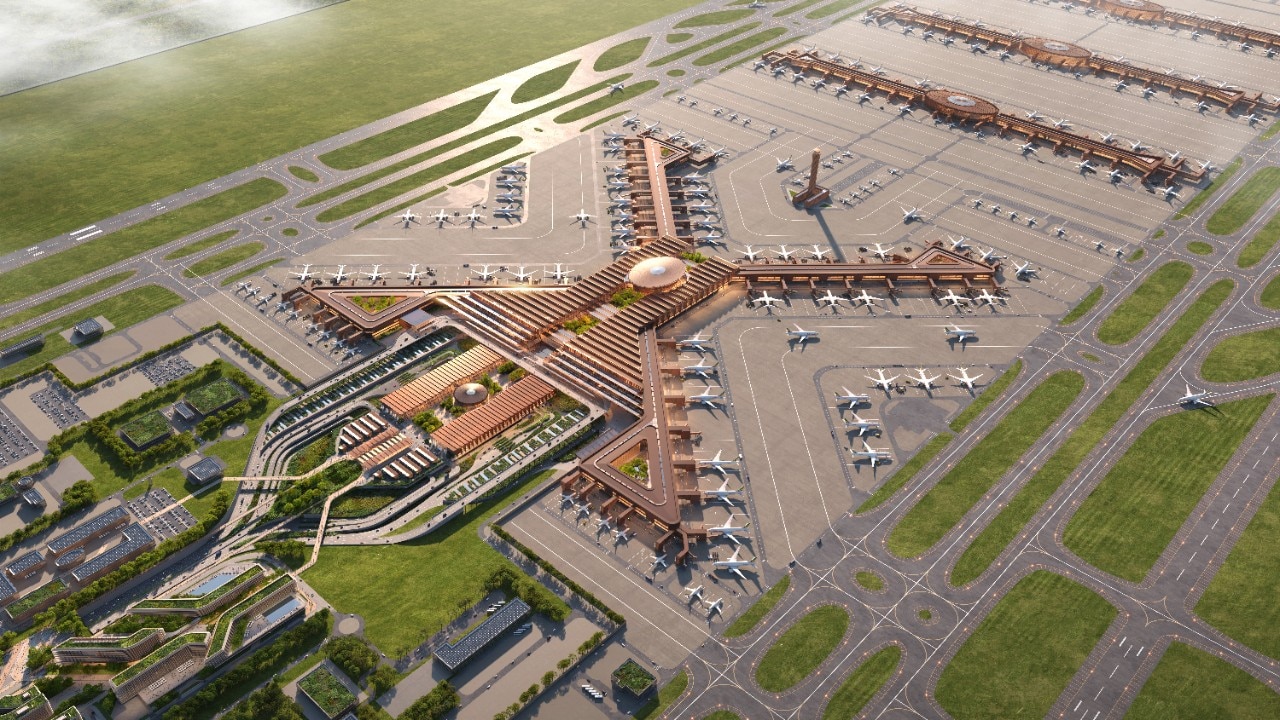

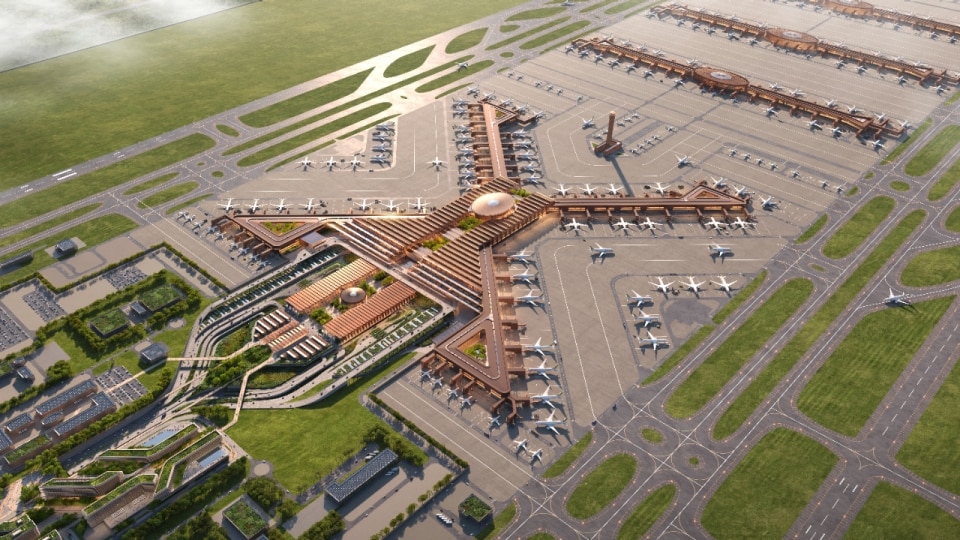


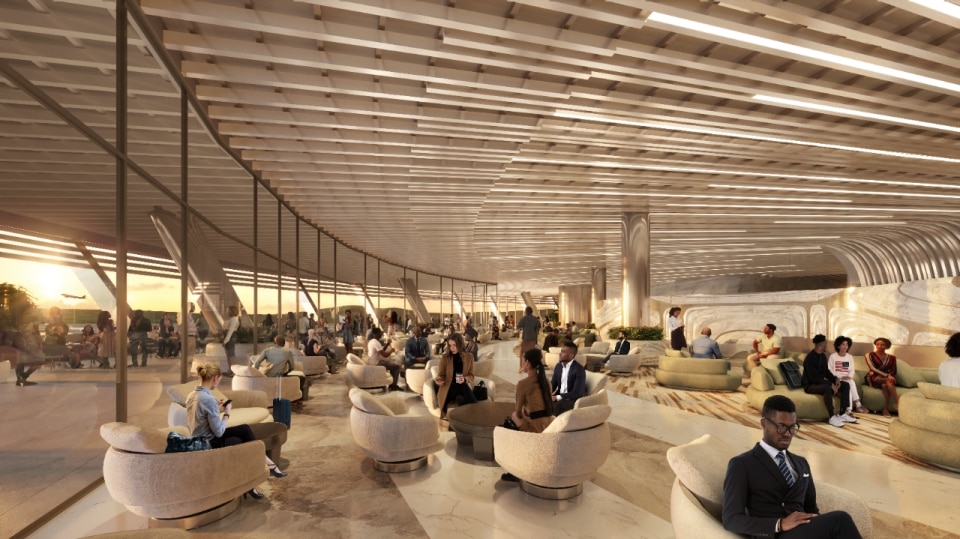
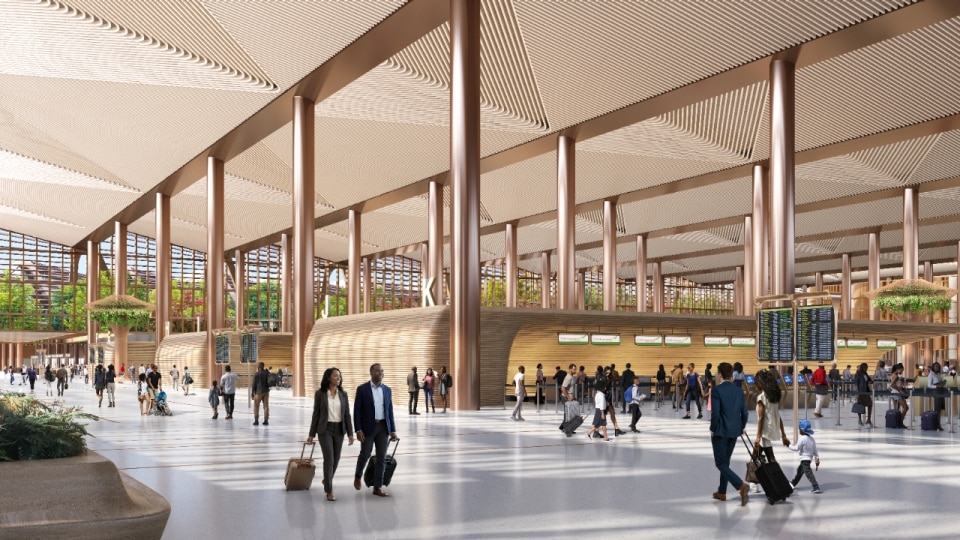
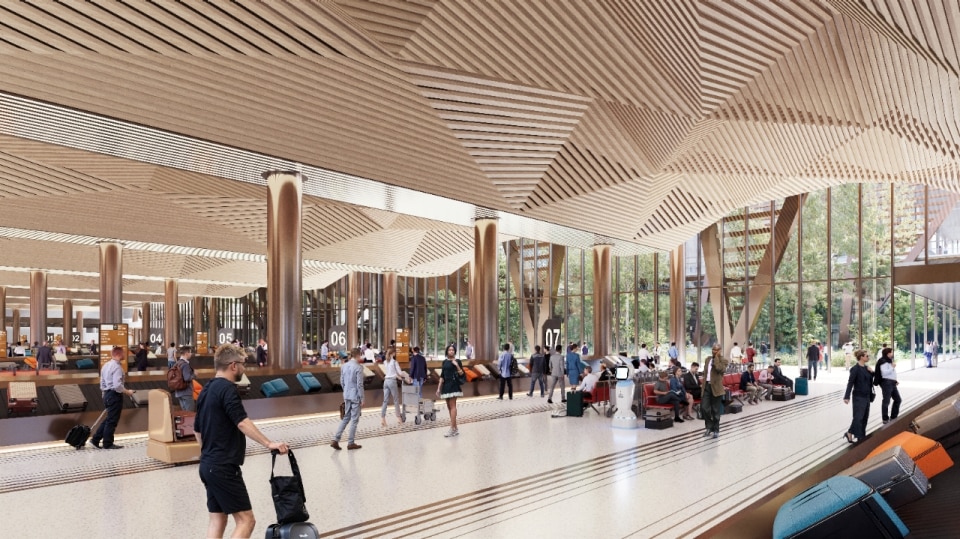
On 10 January 2026, the foundation stone was laid of Bishoftu International Airport, the new airport commissioned by the Ethiopian Airlines Group and designed by Zaha Hadid Architects in Bishofu, about 40 km south of the capital.
The mammoth complex is set to become the largest airport on the African continent and a strategic hub at the crossroads between Africa, Asia and the Middle East. As Cristiano Ceccato di Sabata, Director of Aviation at Zaha Hadid Architects, notes, "Bishoftu International Airport is a visionary project for Ethiopia and Africa as a whole. Airports bring people together and bridge national divides. ZHA is honoured to be part its development—connecting every region of the continent as Africa’s global gateway”.
The infrastructure, which is expected to open in 2030, will be built in stages: the first phase will see the construction of two independent runways and a 660,000 square metre terminal that will serve 60 million passengers per year, before reaching 110 million passengers per year with four runways in subsequent phases. The airport will be connected to the centre of Addis Ababa and the current Bole airport by a high-speed rail link, functioning as a milestone in a new regional transport network.
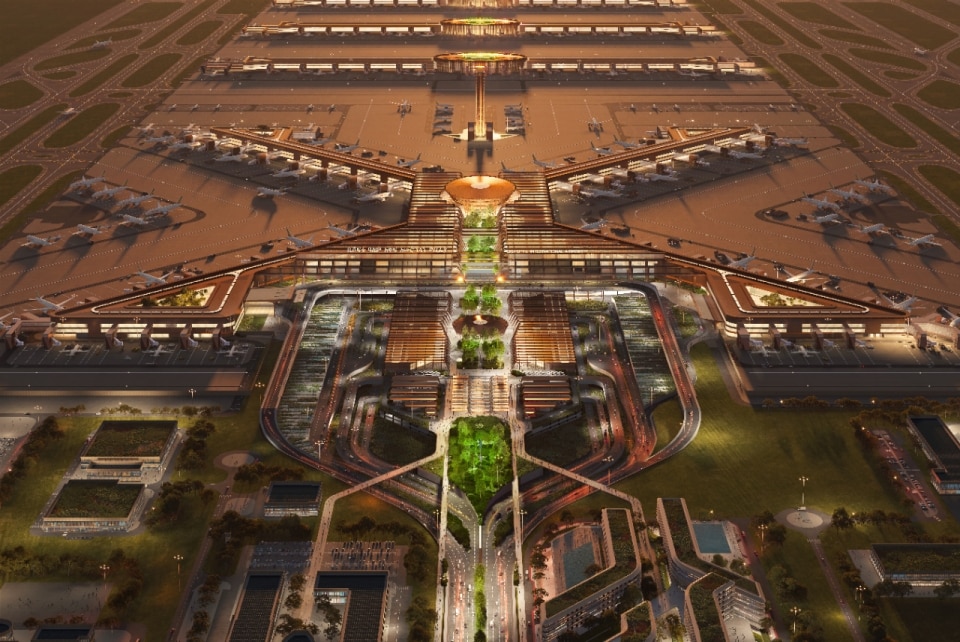
In line with the London-based firm's established approach, the project is a showcase of engineering and technological virtuosity, offering highly efficient services without compromising on a particular focus on people and the environment.
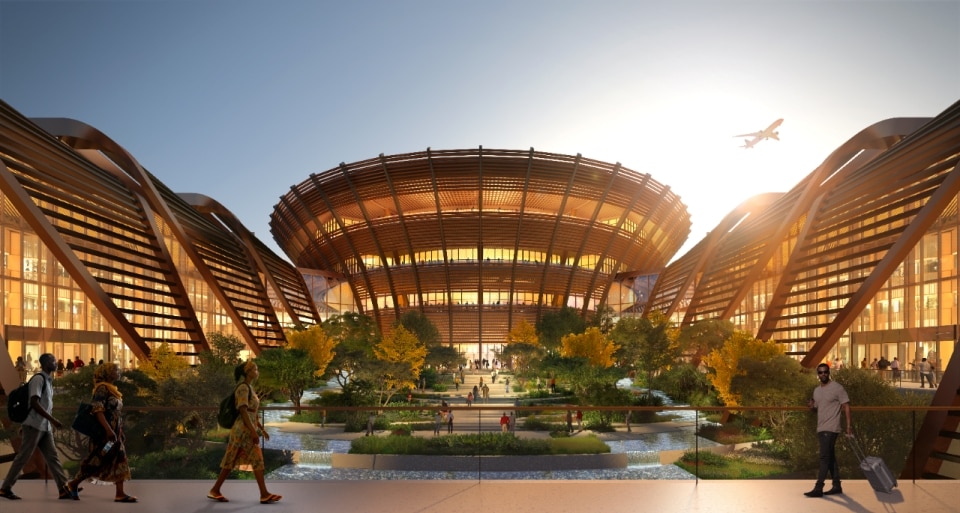
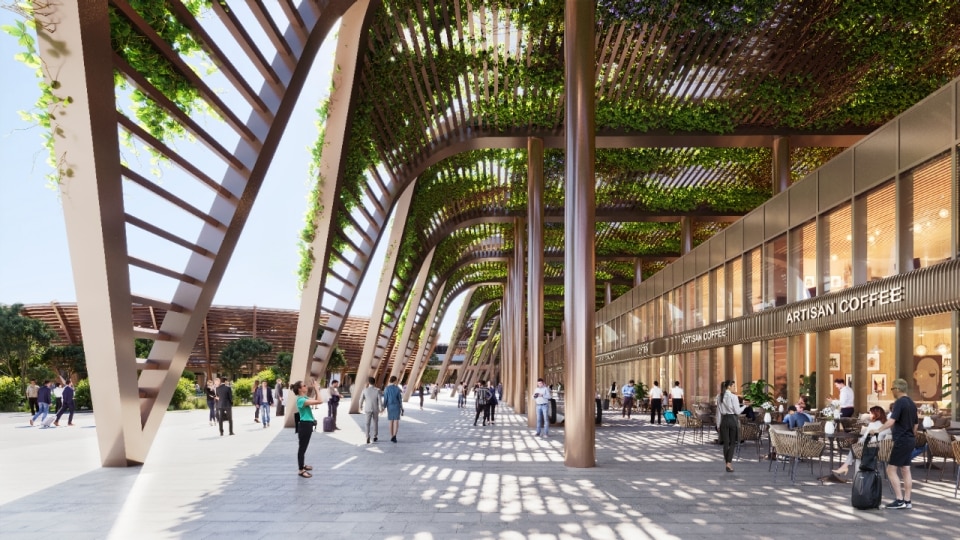
The layout is surprisingly simple considering the complexity of the project. Inspired by the Rift Valley that crosses the country near Bishoftu, a single central spine connects the terminal facilities and runways, reducing transfer distances and ensuring clear and direct routes for passengers. To meet the needs of passengers in transit to other destinations without leaving the airport, the project provides a variety of functional programmes, including hospitality and entertainment services (a 350-room hotel and a wide variety of restaurants), gardens and green spaces.
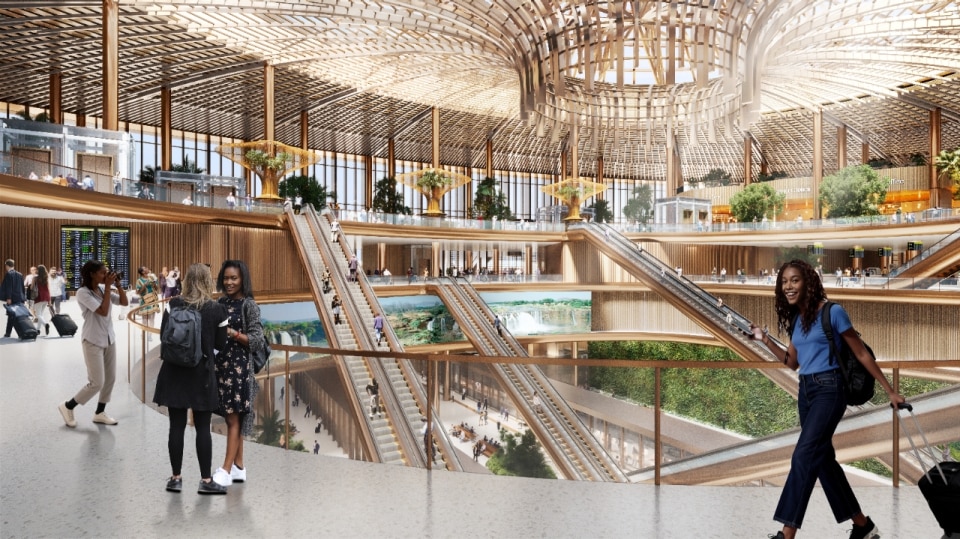
Located in the temperate subtropical climate of the Oromia region's highlands, the structure adopts passive design strategies and advanced technologies to reduce its ecological footprint, aiming to obtain LEED Gold certification: from the use of materials produced or recycled on site and modular manufacturing and assembly techniques to ensure flexibility and economic efficiency, to the use of renewable energy sources; from the study of cross-ventilation flows and shading systems to promote natural micro-climatic well-being, to the collection and reuse of rainwater, to the planting of native species to promote biodiversity.