



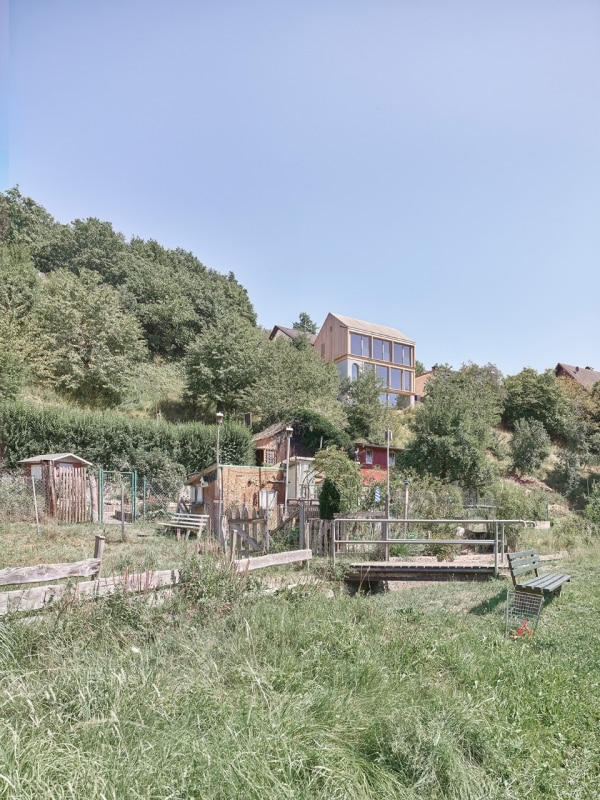
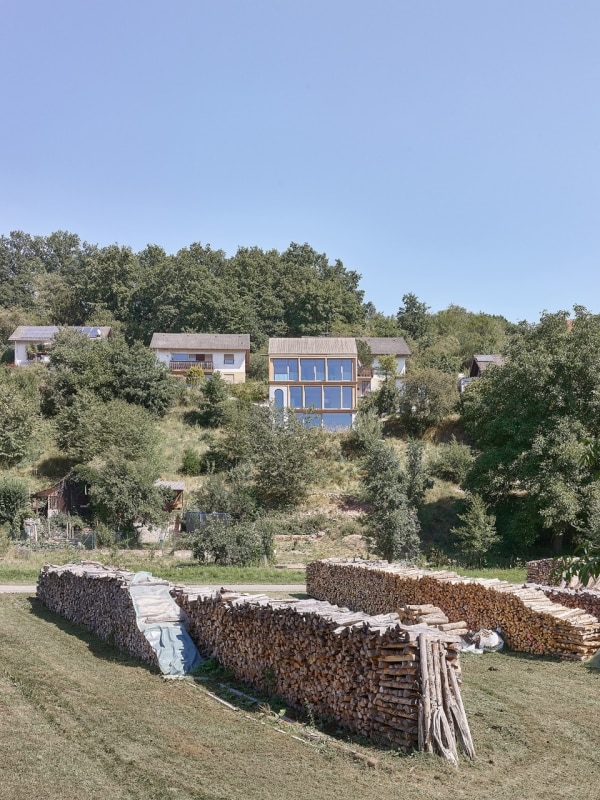
On the steeply sloping terrain of a hillside in Burgsinn, in the Franconia region of Germany, nestled among fruit trees and clinging to a network of natural paths and terraces, stands a house defined by essential lines. These terraces, shaped over time by sheep and grazing animals, were the starting point for ToB.Studio in designing and building the livability of the site.
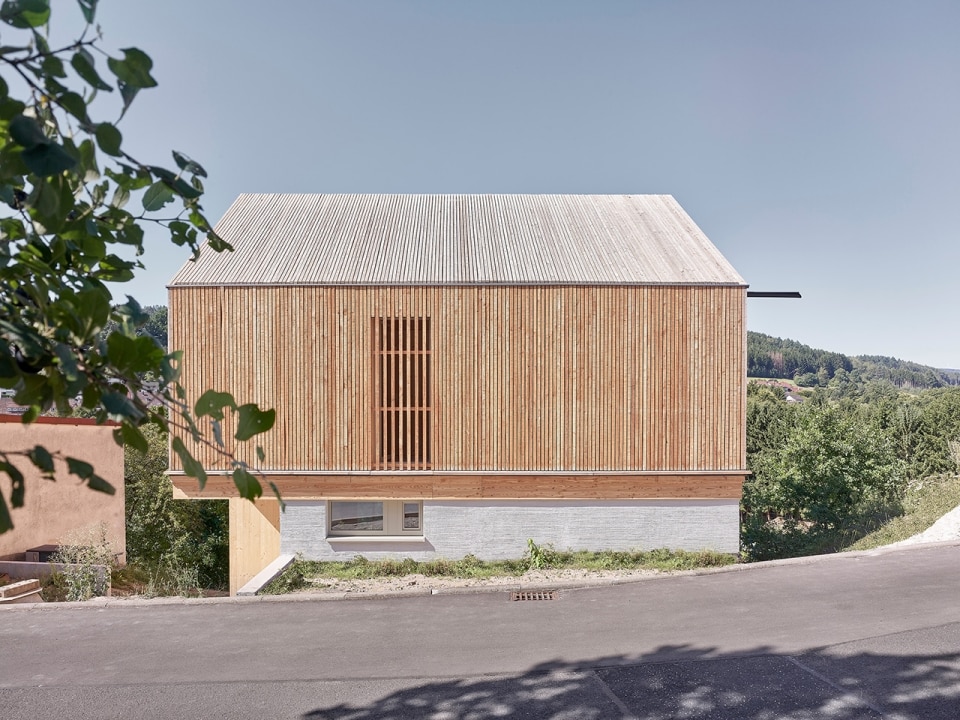
The volume unfolds across three levels and establishes an ever-changing dialogue with the surrounding landscape, playing in particular with the vertical displacement to which it is deeply and structurally tied. The two main facades are conceived in strong opposition: one silent and shielded, protecting domestic life and ensuring the proper degree of privacy, compromised by the immediate proximity of the road; the other, open and projected towards the hillside, is a great portal to nature.
The two main facades are conceived in strong opposition: one silent and shielded, protecting domestic life and ensuring the proper degree of privacy; the other, open and projected towards the hillside, is a great portal to nature.
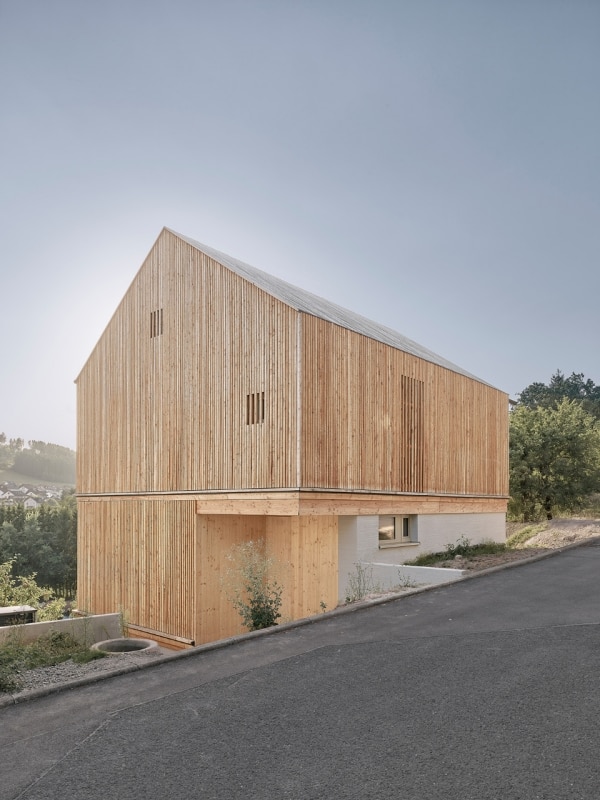
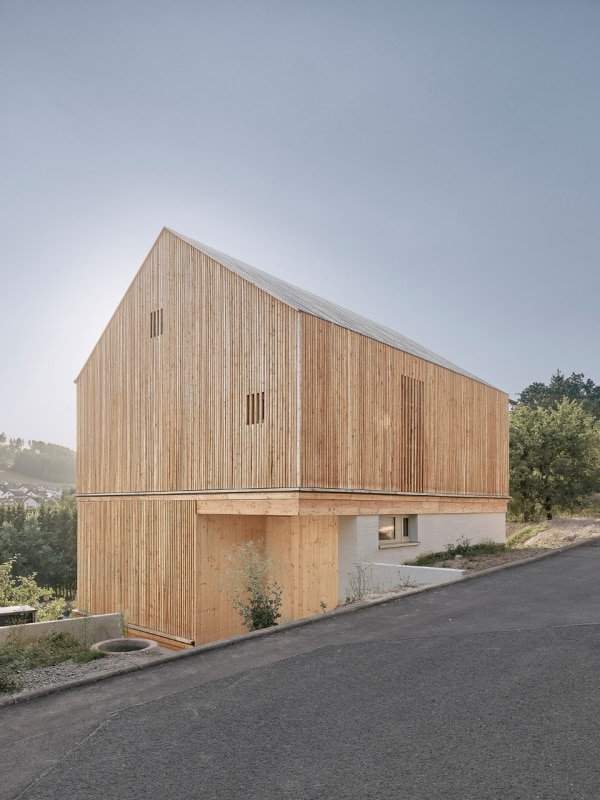
The facade facing the road is therefore hermetic, with a solid concrete base topped by the upper level of the house, entirely clad in local wooden slats sourced directly from the nearby forests. The only exception is the opening marked by the shift in the rhythm of the slats, which appears almost as a brise-soleil.
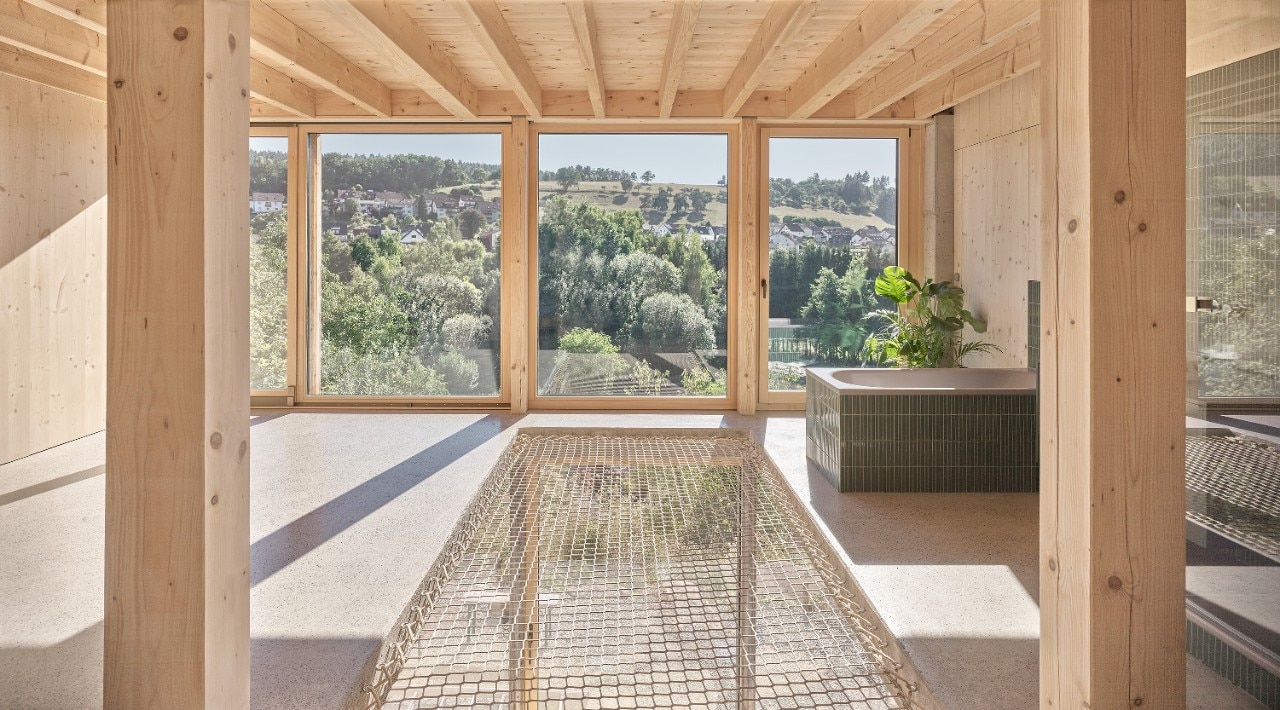
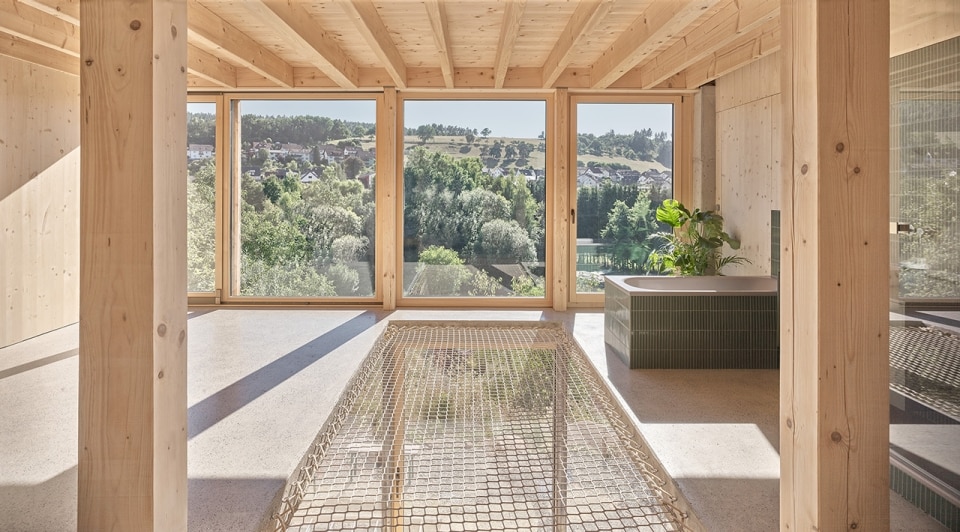
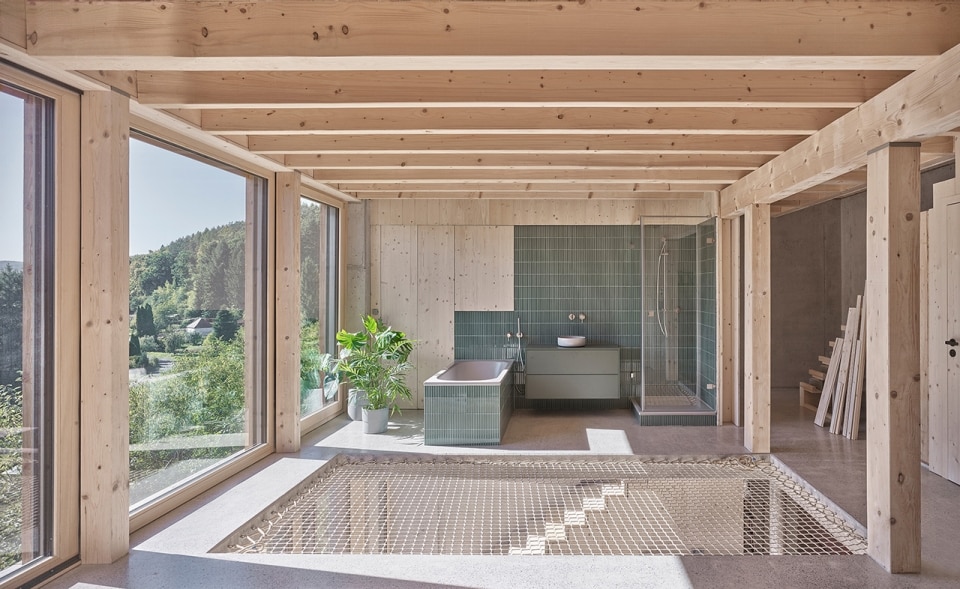
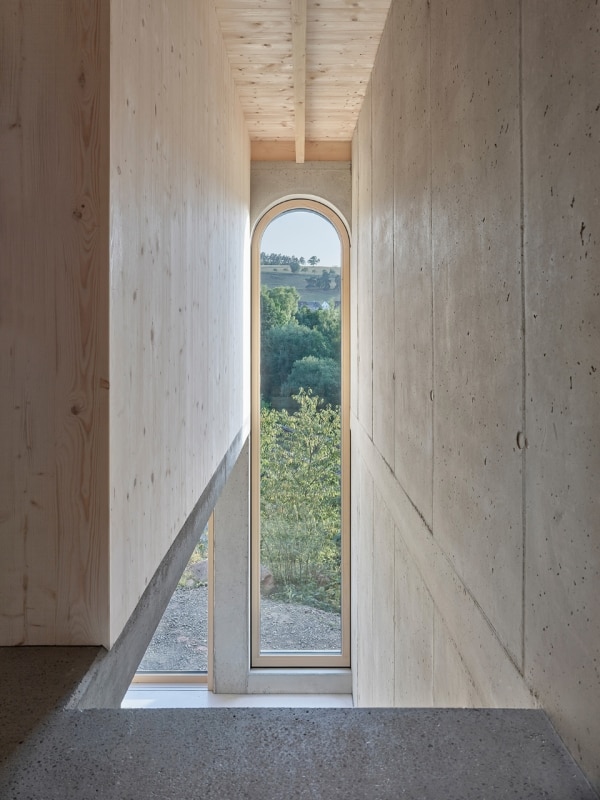
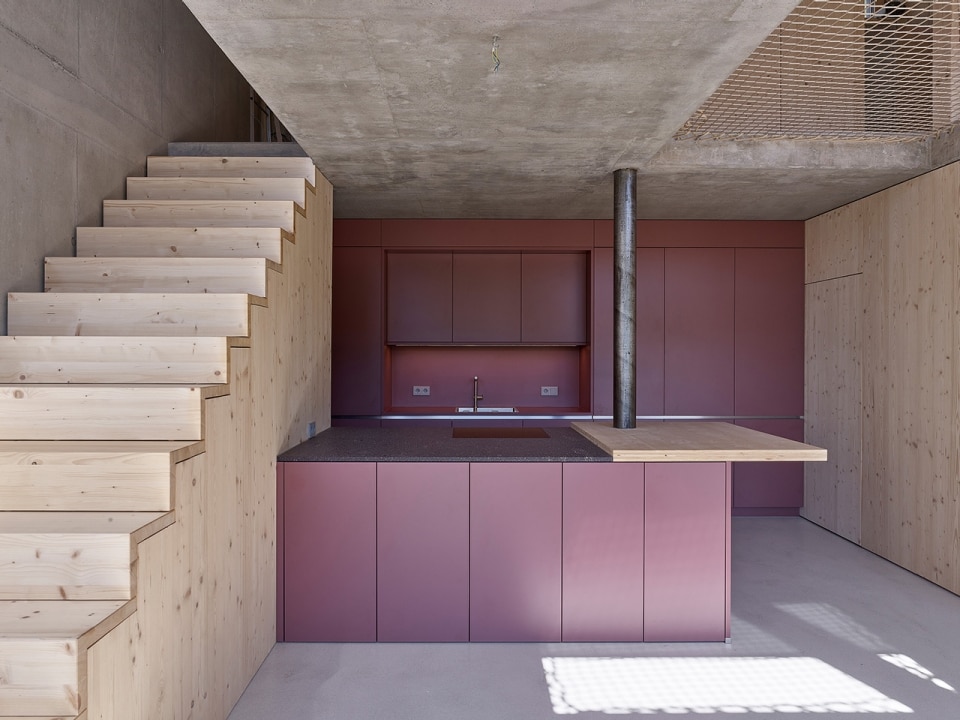
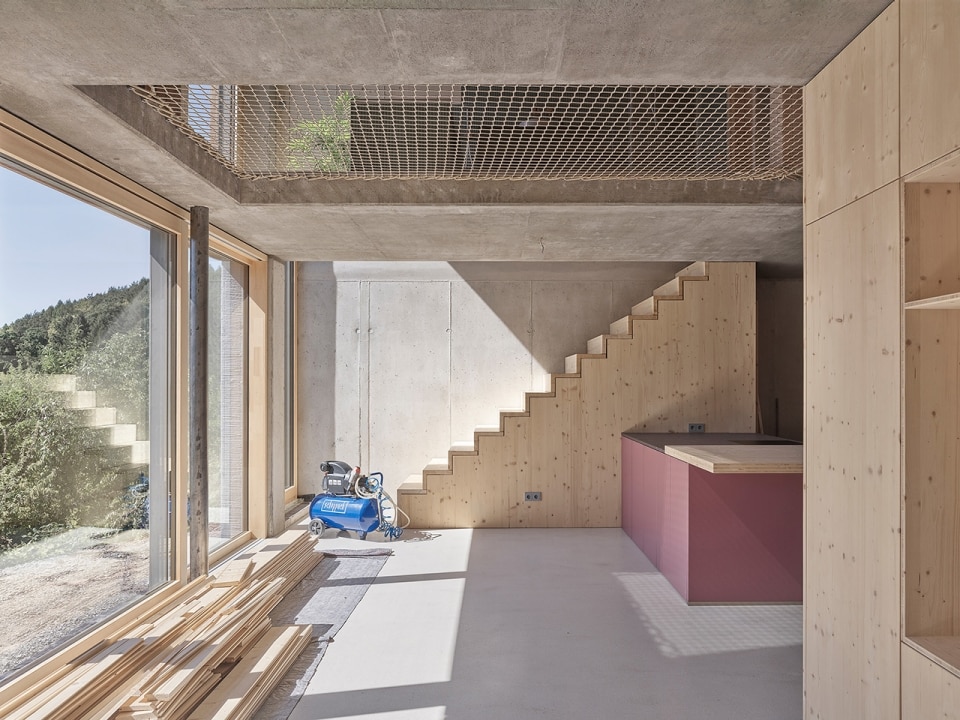
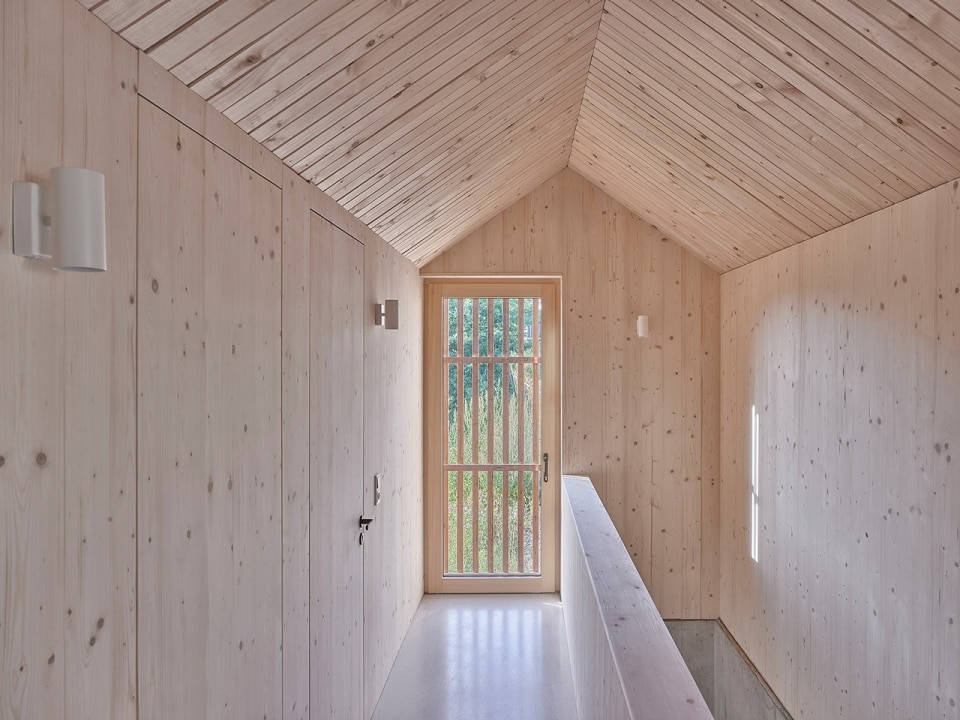
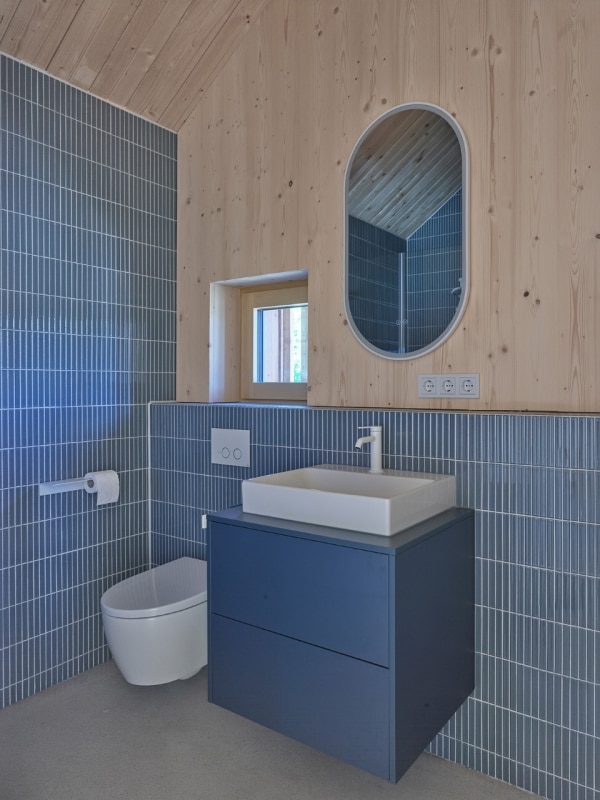
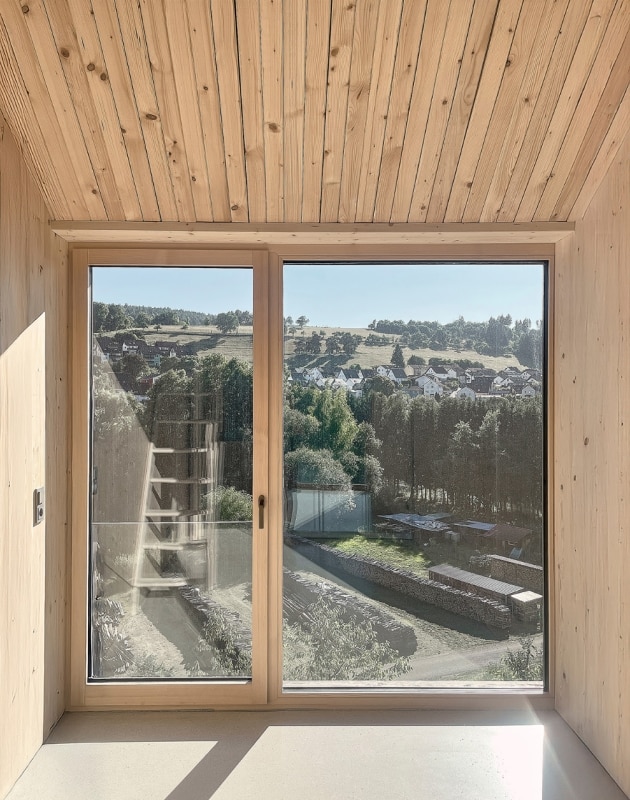
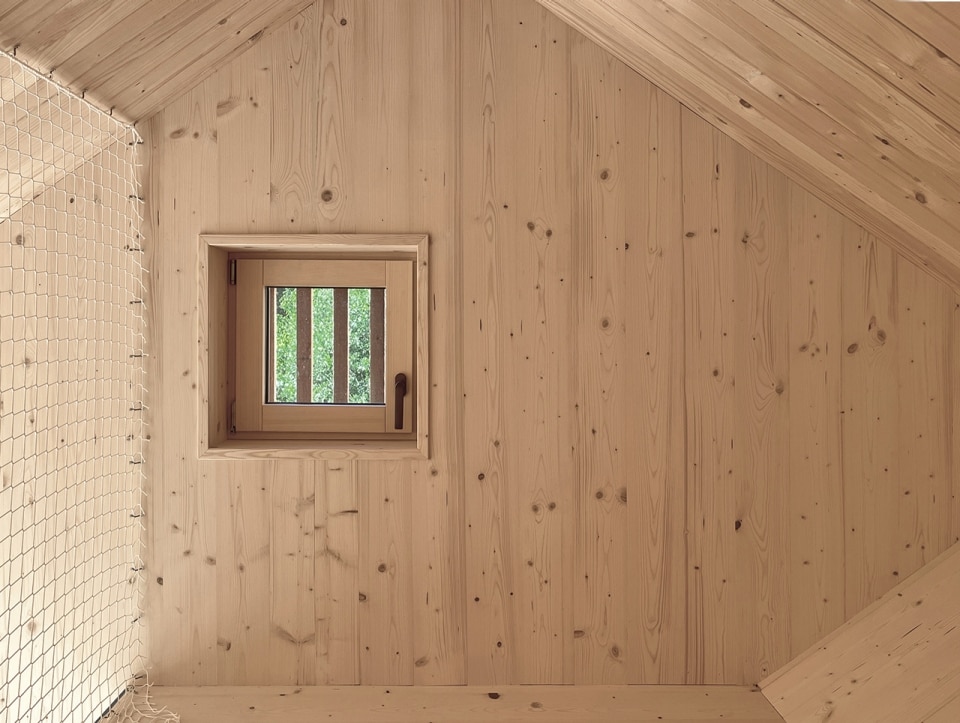
The opposite facade is composed of wide bands of windows that take the place of solid walls. Their repetition is interrupted only by staggered wooden frames and by the corner presence of a double-height arched window, this time framed in concrete, beyond which lies a key element of the house: the staircase. Attached to the external wall and without a balustrade, it rises from the lower level — home to the living room and kitchen — to the intermediate level, where the open bathroom shares the same space as the main bedroom, with no partitions but with a single woven mesh section of the floor acting as a separation between the two areas. On the upper level, a secondary bathroom serves three smaller studio-bedrooms, each equipped with a small mezzanine hosting intimate niches for the beds.
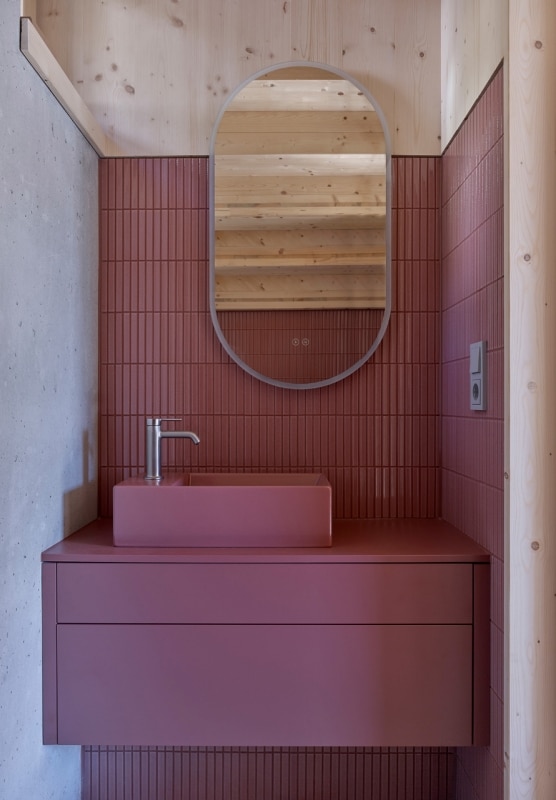
To the neutral tones of light wood and concrete are added the soft hues chosen for the kitchen and bathrooms, in an environment where light is undoubtedly the main element, embracing every space and turning the house itself into a true extension of the landscape.