

Wikipedia has launched a new project dedicated to film — both features and shorts. It’s called WikiFlix. Technically, it pulls material from the archives of Wikimedia Commons, Internet Archive and YouTube, reorganizing and expanding those catalogs with films that are free of copyright. At the moment there are more than 4,000 titles, arranged much like a commercial streaming platform. The difference is that, as with everything related to Wikipedia, the service is completely free and reflects the project’s guiding philosophy: knowledge should be accessible to everyone.
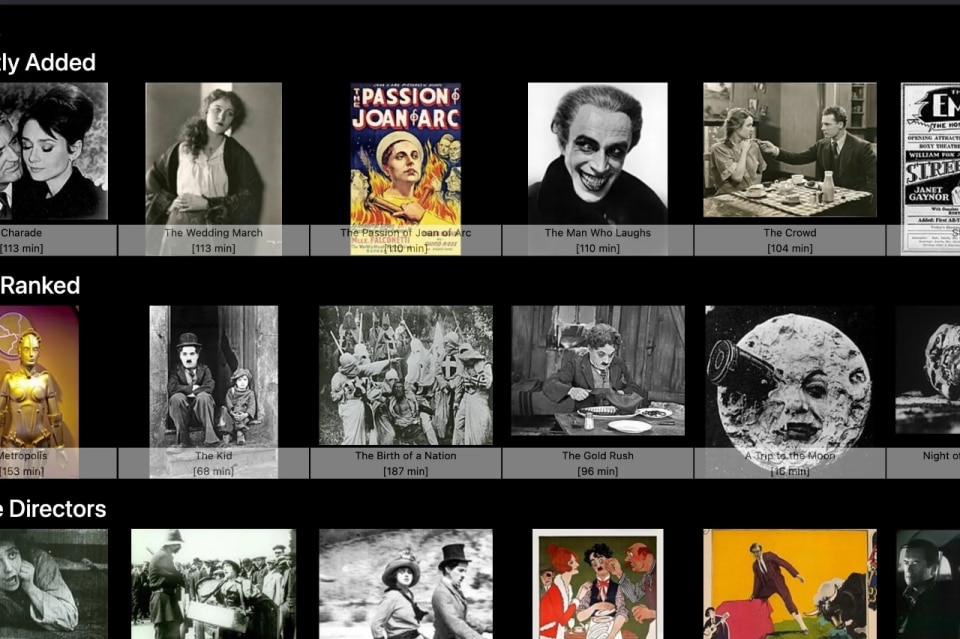
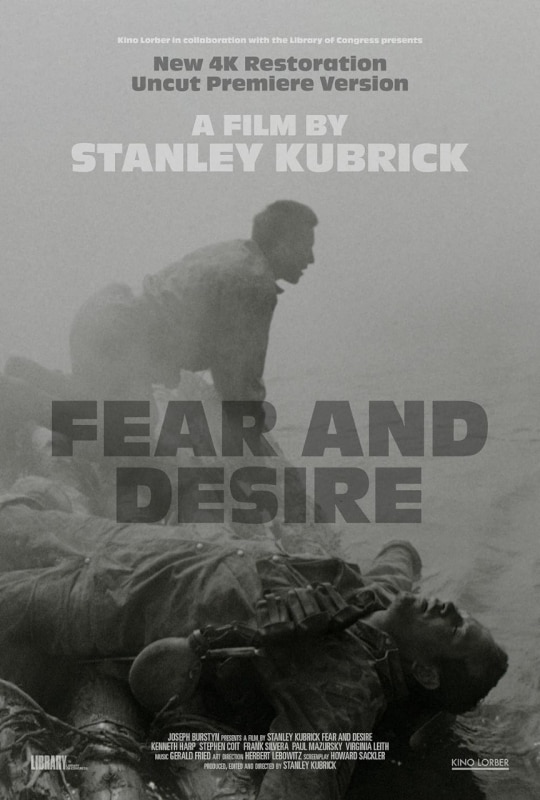
The catalog mainly includes films from the 1930s or earlier, though there are some more recent exceptions such as Night of the Living Dead by George A. Romero and The Driller Killer by Abel Ferrara. Their public-domain status is the result of mistakes, omissions or problems in copyright registration. In each case the films can be viewed through multiple sources — sometimes YouTube, sometimes the Internet Archive, and occasionally Wikipedia itself — always in their original language. The platform also includes Fear and Desire, Stanley Kubrick’s first film, which the director himself later disowned because he considered it too immature.
Most of this material is, broadly speaking, already available on YouTube (where many older films — including some still under copyright — circulate online). What WikiFlix adds is organization, detailed information often missing from YouTube — the metadata is pulled from the WikiData archive — and an interface that makes browsing easier even if you don’t have a specific title in mind. Exploring the WikiFlix catalog also reveals several small design and filmmaking gems.
From Fritz Lang's Metropolis to Kubrick's first film: on WikiFlix more than 4,000 public domain films become a free streaming catalog.
First come the classics — films whose canonical status is well established. Among them stands the most obvious and influential example: Metropolis by Fritz Lang, available in the restored version with English intertitles (alongside some VHS versions that circulated before 2000 with incorrect editing and music). It remains one of the most visually influential science-fiction works ever made. Its imagery can still be found in contemporary cinema: the first great vision of a future urban dystopia, a city rising vertically with skyscrapers and elevated highways, where the working classes live below while the elites occupy the heights. And then there are humanoid robots, inventors with wooden hands, and remarkable interior design.
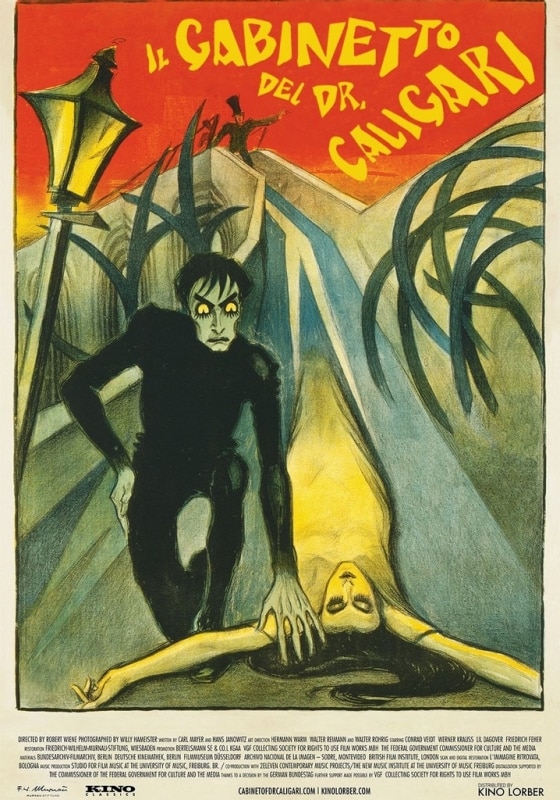
From the same era but at the opposite end of the stylistic spectrum is The Cabinet of Dr. Caligari, a film with nothing realistic about it and everything dreamlike. It was the result of collaboration between filmmakers and painters associated with German Expressionism in the Weimar Republic. The sets and backdrops were created by artists, and the entire film was conceived to appear distorted, presenting a hallucinatory world.
Another highlight is Wings (1927), the first film ever to win an Oscar at the inaugural Academy Awards. It represents one of the clearest expressions of the emerging American Way of Life aesthetic — a cinema of optimism, aviators, romance and a worldview that always feels aspirational. More importantly, it embodies a defining trait of American cinema: its deep connection to technical innovation. In Wings there is a famous camera movement that travels across a series of tables before arriving at the protagonists. Achieving it required a sequence of technical tricks that remain memorable — a perfect example of the way Hollywood often places sophisticated technique at the service of a narrative idea.
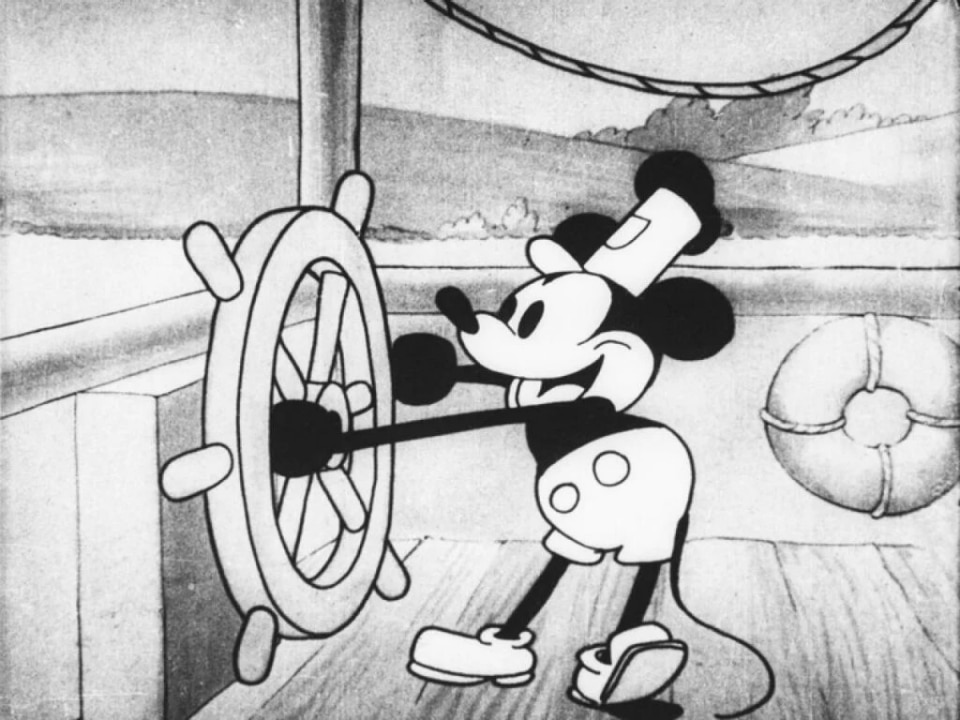
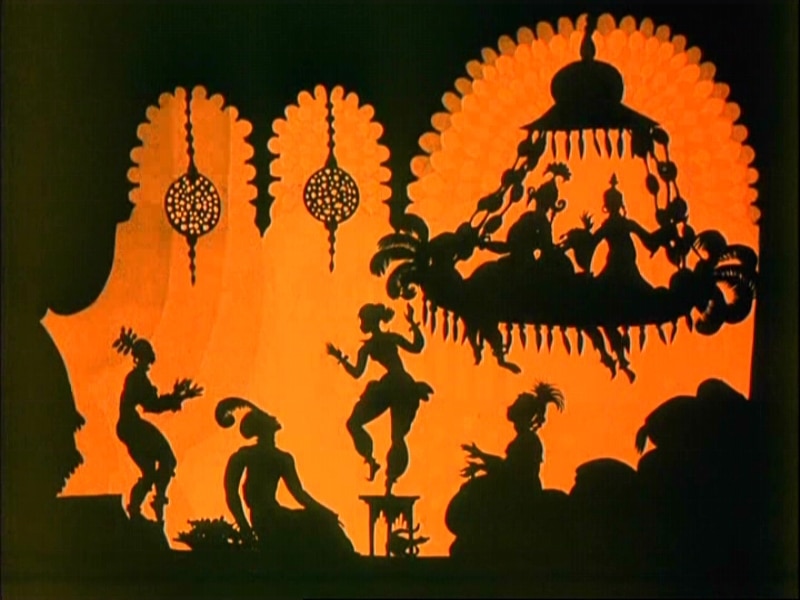
In the animation section there are several remarkable discoveries. Beyond the well-known Steamboat Willie, the first short film to feature Mickey Mouse — which entered the public domain last year — there is The Adventures of Prince Achmed (1926), one of the earliest structured animated medium-length films, running 65 minutes. It was conceived and created by Lotte Reiniger, a pioneer of European animation. The entire film is made using silhouette animation, with cut-out puppets, colored backgrounds and extraordinary expressiveness. Another highlight is Gulliver’s Travels, the second American animated feature after Snow White and the Seven Dwarfs, produced by the Fleischer Studios as a direct attempt to compete with Disney. Its most striking idea is stylistic: the tiny Lilliputians are drawn in a cartoon style, while Gulliver himself was created using rotoscoping — an actor performs the role and animators trace the filmed movement frame by frame to achieve maximum realism.
For fans of Constructivist aesthetics, there is also the epic The Snow Queen, a 1957 Soviet animated feature showing how fairy tales in Russia were transformed into a visual universe for young audiences — one built on geometry, intimidating characters and a hardness unfamiliar to Western children’s cinema.
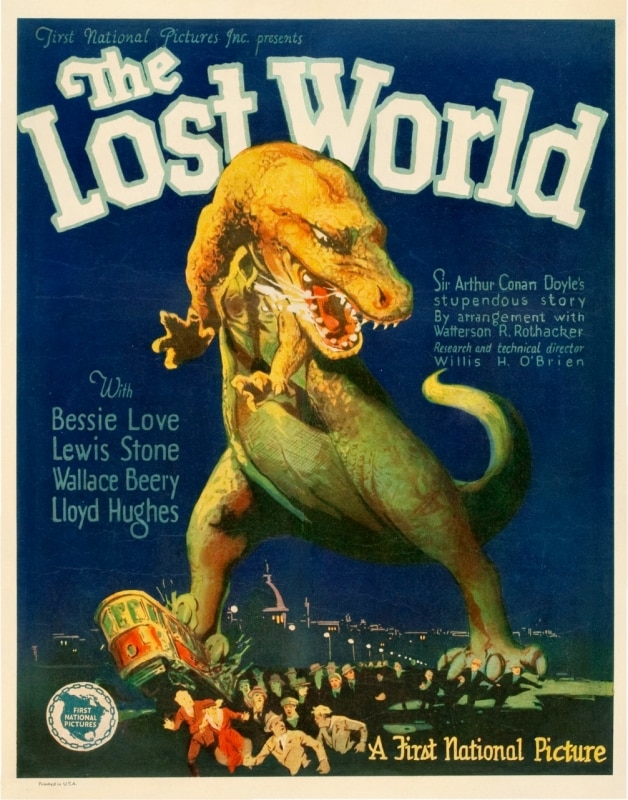
Finally, there are two gems of handcrafted filmmaking. One is The Lost World (1925), based on the novel by Sir Arthur Conan Doyle, where the dinosaurs and prehistoric creatures are brought to life through stop-motion animation with astonishing results. The other is Italian. WikiFlix even includes a respectable section dedicated to Italian films whose copyrights have expired. Among them is The Warrior (1916), a pure escapist entertainment film from the era when Turin was the capital of Italian cinema. The story follows Maciste, a powerful strongman recruited among the Alpine troops.

The tone sits somewhere between Bud Spencer and Terence Hill and Jackie Chan — a mix of cartoonish violence and real stunt work. Maciste is played by Bartolomeo Pagano, who truly had an imposing physique. Beyond the fun, the film also reveals a pre-Fascist Italian visual culture — not Art Nouveau or Futurism for once, but a monarchical, Savoyard aesthetic translated into cinema.
Opening image: Fritz Lang, Metropolis, 1927