


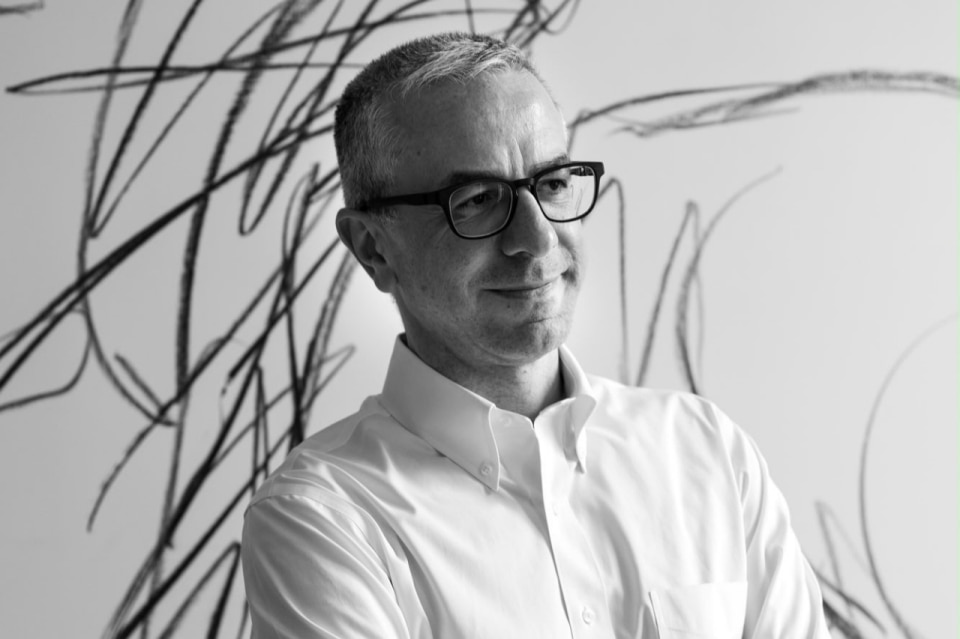
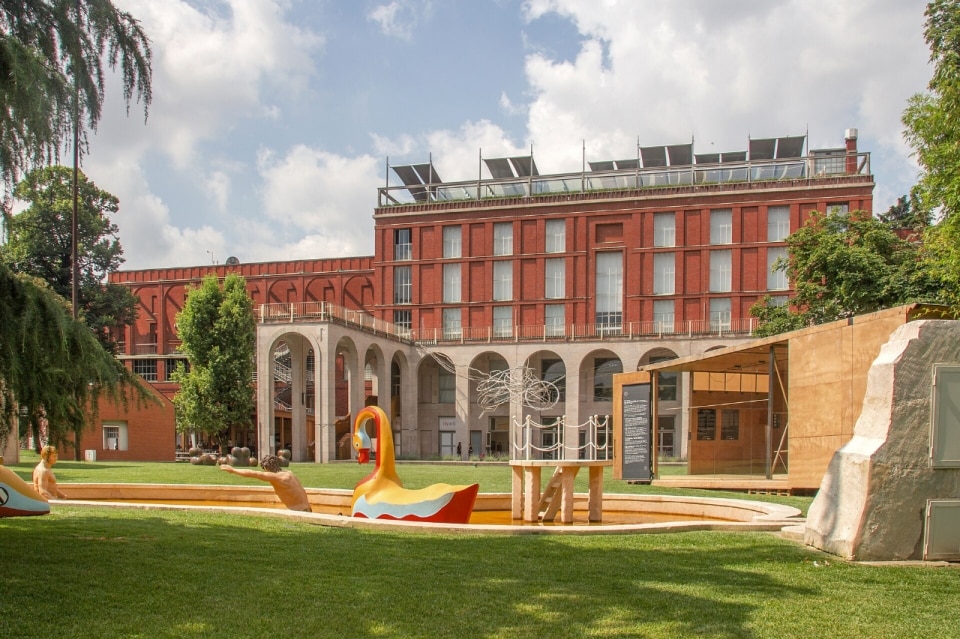
Just over a month after his appointment as president of Triennale Milano, Vincenzo Trione presented the strategic guidelines that will direct the institution’s activities over the four-year period from 2026 to 2030. Rather than merely presenting an exhibition programme or a series of new appointments, the critic and art historian outlined a cultural vision inspired by the building itself, which was designed by Giovanni Muzio. According to Trione, the Palazzo dell’Arte reconciles two seemingly incompatible qualities — “rationality and variety” — that will form the basis of the new Triennale’s manifesto, supported by the appointment of Michele De Lucchi as creative director and head of the Museo del Design Italiano.
“I like to start with architecture,” Trione explained. “It is an architecture that brings together two different voices, two different cultural tensions.” On one side, “the rationalist dimension”; on the other, “a sort of magic labyrinth.” “We will try to do exactly that.”
This concept underlies the entire project of the new president, who envisages the Triennale as a “cultural infrastructure”: an institution capable of connecting architecture, design, art, photography, fashion, cinema, theatre and music, as well as universities, businesses and research institutions. “After all, the Triennale is a complex entity that encompasses different worlds, cultures and practices,” he said. “It is unique on the international stage.”
Design can become a tool for building bridges between past and future, between concrete and virtual, between human and digital helping us to confront the great contradictions of the present while maintaining a constructive outlook.
Michele De Lucchi
The second keyword of this new phase is “question.” Each year, Triennale will select a question deemed essential for understanding the present, and will develop exhibitions, public programmes, research activities, and publications based on that theme. “We live in a time when asking questions perhaps matters more than offering answers,” Trione observed. “Anyone dealing with artificial intelligence today knows that the ability to ask questions is more important than having the answers.”
One of the most significant innovations is the establishment of an advanced training school focusing on curating, exhibition design, and cultural communication. This will be complemented by a new PHD Program developed in collaboration with Italian and international universities, as well as a fellowship program for scholars, curators, artists, architects, and designers. The Centro Studi, relaunched as an interdisciplinary research hub, will be responsible for identifying the annual themes for the programme and for the upcoming Esposizione Internazionale in 2028.
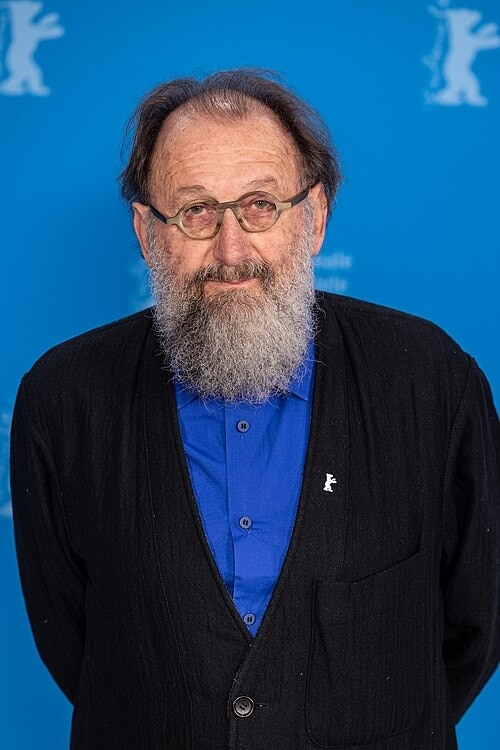
The new governance structure also introduces the role of creative director, which has been entrusted to Michele De Lucchi. He will also lead the Museo del Design Italiano. In his speech, the architect traced the evolution of the concept of design itself, recalling how he had protested against the 1973 Triennale as a student. He observed that today, design no longer coincides solely with industrial production, but spans every sphere of society, from architecture to digital interfaces and social relations.
It is an architecture that brings together two different voices, two different cultural tensions. On one side, the rationalist dimension; on the other, 'a sort of magic labyrinth. We will try to do exactly that.'
Vincenzo Trione
“Design is the most human manifestation of humanity,” De Lucchi stated. For this very reason, design can become a tool for building bridges “between past and future, between concrete and virtual, between human and digital,” helping us to confront the great contradictions of the present while maintaining a constructive outlook.
In the press release accompanying the presentation of the new strategic guidelines, De Lucchi defined his goal as transforming Triennale into “a laboratory of vitality,” capable of fostering a “sustainability of the collective imagination.”
Alongside the new role entrusted to De Lucchi, the scientific committee will comprise Manuela Lucà-Dazio, who will oversee architecture, and Andrea Viliani, who will oversee contemporary art. They will be supported by consultants specialising in cinema, music, fashion, archives, theatre, public programmes and Design Week.
Rather than a simple change of governance, Trione has outlined a change of method. The declared goal is to transform Triennale into an institution that continues to produce exhibitions, but which increasingly becomes a place for research, training and critical thinking. An institution that, like Giovanni Muzio’s Palazzo dell’Arte, from which it draws inspiration, attempts to combine rationality and variety.
Opening image: Vincenczo Trione, the new president of the Triennale di Milano. Photo courtesy of Triennale