

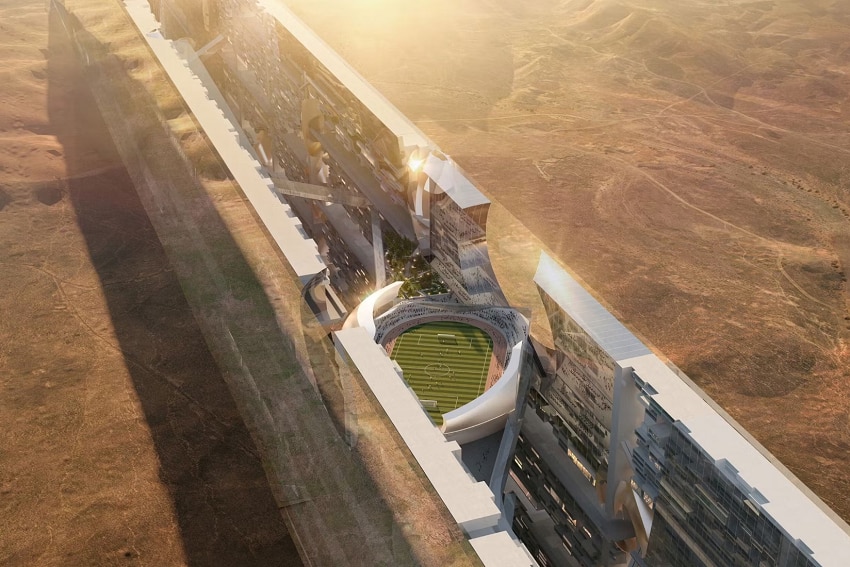
In March, we already reported how the dream of The Line – the 170-kilometer-long linear city designed as the most spectacular element of Neom, the massive urban and industrial plan commissioned by Saudi Arabia as part of Vision 2030 – was entering a critical phase. Even then, there was talk of downsizing, strategic reviews, contract cuts, and drastically reduced targets.
Above all, an investigation by the Financial Times had identified a significant signal in the new agreement signed by Neom with DataVolt, a Saudi company specializing in digital infrastructure and energy for data centers. The deal, which involved massive investments in artificial intelligence and cloud infrastructure, hinted at an increasingly evident shift in priorities: fewer speculative megastructures and more technological infrastructure deemed economically sustainable and strategic.
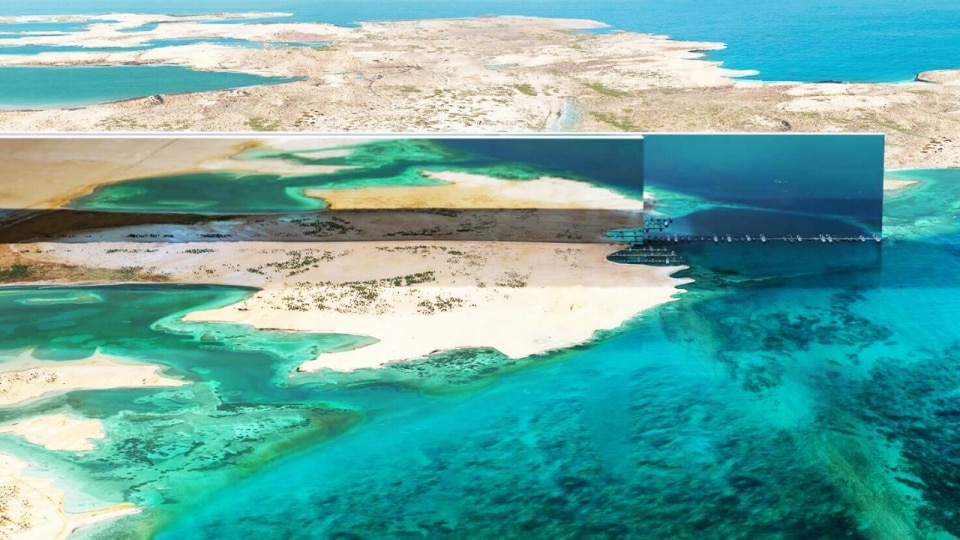
Today, however, something even more definitive is emerging. According to an exclusive published by Semafor, Saudi Arabia has reportedly decided to postpone further substantial work on The Line until at least after 2030. And it is reportedly not the only segment of Neom to have been delayed indefinitely.
Inside rumors on the project
The news has not been officially confirmed either by Neom or by the Saudi government. Semafor writes that the company “did not respond to requests for comment,” but the account published by the American outlet – later picked up by other economic and financial platforms – is based on anonymous sources close to the matter.
“People familiar with the matter,” writes journalist Matthew Martin in the article published on May 22, which reviews all the signs of deceleration that have emerged in recent months: from the reallocation of Saudi investments toward infrastructure considered more profitable and strategic, to statements by Yasir Al-Rumayyan, governor of the Saudi Public Investment Fund (PIF), who as early as April 2026 had spoken publicly about the postponement of certain Neom projects.
According to Semafor, the decisions are the result of an internal strategic review led by Neom’s new CEO, Aiman al-Mudaifer, appointed in 2024 after months of growing pressure regarding the project’s costs and timelines.
As part of this review, the number of residents expected by 2030 has reportedly been further scaled back: today, the target is allegedly around 100,000 residents, compared to the 1.5 million initially envisioned and the 300,000 projected just two years ago.
From manifesto-city to data hub
After all, criticism of the project has never been lacking. Since its presentation in 2021, urban planners, architects, and international observers have questioned the economic sustainability of The Line. Over the years, doubts regarding costs and technical feasibility have been joined by criticisms related to ecological impact, energy consumption, and the conditions of local communities involved in the construction of Neom.
Rather than a simple setback, the current situation seems to reflect a deeper transformation of Saudi priorities: away from The Line as a manifesto-city designed to house millions of car-free residents, powered by renewable energy and integrated with AI systems, toward a new model of an industrial and infrastructural hub primarily tied to data management.
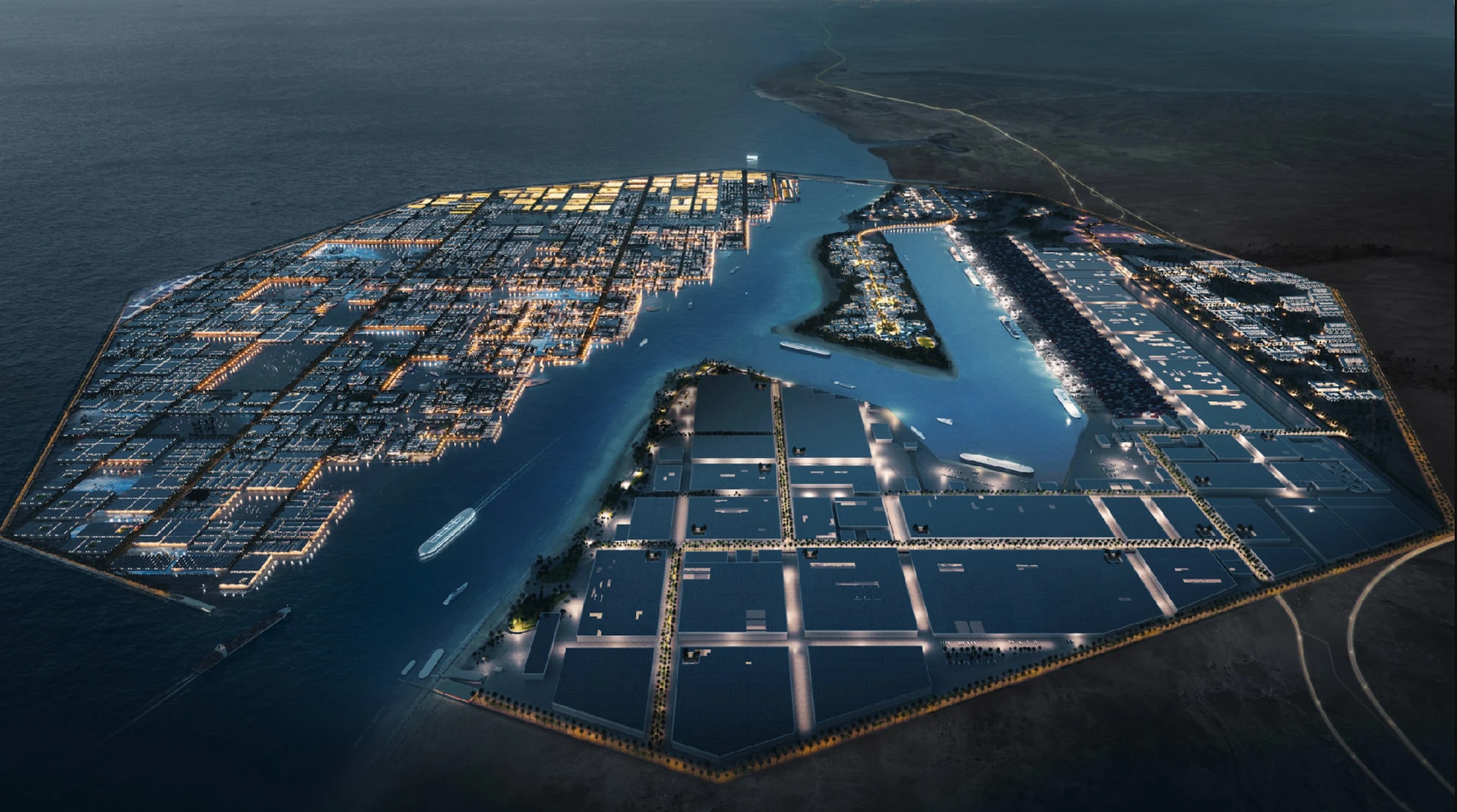

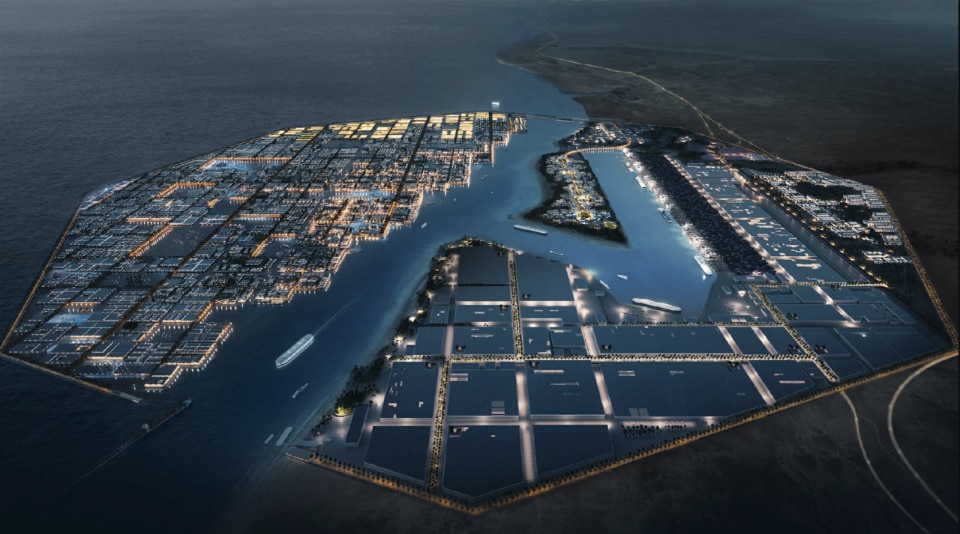


According to the sources cited by Semafor, Oxagon, the industrial and port district on the Red Sea, remains a top priority: a commercial node that appears even more strategic today in light of the crisis in the Strait of Hormuz and the Saudi need to rethink regional trade routes and infrastructure.
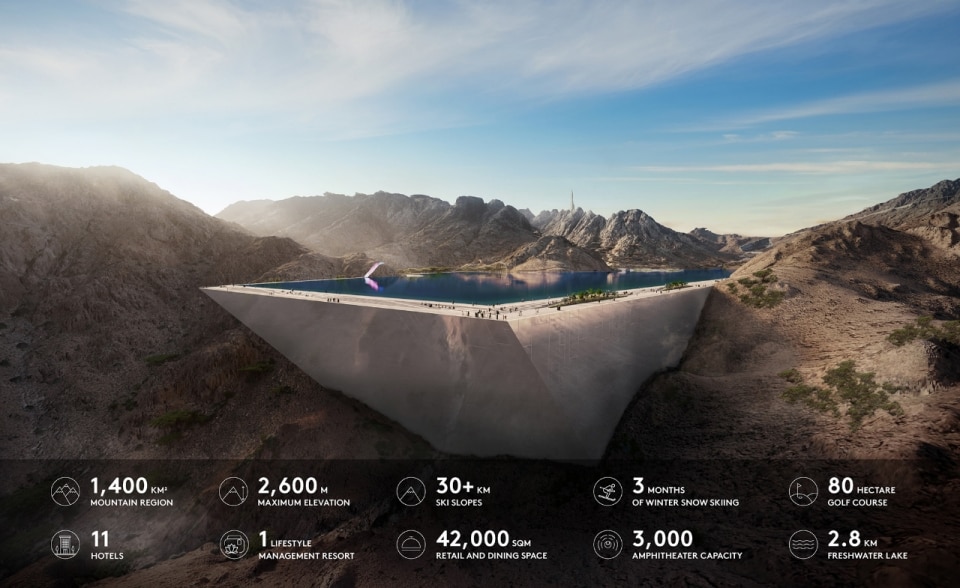
Other symbolic pieces of Neom – such as Trojena, the mountain resort destined to host the 2029 Asian Winter Games – have also reportedly been postponed beyond 2030. Furthermore, just a few months before May 2026, the Mukaab project – the colossal cube-shaped building planned for the center of Riyadh, another symbol of recent Saudi architectural expansion – was also reportedly put on hold.
In short, Neom does not seem destined to disappear. However, its center of gravity could change radically: less of a utopia-city like The Line and more of an industrial, energy, and digital infrastructure deemed increasingly strategic within a rapidly changing geopolitical landscape.
Opening image:The Line. Courtesy Neom