

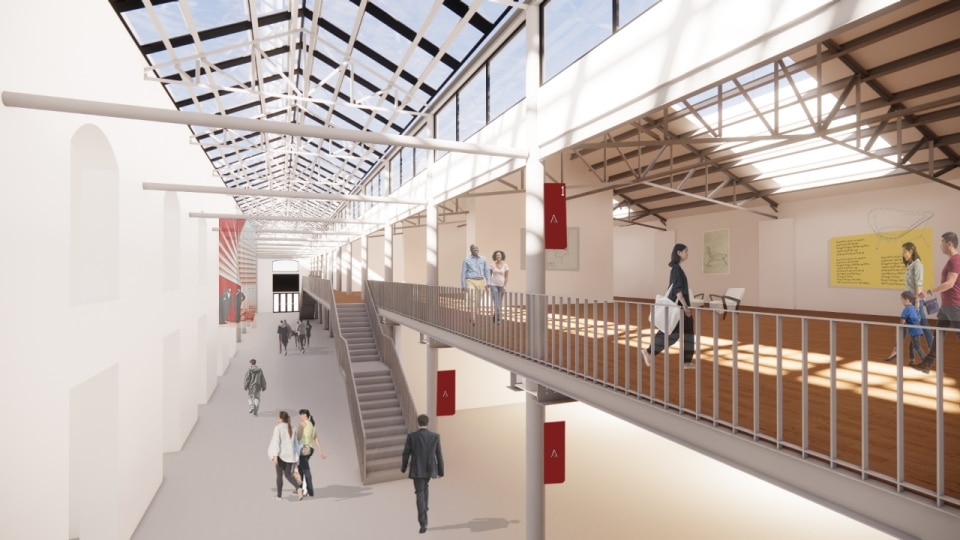
The new chapter in the life of ADI Design Museum, announced in February 2026 during the Olimpiade Culturale, is now moving towards realization and will be dedicated to Gio Ponti, a foundational figure in design culture and in the creation of the Compasso d’Oro, the award at the origin of ADI, with an over 70-year-long history. The signing of the agreement between Regione Lombardia and Fondazione ADI Collezione Compasso d’Oro officially launches the development of a permanent space, which will expand the museum surface by approximately 700 square meters.
Maurizio Milan’s design introduces an autonomous architectural intervention conceived in dialogue with the museum’s post-industrial character. A lightweight steel-and-wood mezzanine will be inserted within the central wing, maintaining its permeability while accommodating both a permanent display and a programme of temporary activities. “We do not want to create a celebratory space,” said ADI president Luciano Galimberti, “but in an active environment inspired by Gio Ponti’s reformist ethos. For this reason, it will be an open, free-access space, designed for everyone”.
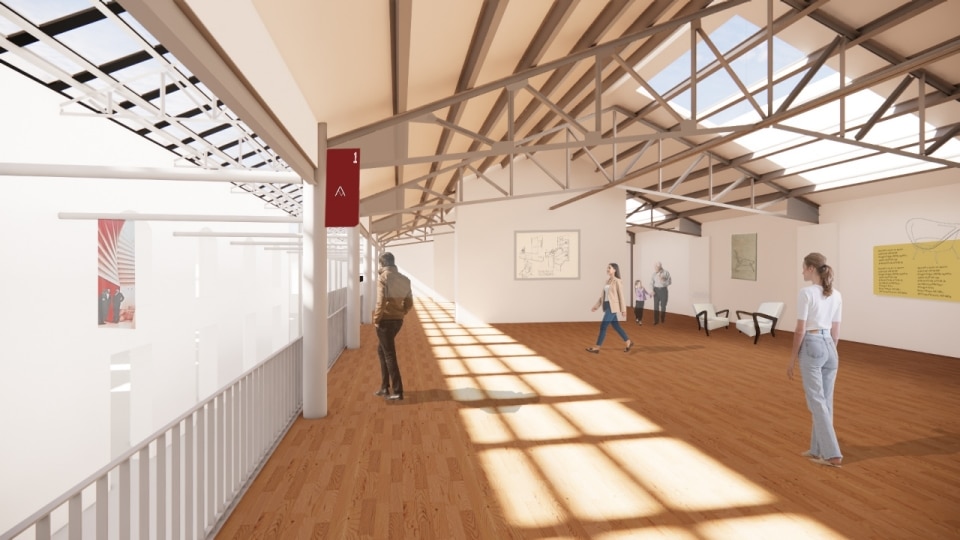
At the heart of the project is its curatorial vision, entrusted to historian Fulvio Irace, among the foremost scholars of Gio Ponti. The framework engages with the breadth and complexity of Ponti’s thinking, positioning it as both historically grounded and urgently relevant today. As Fondazione ADI president Umberto Cabini notes, this is a natural choice for a figure who conceived design as “a synthesis of industry, culture, society and communication”.
The exhibition design by Matteo Vercelloni further extends the dialogue between the Compasso d’Oro Historical Collection and contemporary design discourse, reinforcing the museum’s role—since opening in 2021—as a platform for research and cultural production.
Construction is scheduled to begin in summer 2026 and conclude by December. A public seminar planned for September will help shape the project’s content through a collective process involving institutions, companies, scholars and the Ponti Archive.