

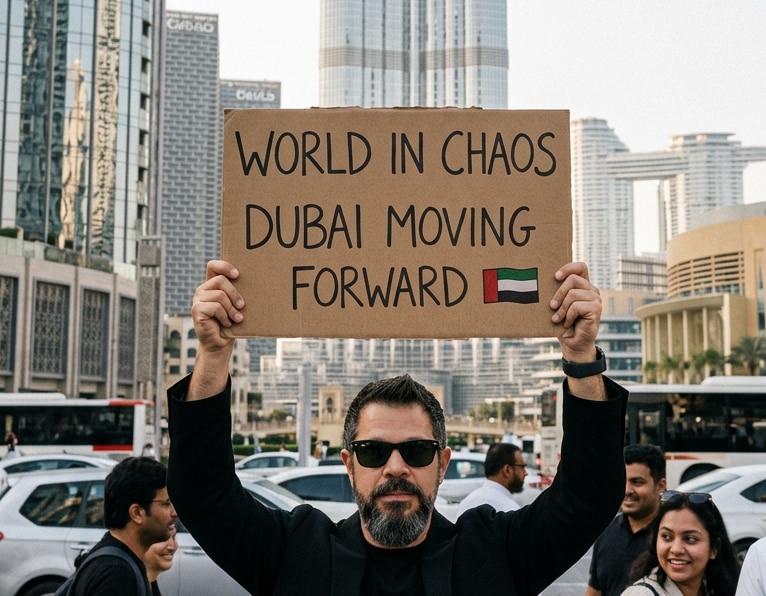
As war in the Middle East unfolds, the United Arab Emirates continues to build, design, and operate—revealing how Dubai’s architecture and creative industries are reacting in real time.
Despite the conflict, most construction projects are moving forward. Developers and contractors are largely maintaining a “business as usual” approach. Aldar, the Abu Dhabi property developer, confirmed that activity continues across all its sites, including projects in Dubai, Abu Dhabi, and Ras Al Khaimah.
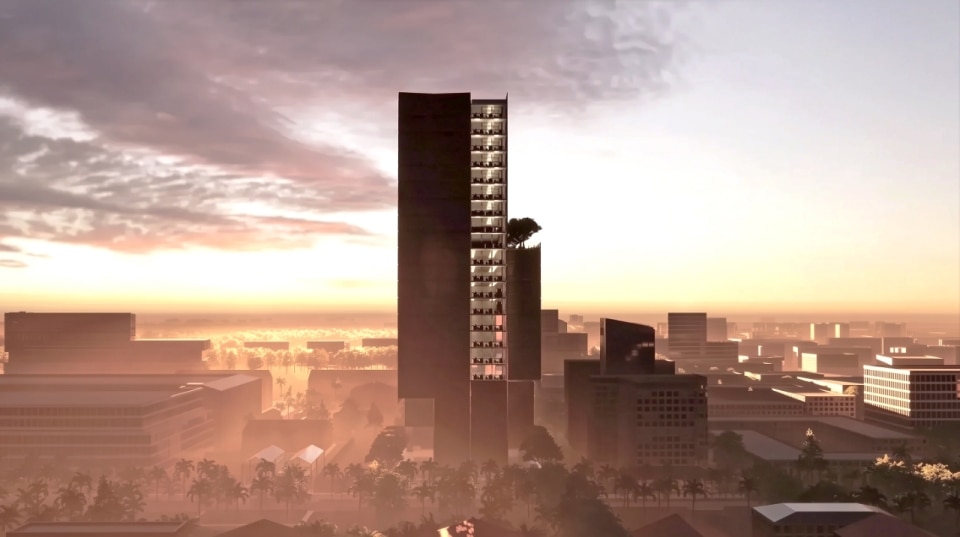
“The situation is clearly tense, and that naturally brings a level of caution,” say Stefania Digregorio and Mirko Sala Tenna, founders of Dubai-based architecture and design firm Etereo. “Some clients are reassessing timelines or taking a more considered approach, but overall, the market hasn’t stopped. Projects are still moving—just with more awareness of the context.”
Projects are still moving—just with more awareness of the context.
Stefania Digregorio e Mirko Sala Tenna, Etereo
Uncertainty remains high, and architects and designers across the UAE are adapting both their operations and creative processes to this unstable period. What emerges is a dual condition: a continued push toward rapid, high-end development—fueled by economic diversification—alongside growing exposure to regional instability, supply chain disruptions, and investor caution.
The conflict, with no clear end in sight, has also begun to challenge global perceptions of the UAE as a secure and stable hub for business and life.
Between resilience and caution
“We haven’t really seen a slowdown in our projects so far,” says Firas Alsahin, co-founder of Dubai-based 4SPACE Design. After relocating from Syria, Alsahin describes Dubai as a place where “if you are willing to work, adapt and stay consistent, you can build something meaningful.”
“In fact, we’ve signed new projects even within the past week,” he adds. “That reflects continued confidence in the market.” Drawing parallels with the Covid-19 pandemic, Alsahin believes the UAE will once again transform adversity into opportunity. “The country has a unique ability to turn challenges into momentum. Those who stay, adapt and believe will grow with it.”
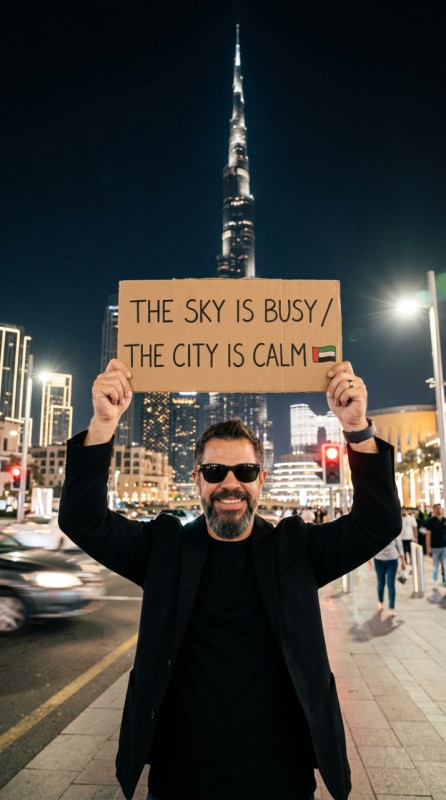
Still, he notes a shift at later stages of development: “Once projects move from design into tender and contractor appointment, there is more of a ‘wait-and-see’ approach. Clients are taking time to assess cost fluctuations and broader uncertainties.”
Lebanese carpetmaker Iwan Maktabi—known for its contemporary carpets and collaborations with regional and international designers—opened its Dubai flagship in a three-story villa on Jumeirah Beach Road in November 2024, during the last war in Beirut.
A place where you feel safe in a region that is unsafe—an unusual dichotomy.
Mohamed Maktabi, co-founder and CEO of Iwan Maktabi
Today, co-founder and CEO Mohamed Maktabi finds himself navigating a second conflict, this time from his new base in Dubai, while war continues simultaneously in Lebanon.
“Five years ago, we moved from Beirut to Dubai after the Beirut Port Blast,” he says. “We opened our design lab in Alserkal Avenue and then our flagship in Jumeirah. As destiny would have it, we now face uncertainty again—but on a different scale.”
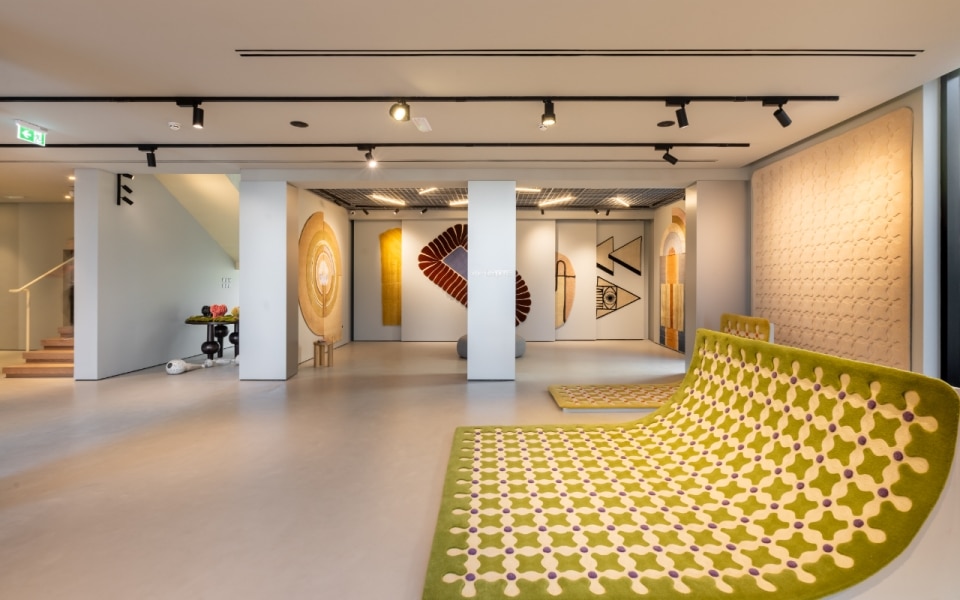
He describes Dubai as “a place where you feel safe in a region that is unsafe—an unusual dichotomy.” While stress levels are lower than in Beirut, the situation still requires adaptation. Drawing on past experience, the company prioritizes employee safety, community support, and a forward-looking mindset.
“We use downturns to sharpen our creativity and operations,” he explains. “Nothing lasts forever—and we are confident we will recover quickly.”
A market that adapts rather than stops
Jonathan Ashmore, founder of ANARCHITECT, confirms that construction across his projects remains steady. “We are seeing some logistical adjustments, particularly in shipping and delivery timelines, especially for furniture procurement,” he says. “But our practice remains resilient, partly because we prioritize locally sourced materials. Encouragingly, clients continue to show confidence.”
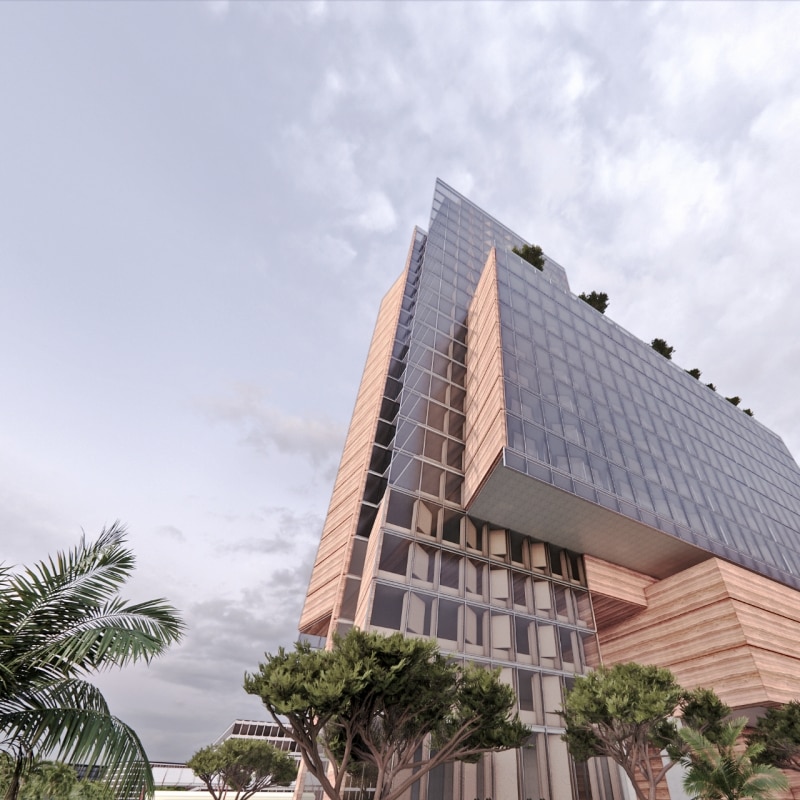
Ashmore suggests that instability is not halting architecture, but redirecting it. “What we are witnessing is not contraction, but redistribution. Globally mobile wealth is becoming more strategic and long-term, and this directly shapes our commissions.”
While international headlines often suggest a collapse of Dubai, those working on the ground describe a more complex reality.
Having witnessed the UAE’s exceptional resilience firsthand over the past fifteen to twenty years, we have little doubt that its market will bounce back.
Jonathan Ashmore, ANARCHITECT
“We are living in two realities at once,” say Neydine Bak and Dewald Struwig of Verhaal. “On one hand, Dubai feels safe, structured and calm—we continue to work and move projects forward. On the other, we are fully aware that we are in a region experiencing deep uncertainty.”
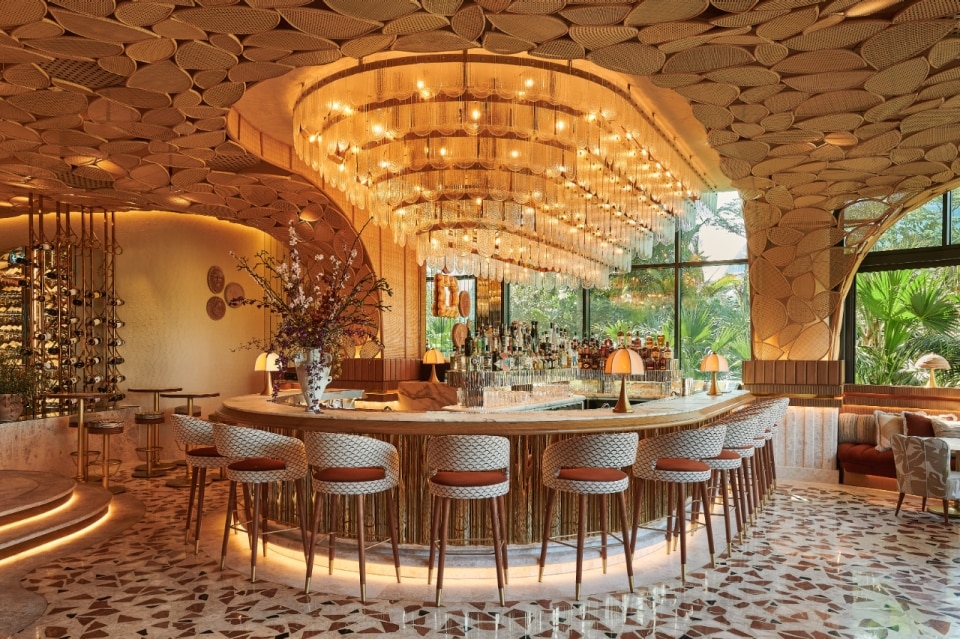
This is not the first time the UAE has faced major disruption. From the 2008 financial crisis—which severely impacted Dubai’s real estate market—to the Covid-19 pandemic and the floods of April 2024, the country has repeatedly demonstrated its capacity to recover.
For many long-term residents, this moment is no exception.
As Ashmore concludes: “Having witnessed the UAE’s exceptional resilience firsthand over the past fifteen to twenty years, we have little doubt that its market will bounce back.”
Opening image: Firas Alsahin, co-founder of Dubai-based 4SPACE Design