

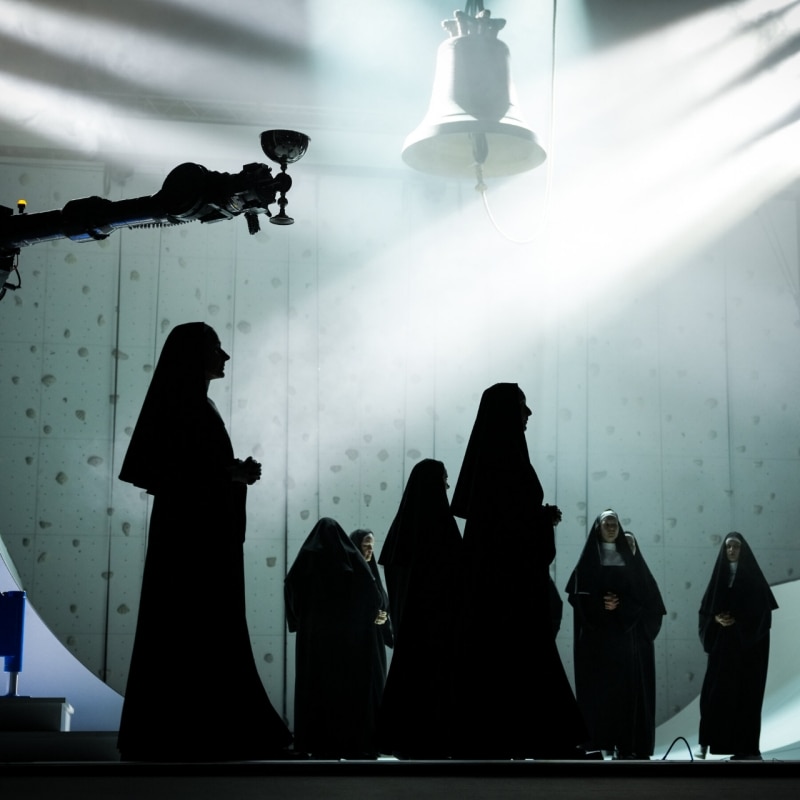
There is a gesture that has been recurring for months in the videos circulating on TikTok: a young woman covers her hair with a dark veil, wears a long dress buttoned up to the neck, and walks silently through a bare space.
The visual reference is unmistakable — the nun, the cloister, the rule — yet the context is anything but devotional. It is called nuncore and, more than a passing trend, it operates as a new visual language emerging where contemporary image culture meets an urgency it can no longer ignore: withdrawal. Or the withdrawal of the body.

The term nuncore — an ironic fusion of nun and hardcore — reactivates the codes of female monastic dress (veil, wimple, long skirt, matte fabrics, absence of ornament) and grafts them onto a secular context, from TikTok reels to Pinterest boards.
The palette is restrained — primarily black, grey and white — and the essential garments include white shirts, long skirts or dresses, and sharply cut tailoring. It is an austere minimalism: very few embellishments, if any, and no shiny or patterned fabrics.
@ruuvsisprocrastinating lapsed catholic nurse nun core 🤳🤳🤳 #woreiwore #fitcheck #outfitinspo #autumnoutfits #fyp ♬ WHERE IS MY HUSBAND! - RAYE
Rosalía has played a decisive role in bringing this aesthetic beyond online niches. With her latest album Lux, the pop star moves between sacred and profane, medieval mysticism and relic culture, sacred hearts and evangelical quotations such as Ego sum lux mundi. In the album’s promotional imagery, veils, capes and structured textiles envelop her body without revealing it.
In this sense, Lux has given visible form to a widespread intuition: today, covering up can be more radical than nudity. Within an economy of the gaze founded on the body’s total accessibility — its constant availability for observation and judgment — nuncore introduces a rupture in the flow and aligns with a broader constellation of contemporary practices that could be described as voluntary subtraction.
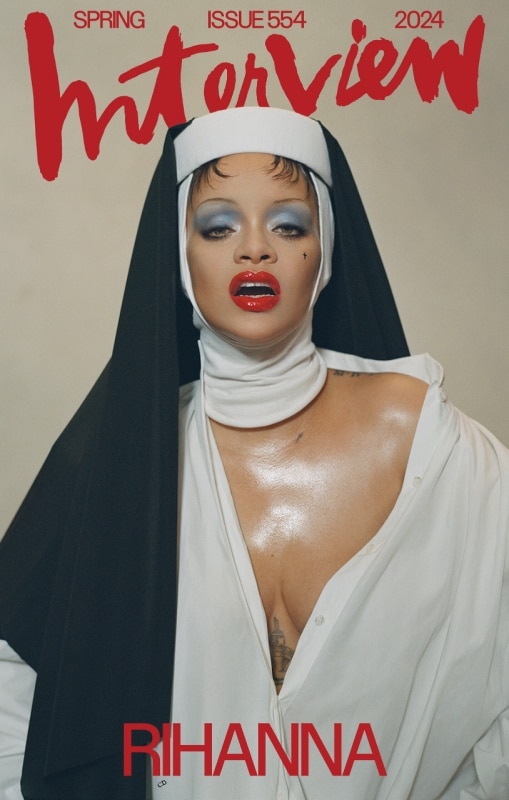
Digital detox, quiet luxury, the return to the analog, aesthetics of silence: all are symptoms of a deep fatigue with the regime of permanent visibility. Significantly, many of these imaginaries are emerging precisely on TikTok, the platform that more than any other has radicalized the logic of exposure.
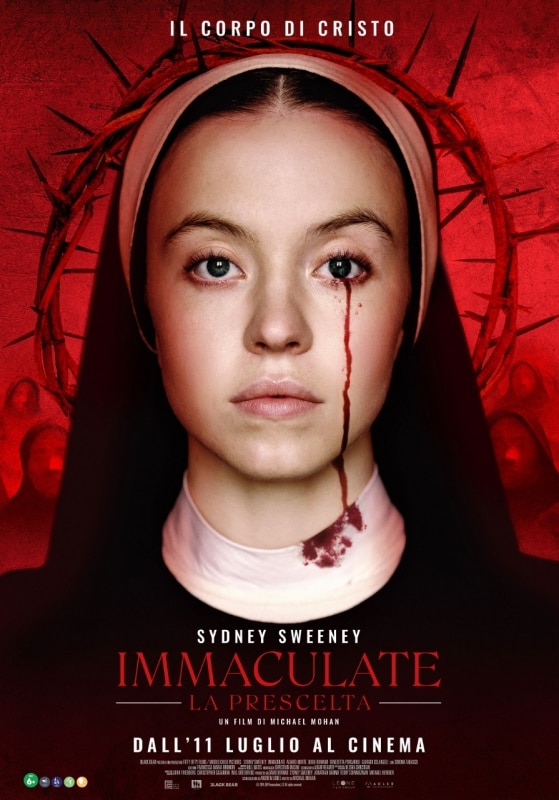
Finally, the gender dimension cannot be ignored. Nuncore is a predominantly female phenomenon, and part of its force lies in the reappropriation of a historically ambiguous symbol. The nun’s veil has, across centuries, signified both submission and power, renunciation and authority: medieval abbesses governed territories and assets, and the cloister was often the only space in which women could access written culture.
Nuncore reactivates this ambivalence. It does not choose between freedom and constraint; rather, it reveals how every mode of appearance is always both.
Opening image: Florentina Holzinger, Sancta, 2024. Photo Nicole Marianna Wytyczak