

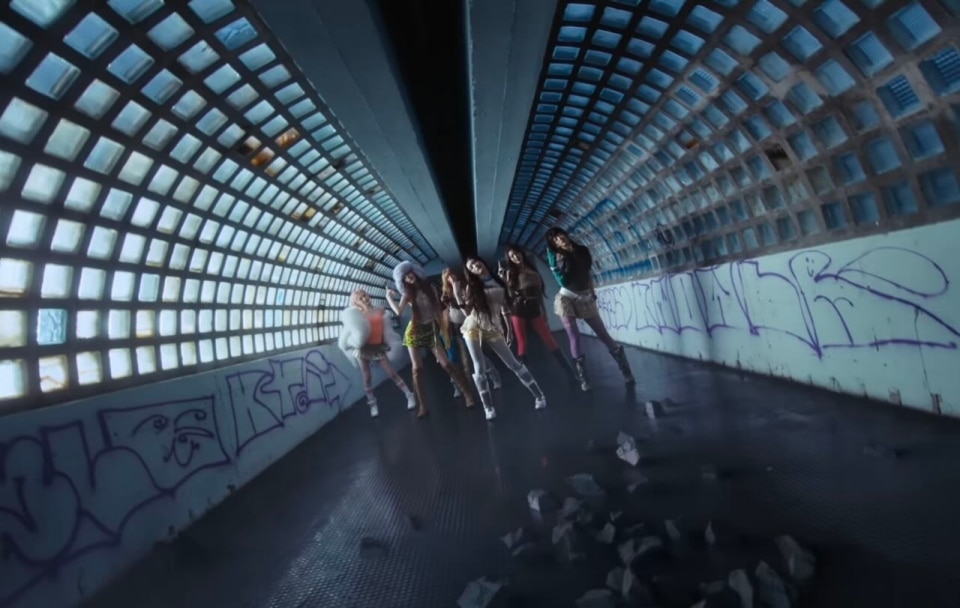
With 12 million albums sold worldwide, consistently sold-out tours, and multiple singles landing in Spotify’s Top 10, Ive are now one of the most popular acts in K-pop—the South Korean genre that blends pop, hip-hop, R&B, and electronic music.
This time, however, it’s not the choreography or the glossy visual aesthetic typical of their videos that’s drawing attention, but the setting: their latest single, Bang Bang, unfolds inside a gigantic Brutalist residential complex on the outskirts of Trieste.
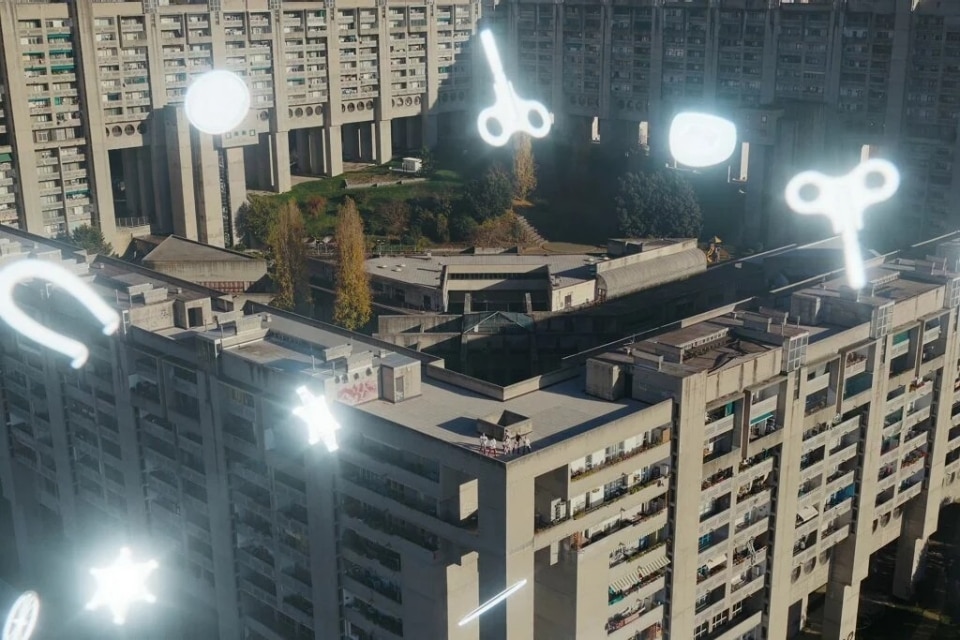
Home to 468 apartments and roughly 2,500 residents, with as many housing units arranged along open galleries and covered corridors, the Rozzol Melara district sits about 4 kilometers from the city center and feels almost like a Hunger Games-style backdrop spread across 89,000 square meters.
Seen from above, it’s composed of two L-shaped slabs, each side stretching 200 meters, one twice the height of the other. Together they enclose a vast shared outdoor space—the concrete-framed plaza where Ive perform their choreography. Though now disused, this area once housed public amenities including a school complex, a library, a post office, and an amphitheater.
Built between the late 1960s and early 1980s, Rozzol Melara is a pure example of Italian social housing: a local interpretation of the Brutalist legacy developed in suburban areas to create “cities outside the city” and respond to the postwar housing boom.
For some, it’s one of Trieste’s worst neighborhoods. For others, a striking film set. The district—and Ive’s video—surpassed 10 million views in just two days, thrusting Trieste before a global audience. And it’s not even the first time: Rozzol Melara also starred in Tuta Gold, the music video for the song Italian artist Mahmood brought to Sanremo 2024.
Shot in November 2025, the Bang Bang video was produced with support from the Friuli Venezia Giulia Film Commission – PromoTurismoFVG and the Municipality of Trieste, with permits and collaboration provided by Ater Trieste.