


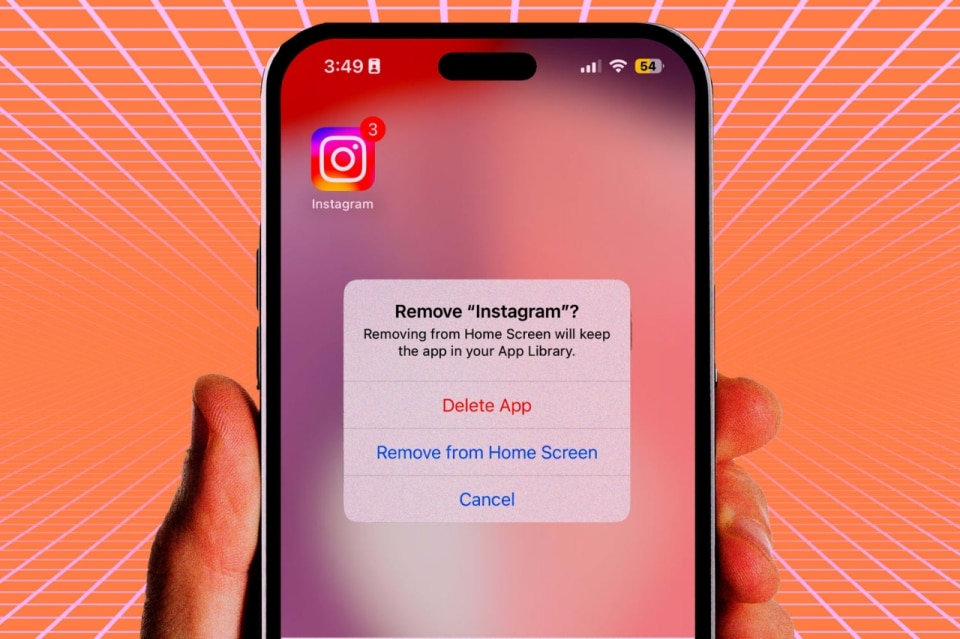
It’s hard to feel nostalgic about the early days of social media. From the start, we sensed how these platforms could bring out the worst in us: political arguments with people we barely knew, travel photos posted to spark envy among those stuck in the city, and pages along the lines of “People who say goodbye and then walk in the same direction.”
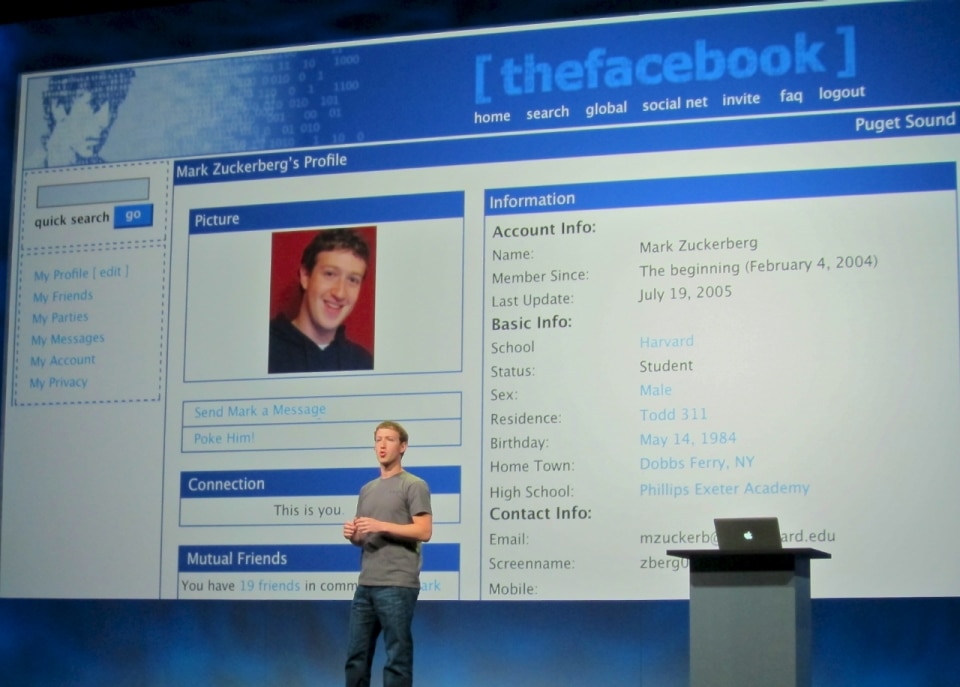
Not everything was worth seeing — or posting. But at least we, the users, were the undisputed protagonists of Facebook, Twitter (launched in 2004 and 2006, respectively), and a few years later Instagram (2010). That was precisely what drew us in: these networks really did resemble “digital squares,” expanding or sustaining our social ties in a very literal sense.
From friends’ feeds to an endless broadcast
Fast-forward twenty years and the picture has changed dramatically. My personal contacts have all but vanished from my Facebook feed, replaced by pages with thousands of likes thriving on the controversy of the day, ads occupying half the available space, videos of politicians and public figures reposting the most polished clips of their TV appearances, and a flood of AI slop — ultra-low-quality content generated by artificial intelligence.
It’s even worse on Instagram, where personal connections have nearly disappeared, replaced by an algorithmic selection of creators, educators, comedians, journalists, celebrities, singers, and countless others I never chose to follow.
More than a social network, Instagram — like TikTok — now resembles a kind of hyper-accelerated, smartphone-sized television. I scroll through it with less interest than when I used to channel-surf. The result: my weekly “screen time” report shows a steady decline in time spent on social platforms.
Fewer people are posting — and that’s no coincidence
What might seem like personal anecdote is backed up by recent data. Charts shown by Mark Zuckerberg last April during US antitrust hearings revealed that the share of content posted by our contacts on Facebook fell from 22% in 2023 to 17% in 2025. On Instagram, it dropped from 11% to 7%.
More than a social network, Instagram — like TikTok — now resembles a kind of hyper-accelerated, smartphone-sized television.
That means 83% and 93% of what we see on Meta’s platforms now comes from pages, news outlets, ads, and creators. Calling them “social networks” feels increasingly anachronistic.
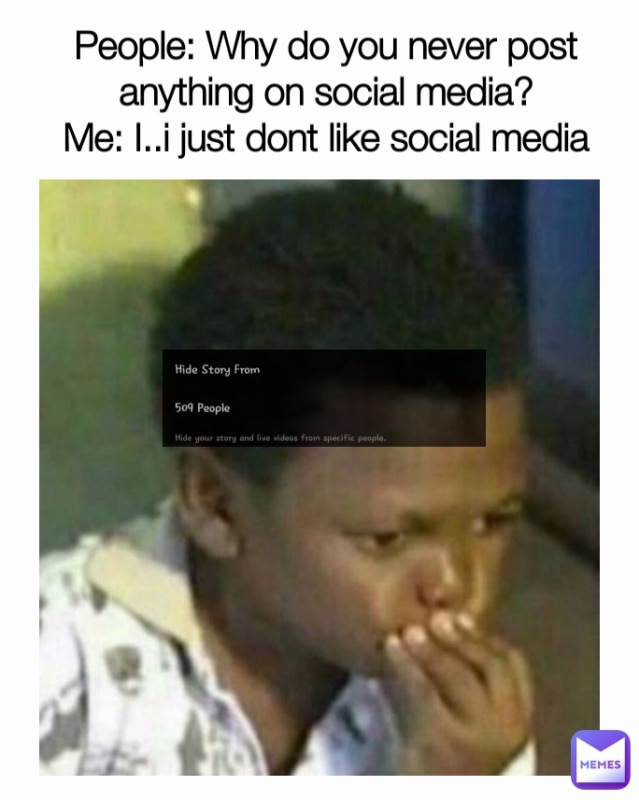
These figures align with data showing that nearly a third of users post less than they did just a year ago. It’s a vicious circle: less space for personal content means less engagement, which in turn reduces the incentive to post, further ceding ground to creators and branded pages.
Plenty of users, less time: the metric platforms fear most
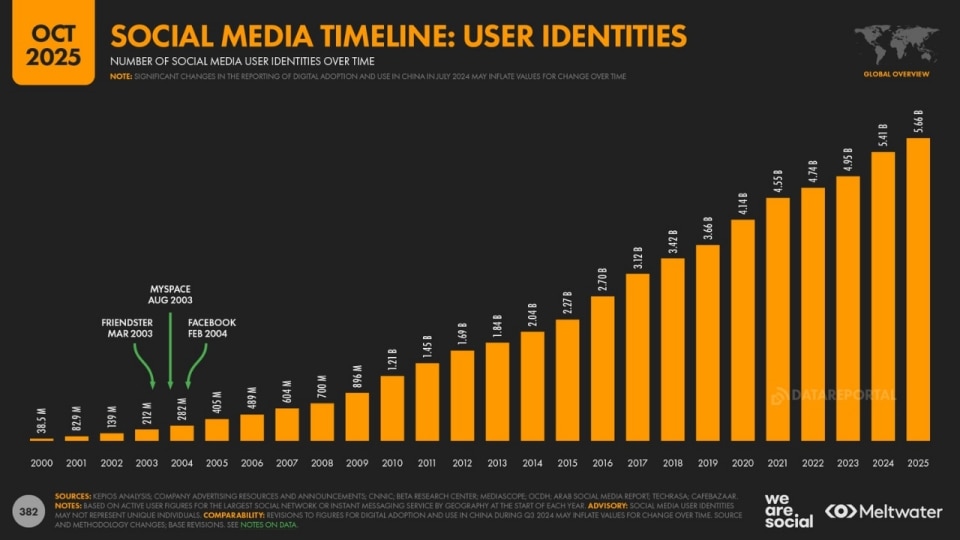
Participation is declining, but social media hasn’t been abandoned. By the end of 2025, active users across Facebook, Instagram, TikTok, and X reached a record 5.6 billion — nearly everyone connected to the internet worldwide (duplicate accounts and bots aside).
Yet growth now comes almost entirely from developing markets in Africa and Asia, while Western markets have stalled or begun to reverse. In the US, the average number of social platforms per person fell from 3.2 in 2023 to 2.6 last year — a drop partly linked to the exodus from Twitter after Elon Musk acquired it and rebranded it as X.
In Western Europe, user numbers appear to have peaked. Italy is estimated to have lost 600,000 social media users in a year (-1.4%), while in Germany the number of teenagers active on Instagram and especially TikTok has declined sharply — from 66% to 54%. If confirmed, it would be the first concrete evidence of the long-discussed retreat of teenagers from social media.
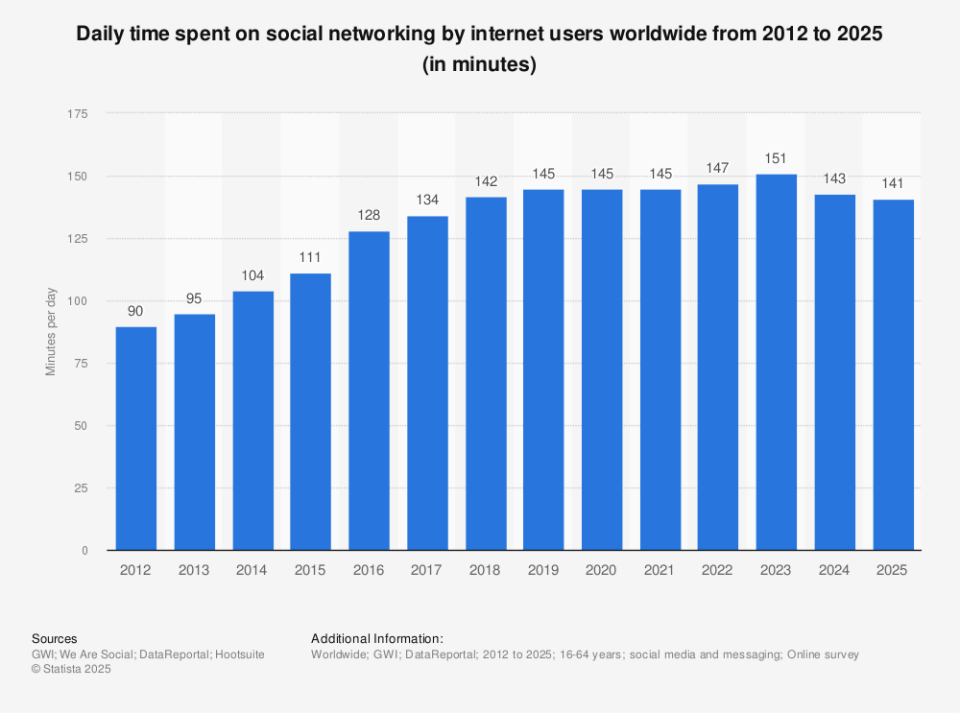
The most significant data, however, concerns time spent — the metric platforms care about most. According to research by GWI based on 250,000 users across 50 countries, daily time spent on social media has been declining since 2022, when it reached 151 minutes per day, falling to 143 the following year and 141 in 2024.
The age of slop
Pinpointing causes is difficult, but two stand out. One is the invasion of “slop.” Beyond its role in political misinformation, it has eroded our ability to be surprised — even by unusual animal videos, which increasingly turn out to be AI-generated. My personal breaking point was a video of a lioness handing her cub to a human to “save it” from the hardships of the savannah. Slop may be a boomerang: maximizing short-term engagement while gradually driving users away.
More toxic platforms, more exhausted users
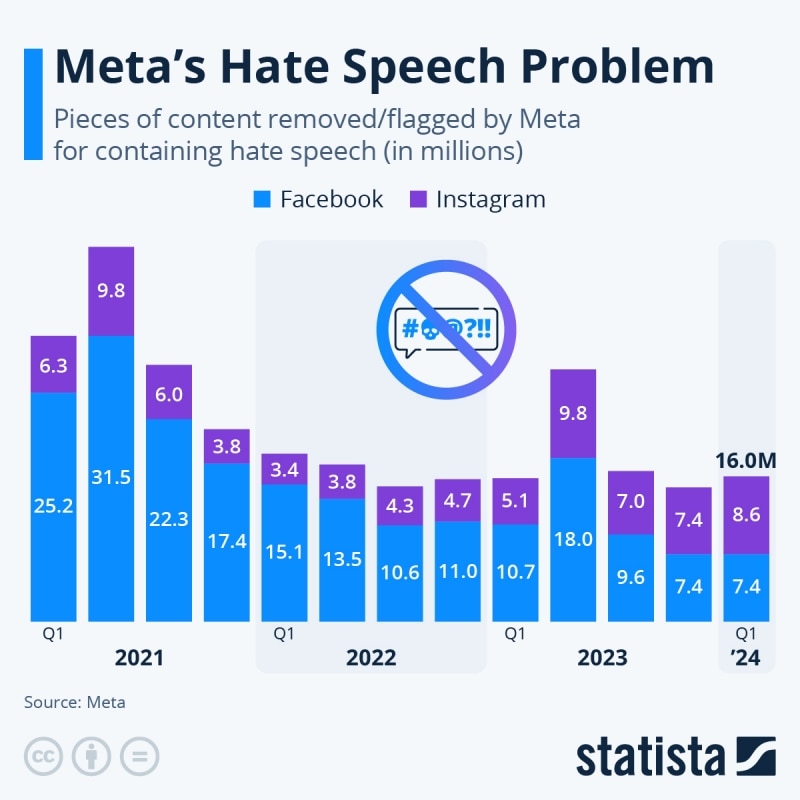
Another likely cause is the dismantling of moderation policies since 2023, allowing trolls, conspiracy theorists, and extremists to flourish. According to research by GLAAD, 72% of Meta users have noticed an increase in hate speech toward previously protected groups, and 92% say they feel less protected from harmful content.
Giving trolls free rein — in the name of a misguided interpretation of free speech — may boost participation among power users who thrive on conflict, but it likely alienates the majority who want to avoid toxic discourse.
These aren’t mass arenas, but more like clubs — invite-based spaces with rules, where people remember you.
As Noema Magazine notes, user engagement is evaporating and average interaction rates across major platforms are rapidly collapsing: posts on Facebook and X now reach just 0.15% average engagement, while Instagram has recorded a 24% year-on-year decline. Even TikTok has begun to show signs of stagnation. People no longer connect or converse on social media as they once did; they simply drift through the slop.
From this perspective, platforms are rapidly ceasing to be places where we seek information or truly spend time socially. Instead, they are becoming a stream we scroll through absent-mindedly while waiting for the subway or for the pasta to cook — with the same level of engagement we once had, years ago, reading the shampoo label in the bathroom just to pass the time.
We’re not leaving the internet — we’re moving elsewhere
In short: we’re still on social media, but mostly out of habit. Its decline won’t come with a bang, but with increasingly distracted scrolling, driven by platform “enshittification” — the shift from human networks to content streams dominated by creators and AI-generated noise. These “new media” are now over twenty years old, and struggling to reinvent themselves.
This doesn’t mean we’re going offline. People still share and debate online, but increasingly in spaces shielded from algorithms and public scrutiny: WhatsApp group chats, Telegram channels, Discord servers, Substack newsletters, and Reddit forums.
"These are not mass arenas, but they look more like clubs, invitation-only spaces where you have to abide by rules and where people remember you," Noema further reads. "What is sold here is more a sense of proximity than a product, and the atmosphere here is more intimate, slower and more reciprocal. In these spaces creators do not chase virality but cultivate trust."
From mass social media to digital clubs
From Discord to newsletters, from Reddit to user-governed niche networks like Mastodon (and to a lesser extent Bluesky), we’re not becoming less active online — we’re fragmenting into many smaller spaces that feel more aligned with us than algorithmically managed digital squares crowded with trolls and controlled by owners focused solely on extracting economic value. It took time, but perhaps mass social media is finally beginning to loosen its grip on society.