


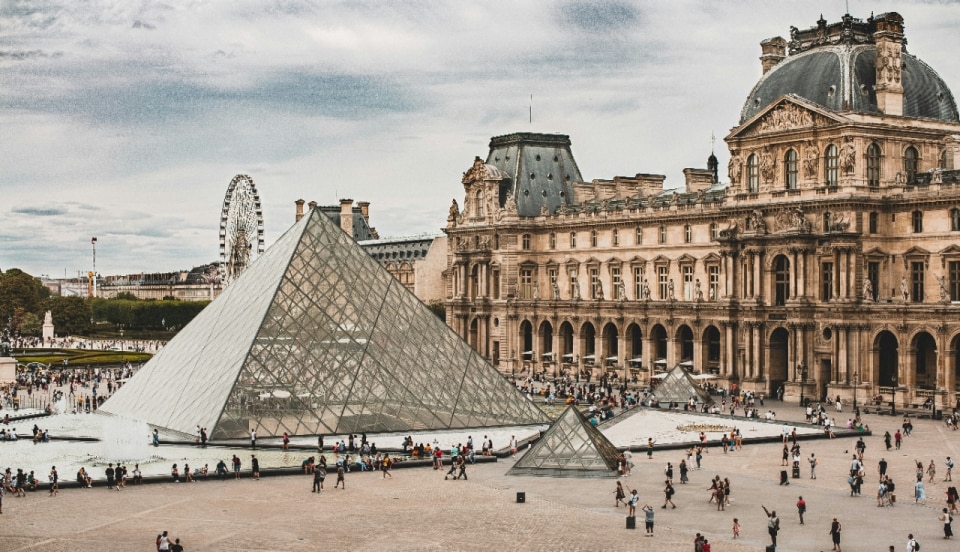
We’ve told you before: the old Louvre can no longer keep up. And by “old”, we now have to include even Ieoh Ming Pei’s Pyramid, not yet forty years old but already under strain. Under the weight of globalization and overtourism, this high-tech icon, immortalized by films and TV series, now needs new supporting infrastructure to handle the overwhelming crowds. That’s the premise behind the international competition “Louvre – Nouvelle Renaissance,” launched in June 2025. In October, President Emmanuel Macron revealed the five finalist teams.
The jury, chaired by Marc Guillaume, Prefect of Île-de-France and Paris, reviewed more than one hundred submissions – two-thirds from international teams – and selected five finalists that read like a who’s who of contemporary architecture.
Amanda Levete Architects (AL_A) competes alongside NC Nathalie Crinière, Carole Benaiteau, Vdla, and Atelier Soil. Architecturestudio and Diller Scofidio + Renfro are collaborating with Atelier Brückner, Lamaya, and Ter. Dubuisson Architecture and Sanaa have teamed up with Dan Pearson Studio for landscape design. Sou Fujimoto ateliers Paris and Sou Fujimoto architects are joined by Ducks Scéno for museography and scenography, and Vogt paysage for urbanism and landscape. Finally, Studios Architecture and Selldorf Architects are working with Scénarchie and Base studio.
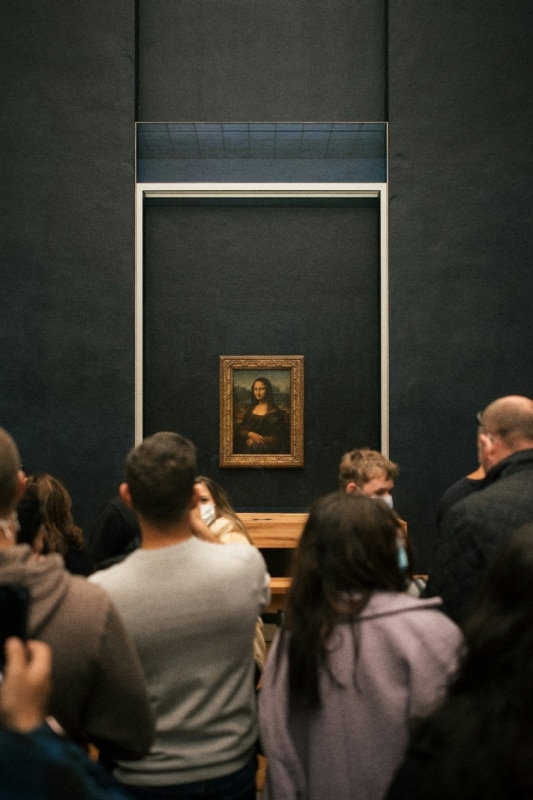
In this second phase, the competition focuses on two main themes. The first, Louvre - Grande Colonnade, rebalances access points along the palace’s eastern wings and envisions new underground spaces beneath the Cour Carrée and its adjoining gardens. These will be dedicated entirely to the Mona Lisa, relieving the overcrowded Denon Wing, currently overwhelmed by the painting’s global magnetism. The second theme, Louvre demain (Louvre Tomorrow), looks ahead, defining the museum’s future in terms of infrastructure, visitor services, and technology. Both directions intersect with the ongoing restoration of the historic monument, led by François Chatillon, Architecte en chef des monuments historiques, known for landmark projects such as the Grand Palais restoration.
Each team brings major cultural experience. Levete designed Lisbon’s MAAT and the new galleries at London’s V&A Museum. Sanaa already has “its own Louvre”, the Louvre-Lens satellite. Diller Scofidio + Renfro reimagined MoMA in New York and designed The Broad in Los Angeles and the ICA Boston. Sou Fujimoto has a long-standing relationship with the art world, including his acclaimed Serpentine Pavilion. And Selldorf Architects recently redefined the Sainsbury Wing of London’s National Gallery – originally by Venturi and Scott Brown – and has worked with the Frick Collection and David Zwirner. With such a powerhouse lineup, the outcome is far from predictable.
Opening image: Photo by Mika Baumeister on Unsplash