

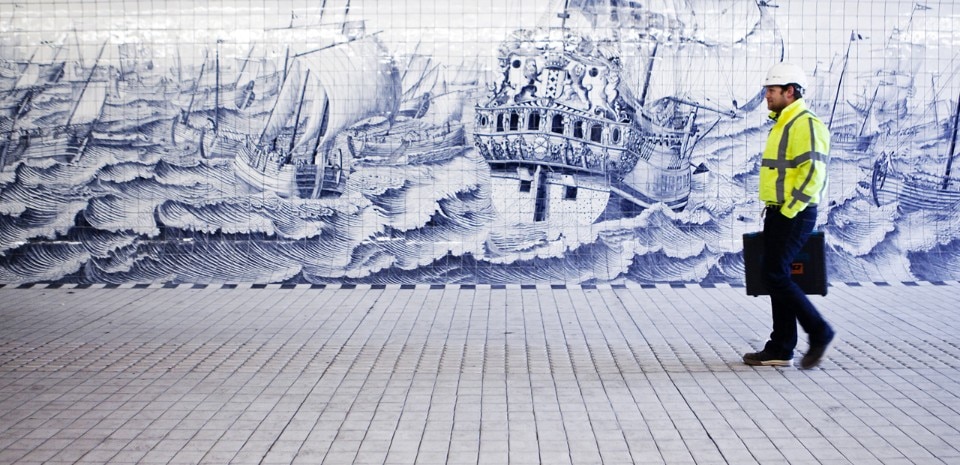
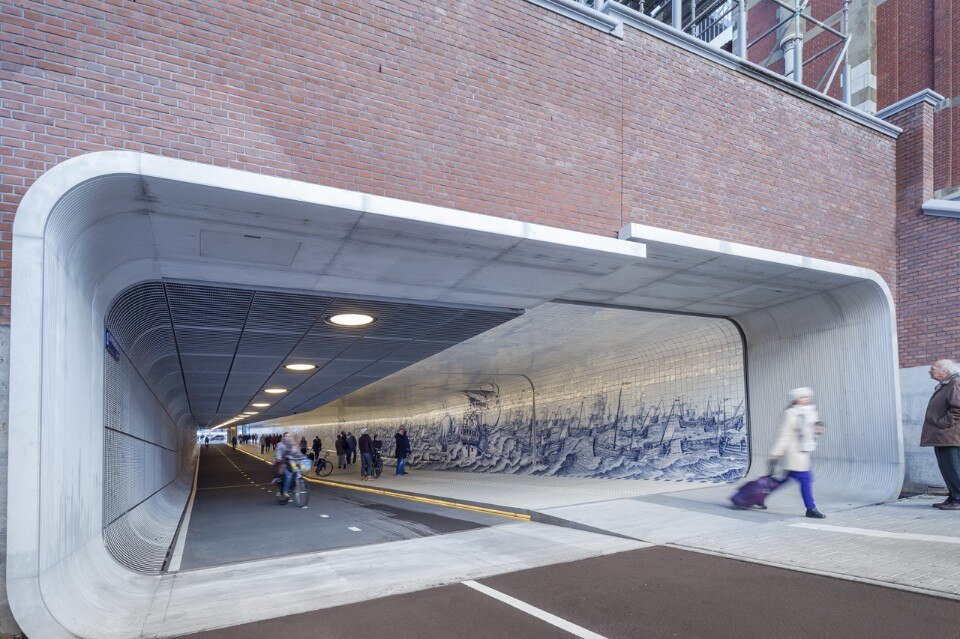
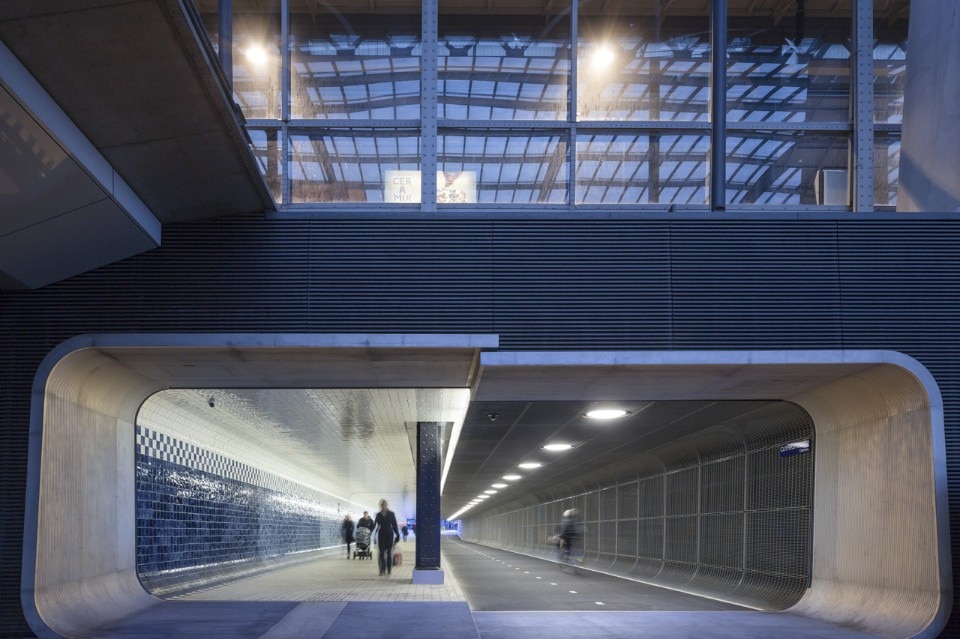
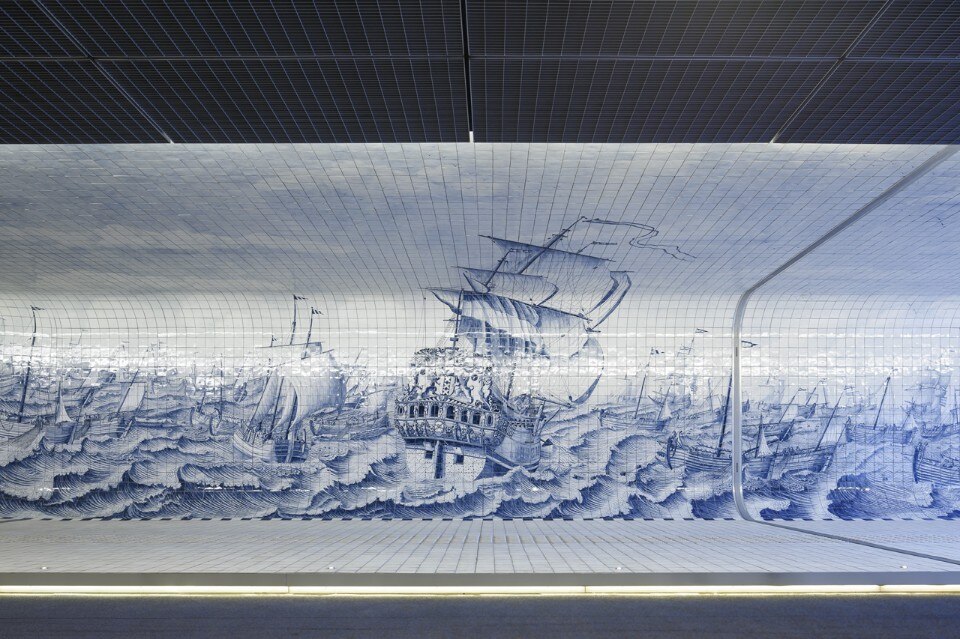
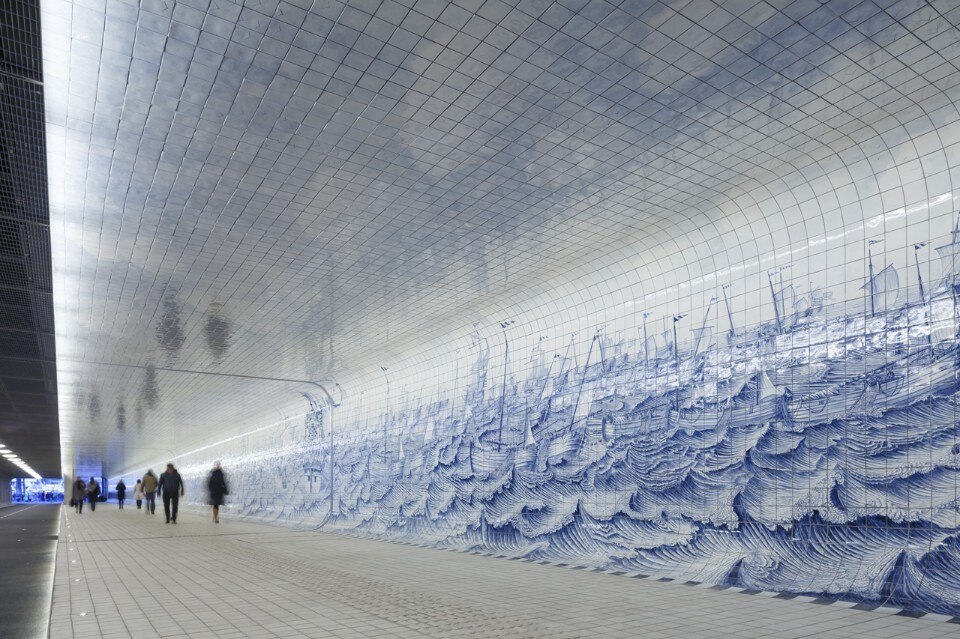
Along the footpath wall is a tile tableau designed by Irma Boom Office. The design steps off from a restored work by the Rotterdam tile painter Cornelis Boumeester (1652-1733). His tile panel depicting the Warship Rotterdam and the Herring Fleet is in the collection of the Rijksmuseum, Amsterdam. Irma Boom replaced the original crest on the stern with the Amsterdam coat of arms. The cyclist or pedestrian leaves the old historic part of Amsterdam through Cuyperspassage and heads towards ‘new Amsterdam’ in the north, or vice versa.
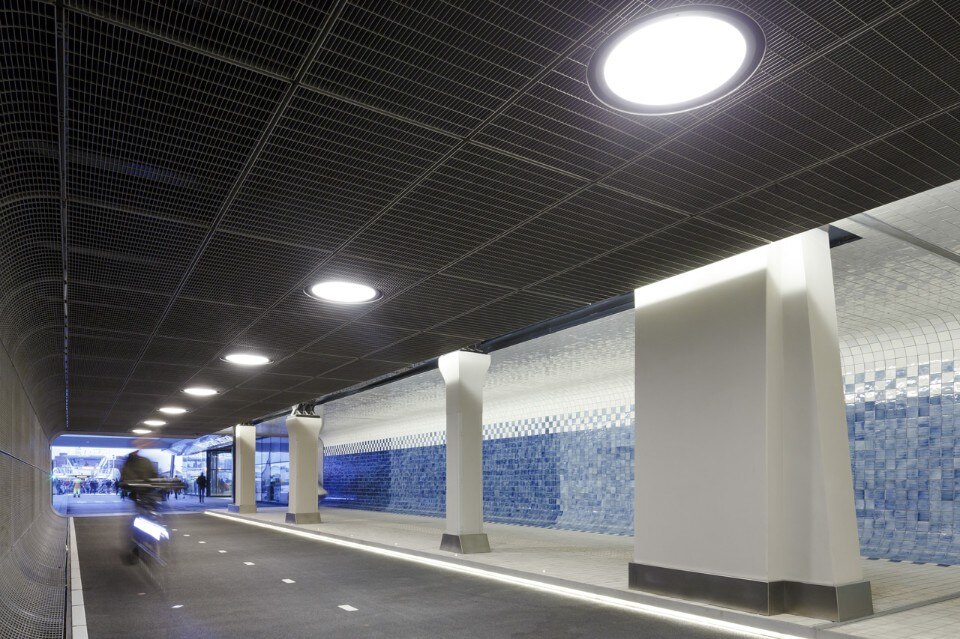
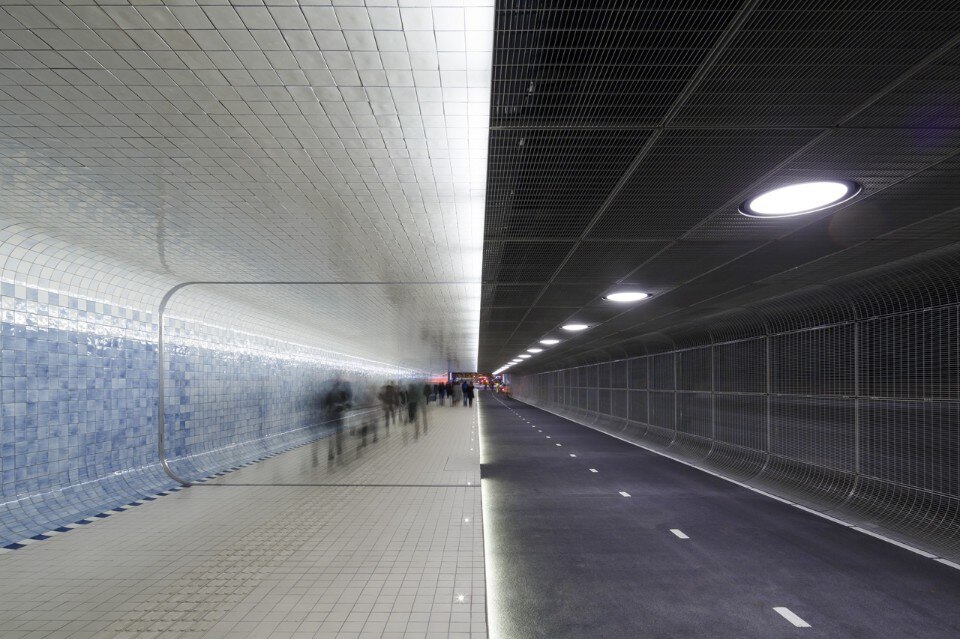
The tableau fades away towards the IJ-river, the lines of the original work gradually dissolving. Then it builds up again in an abstract form from light to dark blue, as if encouraging cyclists to slow down as the ferry comes into view. Its drawn lines and pixels also visualize the transition in art from the old to the new. The ceramic company, Royal Tichelaar Makkum, spent five years making the 46,000 wall tiles for the tableau, as well as 33,000 floor tiles, in the traditional Dutch tile size of 13 x 13 cm. In it, we see large and small merchant vessels, herring busses with nets in place, churning waves, gulls. The whole recalls old kitchens in Amsterdam canal houses, so that the tunnel is experienced as a safe place – as an urban room.
 View gallery



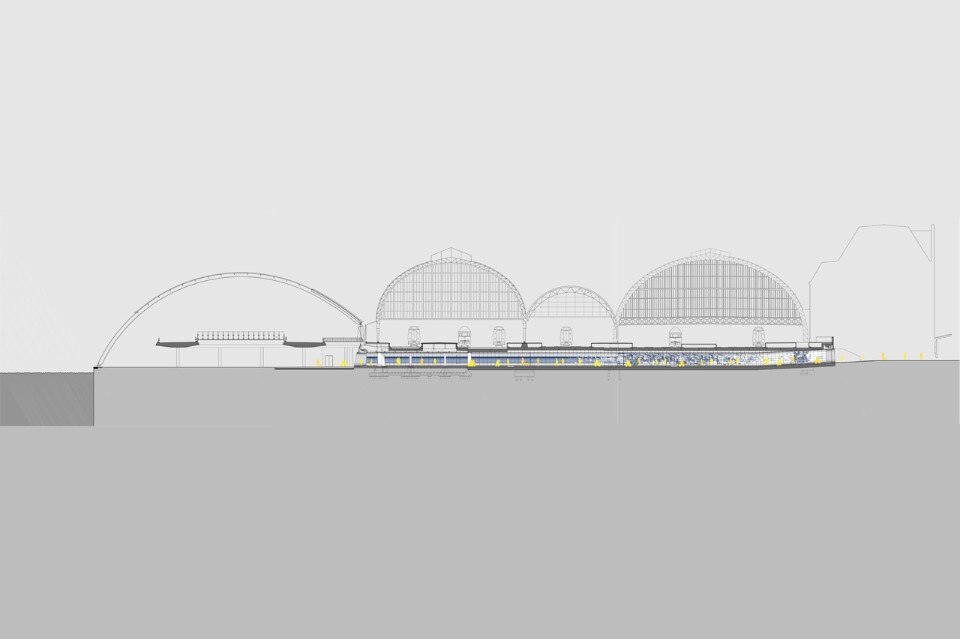
Cuyperspassage, Amsterdam, The Netherlands
Program: tunnel
Architects: Benthem Crouwel Architects
Completion: 2015