Domus Digital Archive PRO on sale

Curry Stone Design Prize 2012: CUP

Expertly using graphic design, the Center for Urban Pedagogy visually communicates complex urban-planning processes and policy-making decisions, empowering citizens: as one of the the five winners of the 2012 Curry Stone Design Prize, Domus takes a closer look at this production company of sorts.

The Center for Urban Pedagogy (CUP) collaborates with teachers and students, policy experts and community advocates, and artists and designers to visually communicate complex urban-planning processes and policy-making decisions. In CUP's hands a topic as dry and alienating as voter redistricting is distilled down into a colorful, accessible foldout brochure that becomes a source of empowerment. The subjects of CUP's projects vary greatly, but many provide practical advice to groups who lack access to such information: immigrants, public-housing residents, and at-risk youth, to name a few. CUP doesn't rest once the design phase is complete—the group also organizes community sessions and school workshops in order to help build an engaged citizenship.

Designer and artist Damon Rich and seven cofounders with diverse backgrounds in graphic design, architecture, history, public policy, and political theory, formed CUP in 1997 to investigate the basic workings of New York City infrastructure and bureaucracy. At first, their findings were published in a zine and presented in art installations. After becoming a nonprofit organization in 2002, Rich and fellow cofounder Rosten Woo started creating structured collaborations with CUP's growing network of artists and policy experts. In its first real partnership with a community organization, CUP made educational videos for Public Housing Residents of the Lower East Side (PHROLES) to use at its meetings.


Today, under the direction of Christine Gaspar, CUP is a production company of sorts, matching artists and designers with civic professionals and public school teachers, and working closely with all parties to ensure that the posters, brochures, and multimedia toolkits are well designed and useful.
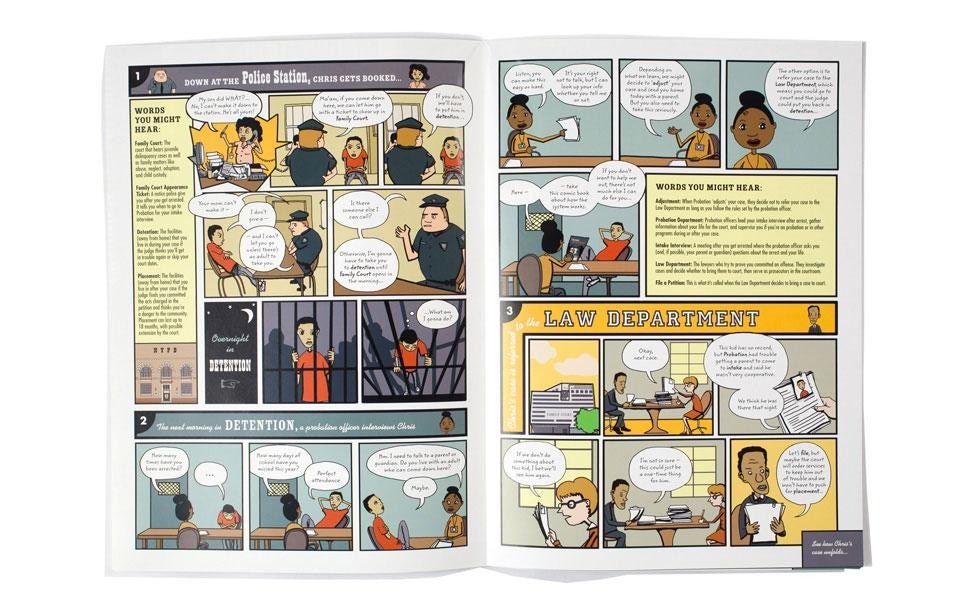
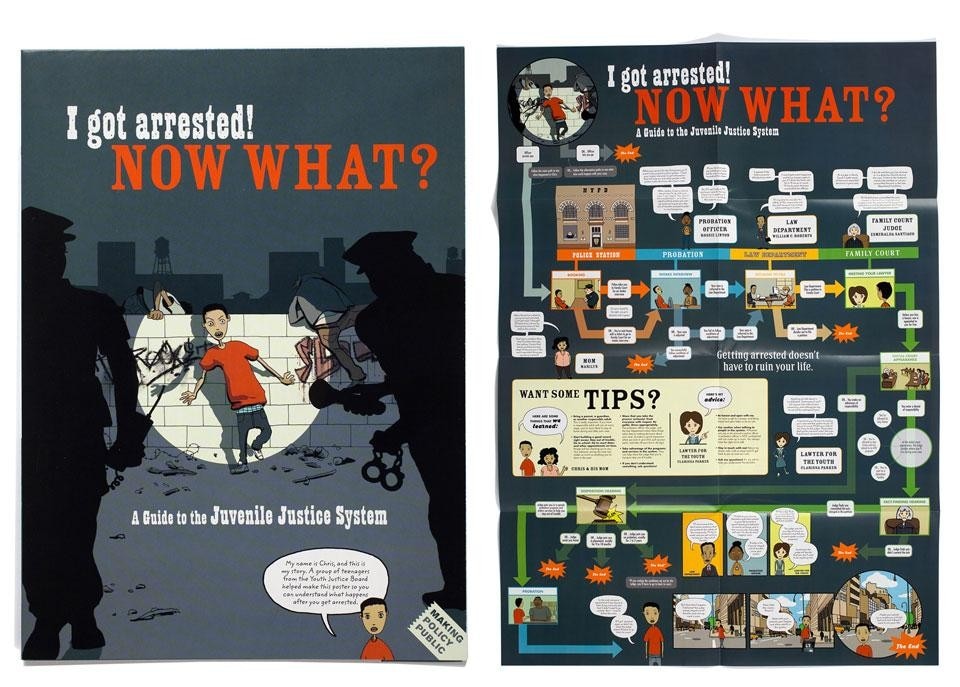
<em>I Got Arrested! Now What? </em> This project was completed by CUP, graphic novelist Danica Novgorodoff, and the Center for Court Innovation. It is a comic book guide to the NYC juvenile justice system for youth who have been arrested. It’s currently  handed out by the Department of Probation to every youth in the system, with over 30,000 copies ordered to date
I Got Arrested! Now What? This project was completed by CUP, graphic novelist Danica Novgorodoff, and the Center for Court Innovation. It is a comic book guide to the NYC juvenile justice system for youth who have been arrested. It’s currently handed out by the Department of Probation to every youth in the system, with over 30,000 copies ordered to date
Throughout the year CUP runs several community education and youth education programs, all of which emphasize collaborative design and the use of visuals to break down complex issues. An annual highlight is Making Policy Public, when CUP produces a series of four foldout posters. Past posters have included I Got Arrested! Now What?, a collaboration with the Center for Court Innovation and graphic novelist Danica Novgorodoff that helps teenagers navigate the maze of New York's juvenile justice system, and Vendor Power!, a collaboration with non-profit group The Street Vendor Project and artist Candy Chang that decodes the byzantine regulations governing New York's 10,000 street vendors.
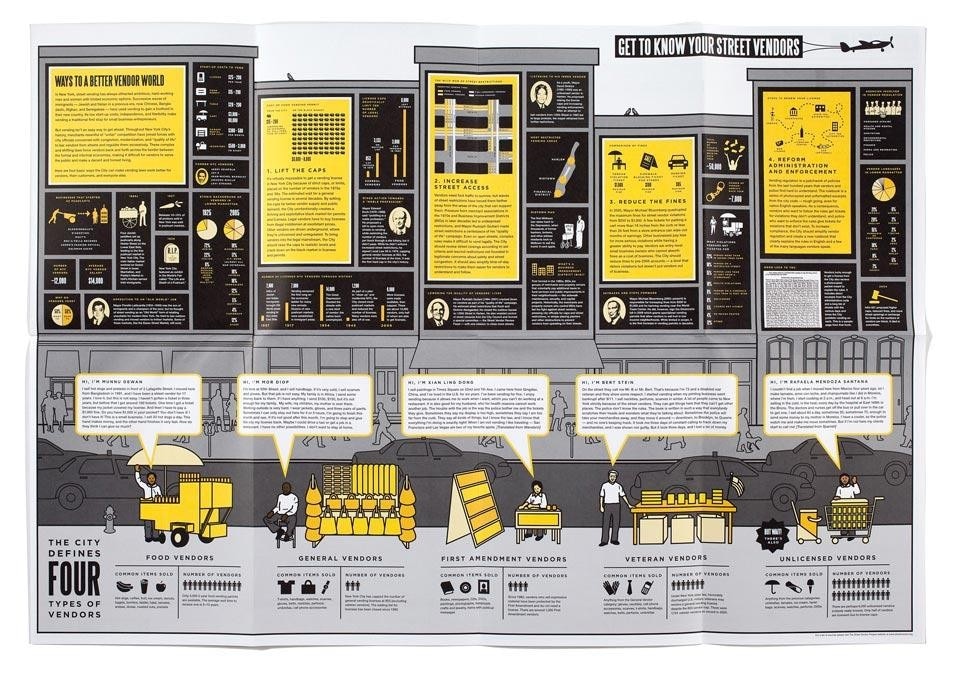
<em>Vendor Power! </em> Street vendors are often recent immigrants and in NYC they speak many languages. The poster uses mostly graphics to tell the story of the street vending laws. Where there is text it appears in five languages, the ones most common to the city’s street vendors
Vendor Power! Street vendors are often recent immigrants and in NYC they speak many languages. The poster uses mostly graphics to tell the story of the street vending laws. Where there is text it appears in five languages, the ones most common to the city’s street vendors
CUP plans to keep growing. To address the demand for its work outside of New York City, CUP is developing a toolkit to help educators in other parts of the country replicate the group's project-based educational model. CUP is also working on a customized Affordable Housing Toolkit for use by Chicago-based advocacy groups.

CUP provides a rare, mutually beneficial exchange among community organizations, advocacy groups, and designers, helping them to speak one another's languages and demystify the complexities of urban systems.
CUP provides a rare, mutually beneficial exchange among community organizations, advocacy groups, and designers
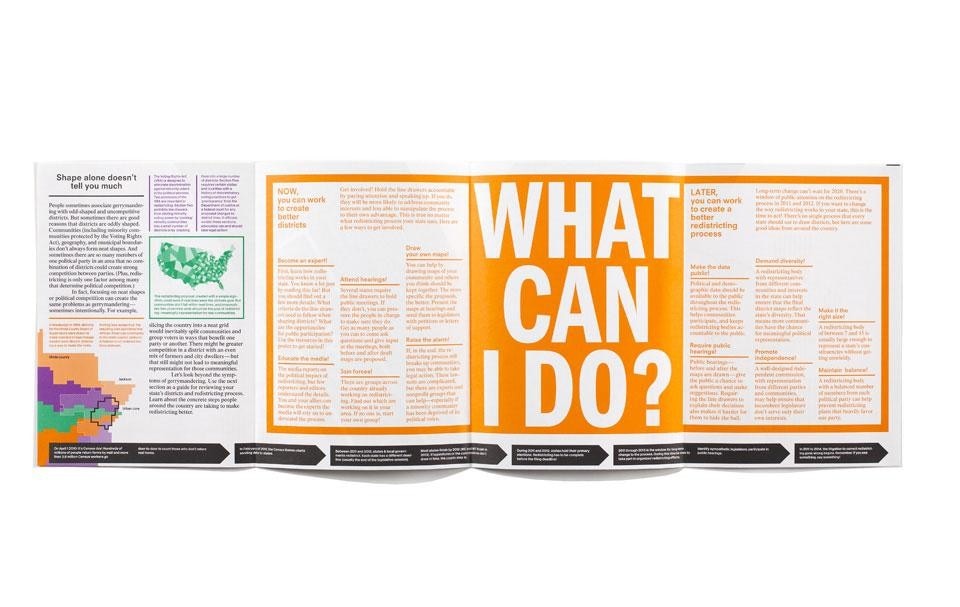
<em>Know Your Lines</em>, is a poster CUP worked on with the Brennan Center for Justice and designers We Have Photoshop. It explains the redistricting process that happens every ten years after the national census.  The poster uses maps and diagrams to explain this complex process. The audience for the project is organisers and advocates working on voting and civic access issues. It directs people to the ways they can be involved in the issue in their community. This project was distributed nationally
Know Your Lines, is a poster CUP worked on with the Brennan Center for Justice and designers We Have Photoshop. It explains the redistricting process that happens every ten years after the national census. The poster uses maps and diagrams to explain this complex process. The audience for the project is organisers and advocates working on voting and civic access issues. It directs people to the ways they can be involved in the issue in their community. This project was distributed nationally
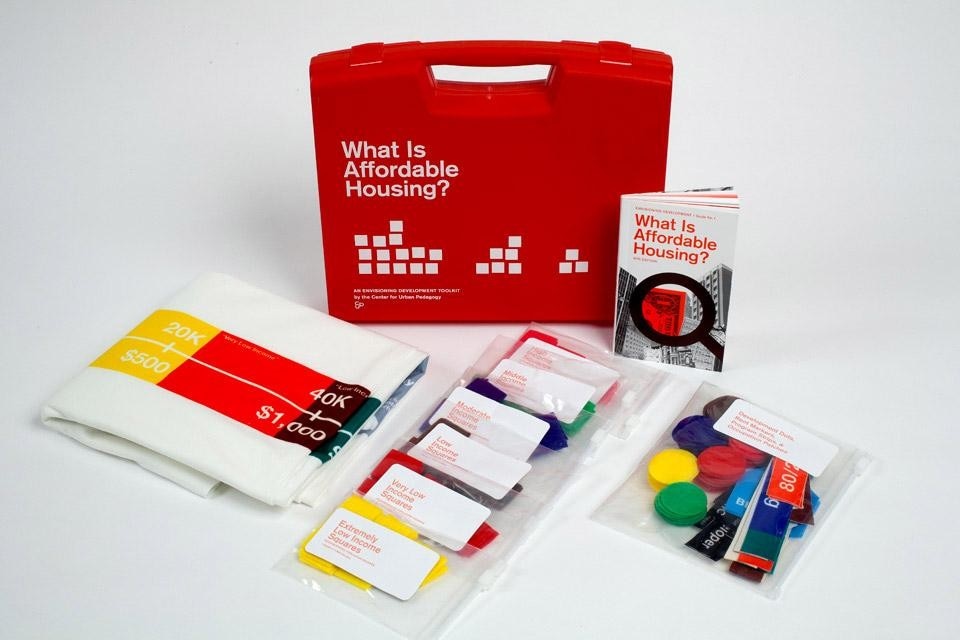
The <em>What Is Affordable Housing?</em> toolkit is used in workshops on a regular basis. Over 50 organizations have toolkits in NYC, and CUP is currently producing more units. The workshop allows residents to explore neighborhood income demographics, proposed development, and how affordability programs relate to both. It helps build their vocabulary and familiarity so they can advocate for these issues in public hearings and other settings
The What Is Affordable Housing? toolkit is used in workshops on a regular basis. Over 50 organizations have toolkits in NYC, and CUP is currently producing more units. The workshop allows residents to explore neighborhood income demographics, proposed development, and how affordability programs relate to both. It helps build their vocabulary and familiarity so they can advocate for these issues in public hearings and other settings

Latest on News

Latest on Domus

China Germany India Mexico, Central America and Caribbean Sri Lanka Korea icon-camera close icon-comments icon-down-sm icon-download icon-facebook icon-heart icon-heart icon-next-sm icon-next icon-pinterest icon-play icon-plus icon-prev-sm icon-prev Search icon-twitter icon-views icon-instagram