

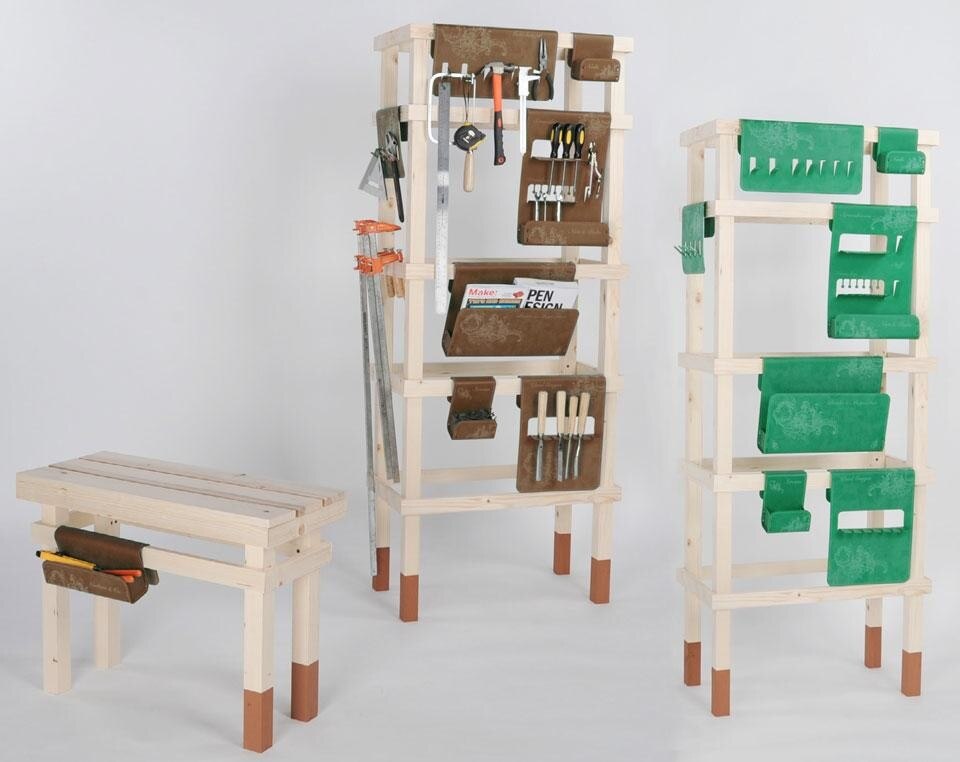
Autoprogettazione 2.0: on display
A news report from Milan
Following the fantastic response to our Autoprogettazione 2.0 global open-source design challenge, launched by Domus with FabLab Torino, the selection committee has chosen the seven projects that will be on display at The Future in the Making, in Palazzo Clerici, during the Salone del Mobile.
Filippo Mambretti and Mirko Carsana, Massimo Barbierato, Michael Tomalik, Pietro Leoni, Andreas Kowalewski, Carlo D'Alesio, and Paolo Cardini will see their projects fabricated and displayed in a temporary FabLab set up inside Palazzo Clerici. The selected designs will also be published in Domus and made available for download on our website, in acknowledgement of the project's open-source philosophy.
[Read the complete article]
An op-ed from Milan by Chiara Alessi
We asked designers which and how many of their projects failed to make it to this year's carousel, and why. We asked if it was true that the awkward attempts to show off — with which some companies reacted to the struggling financial situation in recent years — have been followed by a more restrained attitude, and an honest tightening of the production belt. We also sought to discover which of the companies that will be present at the Salone are focusing on quantity, which are focusing on quality, and when will these two factors be combined or pitted against each other.
[Read the complete article]
Back to earth
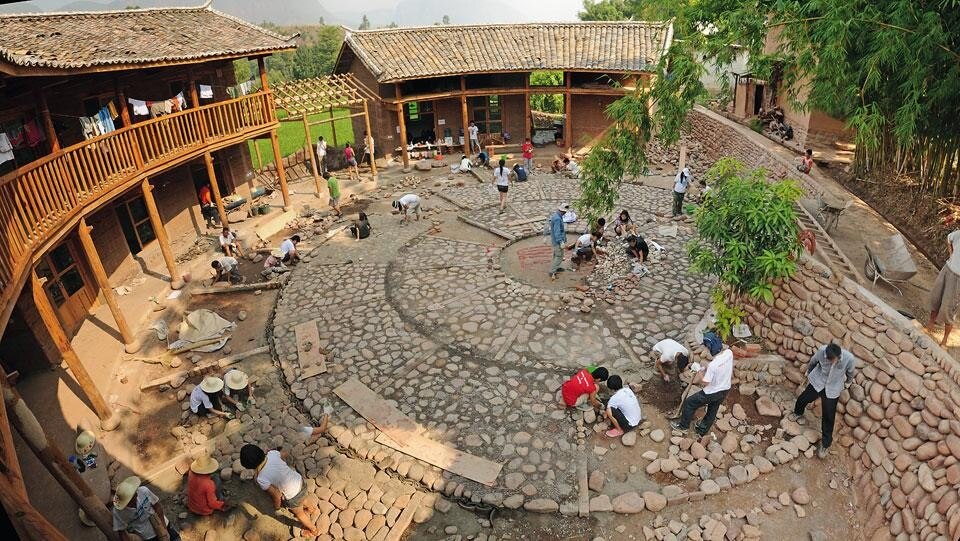
An architecture report from Ma'anqiao by Jun Mu, Edward Ng, Tiegang Zhou, Li Wan
after the earthquake, not only did villagers see the total abandonment of their building tradition, but also a deep fracture in their original peaceful style of living. Faced with these post-quake challenges, villagers felt restless and confused about their reconstruction plan.
In response to these challenges, the most feasible and sustainable strategy for rebuilding villagers' homes and stimulating future development was not to build "for" them with outside resources, but rather to "empower" them to do so themselves with locally available resources and by tapping into their tradition of self- construction. This approach relies on a feasible technology that villagers can afford and easily manage for the self-construction of their homes.
[Read the complete article]
An art report from Douala by Iolanda Pensa
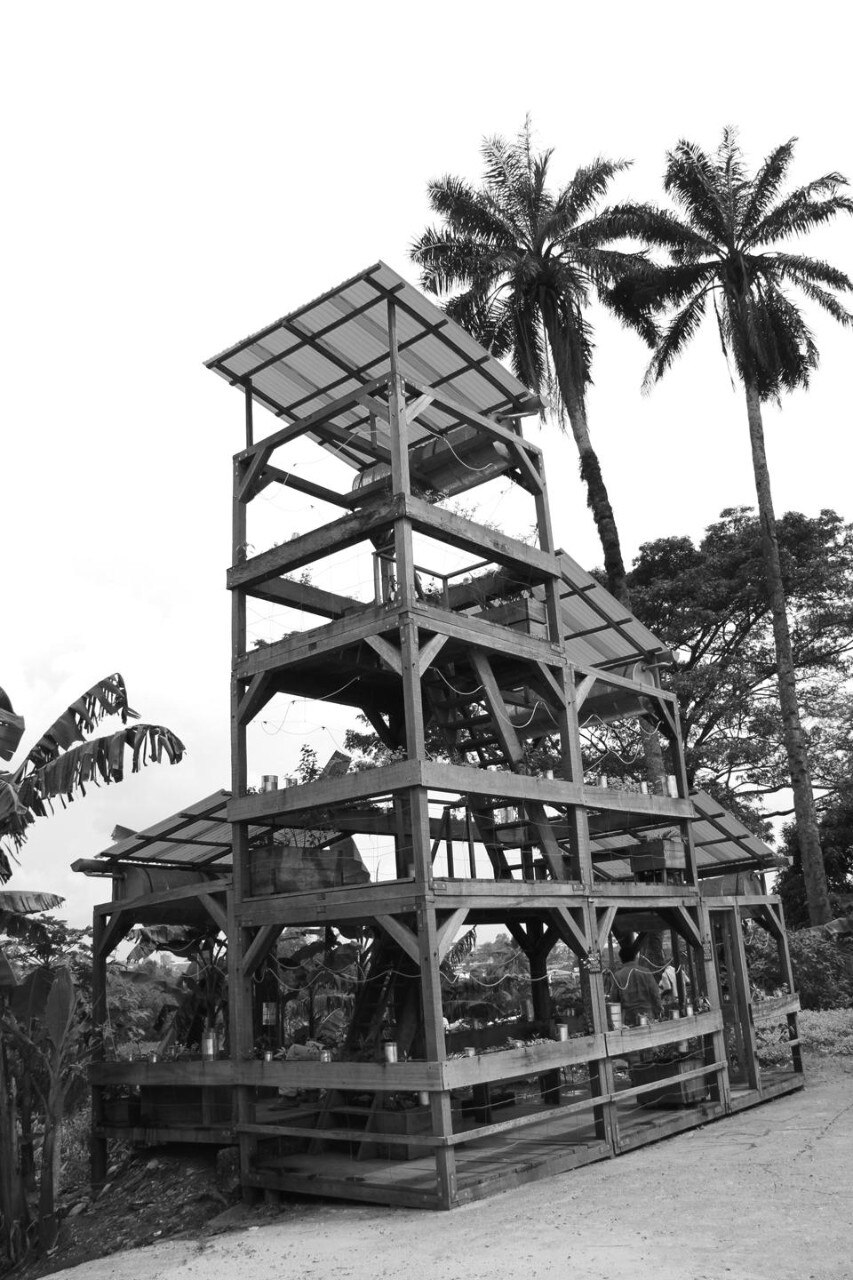
Producing works of art in Douala's public space involves a striking degree of complexity which includes — to give you an idea — the management of public and private land ownership, working with local authorities and police, the importing and expense of equipment, sourcing materials, training skilled staff, fundraising, security and the problematical issue of photographing public artworks in a place that really is not photogenic. This is an impossible environment to conjure up when strolling through the streets of Münster, to remain on message. The SUD triennial was created with the aim of bolstering the work started by doual'art in 1991 and to transform Douala. No local branding but real and pure transformation. And they are succeeding! In Douala!
[Read the complete article]
A design report from London by Catharine Rossi
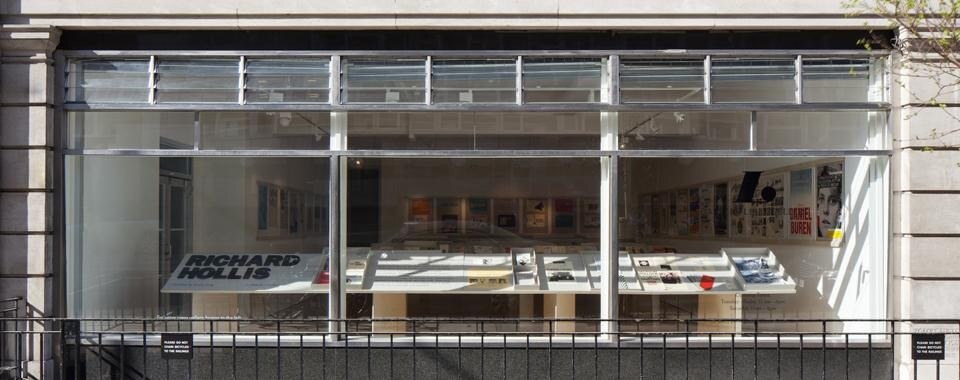
What do Steve McQueen, the Whitechapel Gallery, John Berger's Ways of Seeing and Graphic Design: A Concise History all have in common? The answer is they have all benefitted from the contribution of the illustrious Richard Hollis. One of Britain's most influential graphic designers, Hollis has been active as a practitioner, educator and author since the late 1950s, and yet his work has so far remained little known outside of the design community.
This relative anonymity looks set to change thanks to the current exhibition at London's Gallery Libby Sellers, the first to be devoted to the designer. Consisting of over two hundred items drawn from Hollis's personal archive, including his books, letterheads and posters, personal correspondence and postcards, this is the first real insight into the designer's process, practice, and personal values. What it reveals is how closely connected these all are.
[Read the complete article]