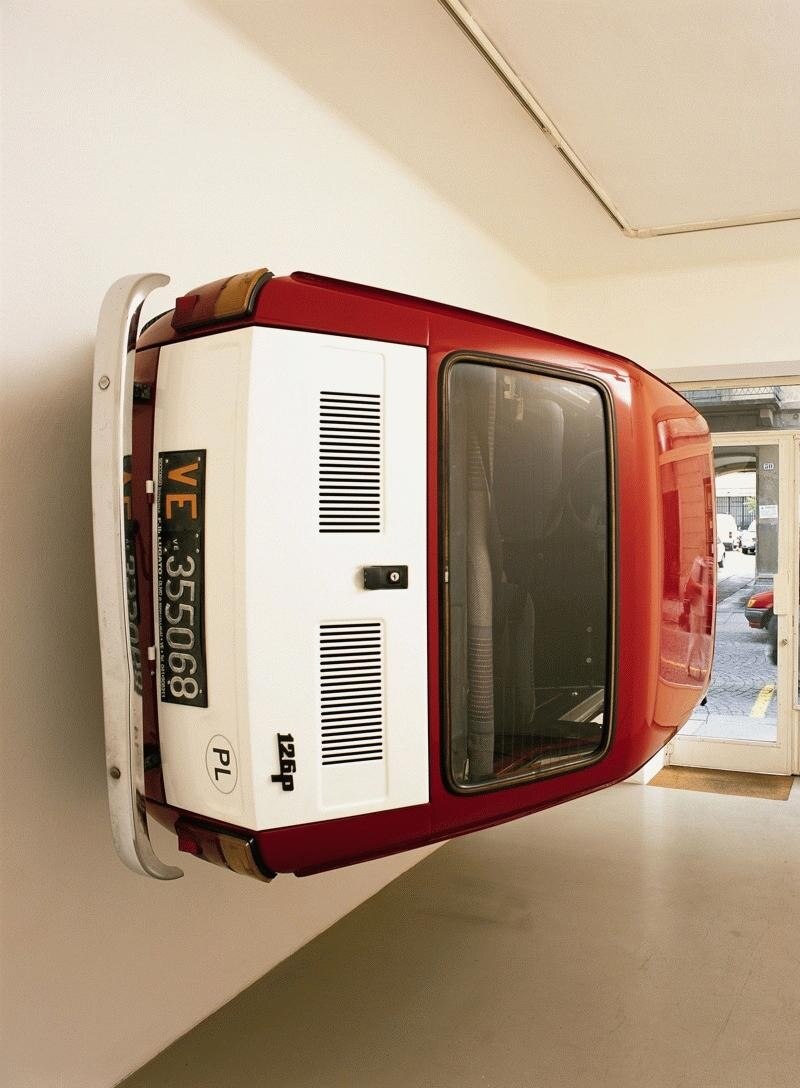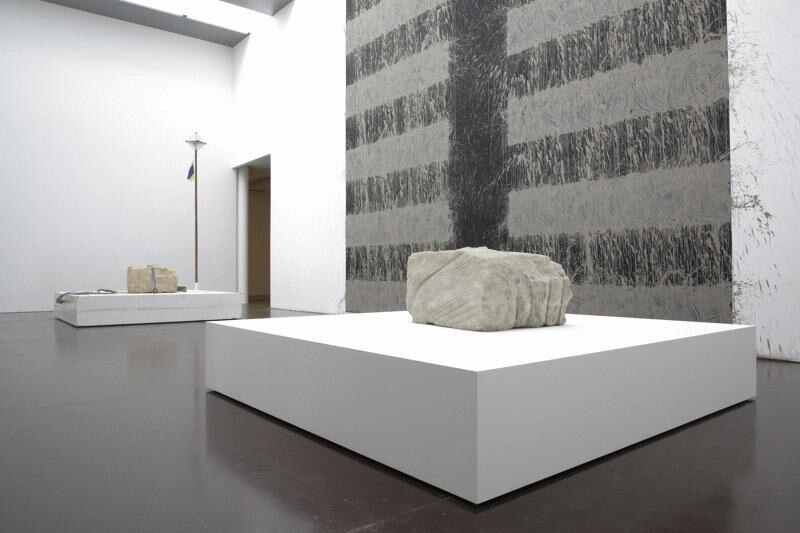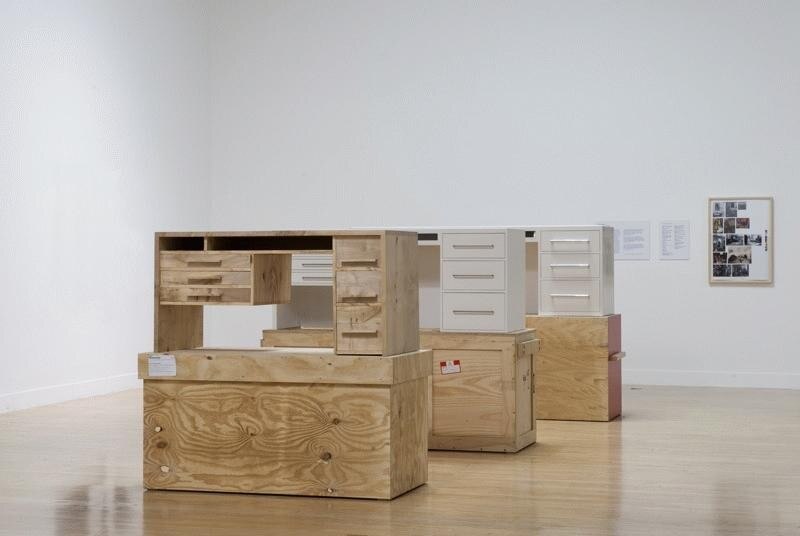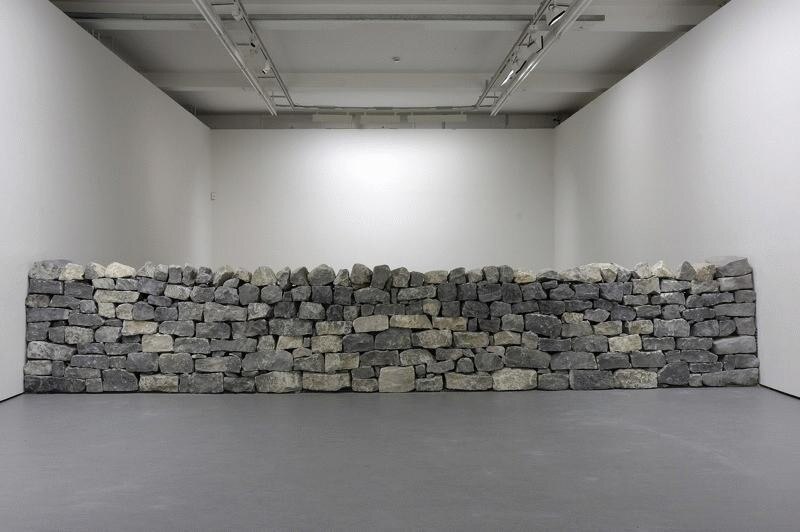
For over 15 years, Starling has been revisiting the history of forms and questioning the notions of value, construction, and the status of objects. His sculptures, installations, and voyages are generated through transformation, hybridization, dislocation, and in situ pieces. By methodically unravelling both material and context, Simon Starling realigns the ties that bind seemingly unrelated and non-contemporaneous subjects. For his first solo exhibit in France, on two different sites, the artist continues to develop these themes which seem more timely than ever.
The exhibit design at MAC/VAL is inspired by the idea of transformation, of objects and their mirror image. Using the principle of self-generative reproduction, Simon Starling places dislocation at the heart of his creative process. Documentary and fiction are tossed into his work with encyclopaedic archiving, which manages to avoid both the didactic and the frustrating. The narrative structure which holds the exhibit together is far from linear; rather it echoes the notion of re-interpretation as tangible artistic reflection. The viewer is coaxed into a world whose poetry defies the seemingly austere nature of the works. With interlocking compositions and endless mirroring, the MAC/VAL exhibit dangles many surprises along its path, revealing unexpected aspects of Simon Starling’s work. Striking down the road of re- interpretation, we follow the path of meaning as it recedes before us. At both MAC/VAL and the Parc Saint-Léger, the artist displays objects as relics; his art of context continually sparks a narrative form. The works are inextricably linked to their associated stories: Rock Raft, Flaga and Three White Desks are messengers of the stories they carry. Starling warps their context as a way of jolting the viewer out of complacency.
Be it in inverting processes, the use of unproductive technologies, or simply in the metamorphosis of an object, Simon Starling recasts value attribution and perception. His transformations and hybridizations query the reality of objects. Their destruction/transformation/recomposition places them within a narrative, leaving visible scars and converting their value from the functional to the symbolic.