


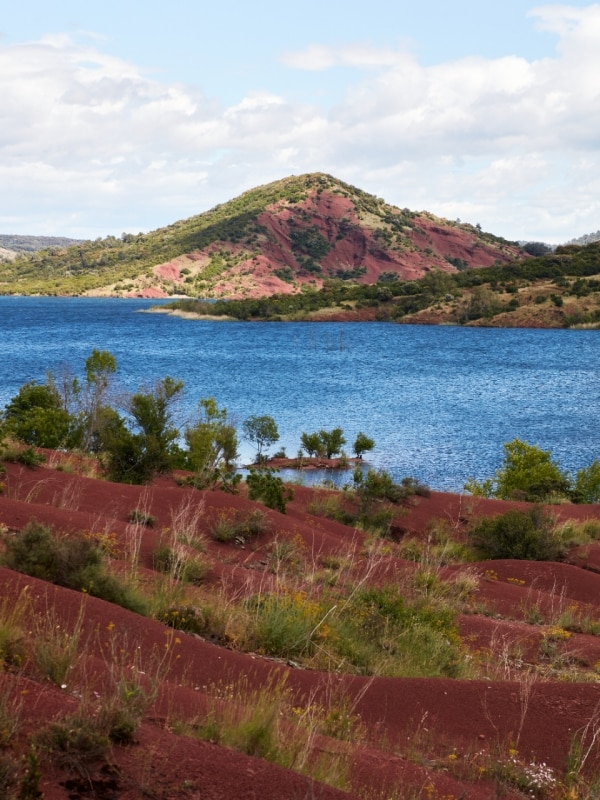
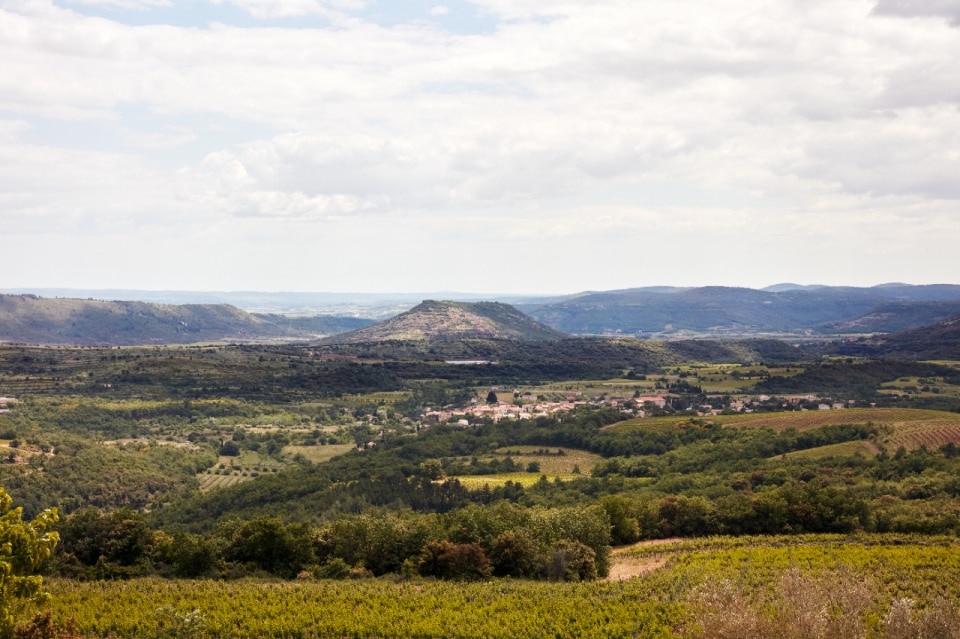

Along the Camino de Santiago, in the ancient village of Saint-Jean-de-la-Blaquière, renowned for the high quality of its terroir and its landscapes dotted with oak forests and polychrome geological formations, Roque architectes, Antonio Buonsante and Hugo Rossi have renovated a villa that offers hospitality to those who want to dive into the heart of a wine region rich in history and culture.
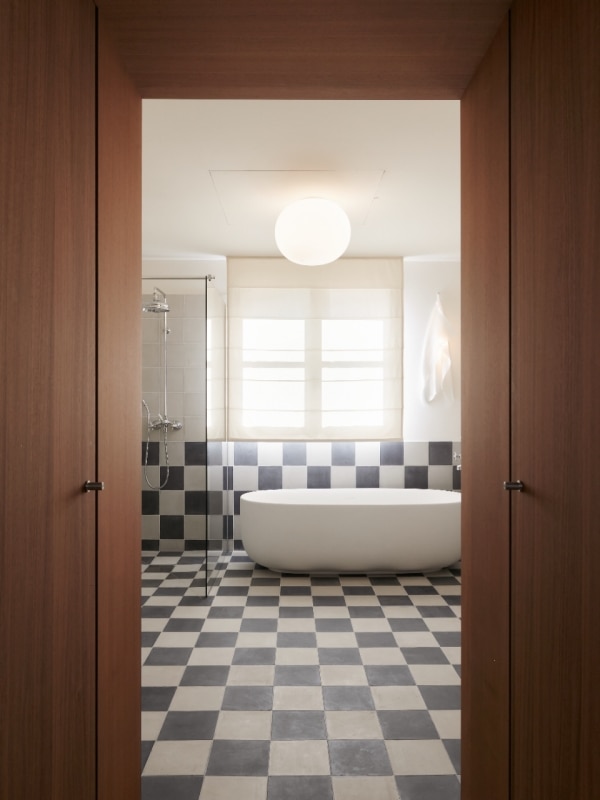
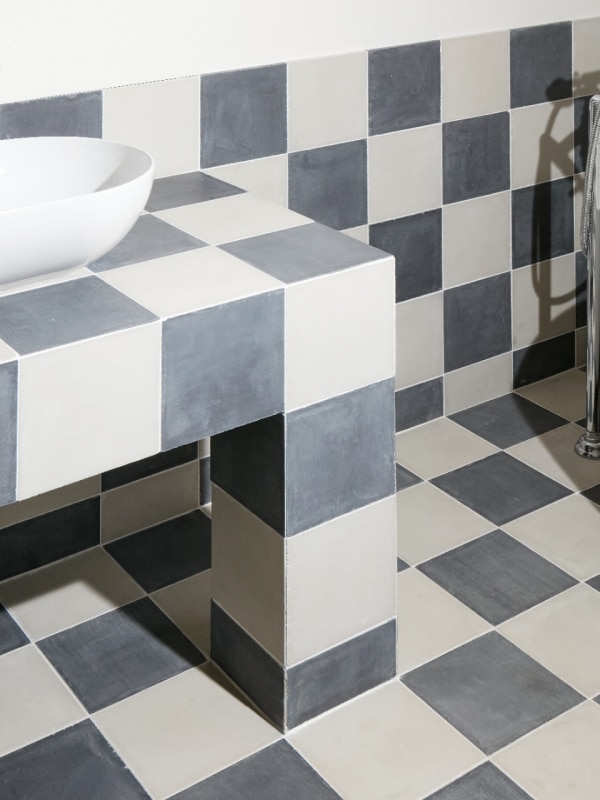
The place lives within project through a narrative of colours, furnishings and finishes that pay homage to the varied character of the natural and human landscape of Languedoc, reinterpreted in a contemporary key without verbatim reproductions, through minimalist suggestions, optical textures and material accents, describing a surprisingly diverse dwelling space, just like the region that hosts it.
The place lives within project through a narrative of colours, furnishings and finishes that pay homage to the varied character of the landscape of Languedoc, reinterpreted in a contemporary key through minimalist suggestions, optical textures and material accents.
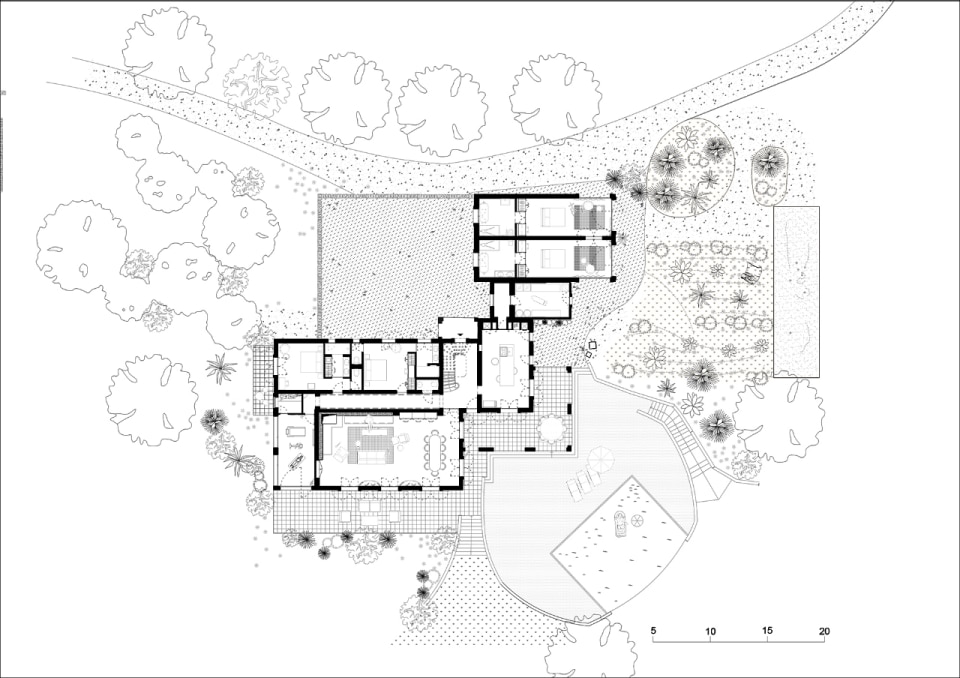
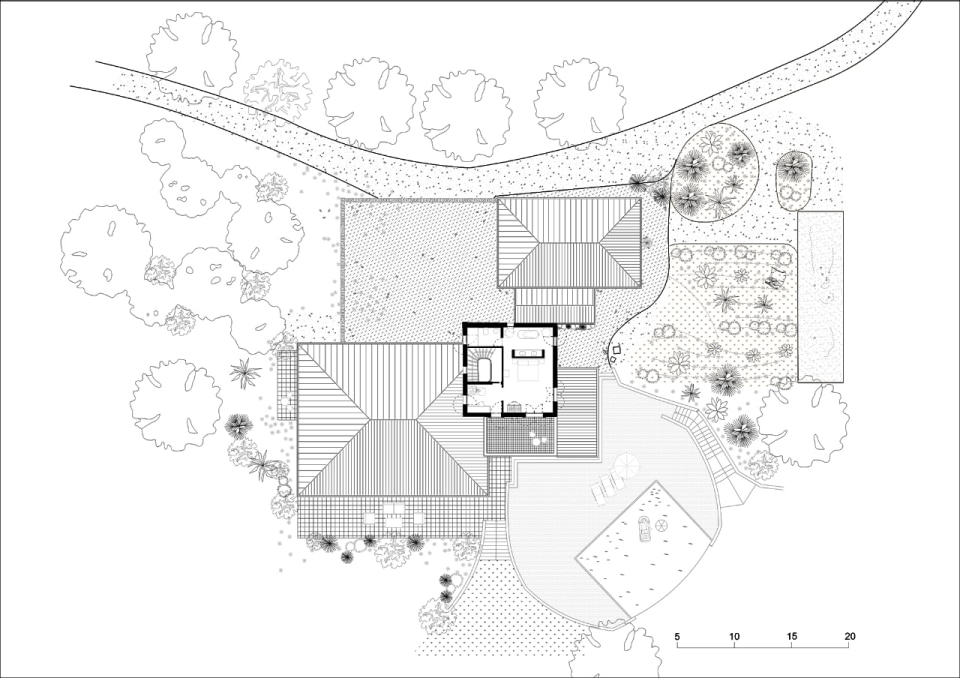
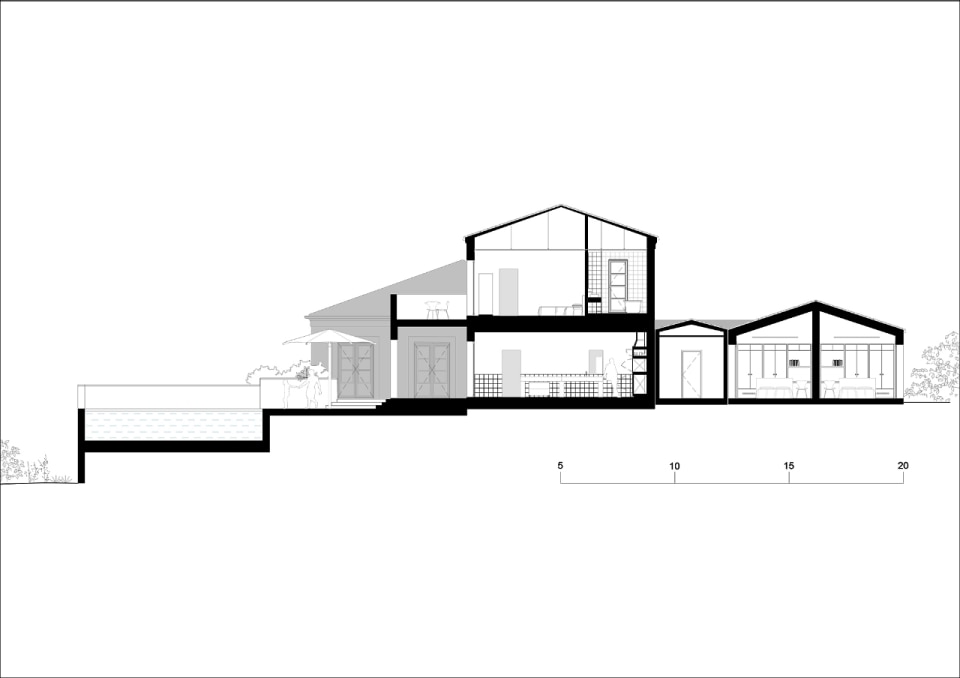
The building consists of two single-storey wings, grouped around a central core on two levels.
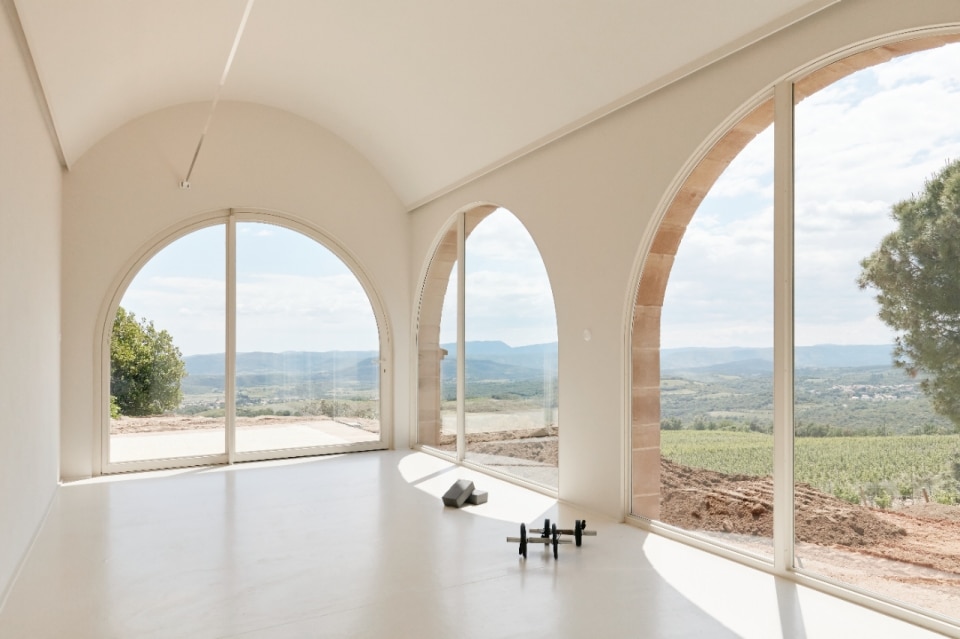
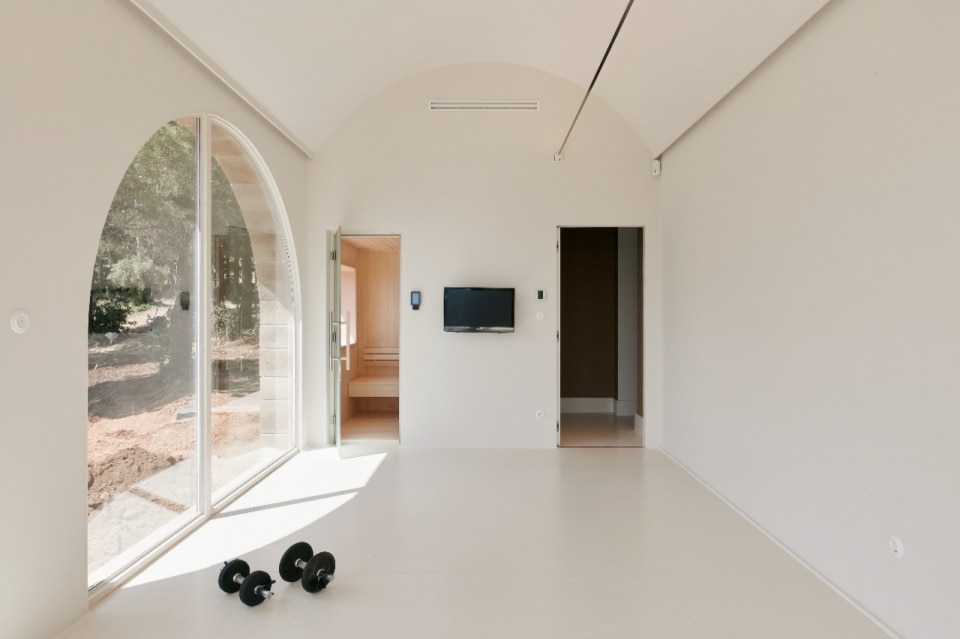
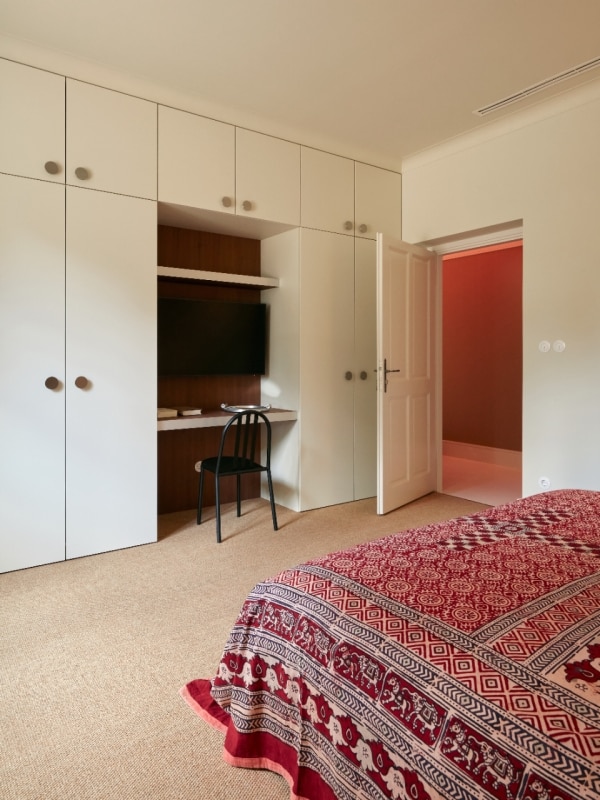
On the ground floor, the kitchen and staircase leading to the first floor are located in the centre; on one side, the living area with dining room is completed by a gym and two bedrooms with bathrooms; on the other, two more bedrooms with adjacent bathroomsfind their place. An additional bedroom can be found upstairs.
The multifaceted spaces, resulting from a synergy between architects, designers, decorators and craftsmen, embrace the rhythms of living.
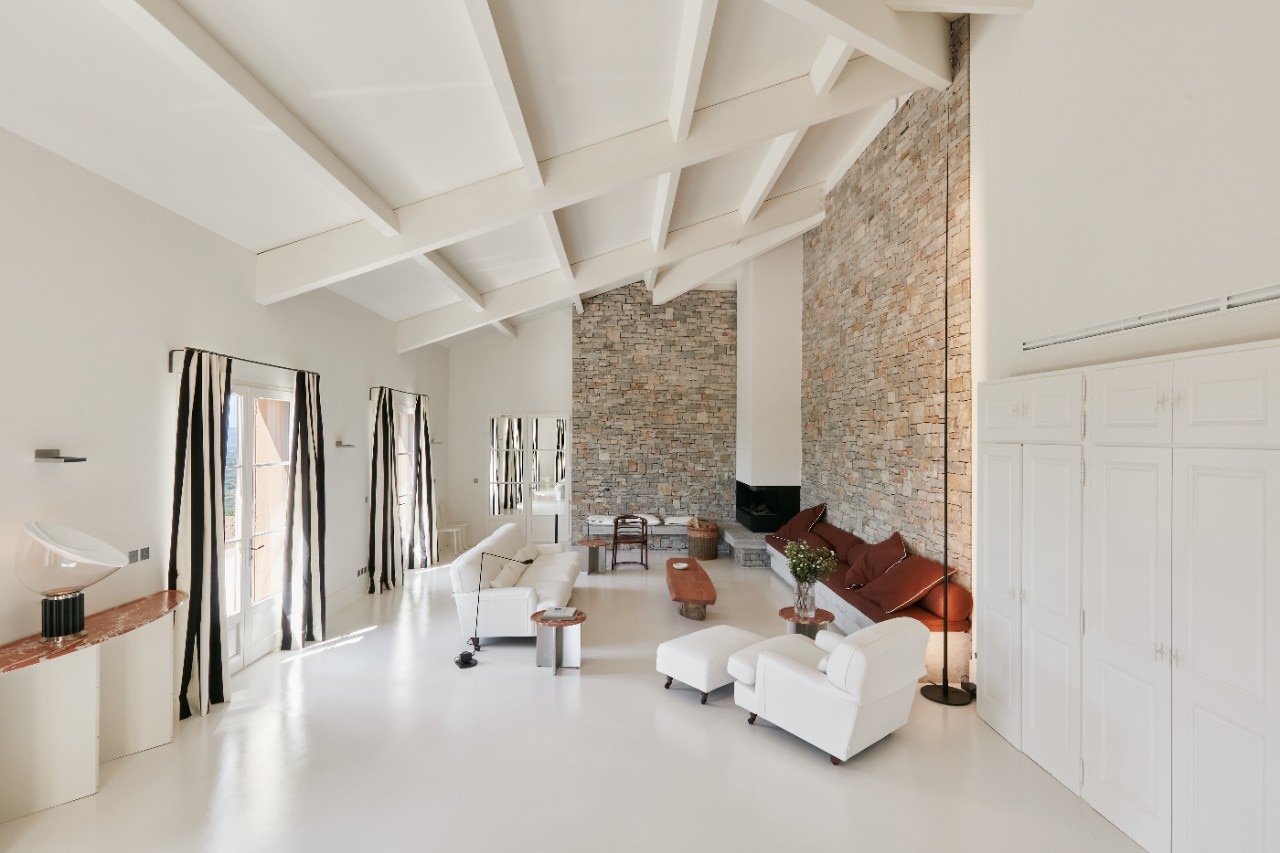
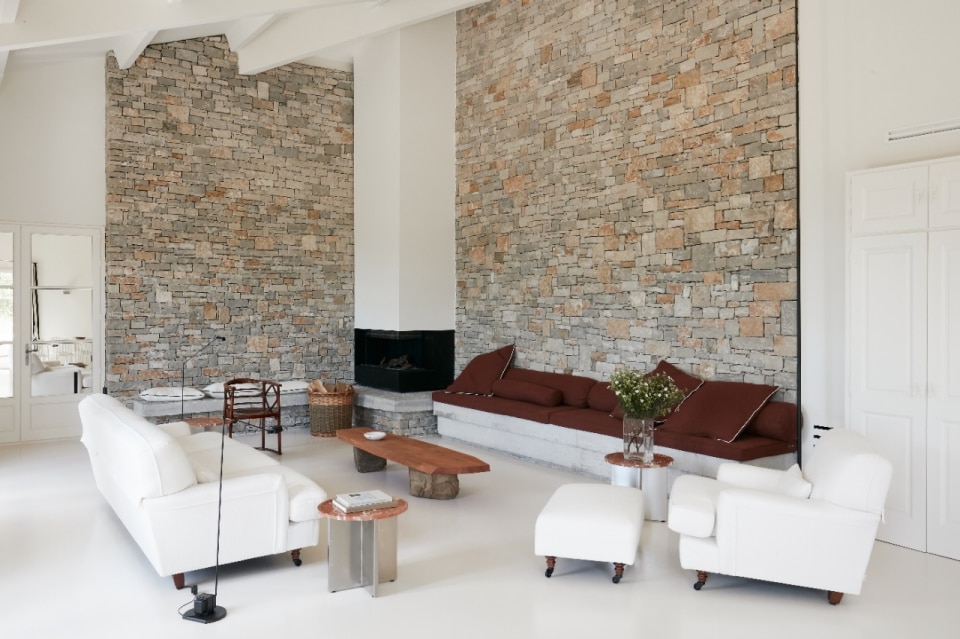
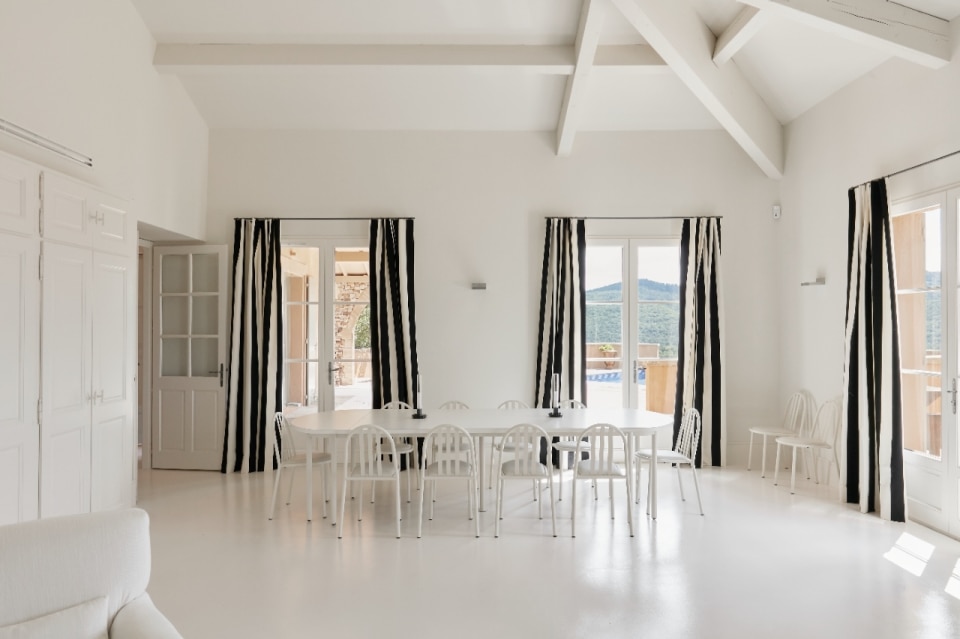
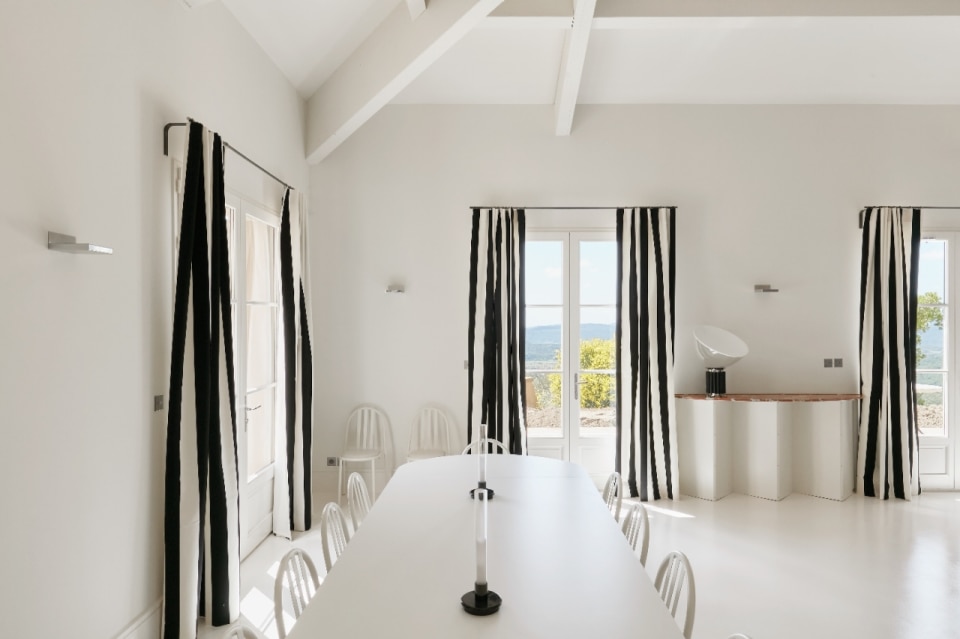
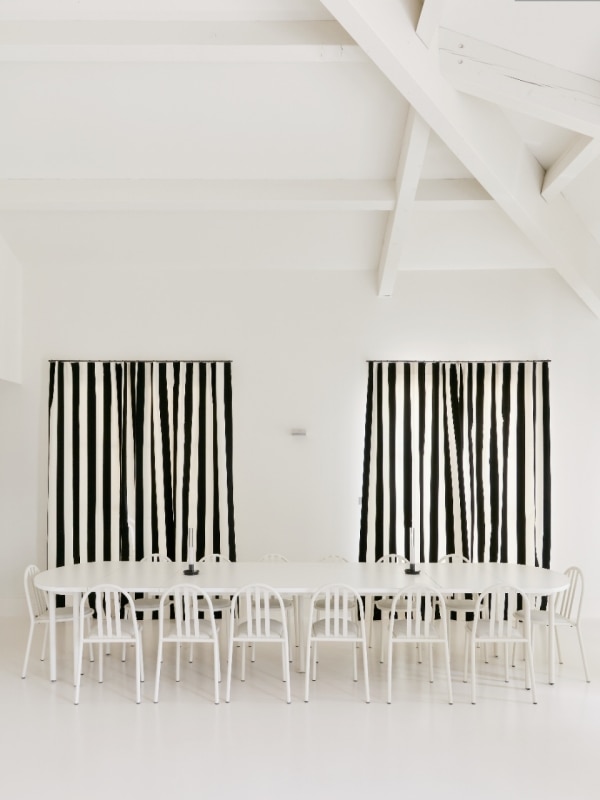
In the living room, a shell of immaculate ceilings and walls, interrupted by exposed stonework, gives the space a diaphanous and vaguely conceptual character, accentuated by the two-tone curtains on the windows.
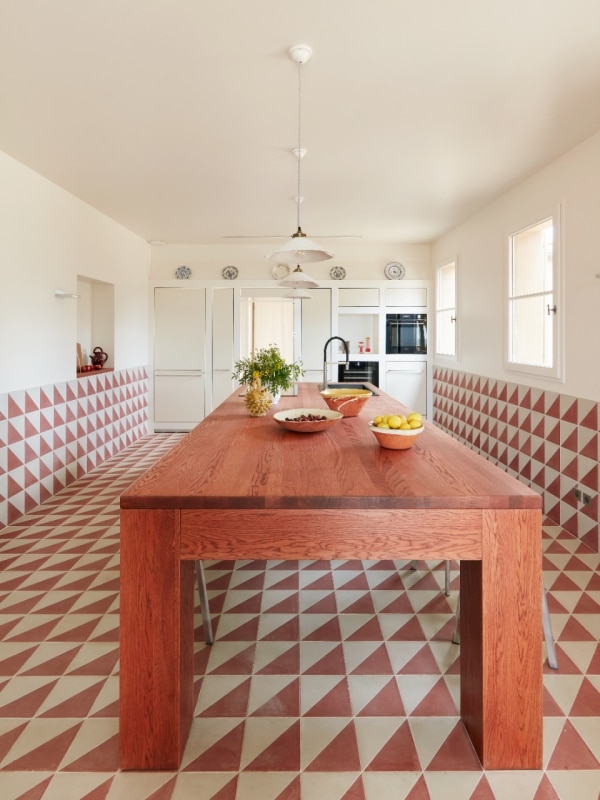
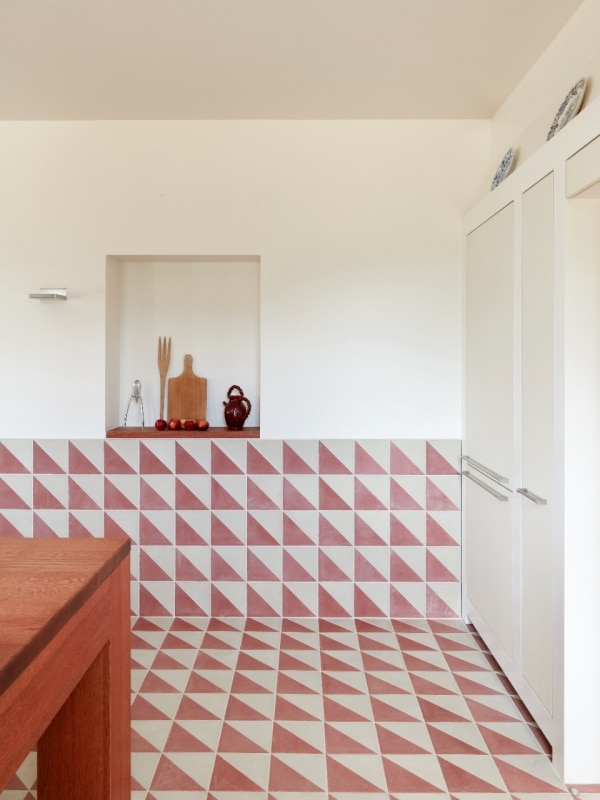
In the kitchen, the heart of the villa, the warm, textured atmosphere of the Languedoc hearth is recontextualised by the geometric patterns of the ceramic wall and floor coverings, the solid wooden table and the decorated plates made from clay from the estate.
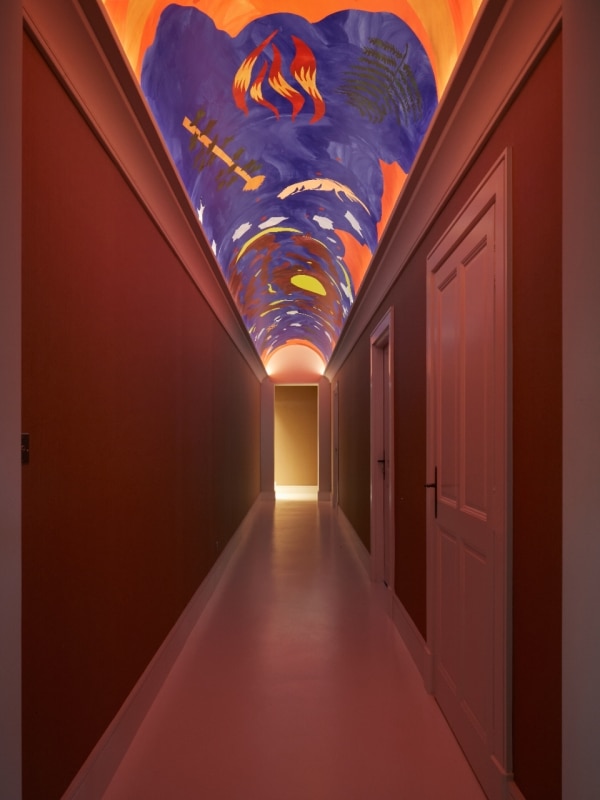
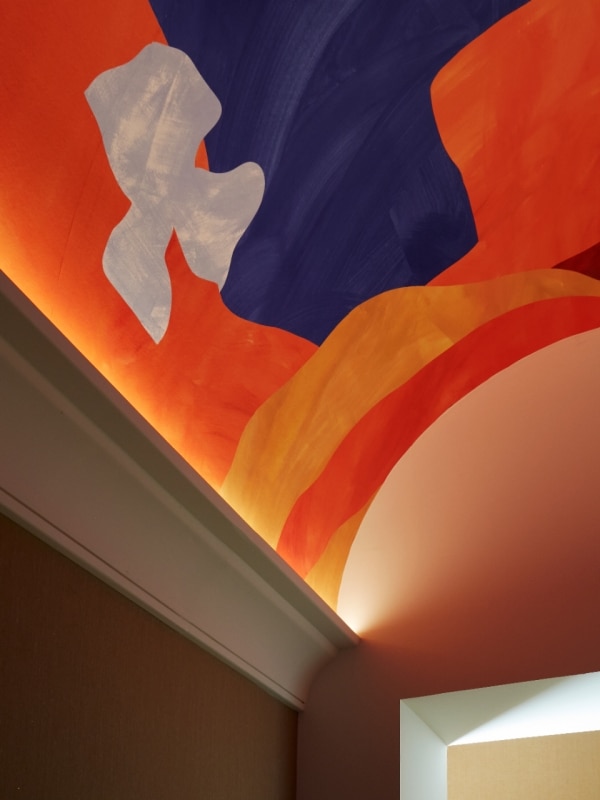
In the corridor, a vaulted fresco retraces the mythology of the local Chateau La Sauvageonne winery and accentuates with warm, bright brushstrokes the cave-like, dreamlike atmosphere of the area leading to the bedrooms.
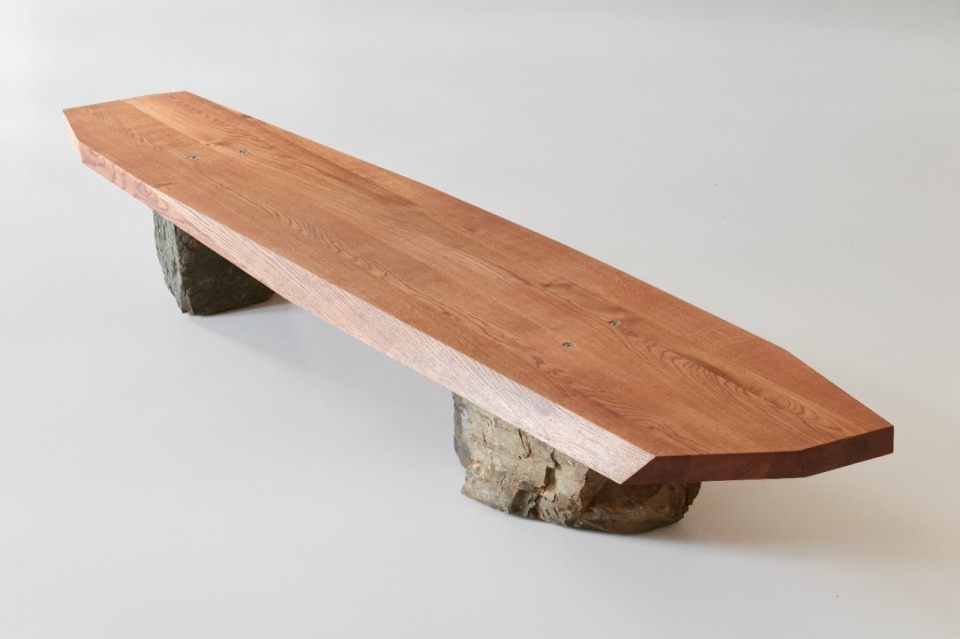
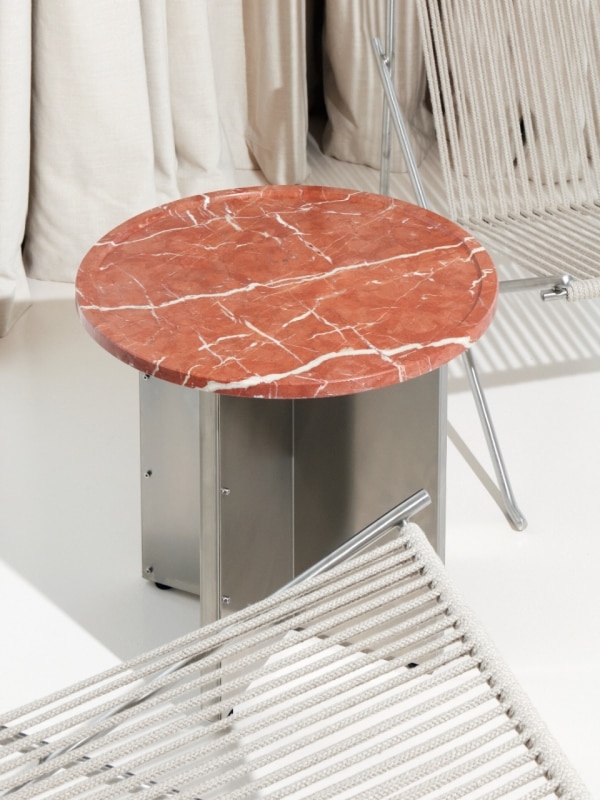
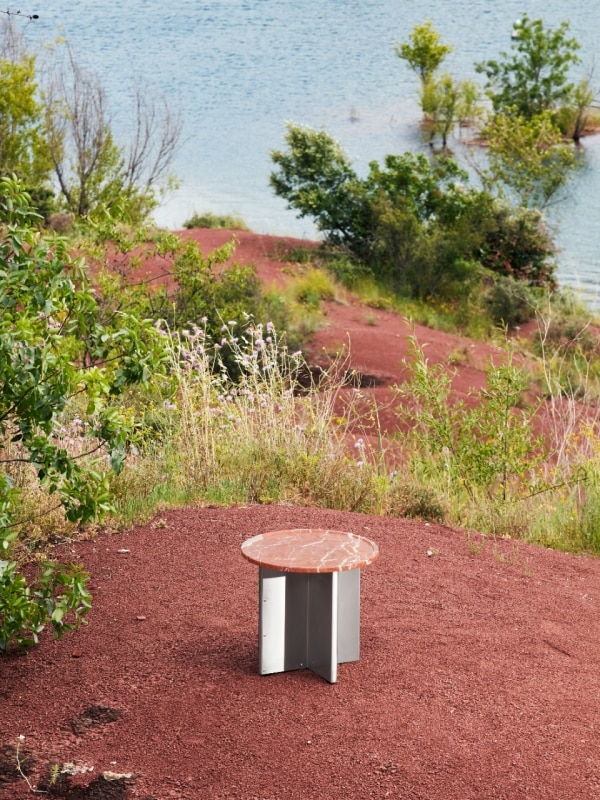
Custom-made furnishings intertwine local identity and contemporary design: from the red marble coffee table from Saint-Pons-de-Thomières, which echoes the colours of the territory, to the living room table in wood and stone with a brutal and archaic feel, suggesting a timeless bond with the context.
- Contributor:
- Diletta Fantin
- Artist:
- Les Crafties
- Landscape:
- Khatir Fares
- Construction:
- Peyre Construction
- Client:
- La Sauvageonne, groupe Gérard Bertrand