

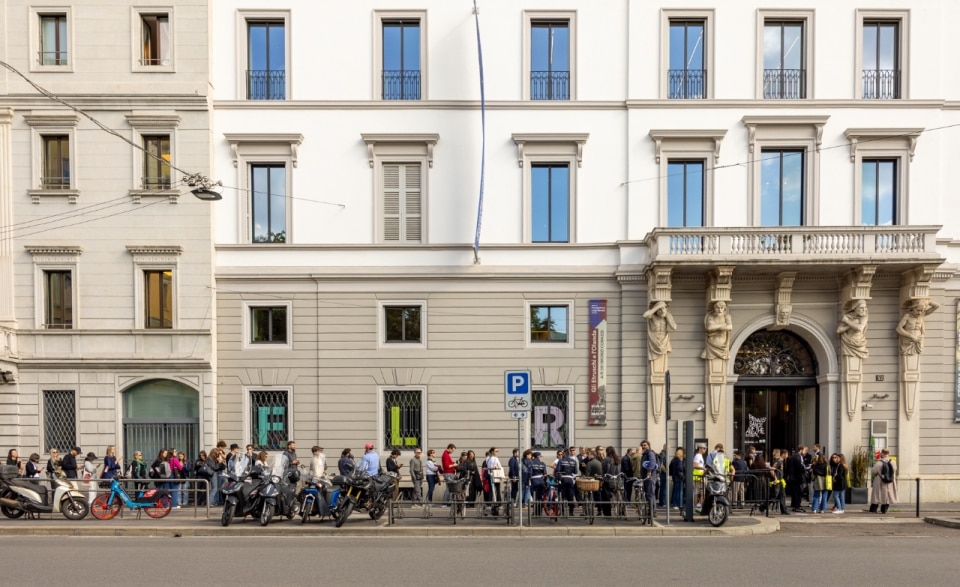
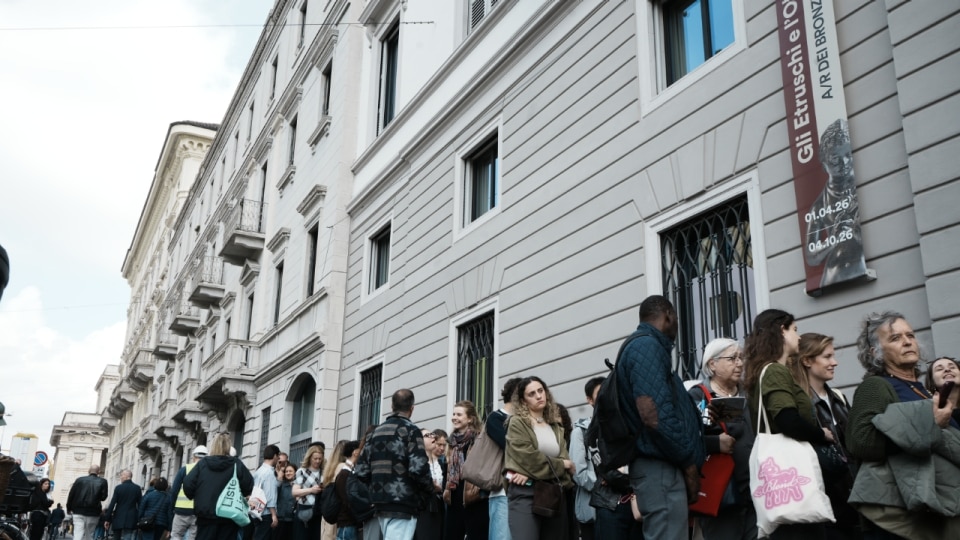
Turn the corner, slip through the streets: the queue outside the former Baggio Hospital—home to Alcova this year—winds like a slow, unruly snake. It starts at 10am and offers no mercy. You can register, book, rush—it doesn’t matter.
In the city center, things are no better. At Cairoli, Jil Sander’s dimly lit “library,” designed for very limited access, has been fully booked for at least two weeks before Fuorisalone even began. And then there’s Prada Frames: for the past two years, Formafantasma’s talks have been staged in deliberately tiny venues—first a train, now a cloister. Sold out, of course.
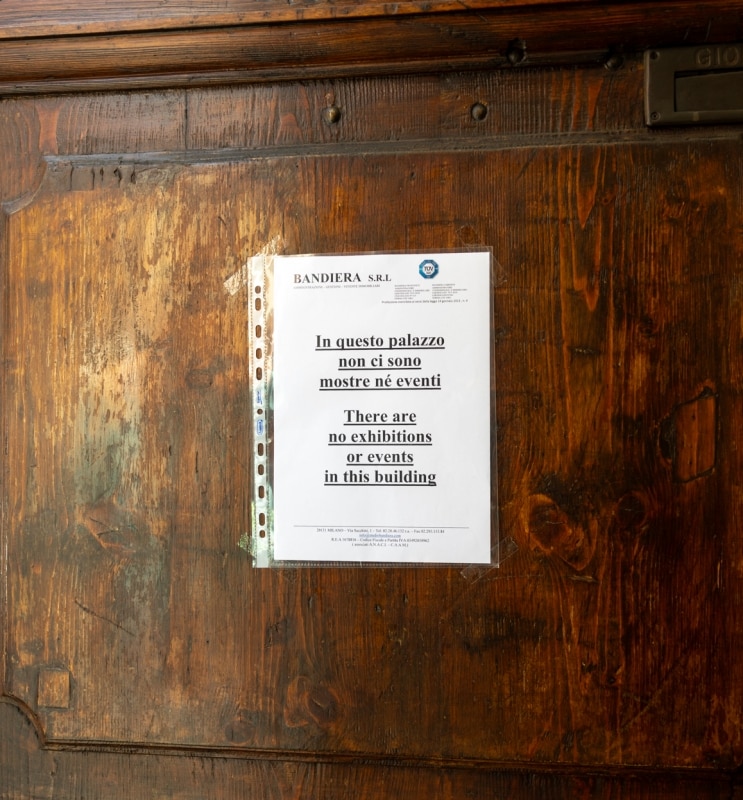
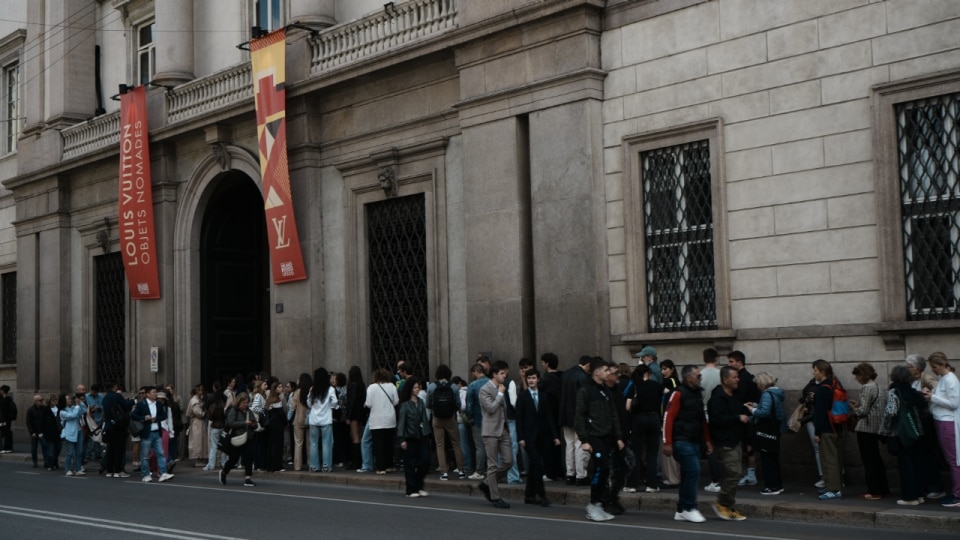
Queues have become a constant of Fuorisalone—and of urban life more broadly. But the real question is: are they worth it? Probably not. After years of watching Design Week come and go, standing in line becomes a choice. And we’d like to suggest alternatives.
Queues have become a constant of Fuorisalone. But the real question is: are they worth it?
So, can you truly enjoy Design Week without getting trapped in these human serpents? We think so. Here’s how.
Didn’t manage to get up Torre Velasca? There are other modernist masterpieces with no queues
We’ve said it, everyone has: the mysterious tea room inside Torre Velasca closed on Tuesday, and almost no one made it in. The same goes for Villa Pestarini, one of Alcova’s venues, sold out twice over. No BBPR, no Franco Albini—for mere mortals this weekend. But thankfully, they’re not the only destinations for lovers of 20th-century architecture.
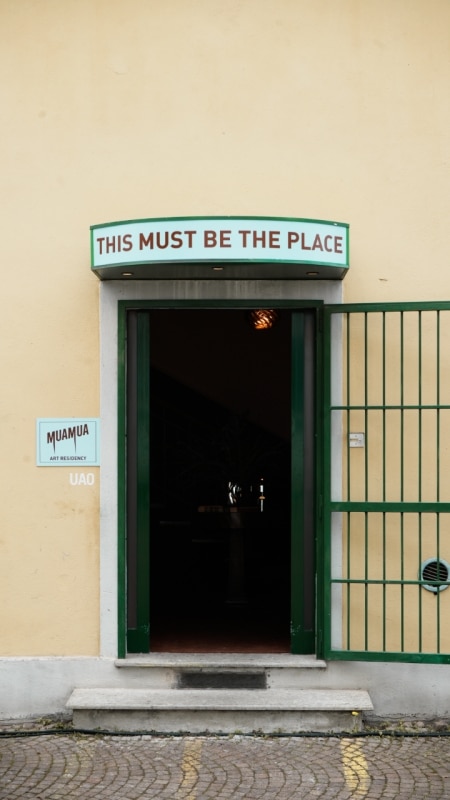
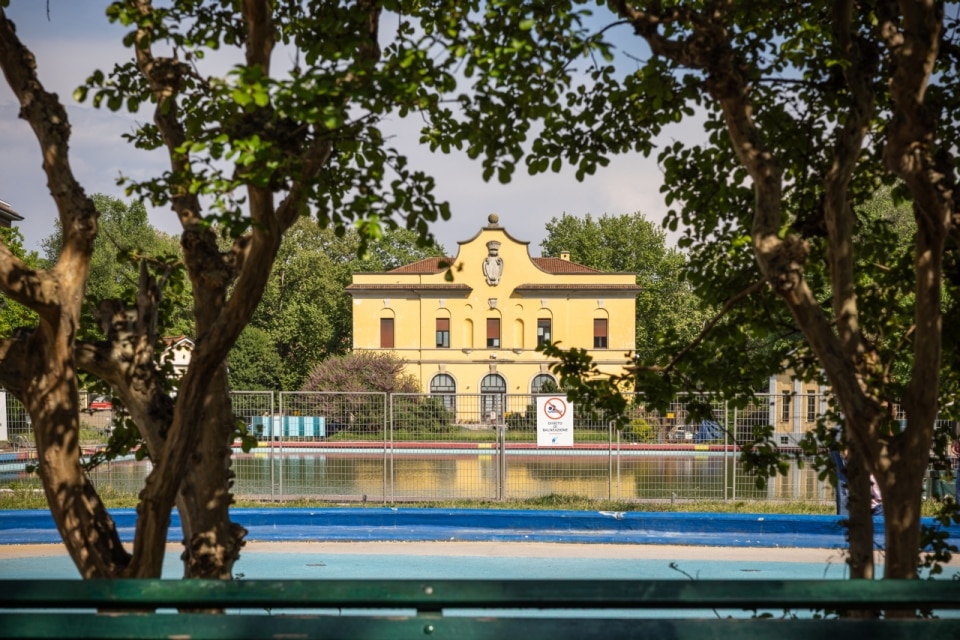
Design duo 6:AM has been taking over Milanese swimming pools for two years; this time it’s Piscina Romano, with an installation even more successful than last year’s at Cozzi. Located at Via Ampère 24 in Città Studi, this public pool designed by Luigi Secchi once hosted 1930s bathing rituals. Think of it as stepping into a De Chirico painting—without wasting time in line.
British designer Tom Dixon, meanwhile, has recreated a micro-hotel—complete with striking beds and furnishings—inside a 1929 building designed by Gio Ponti’s studio. Almost no one knows about it. Which makes it blissfully uncrowded.
Not a masterpiece in the traditional sense, but in Via Padova there’s a former 1950s factory—once producing car bearings—now home to Deoron, an independent design platform staging a compelling underground fair. The location is extraordinary, in a neighborhood set to redefine Milan’s design scene: forget Brera—this is Nolo.
And for the classics? Nilufar, Nina Yashar’s collectible design gallery, remains a guarantee. Across both venues, it presents exceptional furniture within a curatorial framework that’s always sharp and never predictable. This year, the Depot space—loosely inspired by La Scala—transforms into a hotel, while the historic Via della Spiga location becomes a “magical house.”
Okay, Villa Necchi Campiglio — but have you ever heard a 19th-century organ being played? The most beautiful palaces with no queues
What longtime Milanese residents would say to newcomers is simple: Villa Necchi Campiglio is beautiful—but it’s always open. It’s a FAI heritage site, and we’ve seen it in every possible version. Surely there must be other places that offer the same suspended, timeless atmosphere.
One is just around the corner: the Istituto dei Ciechi (Institute for the Blind), a deeply Milanese institution, known mostly to insiders. Music is made here—for visually impaired people—and it houses an extraordinary organ hall. Design studio Dotdotdot, together with Geely Auto, has restored its 19th-century organ. For Fuorisalone, it plays a four-minute composition that changes depending on how visitors move through the space. There’s little queue—and it’s worth visiting even just to discover the place for the first time.
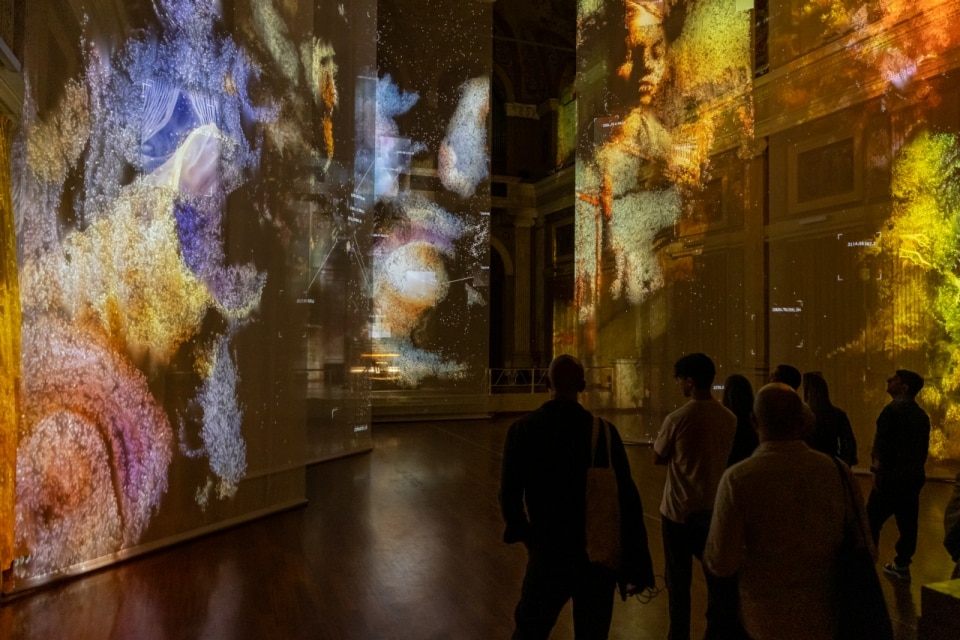
Another must-see is Teatro Arsenale: once a medieval church, later a performance venue with an acting school. Here, Estúdio Campana presents Floralis, a collection of carpets designed for Art de Vivre. Suspended on a dark stage under theatrical lights, the carpets feel like actors. Some might even say they move.
McDonald's makes you feel like a kid again, but if there’s too much of a line, there’s also this carousel
In the Tortona Design District, one of the longest lines leads to a giant ball pit reminiscent of early-2000s McDonald’s play areas. Appropriately, it’s a large-scale installation by McDonald’s with curator Nicolas Ballario, paired with artworks by Damien Hirst and Vedovamazzei. Yes, it brings back childhood. But there’s another experience that does it better—and without a 30-minute wait: the carousel designed by New York-based artist and chef Laila Gohar in Via Palestro.
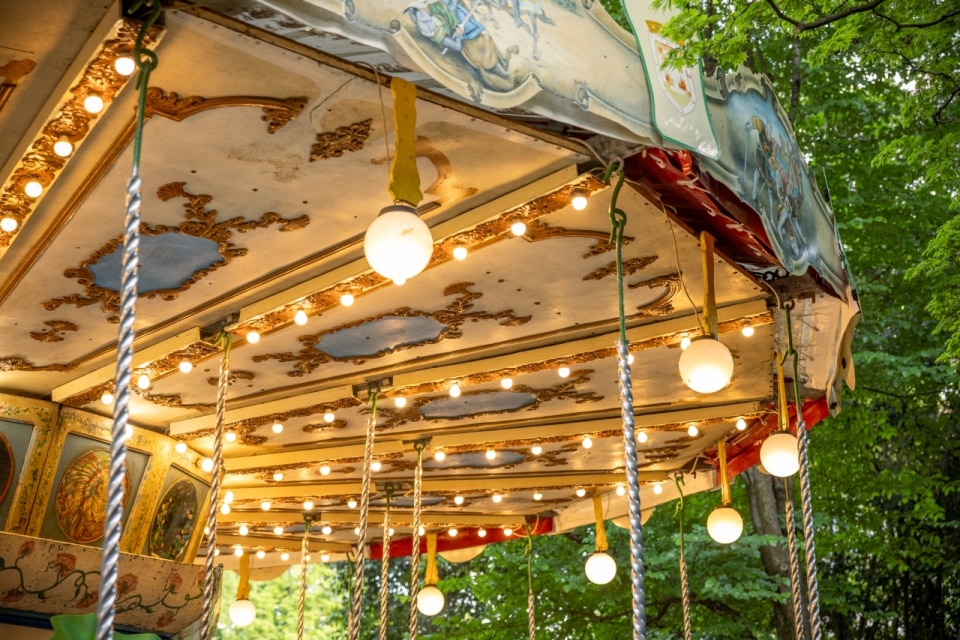
Set between the Porta Venezia and Palestro gardens, the carousel is based on a historic piece from Wiesbaden, Germany, dating back to the late 18th century. A rare object, it survives as a testament to a nearly vanished craft tradition. Gohar’s intervention is simple yet effective: replacing the horses with oversized fruits and vegetables.
It’s the kind of installation increasingly rare in contemporary urban space—especially during Fuorisalone. It’s genuinely inclusive without being simplistic, engaging both children and adults without dumbing things down. In short: it doesn’t treat you like an idiot.
The queues that are actually worth it
That said, if you’re not keen on running across the city, there are still a few places worth the wait. One is Snøhetta’s intervention with USM at Fondazione Luigi Rovati, the Etruscan museum designed by Mario Cucinella near Palestro. A massive modular structure is enveloped by a white fabric bubble. Finally—no screens, no devices, no poorly used AI. Just empty space and sunlight filtering through the surface. An installation that expands space and almost reaches infinity.
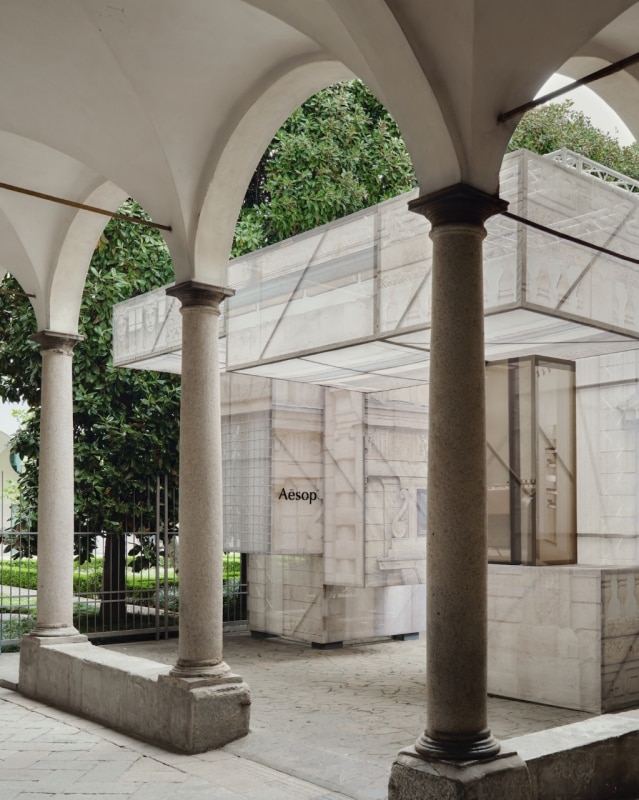
Another calm destination is Aesop’s “factory of light,” one of the most architecturally refined interventions this year. Located inside the Church of Santa Maria del Carmine, the skincare brand has clad the interior with salvaged materials from Milanese construction sites—the same materials used for a limited-edition series of lamps, the brand’s first. At the entrance, naturally, you’re invited to wash your hands.
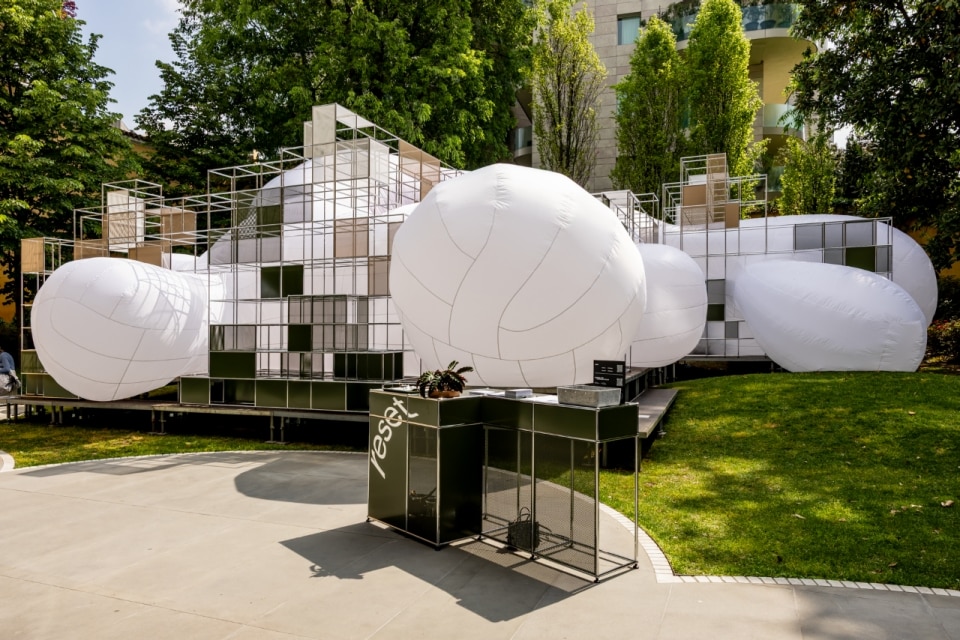
And finally, there’s the University of Milan. Just steps from Torre Velasca, in the heart of the city, it’s the true design amusement park of the week—with contributions from BIG, Snøhetta, MAD, Zaha Hadid, and Ma Yansong. But as with any amusement park, it’s better at night. To avoid the longest lines, go late: it stays open until midnight.
Opening image: The Design Week queues. Photo Guido Rizzuti