


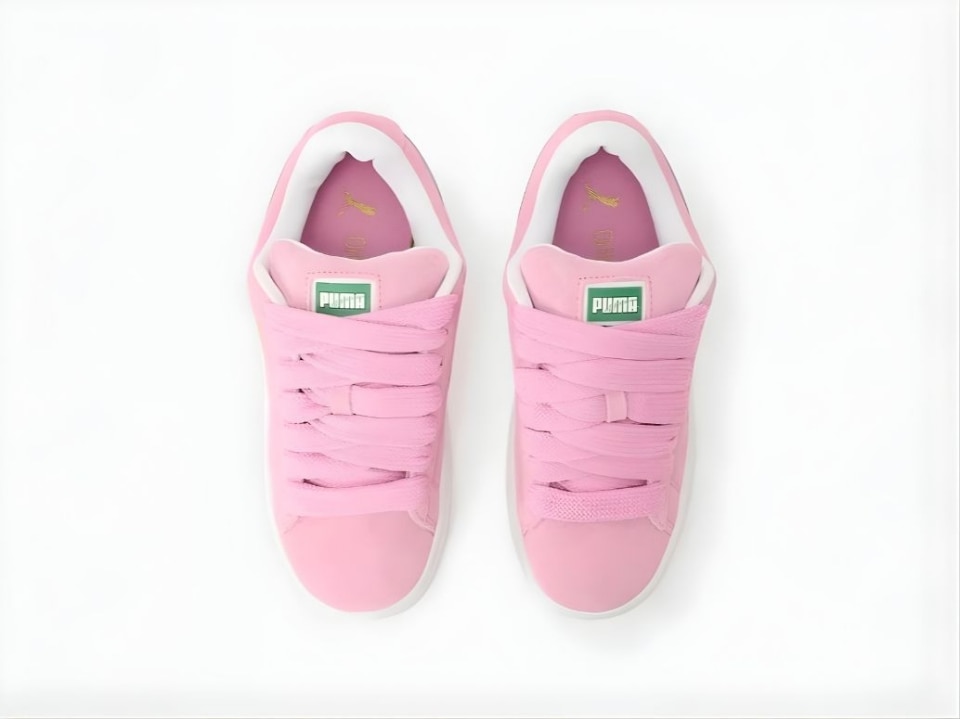
It is now official: the Chinese group Anta Sports has acquired a 29% stake in Puma from the Pinault family’s holding company Artémis, in a deal worth around €1.5 billion. With this move, Anta becomes the German brand’s largest shareholder, marking a strategic shift that could strengthen Puma’s position in the Chinese market — today one of the most competitive and coveted arenas for global sportswear. But how did Puma begin?
When the wildcat logo was chosen in 1948, Puma's image was very clear: speed and strength, dynamism and disruptiveness, key words and core values in the world of sports, now destined to be carried into everyday fashion.
In reality, Puma's history is slightly more complex: in 1924, two brothers, Rudolf and Adolf Dassler, had founded, together, the first sports shoe factory in history, which within a very short time had made a name for itself by equipping the most prominent athletes of the time, especially when sprinter Jesse Owens won, at the 1936 Olympic Games, four gold medals while wearing Dassler shoes on his feet.
Despite the enormous success of the business, the wartime tensions of those years caused deep disagreements between the two brothers, who were driven by different political ideologies, which caused them to separate and found two companies destined to rival each other to this day. Thus in 1948 Rudolf gave birth to Puma, and Adolf the following year created Adidas (a name born from the union of the initial parts of his first name and last name).
Over the decades, Puma began to count more and more pieces of clothing and equipment, expanding its production to numerous different sports as well as an ever-growing list of the most influential athletes of the day: from the Portuguese striker Eusebio to Maradona and Buffon for soccer, to collaborations with centrist Walt Frazier that led to the birth of the Puma Clyde model, not to mention sponsorships with the most famous names in tennis such as Guillermo Vilas and then Serena Williams, or in running with Usain Bolt, who set a new world record in 2009 wearing his trusty Puma shoes.
The strength of the Puma brand lay precisely in its ability to constantly revisit itself by drawing on its archive, managing to ride the wave of modernity and sometimes even anticipating the taste and trends to come. Similarly, the logo also underwent numerous revisits, settling in the late 1960s with the black cat, simple and minimal, caught jumping high and not long, just as the brand excelled in the sports fashion market.
Puma is remembered as the first sports brand to have collaborated with a well-known fashion house, when in 1998 Jil Sander, in love with leather Pumas, decided to pair them with her runway looks. Proving that Puma's sports fashion knows no bounds, Puma has enriched its resume over the past two decades, collaborating with classic video games such as Sonic or Final Fantasy, working side by side with brands such as Rihanna's Fenty, or lending its accessories to models at haute couture shows, as happened this year with Demna's Balenciaga. In recent years, Puma has also walked as an independent name during New York Fashion Week (think of the 2022 immersive fashion show curated by creative director June Ambrose, FUTROGRADE).
Let's now look at five models that have written, and continue to write, the history of the brand.
Puma King
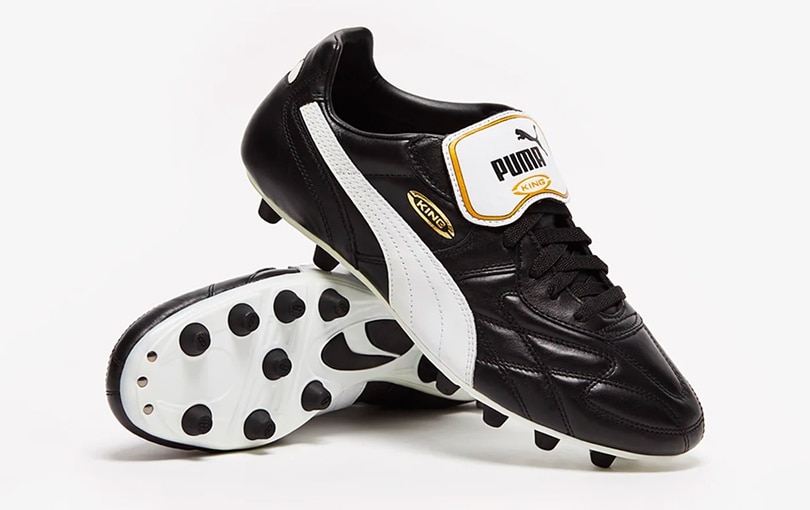
The shoe's inspiration is Eusebio, Portugal's top scorer at the 1966 World Cup. The novelty lay in the non-slip nylon cleats, which gave the model a flexibility unmatched by any other shoe of the time. It would then be Jil Sander, in 1998, who took the shoe and transformed it into the JIL SANDER KING, in leather, a symbol of elegance and simplicity, the perfect synthesis of the aesthetics of the two brands.
Puma Speedcat
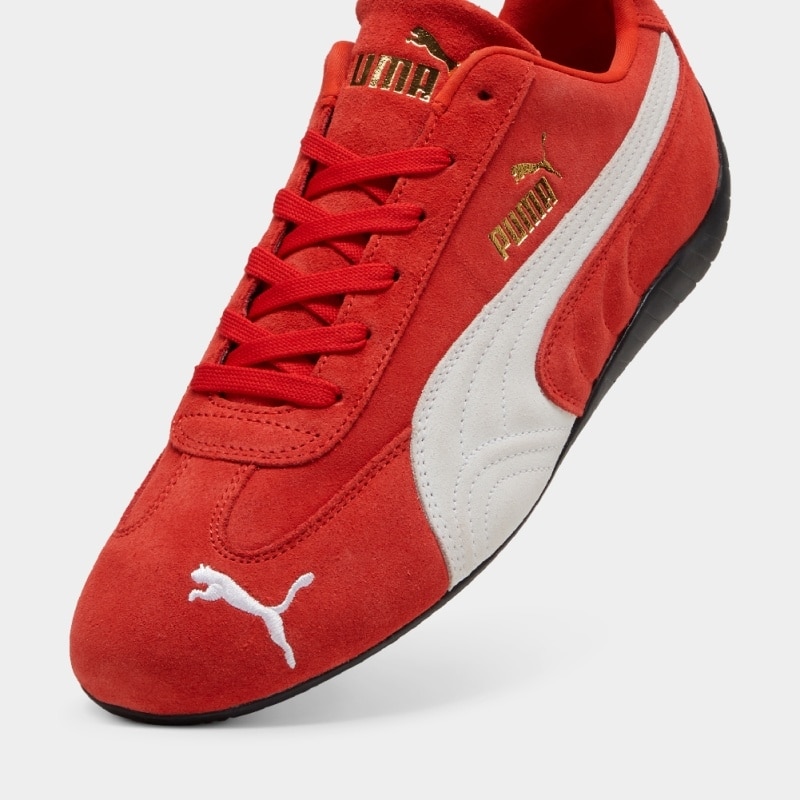
Design originated in 1998, conceived as a fireproof shoe for Formula 1 drivers. The sleek and distinct look, bearing the logo, makes the shoe one of the most influential in recent years, often the protagonist of revisitations and changes, in colors, fabrics or even collaborations, that made it always current and never dated. In 2025, Demna chose the speedcat to dress his models on the runway, in suede and in a tight-fitting structure, at times more reminiscent of a sock than a shoe, in perfect Balenciaga style.
Puma x Fenty Creeper
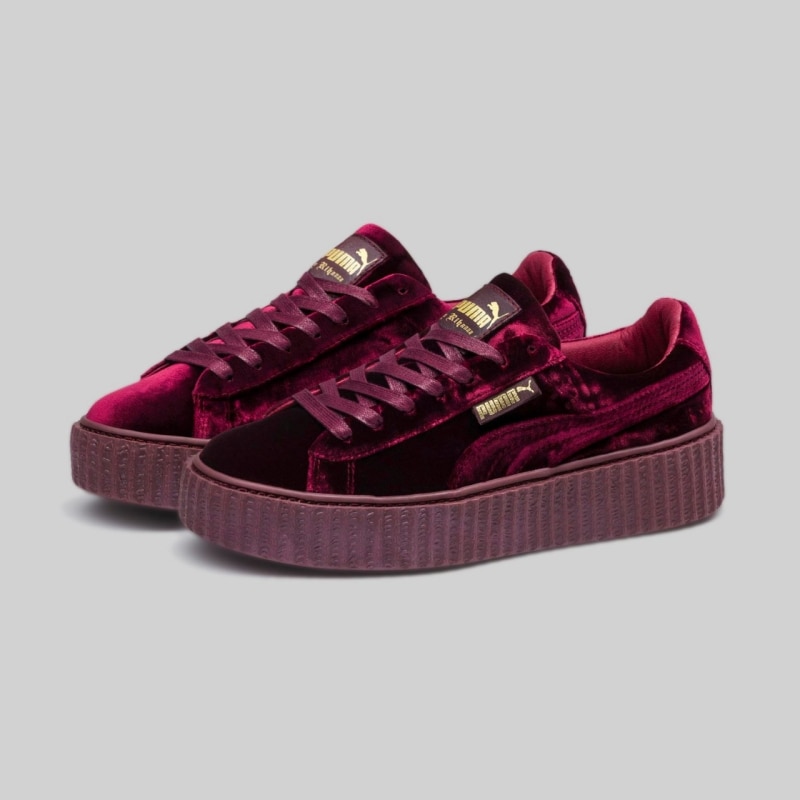
This shoe was born from the fruitful 2015 collaboration with Rihanna, inspired by punk silhouettes. Basically a reimagining of the Puma Suede, the Creeper will win Sneaker of the Year in 2016, thanks to its high, grooved sole and velvet or camouflage fabrics. One of the brand's most versatile shoes, the Creeper will continue to evolve in design, such as with a strap attached to the ankle, or in a pointed model.
Puma Monster
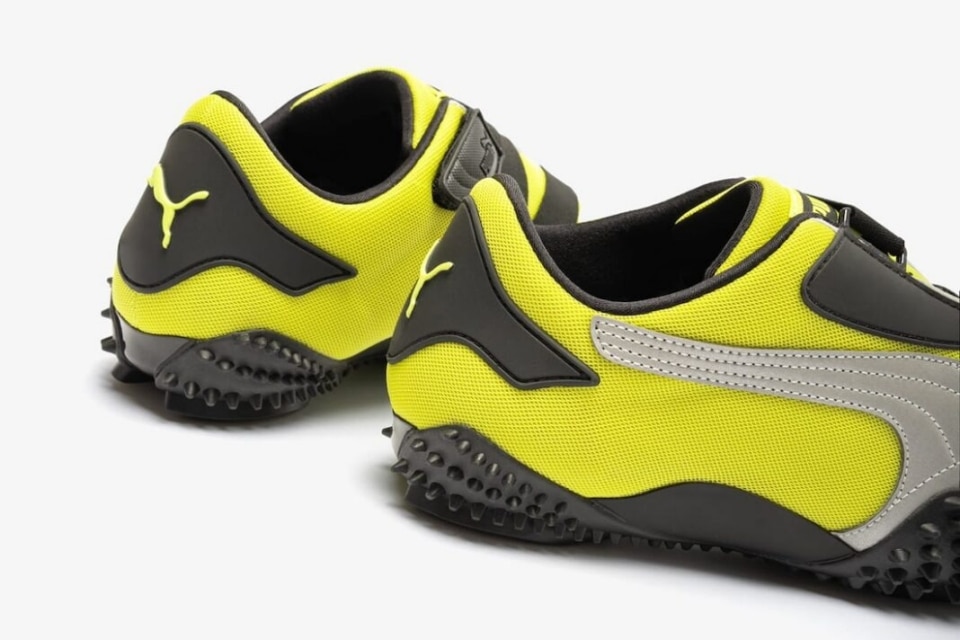
Designed in 1999 by Peter Schmidt, the shoe takes its name from its Italian meaning: a radical and bold design, not afraid to arouse strong emotions, monster resonated with an era at the turn of the millennia that sought the avant-garde and looked eagerly into the future. The shoe consisted of a flat, textured sole accompanied by an asymmetric Velcro closure. Mostro was a shoe made to be different from every model circulating at the time.
Puma Blaze of Glory
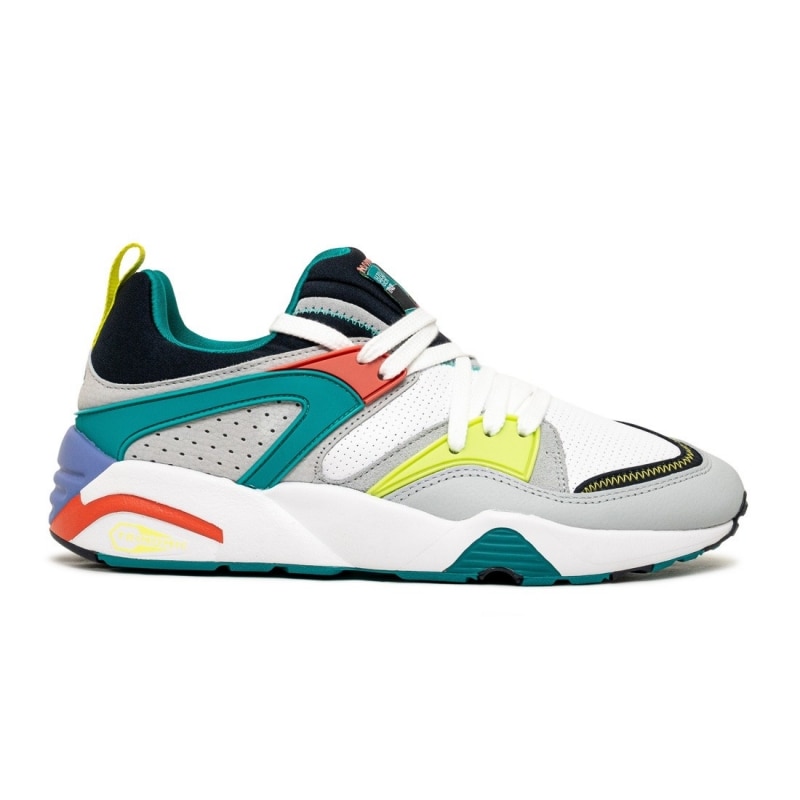
Designed in 1999 by Peter Schmidt, the shoe takes its name from its Italian meaning: a radical and bold design, not afraid to arouse strong emotions, monster resonated with an era at the turn of the millennia that sought the avant-garde and looked eagerly into the future. The shoe consisted of a flat, textured sole accompanied by an asymmetric Velcro closure. Mostro was a shoe made to be different from every model circulating at the time.
Opening image: Courtesy Puma