



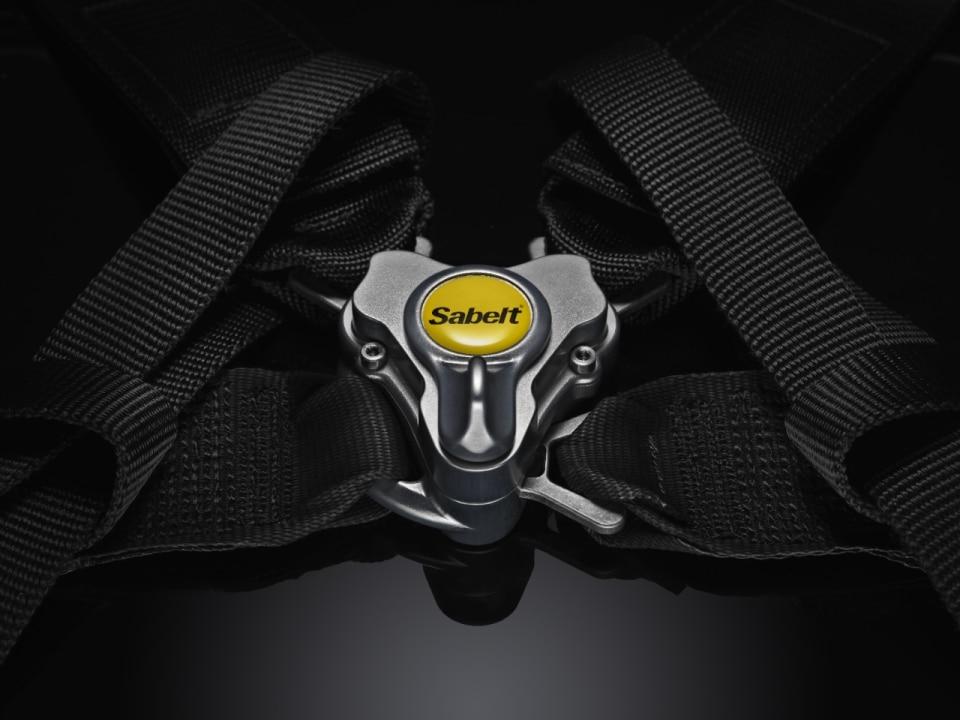
Lewis Hamilton, the Formula 1 champion who as of this season drives a Ferrari, boasts a unique buckle for his seat belts. A model expressly designed by the Italian company Sabelt, which by the way is the official supplier of six out of ten teams in the top series. "In Formula 1, every element of the vehicle and the driver's equipment is subjected to a very high level of customization, because even the smallest detail can affect performance, comfort or safety," Luca Campanella, Product Development Seatbelt & Restraint system Manager of Sabelt confirms.
Normally, belts are also adapted for each rider in terms of belt length, materials, fittings and installation method. "However, the buckle lever-that is, the mechanism used to release it-is generally standardized," Campanella points out. "Lewis Hamilton, on the other hand, expressed a need for a longer lever that could offer him greater convenience in operation, especially at times when speed of action is critical." And so began the design challenge-which can sometimes translate into an opportunity for innovation.
From design to production of an F1 buckle in 4 weeks
The concrete need, which may come from a specific customer or an internal need for innovation, as Campanella reminds us, must always be analyzed in light of FIA (International Automobile Federation) regulations, technical specifications and production constraints. The difficulty is in finding the balance between performance, safety and development time. "A new component must not only be functional and ergonomic, but also compatible with vehicle geometries, mounting systems and team expectations," the manager stresses. "The testing and validation phase is critical to ensure homologation and full race reliability."
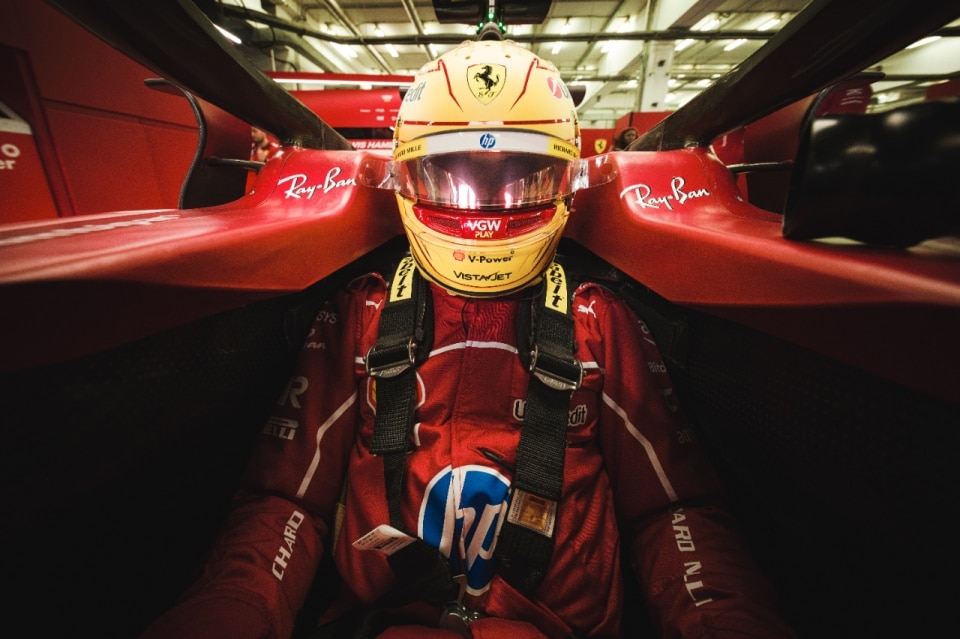
In Hamilton's case, the goal was to introduce a longer lever than the standard configuration, ensuring better perceived ergonomics without compromising functionality, weight, or safety. Thus ensuring that the lever can be operated with the grip of the index finger and thumb, making the gesture more intuitive and less tiring, especially when wearing gloves or being under stress. It should be noted that other riders make a single movement with their thumb to unlock.
Above all, it will be artificial intelligence that will be a new frontier: from optimizing geometries to predictive analysis of racing behavior, AI will be able to support designers and engineers in increasingly advanced ways.
Luca Campanella, Product Development Seatbelt & Restraint system Manager at Sabelt
"The project followed a very tight timetable: in just four weeks it went from request analysis to design, prototyping, and finally production, approval, and homologation of the new component," Campanella recalls. The material, on the other hand, has not changed: Ergal, the excellent 7000-series aluminum alloy widely used in aviation, has been used for years. Today Sabelt's Formula 1 belt system (with adjusters and tabs) weighs just under 400 grams while the buckle is around 100 grams. In short, a scant half kilogram; a record when one considers that in endurance (e.g., 24 Hours of Le Mans) the entire package weighs twice as much.
Since 2000, design has changed speed
The evolution of belts and buckles in racing has always been about increasing safety and reducing weight. Net of increasingly stringent regulations, technological innovation has enabled new avenues to be blazed. "The first major changes occurred starting in the 2000s, when high-performance materials such as titanium, aircraft aluminum, and superlight tapes were introduced. The superlight buckle, for example, is the result of extensive engineering work and is a reference in the industry," Campanella says.
In fact, there is an attempt to combine innovation with the real needs of motorsport. And for the future, the design and production perspective is to rely more and more on multidisciplinarity. "Design will continue to play a key role, both aesthetically and functionally; materials research will lead to ever lighter, stronger and more sustainable solutions; and rapid prototyping will allow us to speed up development and test more options in less time," points out the Sabelt contact.
"But above all, it will be artificial intelligence that will represent a new frontier: from optimizing geometries to predictive analysis of racing behavior, AI will be able to support designers and engineers in increasingly advanced ways. The bottom line will remain safety, which will continue to drive all innovation as a non-negotiable principle."
Opening image: The buckle designed for Lewis Hamilton. Courtesy Sabelt