

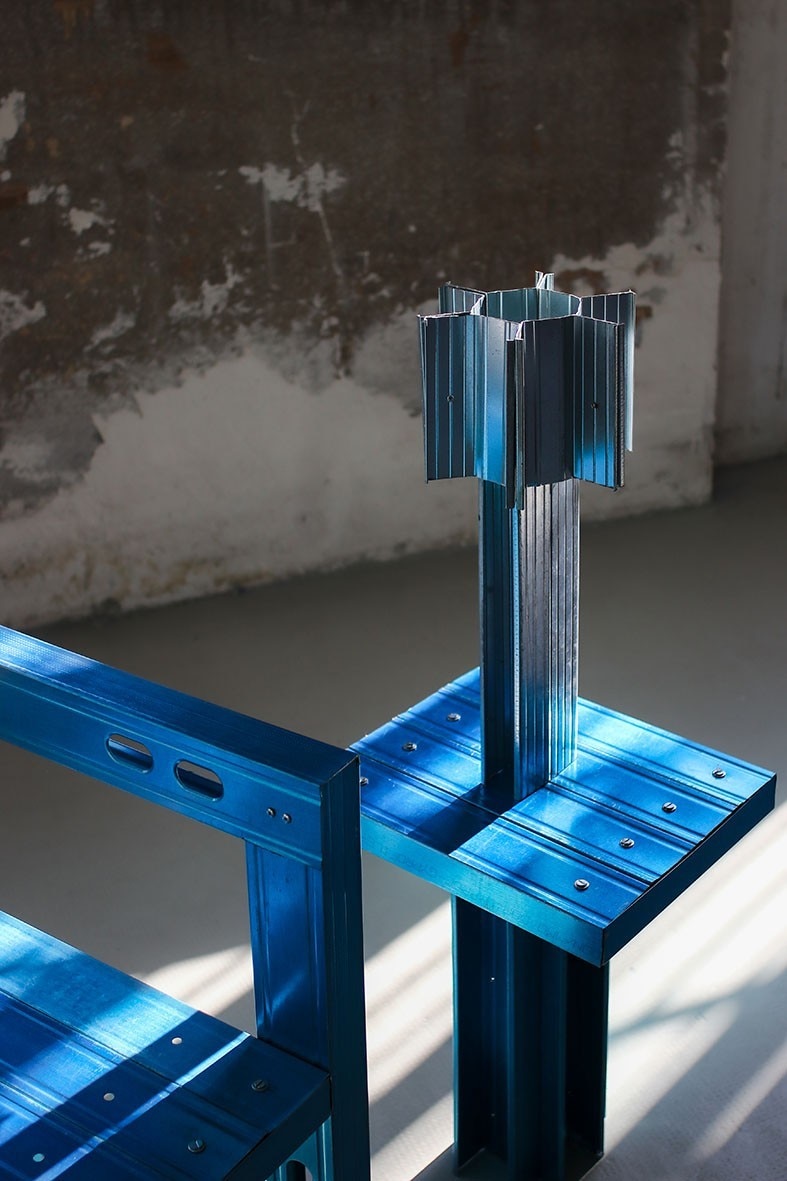

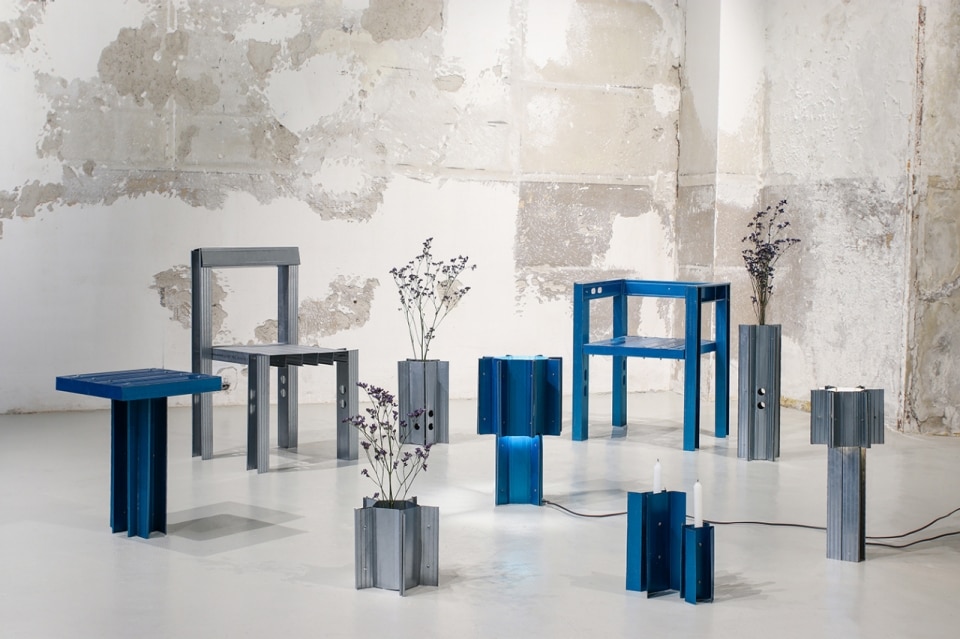
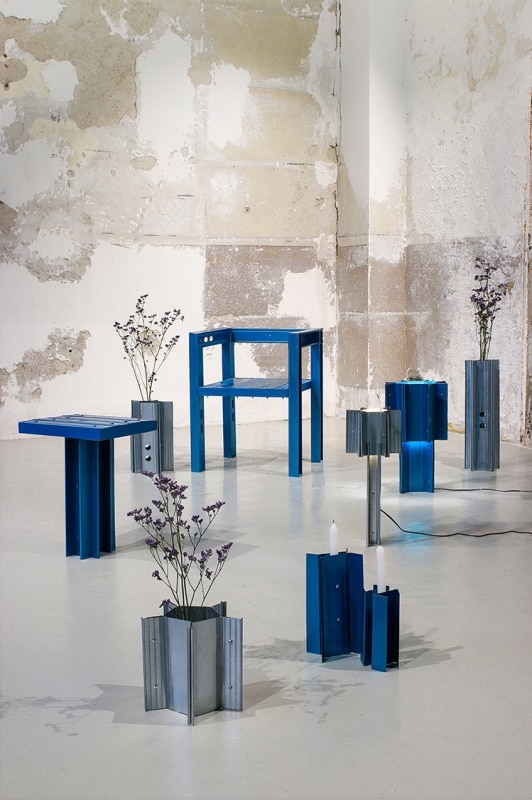
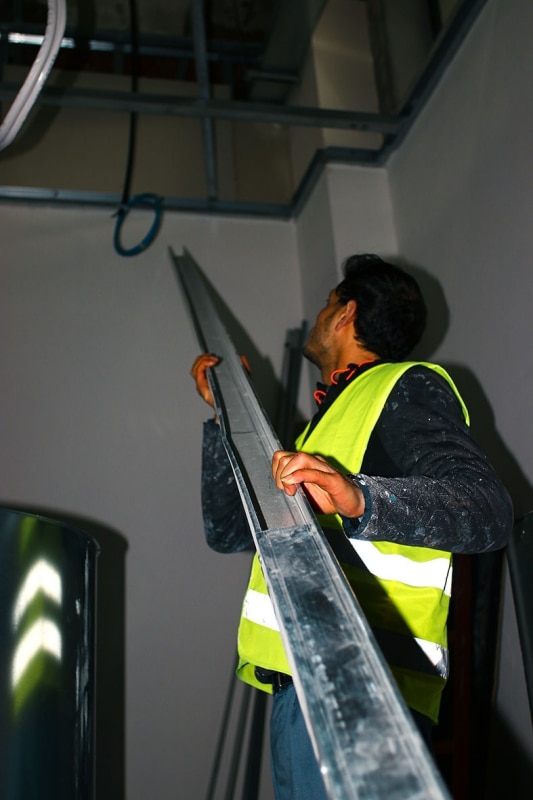
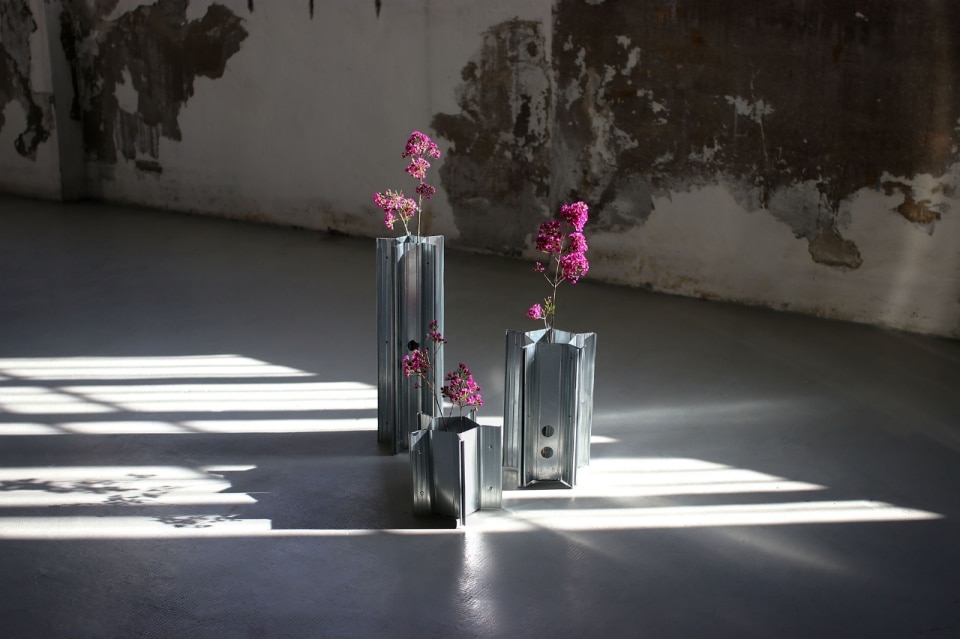
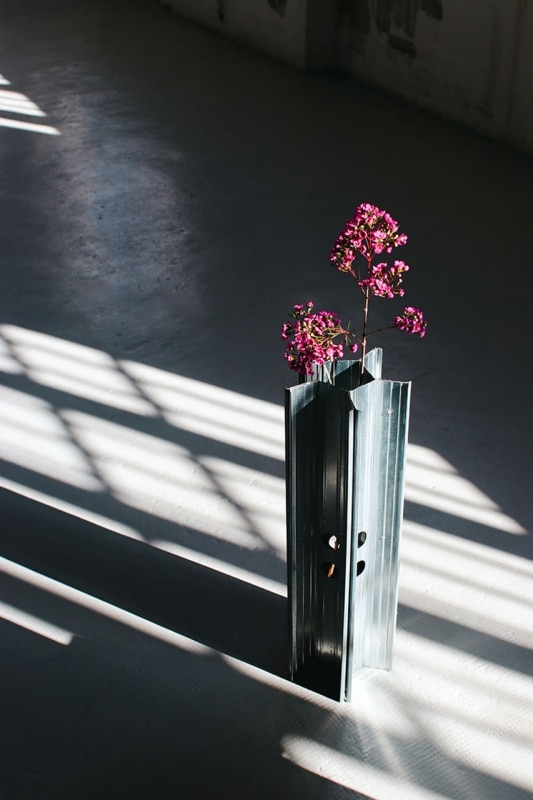
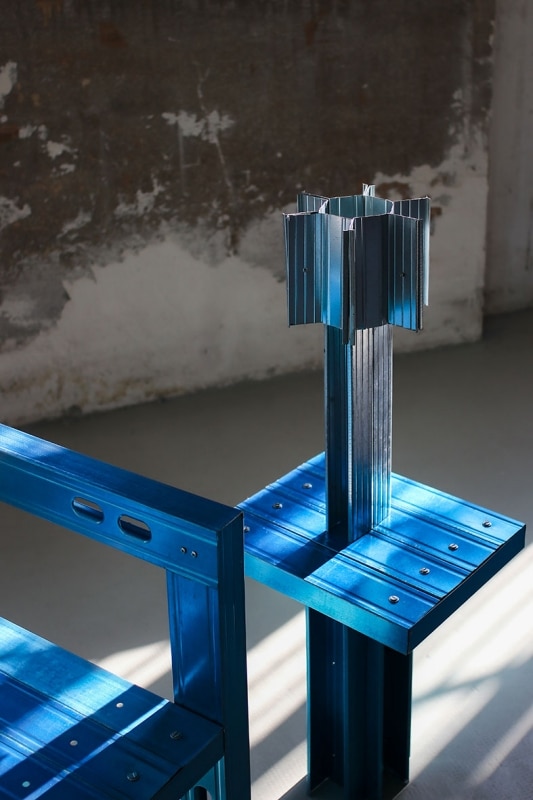
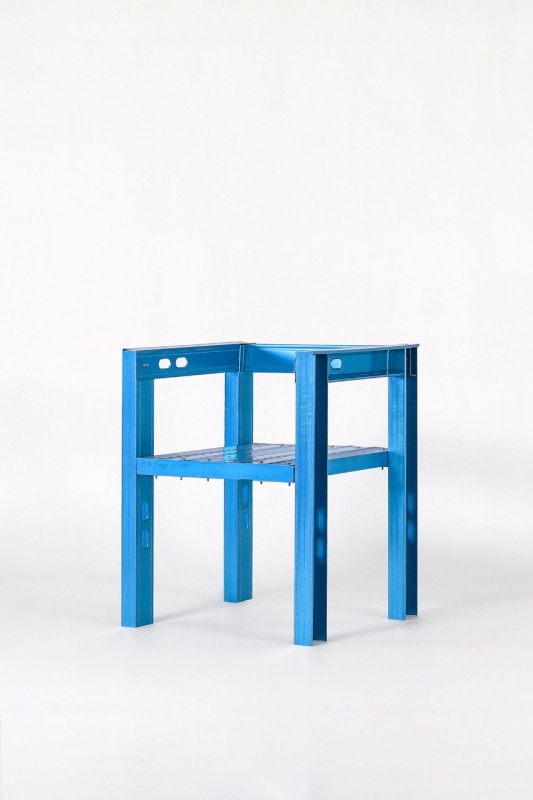
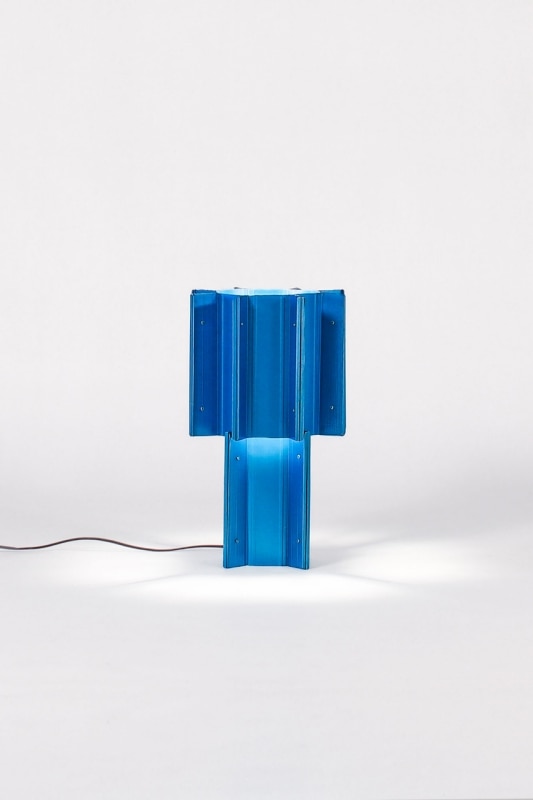
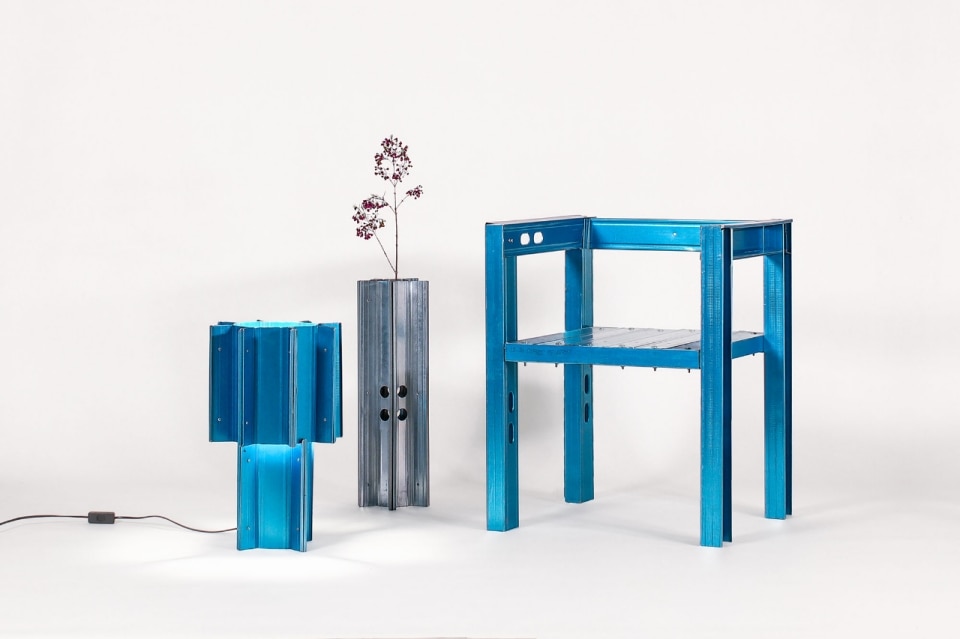
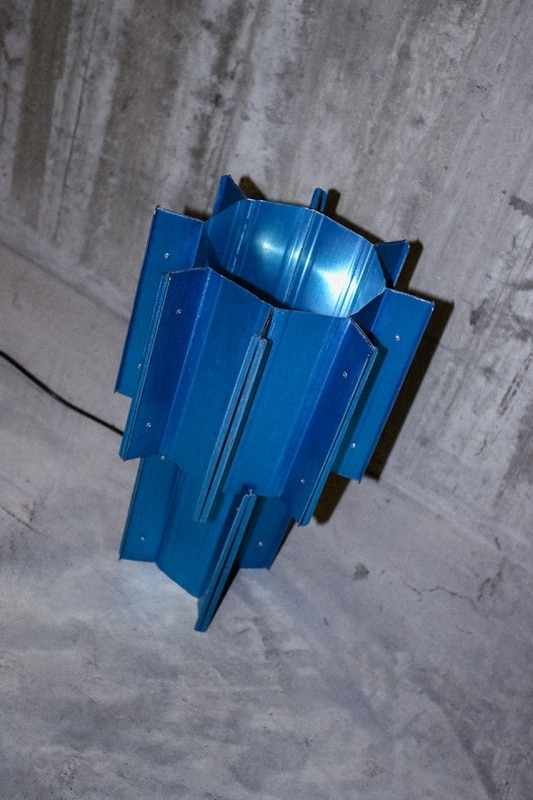
An element that usually remains hidden inside the walls of our homes lies at the heart of the latest furniture collection by designers Claudio Larcher and Sofia D’Andrea. It is the drywall track: a serial metal profile made from cold-formed sheet steel, conceived as a substructure for dry construction systems and meant to disappear within partition walls.
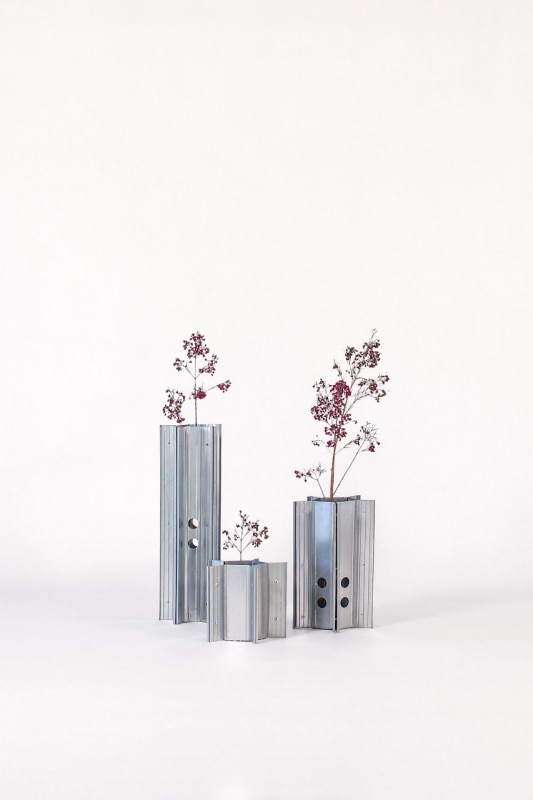
The Drywall collection brings it to the foreground instead: it becomes seating, lighting fixtures, vases, side tables, and candle holders.
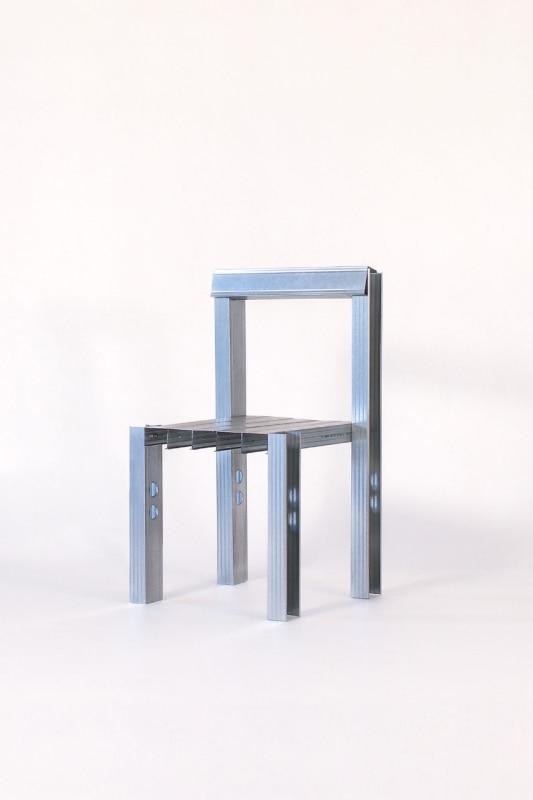
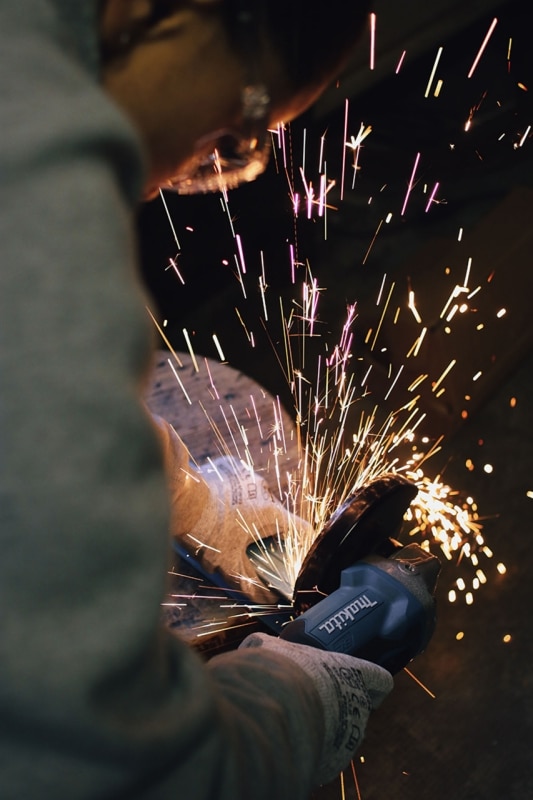
The drywall track is a standard, modular profile—difficult to work with and to differentiate—on which Larcher and D’Andrea chose to intervene as little as possible. “The idea was to work by subtraction,” Larcher told Domus, “keeping the track always recognizable as a technical element.” Modifications are therefore limited to targeted cuts and bends, applied only when truly necessary.
The idea was to work by subtraction, keeping the track always recognizable as a technical element.
Claudio Larcher
The appearance thus remains raw, deeply tied to the world of construction and, by extension, to architecture. Among the references evoked is the Centre Pompidou by Rogers and Piano, the Parisian museum that exposes its systems and structure, making its “interiors” visible, but also Enzo Mari—particularly his steel beam designed for Danese: “an object that brings an industrial element into everyday life without domesticating it, preserving its strength and identity,” Larcher comments.
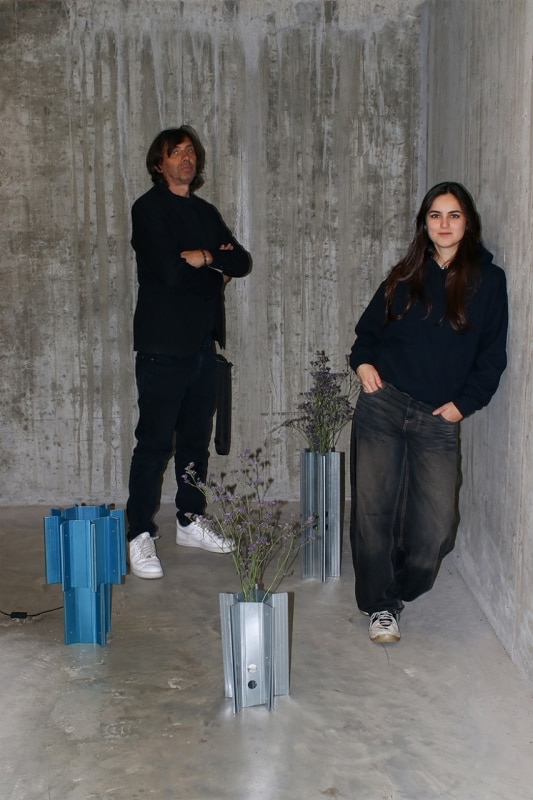
Not an explicit critique of the extreme refinement that often characterizes contemporary design, but rather an operational stance: a way of practicing design that consciously chooses a simple, direct, stripped-down language. “We were interested in working with a minimal and clean aesthetic, where material and process remain legible, without superstructures,” says Larcher — an approach that brings design back to its shared ground with architecture: construction.