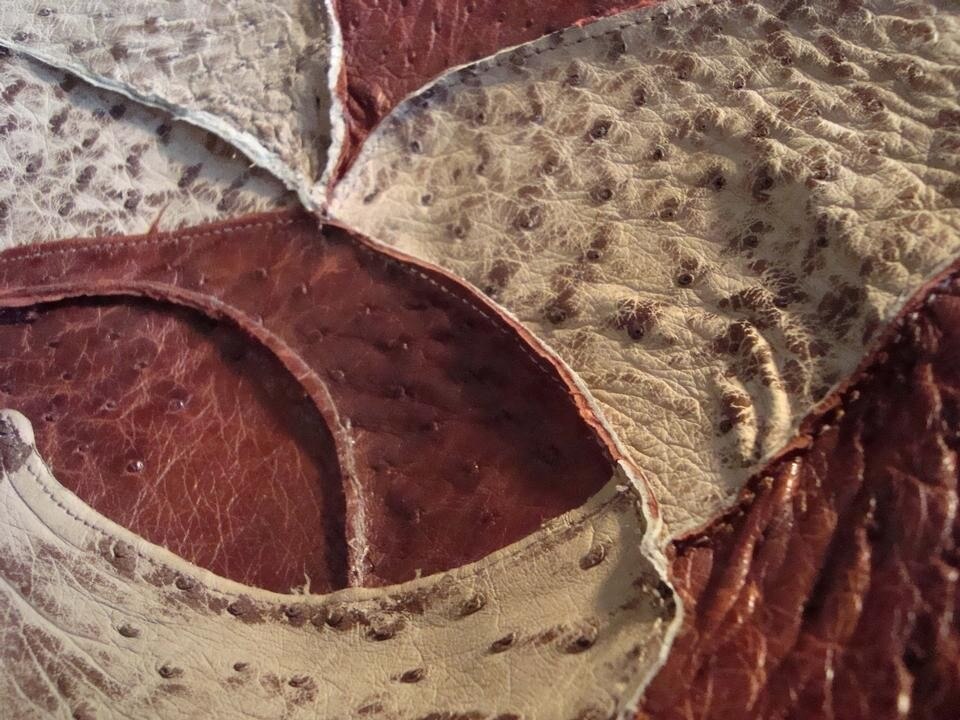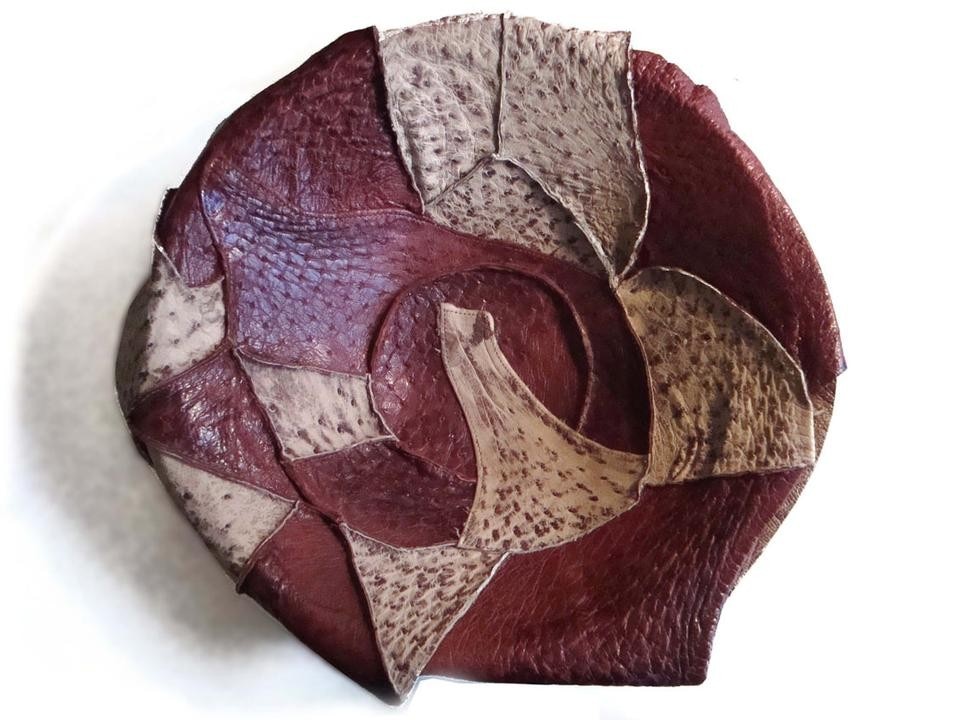
The Campana brothers have been working for months on a series of one-off objects, large and small, commissioned by the South African company Klein Karoo. Founded in South Africa in 1945, it is the market leader in the manufacture and export of this material. Klein Karoo is firmly rooted in the Oudtshoorn area, where it is the main source of employment, and believes the promotion of projects that benefit the local community and improve the population's living conditions is of capital importance, with a special focus on the traditionally most disadvantaged groups. Initiatives backed by Klein Karoo include the Dysseldorp Feather Sorting Project, in which the company trains more than 100 heads of families struggling financially to put their abilities to good use and guarantee an income to support their families. The Klein Karoo factories process between 120,000 and 200,000 hides per year. After arriving in the factory, they are salted, tanned, dyed and then exported. Production starts on the farm and continues to the finished product. Unique and more distinctive than all other leathers, ostrich is famed for its natural beauty and malleability but it is hard to process. One of its most important aesthetic features are the unmistakable points in the centre of the hide, on the back to be more precise, where the precious feathers so much in vogue in the last century are embedded in the follicles. Age and wear only add to its charm – the older the hide, the more beautiful and luminous it becomes without losing its characteristics.
The South African company's idea, in which it involved the Campana brothers, was to introduce ostrich leather – already widely adopted in the fashion world from the 1970s on – into the world of design for unique and special pieces of furnishing. Interior design, the automobile and nautical industries as too the great names in fashion, Yves Saint-Laurent and houses such as Pierre Balmain, Christian Dior and Nina Ricci, to mention but a few, have already seen extensive and varied applications of ostrich, although the fashion industry only wants the most prized part of the whole hide (with the follicles) and throws the rest away. Who better than the Campana brothers to recycle and reuse this material by employing the whole animal hide for the Klein Karoo collection, thus avoiding the waste of thousands and thousands of hides of animals raised on farms for their low-cholesterol meat, an activity that has been one of the country's most important economic resources for some time.
A collection of approximately ten pieces in single editions – still top secret – will be presented at the next Milan Furniture Show. These creations will then be auctioned and the proceeds devolved to a non-profit organisation based in Africa, also still top secret. "From Africa to Brazil and back to Africa" – sometimes design really can forge responsible paths. Maria Cristina Didero