In presenting two impressive contemporary events to the public, Tokyo has rightfully achieved status as one of the world’s design capitals. For five days, from October 9th to the 13th, a heavily loaded program of hundreds of exhibitions, small presentations, miscellaneous events, conferences and concerts invaded the showrooms, galleries and alternative venues of the Aoyama, Daikanyama and Odaiba areas. A true design feast that did indeed fill the streets of these urban areas with colorful throngs of exceptionally young enthusiasts, but does not yet seem to have dented the imperturbable indifference of a production machine populated by around 12 million individuals.
The organization’s commitment was nevertheless remarkable, and succeeded in obtaining involvement from several of Japan’s industry giants, who seem to have finally understood the strategic importance of design. The giants were joined by a series of foreign multinationals such as Puma, Nike, Nokia, Philips, Peugeot and others whose marketing experts have realized for quite some time now that the “young fauna” of this metropolis constitutes a market that is the absolute summit of interest in and sensitivity to all that is new, from fashion to technology. These precise factors are what, all of a sudden, makes Tokyo Milan’s most fearful rival in the race for leadership as stage-city of design. It has become more threatening than the other European cities that organize events analogous to Milan’s fuori-salone Furniture Fair, and that in any case can count on government subsidies, which Milan cannot.
The organization’s efforts to make the Tokyo Designer’s Week and the Tokyo Designers Block international events were praiseworthy. They published detailed bilingual guides and had designers participating from almost all Europe, as well as Australia, Canada, Korea and Israel. Much still needs to be done in that respect however, seeing that the majority of exhibition locations were lacking in written information that was comprehensible to the (admittedly few) foreign visitors, to not speak of the absence of expert staff able to communicate in another language than that of the Rising Sun. In any case, it must be noted that the Tokyo Designer’s Week is now eighteen years old and has been held in its five-day formula for seven years now. In 2002 the event received over 300,000 visitors. This year, under the organizational guidance of Shigeru Uchida, it traveled to Osaka (October 30th to November 3rd) and will also go to Kyoto for the first time, with a forum and closure celebration planned there for November 16th.
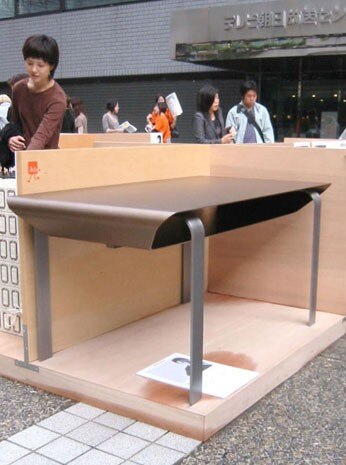
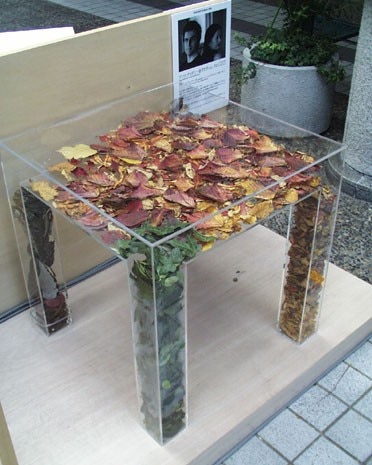
This year, “Table Exhibition”, “Container Exhibition” and “The Way We Sit” were presented as the three main exhibitions of TDW. The first was held in Ark Hills Karajan Place, a plaza inside one of the mammoth, emotionless complexes built by the Mori Building group, who also happen to be the main sponsor of this exhibition. On display are 150 brand-new prototypes of tables conceived for the most disparate of uses, made by 150 different architects and designers that are prevalently Japanese. Some (the most famous) had been invited; others (the youngest) had been selected by the organizers. The prototypes, generally well-made, were meant to demonstrate that there is no end to creativity, even in such a tried-and-true category as the table. They probably succeeded in proving this (but did we really need them to?), even if the selection might have been more efficient on the whole – both among the youthful and the more mature designers. Among the few good ideas were I. Junichi’s “Tubetop”, super-ready to be mass-produced, and “Trans-Table” by the Franco-Nipponese couple Gueydan&Kaneko, which can be modified according to seasonal changes of mood.
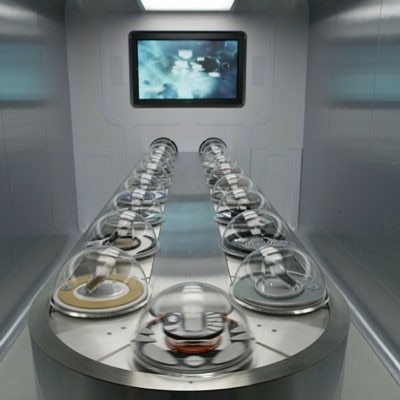
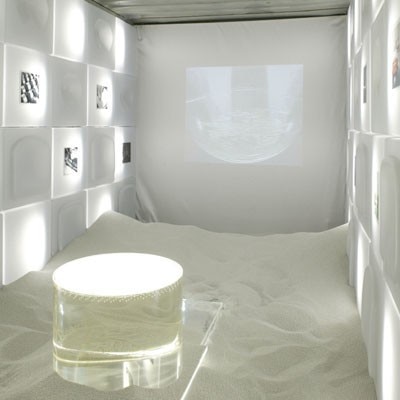
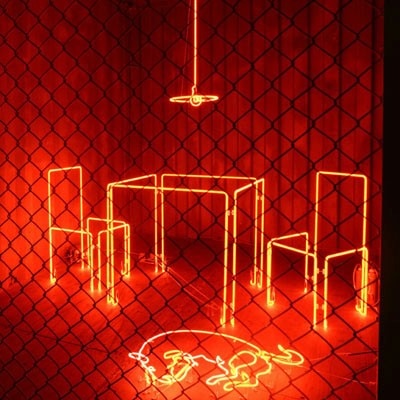
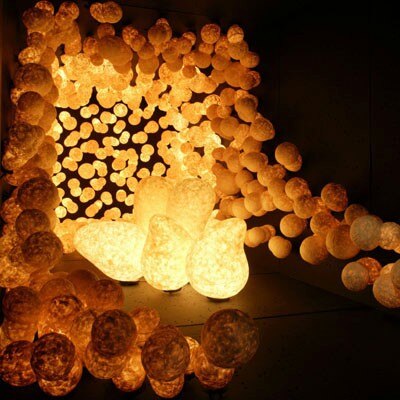
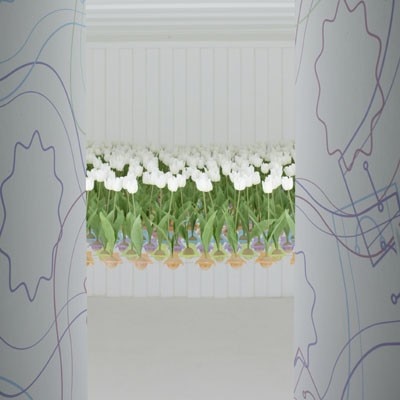
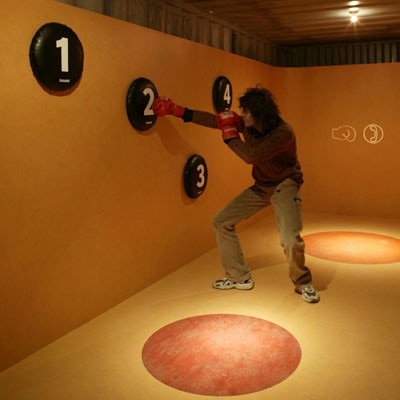
The “Container” show was decidedly more interesting and innovative. It was held in a temporary, ad hoc square in the new Odaiba area, an artificial island off the civic port, dominated by an impressive concentration of futuristic skyscrapers (including Jean Nouvel’s new tower) and connected to the rest of the city by a remarkable suspension bridge and a little monorail train. The square was delimited by seventy-four cargo containers arranged in a herringbone pattern. Inside them, as many different designers (alone or in groups) displayed their interpretations of the container space, having been invited by the organizers to present their particular visions of this type of space. Other designers were linked to either small companies or big corporations (like Nokia, Puma, Peugeot) that wished to communicate their “avant-garde” spirit.
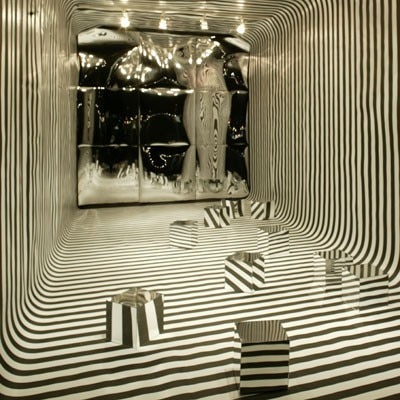
The idea of building a temporary micro-city where every person would have the chance to create his or her own small and very personal universe turned out to be a hit. This was especially effective in a city like Tokyo where one often has the impression that the personality of the single human being is squashed. Even more stimulating was the use of advanced and sophisticated technology in many of these microhabitats. Poetic and sometimes ironic applications compelled visitors in a most complete way with a wide array of moving images, colors, sounds and tactile sensations. There was, for instance, an optical installation entirely covered with black and white parallel stripes that contained cubes of different sizes, also with “mirroring stripes”. Reacting to the clapping of hands of a single “lion tamer”, the cubes were prompted to move from one side of the room to the other without being touched in the least, in an entertaining ballet of camouflage stripes that gradually deranged one’s perception of the whole.
The third exhibition was located in the middle of the square, displaying the work of students from forty different universities and design schools from all over Japan. Its theme was the difficult one of the chair. Again, excellent craftsmanship in the making of the prototypes and models, an exceptional variety of proposals, but excessive citational content and an overall propensity among the students to imitate the masters instead of trying to surpass them.
For several years now, another regular event has been added to the roster: the Tokyo Designers Block, contiguous to the Week, but with a separate organizational structure. Less official and aimed at a younger group, the Designers Block was present in all the same city areas, with a substantial program at that: a good 120 small exhibitions and presentations in as many showrooms, galleries and alternative venues. According to the organizers’ estimation, 250 designers participated this year, including 110 foreigners.
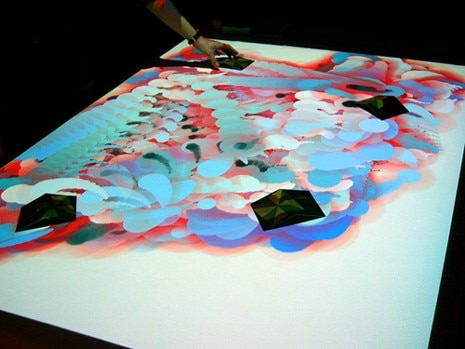
Of all the presentations, mostly organized in the Aoyama area, the Koreans of the OAAA group (Kang, Yim and Lee) are well worth mentioning. Their “Tabl-ature” project was a program of digitally produced images projected onto a table, where they interacted with animate and inanimate items placed there. The resulting configurations of constantly changing lines and colors could be modified by altering the positions of the items, making for a fascinating graphic experiment that transformed the table into an interactive screen – which is somehow close to work by Studio Azzurro, with all due differences.
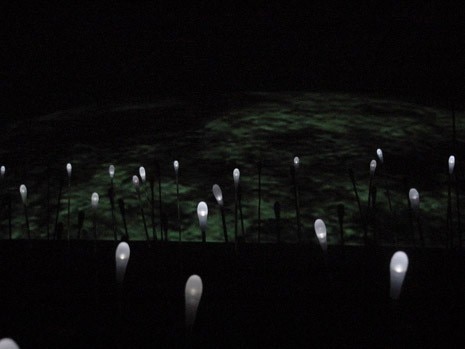
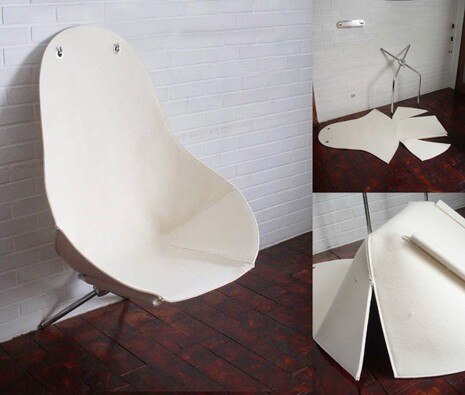
In Omotesando, the boulevard colonized by fashion labels, the Japanese group F.A.T. had plastered its allocated dark space with Grass, a kind of artificial lawn with giant blades. A light-emitting diode at tip of each blade made for a fluctuating illumination effect that was at the wind’s mercy. Another Japanese designer, Arata Asada, was the creator of a curious armchair made of a sheet of wool felt, resourcefully cut and slipped onto a tubular metal frame with the use of minimal additions like buttonholes, pockets and zippers, resulting in a beckoning “warm embrace”.
At the Spiral, Aoyama’s historical meeting place, an interesting installation by the Australian group Dinosaur Design combined shapes and colors of objects and jewelry in glass and transparent resin in a seductive chromatic cocktail. Italy was present in Water Design, an exhibition of modern bathroom furnishings organized by ICE. The results of the TDB Award were also on display, which went out to the innovative prototype of a lamp with a central element resembling a small artificial tree bearing luminous fruits. The fruits are made to survive being picked from the tree (until they need to be recharged, that is).
In the the new residential neighborhood of Daikanyama, the eye-catcher was a project by Zero First, an extra-large seat called “Mogu Picnic”, produced in Japan for Mogu. The soft “bean bag chair” is just the thing to sink into, surrounded by remote control devices, cellular telephones and the little flowers that are stuck in special holders all over the chair.
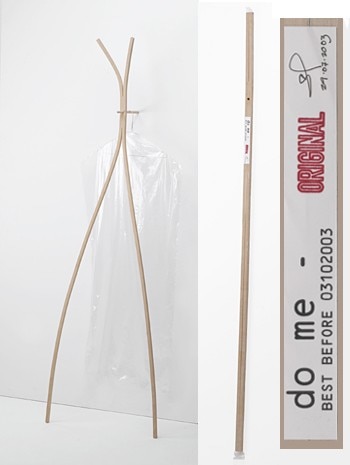
Also in Daikanyama, Danish designers achieved noteworthy results with their use of “new wood”, as presented in the “Walk the Plank” show hosted by the Danish embassy. The “Do Me” coat rack by Søren Petersen is meant to lean against the wall – it is a thin bar of pressed wood with two clever slits. Taken out of its packaging, the bar can be shaped barehanded to obtain the desired position.
Tokyo Designer’s Week
T +81(0)334707699
F +81(0)334707705
E-mail:info@tdwa.com
http://www.tdwa.com
Tokyo Designers Block
http://www.tokyodesignersblock.com
Web and e-mail addresses:
Tubetop: Studio-ikb
Trans-table: Cielrouge
Tabl-Ature: Imhelix
Grass: kuramoto@design.nec.co.jp
Dependant chair: arata.asada@virgin.net
MOGU picnic: shop@zerofirst.co.jp
Do Me: Walk the Plank